

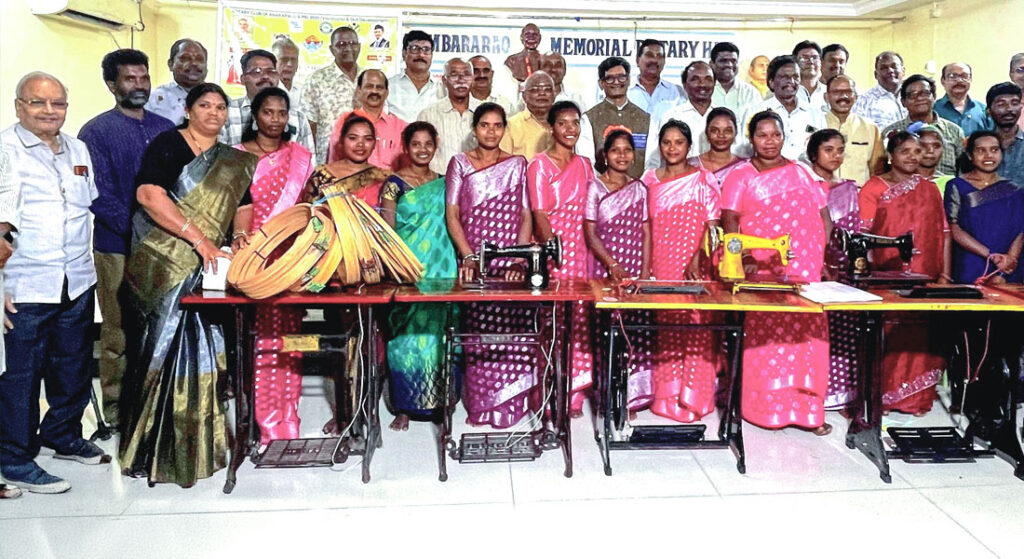
Around 1,250 women from Gathum village and its surrounding hamlets in Visakhapatnam district are currently receiving training in tailoring and embroidery through a three-month course under Project Rotary Shakti, an initiative of the Rotary Club of Vizag Surabhi, RID 3020.
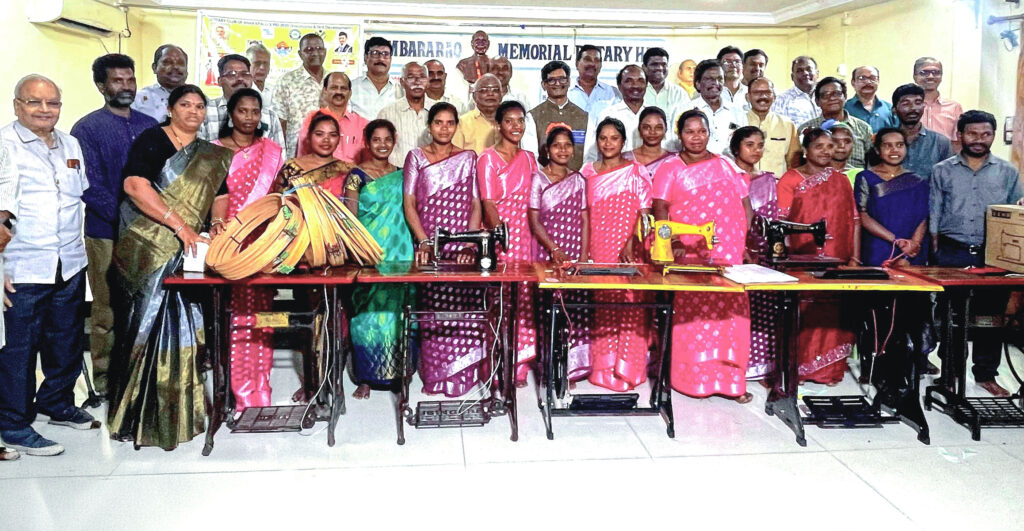
Gathum is a tribal settlement classified under the ‘Particularly Vulnerable Tribal Community’ category, located deep in the hilly interiors of Hukumpeta mandal on the Andhra–Odisha border. “It is a challenging terrain infested with anti-social activists and there is no proper transportation,” says Srinivasa Rao Vuggina, Vocational Services chair of RI District 3020. He is also the nodal officer of the Government of India’s Skill India Mission (SIM) and programme officer of the Jan Shikshan Sansthan (JSS), Visakhapatnam.
Vuggina, a member of RC Visakhapatnam since 2022, helped the club design and implement the project. “I have been working with the villagers for the past two decades, and that’s how I’ve earned their trust. Otherwise these tribals do not trust outsiders easily,” he says.
These women are now successfully earning money through job work. The Rotary clubs help connect them with opportunities.
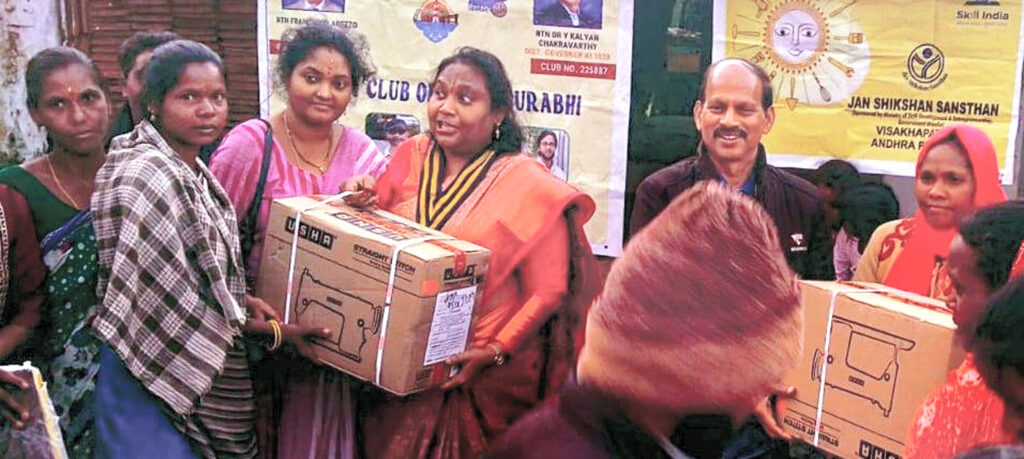
RC Vizag Surabhi has supplied sewing machines and training material such as cloth and thread to enable the women to practise their skills. An instructor walks nearly 25km through the hilly terrain to reach the village. Through the SIM and JSS programmes, Vuggina ensures that the trainer’s salary is taken care of.
Around two lakh women from 500 villages have been identified for vocational training under the district’s Rotary Vocational Mission programme, with Rotary clubs across RID 3020 supporting the initiative. So far, around 2,000 women have been trained through various Rotary clubs in the district. “Another 1,000 women will be trained in the next phase beginning in April,” he says.
Even before joining Rotary, he had personally invested ₹2 lakh from his own pocket to train around 2,000 women in tailoring and embroidery in East Godavari district. “These women are now successfully earning money through job work. My club and other Rotary clubs help connect them with opportunities,” he notes.
One such transformation story stands out for him. He remembers Lakshmi, a young tribal woman who joined a tailoring class with little confidence and no independent income. Within months of completing her training, she began stitching school uniforms and simple garments for nearby villages. “Today she earns enough to support her family. When I visited the village recently, she proudly showed me the small tailoring corner she has set up at home. That moment made all the effort worthwhile.”
The Rotary Club of Anakapalle has similarly supported the training of 1,000 women in another remote village, Garudapalle. The club donated six sewing machines to the village panchayat so that trainees could practise regularly. It now plans to establish a production unit equipped with advanced, high-speed sewing machines to manufacture frocks, skirts and women’s nightwear. The club has also undertaken to market the finished products stitched by the village women and provide the necessary raw materials.
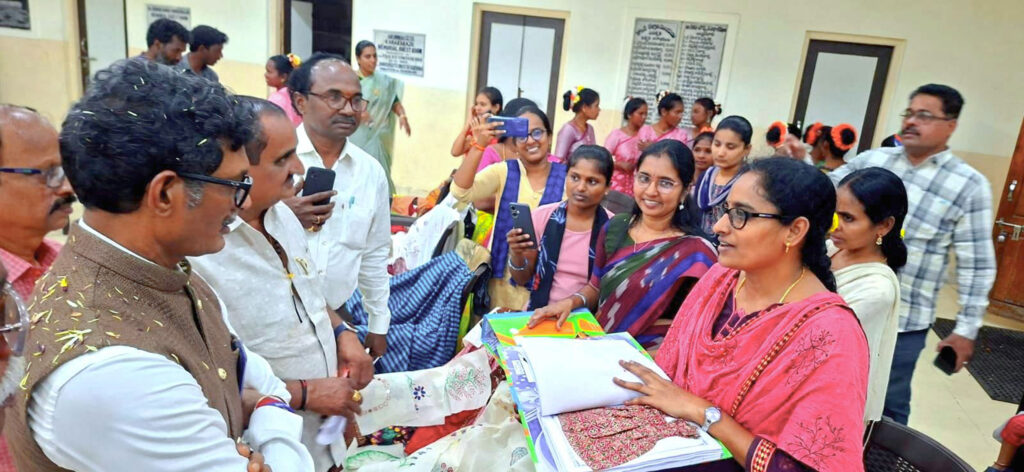
Apart from tailoring, village women have also been trained in other vocations such as making cleaning material, jams, agarbathis and candles. District Governor Kalyan Chakravathy visited an expo organised by the club at the Rotary Skill Centre in Anakapalle, where the rural women showcased the skills they had acquired.
Vuggina also recalls how the initiative proved its worth during the pandemic. “Within two days of the declaration of Covid in 2020, 200 rural women trained under this project stitched and distributed two lakh cloth masks through Rotary clubs across the district,” he says.
He hopes to leverage his official role to create an online platform to market the products made by these women. He is also exploring the possibility of securing recognition for their work at Vigyan Bhavan in New Delhi. The Union Ministry of Skill Development has recognised this Rotary project as a model programme that aligns with the nation’s vision of inclusive development and last-mile empowerment, he adds.
“It is deeply satisfying to see these women gradually transform into financially independent individuals. When a woman becomes self-reliant, the impact spreads across the family — children receive better education, households get healthier food, and the entire family moves towards a more secure future,” he smiles.
His home club, RC Visakhapatnam, also focuses on basic literacy for the tribal trainees. “Whenever a vocational programme is introduced for women in a village, our club conducts basic literacy classes for the first two weeks. We ensure that women and children learn English and Telugu alphabets, numbers and basic arithmetic. This helps safeguard them from being cheated,” he explains. After completing their training, the women are guided towards self-employment opportunities through the Government of India’s Livelihood Cell.
Rotary clubs also organise periodic medical camps in these villages, followed by continued healthcare support.