


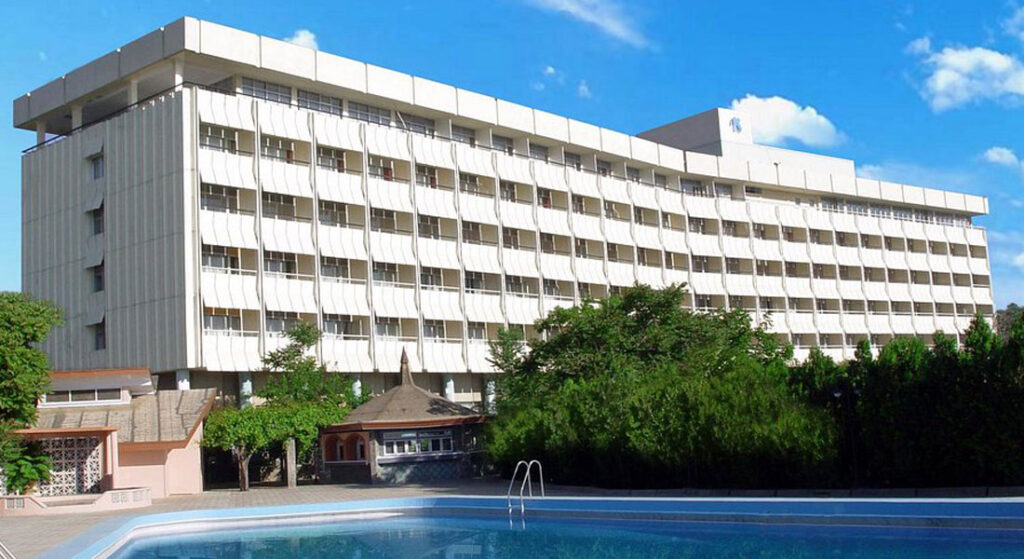
…with the sound of gunfire, the Inter-Continental Kabul is one place that offers a chance of survival…
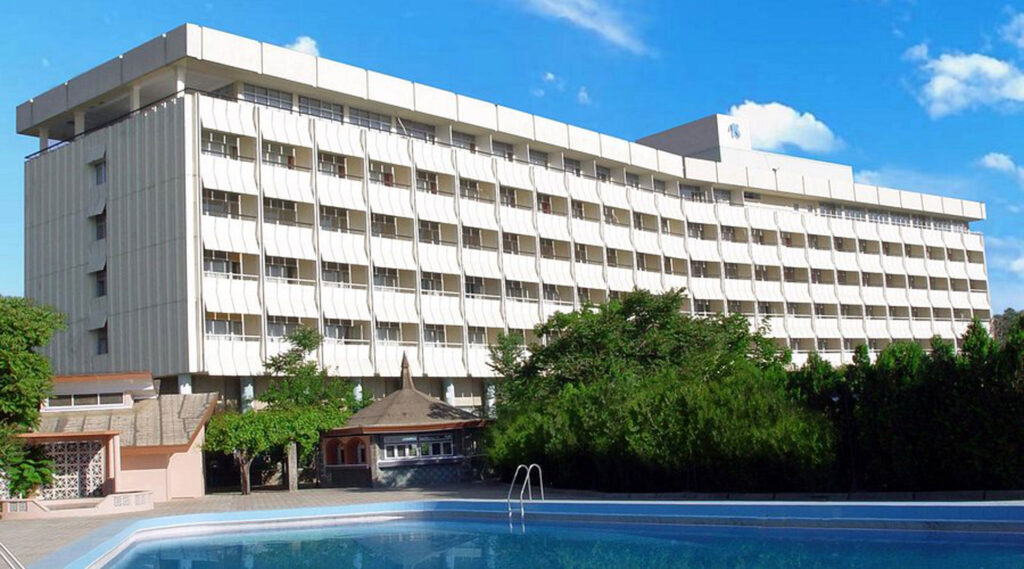
“… there was an Arab guest who occasionally showed up. He never came through the front door, always entering from the back, through an emergency exit used only by him and those around him. … It was as if he had his own hotel within the hotel.” No prizes for guessing the name of this guest: Osama Bin Laden. He, too, conducted business at The Finest Hotel in Kabul, undeterred, undisturbed. The Inter-Continental Kabul, situated atop a gently rising hill, opened in 1969 with prime minister Noor Ahmad Etemadi cutting the ribbon. “Massachusetts Avenue in the Hindu Kush” wrote one American travel editor who had come all the way just for the opening of the biggest hotel in Kabul. It was 48th in the Inter-Continental chain of hotels, the jewel in its crown, an epitome of fine dining and hospitality, a hub of multiculturalism both in clients, and customer service.
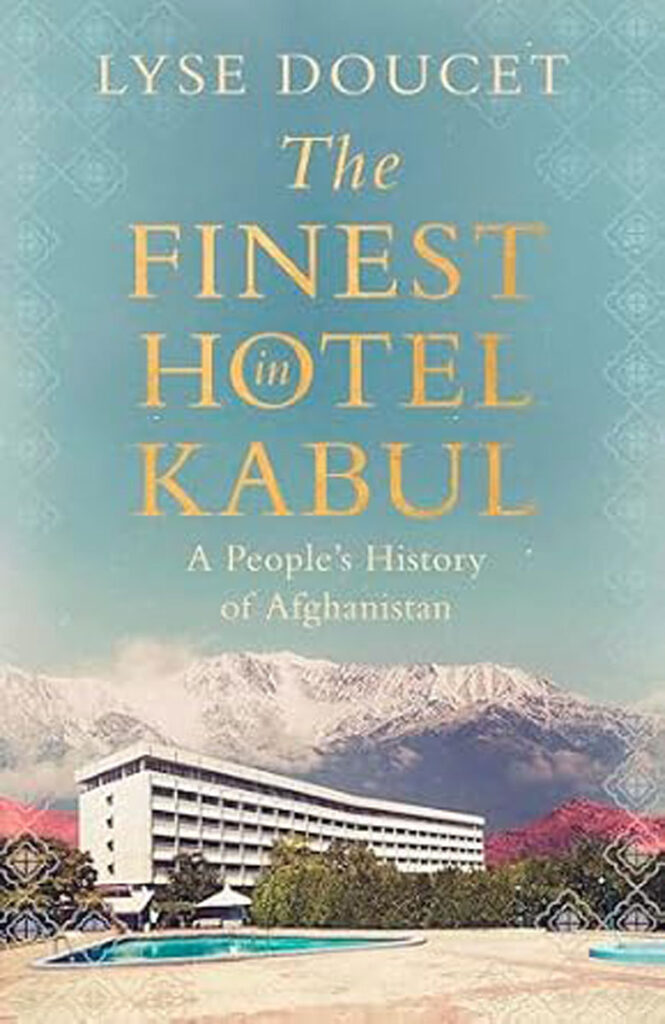
The tagline of the book, A People’s History of Afghanistan, tells the real story. Lyse Doucet, head of BBC’s international correspondents, takes us up close to the lives of ordinary people, people like Hazrat and Abida and Qudus and Amanullah and Sadeq, among several others, who worked at the Inter-Con over extended periods of time. Thus, they were privy to the ever-changing and violent political upheavals that beset their country and, as a consequence, that affected their lives even as they strove to serve in the best traditions of global five-star hospitality. As one reviewer wrote, the book is “a love letter to Afghanistan and its people”.
Lyse Doucet came to Kabul in 1988 “to report on the Red Army’s pull-out, following a disastrous decade-long occupation. As I departed from neighbouring Pakistan, where I had spent the past few months, one mujahideen commander cheerily told me he would soon see me in Kabul, since their victory was now in sight. Another warned that I would certainly be killed there”. It’s not clear whether she met that same commander during her stay at the Inter-Con, but she certainly wasn’t killed. Instead, through close interactions with the people who worked there, including busboys and managers, waiters and cooks, security guards and housekeepers, and observing how the hotel’s beautifully appointed but gradually disintegrating halls hosted meetings of political leaders of different hues: tribal leaders, communists, the mujahideen, the Taliban, presidents and collaborators. It spans some 50 years during which time Afghanistan saw monarchy, coups, communist occupation, US invasion, the rise and fall and return of the Taliban. Told with humaneness and objectivity, it’s no wonder that this blend of personal histories with the history of an iconic hotel and the history of a people and their nation, has just been selected for the women’s nonfiction prize. The prize for fiction has gone to The Correspondent by Virginia Evans.
Lyse Doucet takes us way beyond eyeball-grabbing headlines. History, she writes, “always moves in a multitude of singular stories that carry far bigger truths. Afghanistan’s story tells us that war is more than the blast of bombs, the whistle of bullets. It’s a mother’s anxious eyes, the song of a soldier, a soul-soothing camaraderie, the pause before going out the door.” … The book opens with a wedding in 2021, everyone dressed up and ready to celebrate with music and dancing and food. This, despite an underlying sense of dread. Suddenly, someone sights a pickup on the hill flying a familiar white flag. DJ Nabila begs for a long loose cloth to cover up herself even as women pull out shawls from their bags. The groom grabs the bride’s hand and they, along with their guests, rush out of the Kandahar Ballroom, the just-served lunch sitting piping hot on tables. The Taliban is back.
Lyse Doucet was on the ground, right there, when hundreds and hundreds of people thronged the airport desperate to get away. Who doesn’t remember those horrifying images shown over and over again on television? Unbelievable scenes but true. It seems fitting, therefore, that her story of Afghanistan told through the eyes, lives and voices of ordinary, hardworking men and women, should end with the Taliban’s second coming.
In its early years, the Inter-Con was the place “for the fortunate or for those with a fortune”. Its style was exclusive, its hospitality inclusive. The Bamiyan Brasserie, for instance, had a wall with “a frieze depicting the stunning limestone cliffs of the Bamiyan valley in the central highlands, including a miniature replica of one of two sixth-century giant standing buddhas”. These “crown jewels” of Afghanistan were also featured on the hotel’s publicity brochure. The rich and famous all came there to stay and enjoy its perks. Then when the troubles began, it became the haven of journalists. Hazrat, one of the longest-serving employees of the Inter-Con, features prominently in these pages. Through his memories and the stories of others we see how women worked freely in various capacities, except at waiting. That came later, with Malalai. They dressed freely, too, even in short skirts. The staff represented practically all the ethnic and tribal groups in the country.
Then, in 1973, things began to change under a new prime minister. The king was in London, apparently attending to an eye problem, while here, soldiers gradually took control of the radio station, the airport. In a swift coup, the king’s cousin, Sardar Daoud, installed himself as President. While the hotel continued to function, anyone with royal blood was hounded out. Meanwhile, Hazrat was deployed for military service, guarding a mountain, Koh-e-Asamai, named for the Hindu goddess of hope, Asha Mai. When the Soviets rolled in, Daoud and his entire family were wiped out. The Inter-Con was overrun by soldiers demanding to see and proceeding to destroy anything and everything that presented the old Afghanistan, be it the king, the president, connections with America, fashion shows, Rotary Club charity balls. Books were thrown out, so too clothes, and people with “connections”. Journalists were not spared. But the staff often went to dangerous lengths to help them communicate their stories to the world.
With the “Red Years” we are introduced to Amanullah who dreamt of studying engineering at the Soviet-built Polytechnic University at the bottom of the hill. Not far from Kabul, armed, long-bearded mujahideen were waiting to pounce. Both Kabul Radio and Radio Moskva had denounced the “bandits” backed by “American imperialists and their Pakistani and Iranian puppets”. We follow Amanullah’s career path from military service to working at the hotel to getting an engineering degree and being addressed as Engineer Amanullah. When the Taliban take over, he grows a long beard and wears a turban, before eventually settling to a teaching job. There’s a vivid description of what LyseDoucet (as she was always addressed) describes as the “Soviet sound-and-light show”: helicopter gunships thumping through the sky, “tracer fire flashing trails of green light”, warplanes “swooping over the serrated edges of the Hindu Kush, bombs whistling through suspected insurgent hideouts”…
As the people’s history winds through the years, the narrative compels readers to think upon our own times, in our own political milieu. It’s not so different. Afghanistan could happen anywhere. However, “the iconic letter K still danced on the glass of the revolving front door, and on the roof in a most beautiful blue,” writes the author, in a tribute to resilience in its present avatar as Intercontinental For Everyone.
The columnist is a children’s writer and senior journalist