


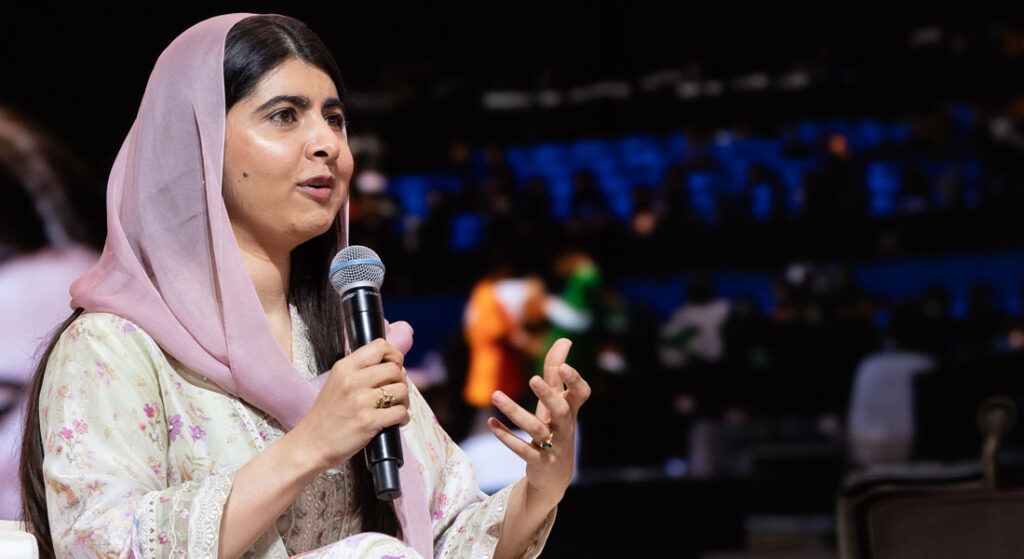
Malala Yousafzai, the youngest-ever Nobel Peace Prize laureate and an advocate for girls’ education, in her keynote address and a following interview on stage at the Taipei Convention, spoke about her personal connections to Rotary as the daughter of a Rotarian and about the importance of empowering girls.
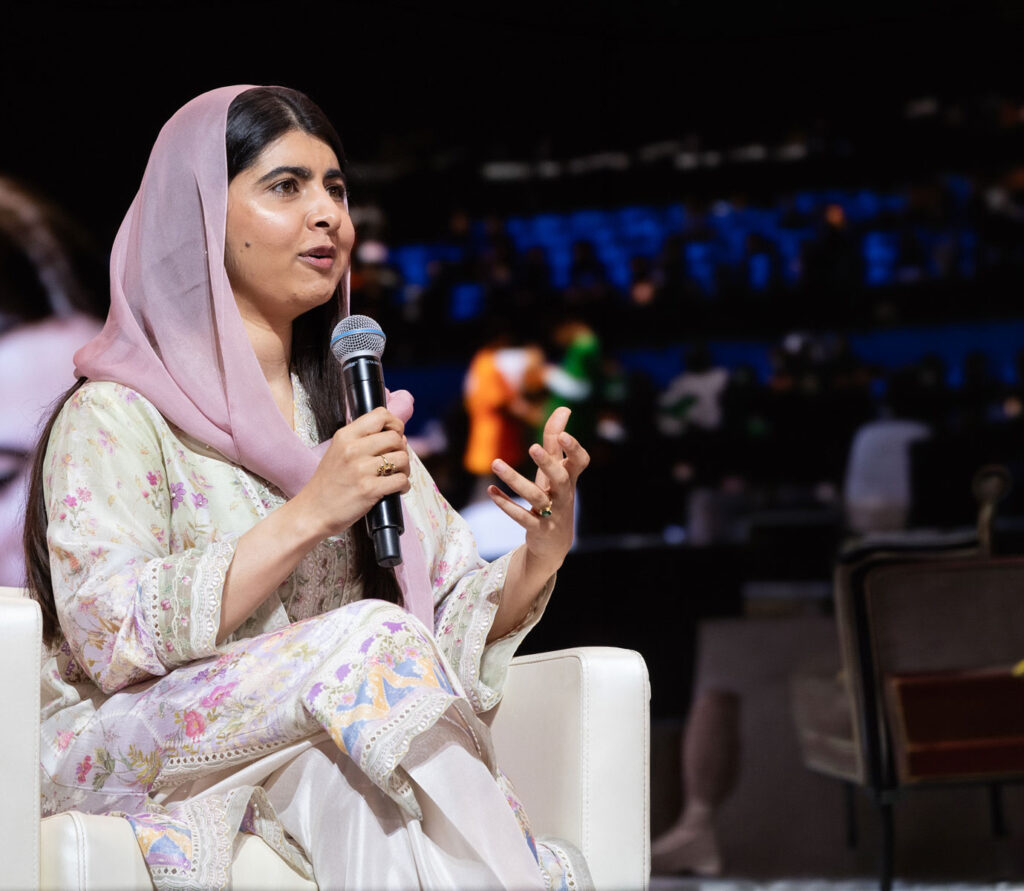
While there has been progress in girls’ education, she reminded the Rotarians that “120 million girls around the world remain out of school,” and advocated for greater trust and investment in girls as leaders. “Girls understand the problems the best… and the solutions the best,” she said, highlighting transformative, girl-led movements from Tanzania to Pakistan.
Reflecting on her own journey from an 11-year-old speaking out for education to the present day, Malala emphasised the power of collective action: “Even small acts… are making a huge and significant change.” She urged the Rotarians to join her cause, saying “We need your bold and ambitious vision to build a better future for girls.”
We need Rotary’s bold and ambitious vision to
build a better future for girls.— MalalaYousafzai
RI general secretary John Hewko addressed the growing global challenge of loneliness. Drawing on a Harvard study that identifies relationships as the strongest predictor of happiness, he framed Rotary as a powerful antidote. “The heart of Rotary is belonging through purpose, …and the world is hungry for this kind of belonging,” he said, encouraging members to share their experiences and invite others to the organisation. He reminded the audience that it is necessary for clubs to adapt to modern lifestyles, create flexible ways to engage, and make it easier for more people to belong.
Rotary Peace Fellowship alum Natalie Emery shared her life story and illustrated how small acts of kindness can grow into systemic impact. From early volunteer activities in India to leading humanitarian logistics efforts with the World Food Programme, Emery’s journey highlighted the importance of taking action.
“You don’t need to be extraordinary to make a difference,” she said. Reflecting on her work in crisis regions such as South Sudan, she explained that ensuring access to food, water and medicine is not just humanitarian work — it is peacebuilding. “Peace is built long before a formal treaty is signed,” she added.
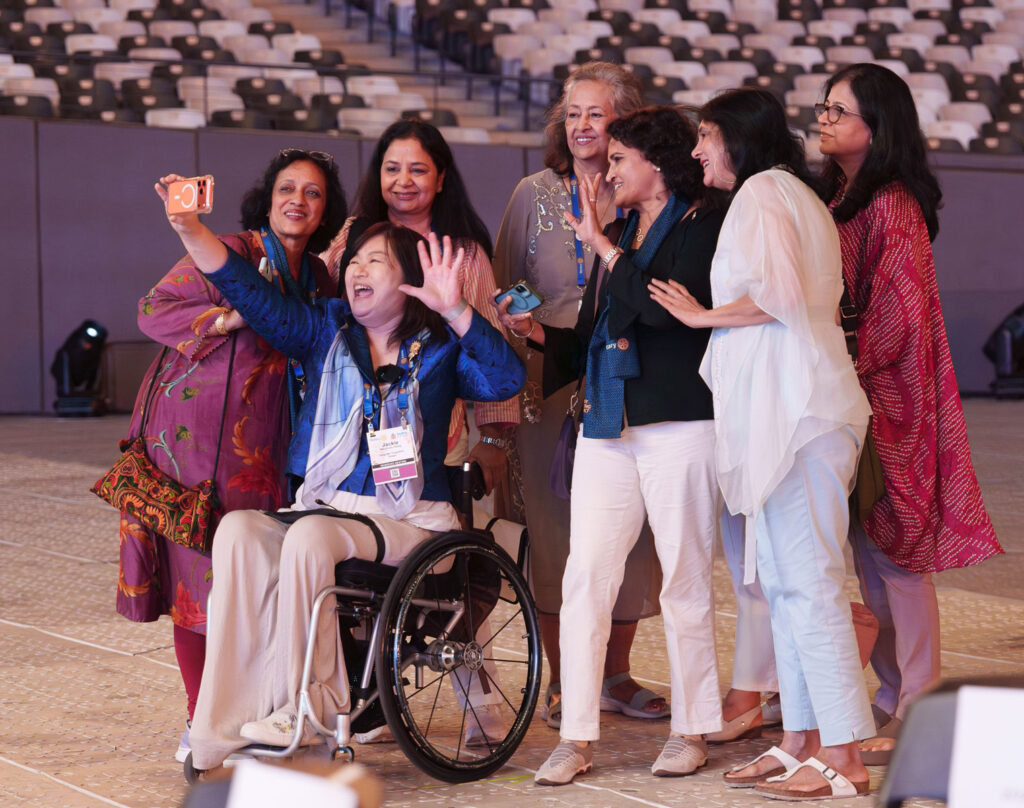
Stories from this year’s Rotary ‘People of Action’ honourees showcased grassroots initiatives tackling literacy, mental health, inclusion and conflict resolution.
The global reach and impact of Rotary’s work were highlighted by trustee chair Holger Knaack, who emphasised that Rotary’s projects are built on data, accountability and partnerships, spanning areas such as health, education, water and environmental protection.
Haiti gets sixth Program of Scale
“We do not run on hope. We run on evidence and measurement,” Knaack said, announcing the sixth Program of Scale the ‘Collaboration for Sustainable Water and Sanitation Systems in Haiti’. The initiative reflects Rotary’s focus on scaling proven solutions to create sustainable change, in this case in partnership with Haitian organisations and the national water agency. Its goal is to cut waterborne disease by 25 per cent — by training local committees and water operators, and the mayors who will sustain the work long after the grant ends.
The fight against polio is still Rotary’s top priority. Valerie Wafer, RI PolioPlus Committee member, and Mike McGovern, chair of the International PolioPlus Committee, highlighted both progress and challenges in reaching vulnerable populations. Afghanistan and Pakistan remain the only countries with ongoing wild poliovirus transmission. The main issues are access barriers, insecurity and mistrust, while Nigeria faces variant outbreaks. With annual funding of $50 million from TRF and $100 million from the Bill Gates Foundation, frontline workers, integrated health campaigns and global advocacy are driving declining case numbers and renewed confidence.
The writer is regional content and magazines lead at RI Global Communications
Taipei Convention draws 37,000 Rotarians
More than 37,000 Rotarians from over 140 countries gathered at the Taipei Nangang Exhibition Center and the Taipei Dome from June 13–17, 2026 for RI’s annual convention, which has returned to Taipei after 32 years.
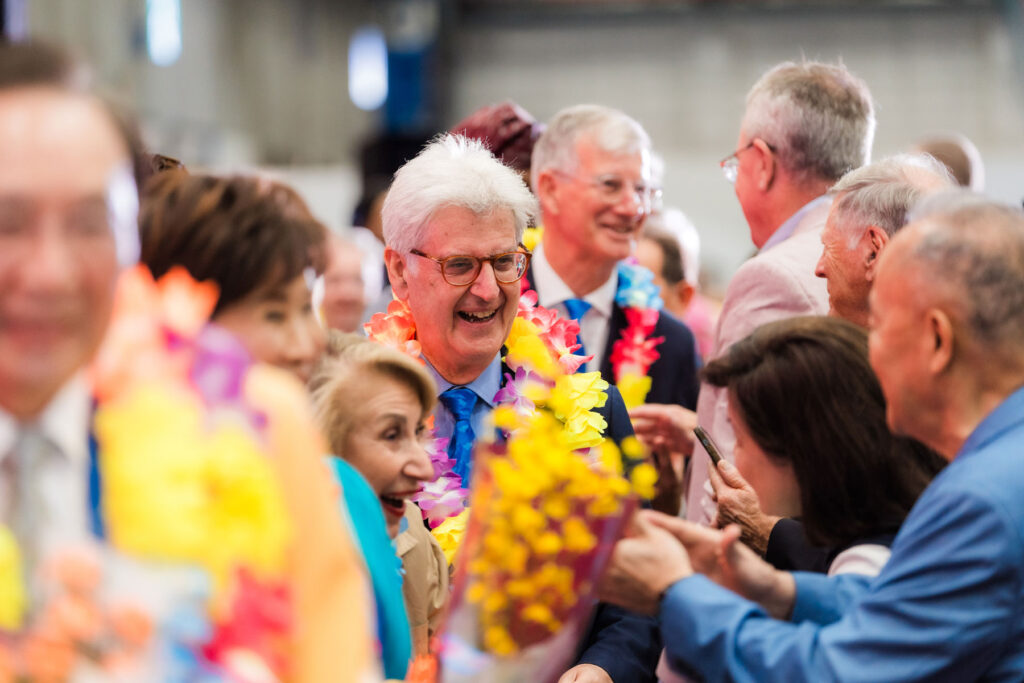
“Rotary conventions are powerful moments of unity, where people from every corner of the world come together to connect, celebrate service, and exchange ideas for a healthier, more peaceful future,” said RI President Francesco Arezzo. Describing the experience of meeting Rotary members throughout his term, he said, “Everywhere I went, I found the same spirit. Different languages, different food, different ways of welcoming a guest — but always the same Rotary heart.”
Reiterating that polio eradication is Rotary’s top priority, he said, “This year was difficult. Funding became harder. Governments faced new pressures. But our efforts on polio do not disappear because the world grows tired of hearing about it. We have to keep our promise to the world’s children.” He described visiting Pakistan to observe Rotary’s immunisation efforts and seeing a child about three years old who had been paralysed by polio. She used her hands to pull herself to join a group of children. “That little girl is why we cannot stop. We must finish because the next child is still waiting,” he said.
Taiwan President Lai Ching-te thanked the country’s Rotarians for bringing the world to Taiwan.
More than 100 humanitarian projects were on display at the exhibition centre, giving a firsthand look at innovative, long-term solutions to the world’s most persistent challenges.