


Leveraging the power of partnerships, a Rotary education initiative spearheaded by the Rotary Club of Pune Far East, RID 3131, titled Saksham, has emerged as a highly successful CSR-driven educational initiative which has taken e-learning to nearly 1,000 schools. It has positively impacted the way over 2.4 lakh students across Maharashtra and schools as far flung as Aizawl in Mizoram in the northeast India learn in underserved schools attended by students from poor families.
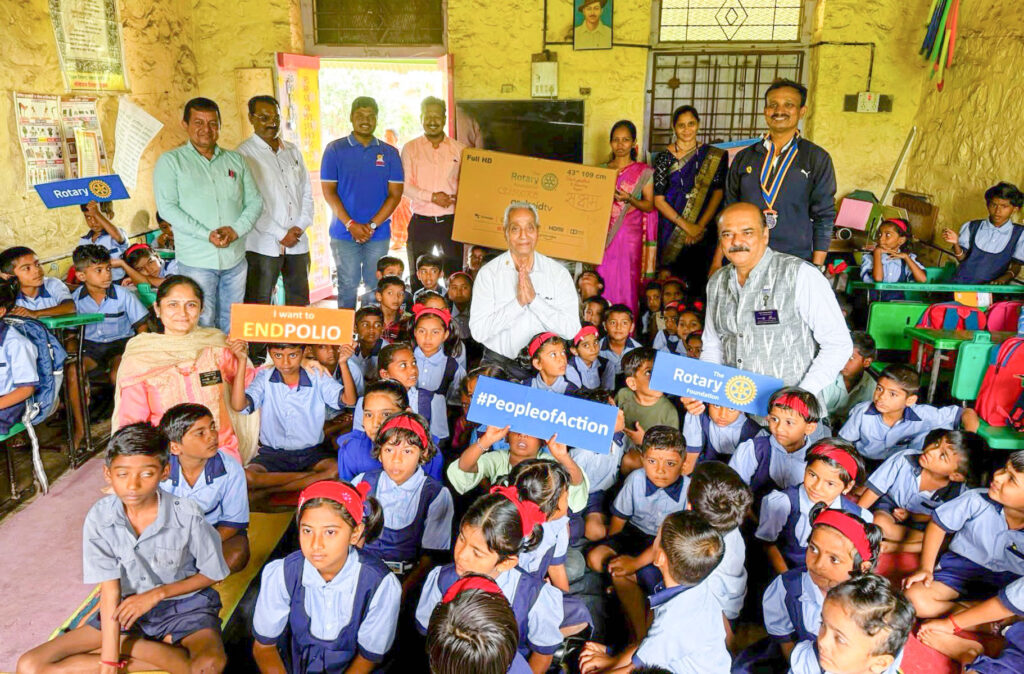
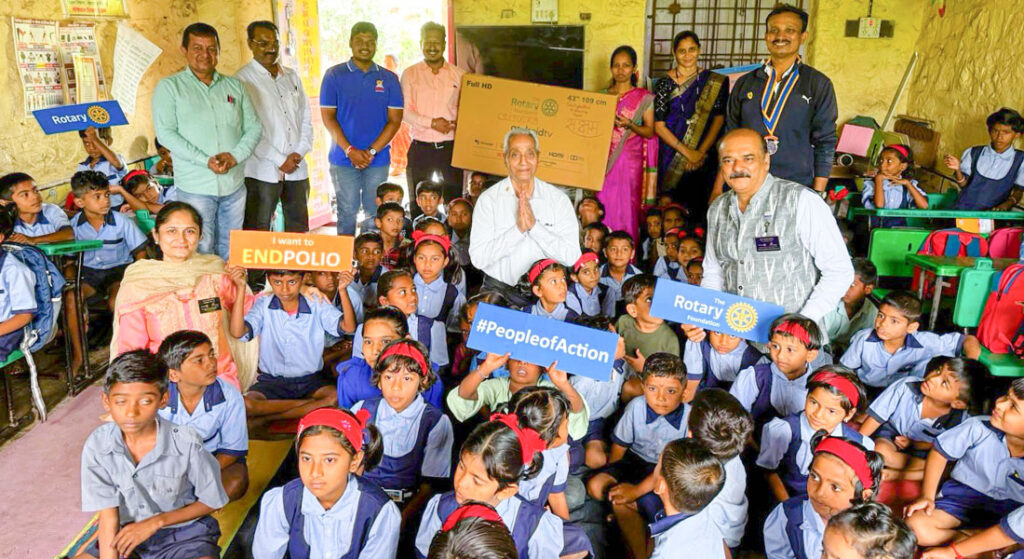
(kneeling, right) with club members at one of the schools where e-learning facility was provided.
Tracing the genesis of the project, past club president and project coordinator Pankaj Patel says the club’s Rotarians got the idea to give schools in remote and rural areas e-learning digital systems during Covid times, as schools had closed down and students were whiling away their time. “From the onset we made it a TRF-CSR project and found two major CSR partners in Suttatti Enterprises and Sahyadri Industries.”
The project continued after Covid too and under the project, schools were equipped with e-learning facilities, with each system costing around ₹50,000. “Our objective was to integrate technology with classroom teaching, thus creating bright educational opportunities for underprivileged children while strengthening the overall quality of education in rural communities,” he says.
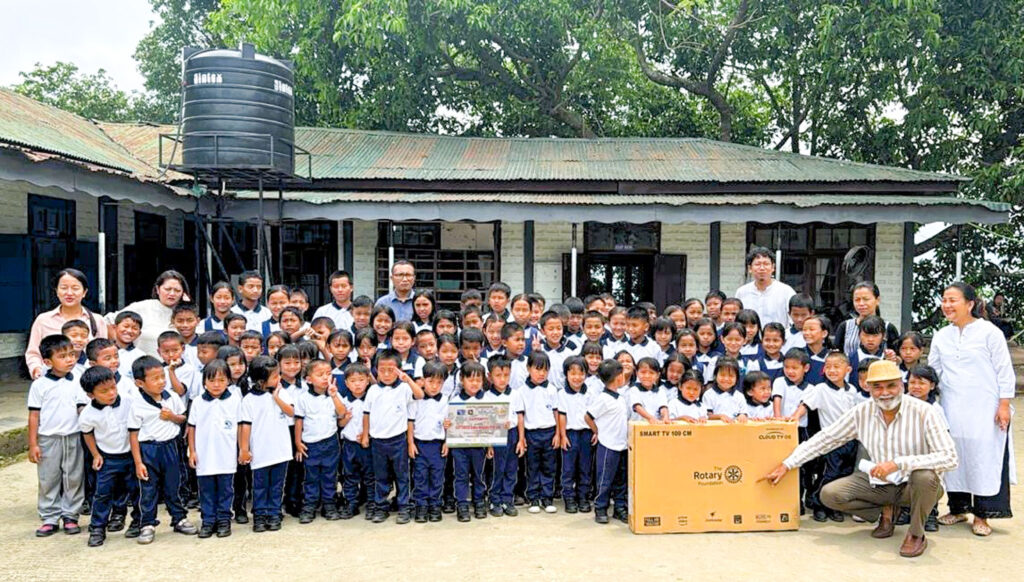
Towards this end, and with the objective to make this a “total Foundation-CSR project, we started contacting and including smaller clubs in remote/rural areas such as Indupur, Alibagh, Kolapur etc, which cannot carry out such projects on their own.” These club members were educated that when individual members donate small sums to the club for birthdays, anniversaries etc, even if a sum of ₹15,000 is collected, by becoming partners in this project, they could give any school of their choice a digital learning kit costing around ₹50,000, thanks to help from our Foundation’s CSR grants programme.”
Soon this flagship project, involving provision of digital e-learning classrooms equipped with curriculum-mapped audio-visual content, interactive learning tools, teacher training, and ongoing technical support to create an engaging and effective learning environment, gained traction.
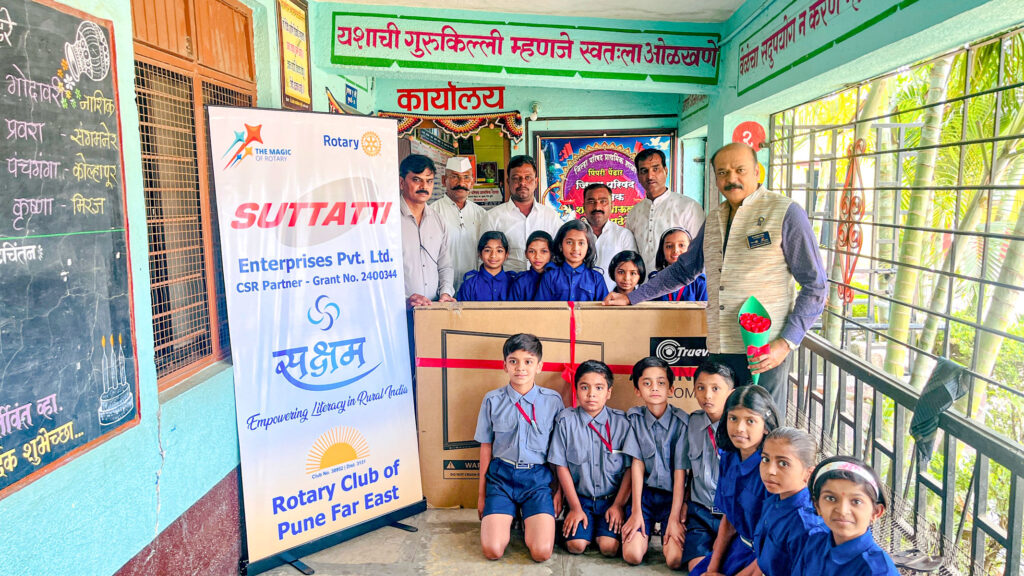
Over the years, “the project has successfully reached thousands of students across Maharashtra and other regions, helping bridge the digital divide and ensuring access to quality education. Through the installation of digital classrooms, students are able to learn complex concepts in mathematics, science, English, and other subjects through animations, simulations, videos and interactive activities, making learning more enjoyable and impactful,” says Patel.
One of the main corporate partners in this project is Sahyadri Industries, which has supported, in the last five years (2020–25), 627 digital e-learning installations in 513 schools, benefitting 1.3 lakh students every year.
The digital classrooms help students learn complex concepts in mathematics, science, English, and other subjects through animations, simulations, videos and interactive activities.
In this massive endeavour, 160 Rotary clubs have been involved.
Another CSR partner, Suttatti Enterprises, first gave CSR grants of $100,000 and then $26,000, twice. Patel says the core team of the project wanted to reach areas in India which are not yet covered extensively by Rotary. “We had Kashmir in mind, but then our CSR partner Suttatti Enterprises said that as the schools in northeastern parts of India also remain neglected and they would love to see us do something in that region. Hence, we chose schools in the Aizawl region to give digital classrooms.”
Thus e-learning systems were installed in some tribal areas in Mizoram, and at the inauguration of the project in Aizawl, Mizoram’s School Education minister Vanlalthlana said he was delighted to be part of the event where Rotary was giving schools in his state smart TVs which could change the lives of students. “We find that many times the difference between an average student and an extraordinary student is not intelligence. It is exposure, access, and whether the child gets the right learning environment at the right time. In a fast-moving world, we cannot be left behind in technology. A student studying in a small school in Mizoram deserves the same quality of learning as a student studying in New Delhi, Bangalore, Pune, or even New York.”
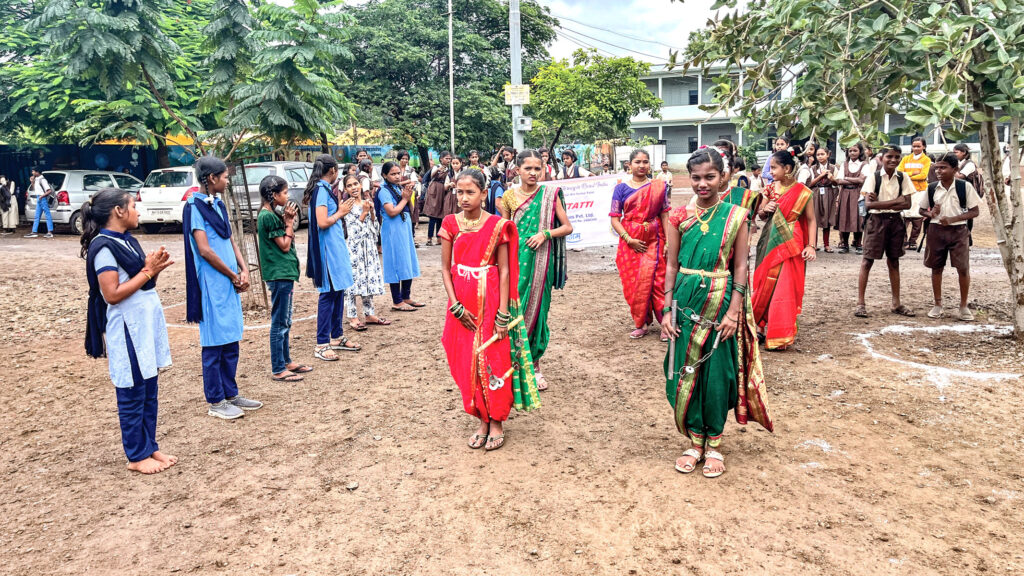
Technology can help reduce such a gap. That is why this initiative was very important. He disclosed that he was the first president of the Rotaract Club of Aizawl, and had set it up after returning from a Rotary Youth Exchange programme on the request of the Rotarians who had selected him for the RYE programme. He wasn’t even 18 then, but he started the club which organised a music concert. The year was 1996, and within three months the club had raised ₹1.5 lakh. Unfortunately, he changed his college and left the club, but was still invited for its meetings. Today, many members of that Rotaract club have become successful officers and businessmen, he disclosed.
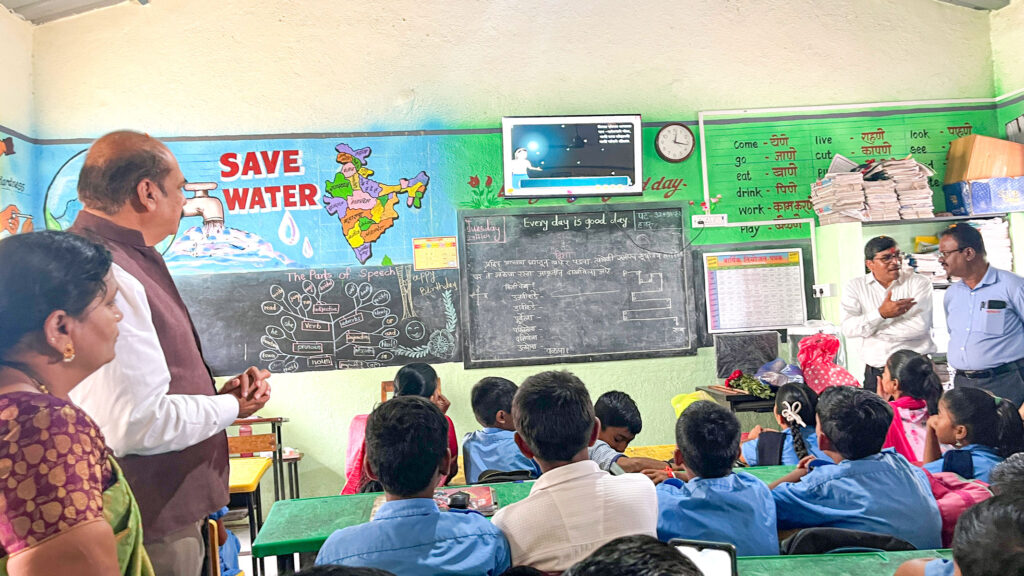
Thanking RC Pune Far East and Suttatti Enterprises for sponsoring e-classes at 10 schools in the region, the minister said the government alone cannot transform education. The community, organisations and corporates should work together to improve the future of the students. Today’s world was very different from the world they all had grown up in. “Those days, we didn’t have TVs in classrooms. The classroom is no longer limited to four walls; information is everywhere and competition is global. The future will belong not to those who memorise facts, but those who can think, adapt, communicate and create, and look beyond textbooks.”
The way technology was being used was very different in present times. Vanlalthlana said he himself was on Instagram, monitored it regularly and downloaded interesting videos which he often showed to youngsters at meetings he addressed. The challenge before teachers today was to make adequate use of technology to keep their students engaged. Today, teachers have an additional power, that of technology, which they’ll have to learn to use it to their advantage. He assured teachers that technology would never replace them, but they should get mileage from it, making optimum use of AI.
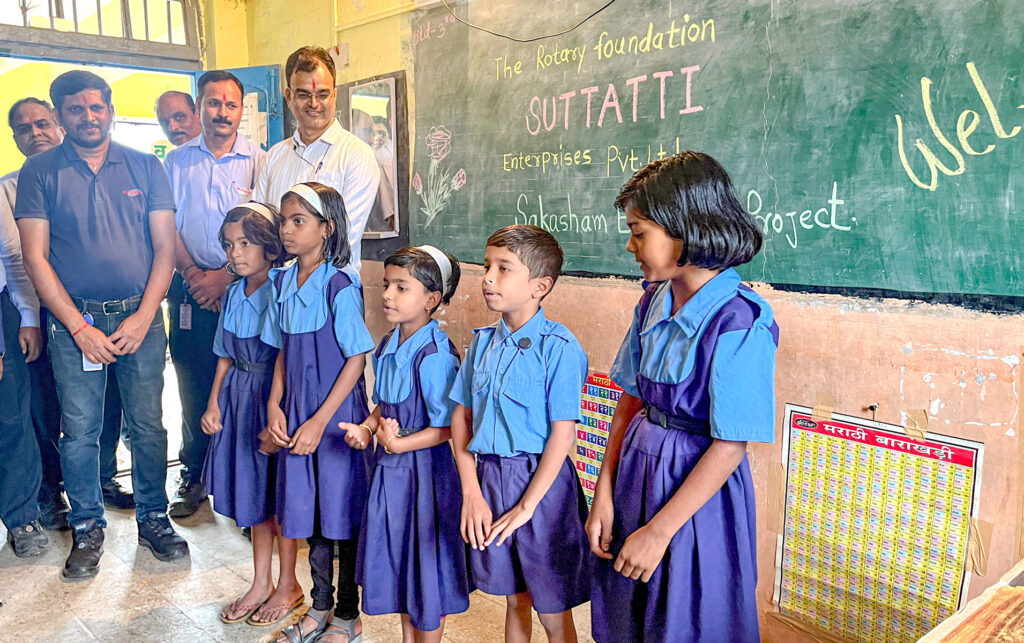
Patel said the club members were very happy to install e-learning sets in schools in the northeast on the wishes of their CSR partner. “It was a sheer joy to see the happiness these e-learning kits had brought to the tribal children. We were really happy to see a little girl, whose leg has been amputated, dancing merrily after experiencing learning on the TV set.”
Now their donor company has agreed to give us more CSR funds; Stuttatti Enterprises has already supported in the last five years 650 digital installations in 484 schools, benefitting over 1.11 lakh students. Here too 164 Rotary clubs were involved in implementing this project.
The combined impact of Saksham has been the installation of 1,277 digital learning systems in 997 schools, reaching e-learning to over 2.41 lakh students, added Patel.
This education programme, he added, has enhanced student understanding through animated and interactive content, improved attendance, participation and learning outcomes, and helped teachers to adopt technology with ready-to-use digital teaching resources in rural and government schools. “Though this initiative, we hope to gradually reduce educational disparities between urban and rural students and create a sustainable digital learning ecosystem.”
Giving the last word to the minister from Mizoram, who while thanking Rotary for its initiative in Mizoram said: “Years from now, one 15-year-old child from this programme may become a scientist, an entrepreneur, a teacher, an artist or a leader. You may never fully realise how many lives you are touching through this initiative. The learning, the experience and the help that you have given them will determine where they go.”
1 Comment
A remarkable initiative by RC Pune Far East to bring the benefits of digital learning to children in the North East. And yes, as the minister says, years from now, a child from this program may achieve great heights. A truly wonderful program by Rotary.