





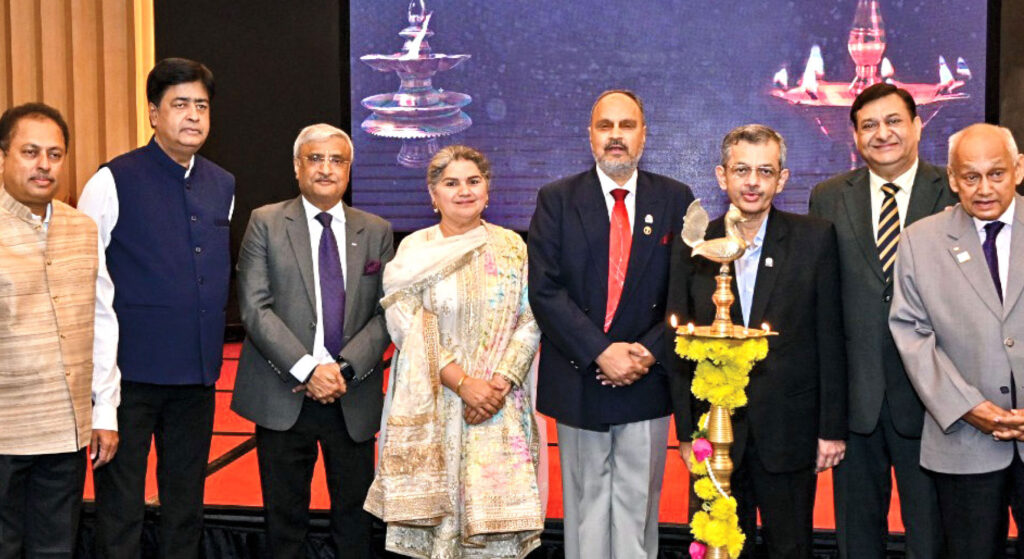
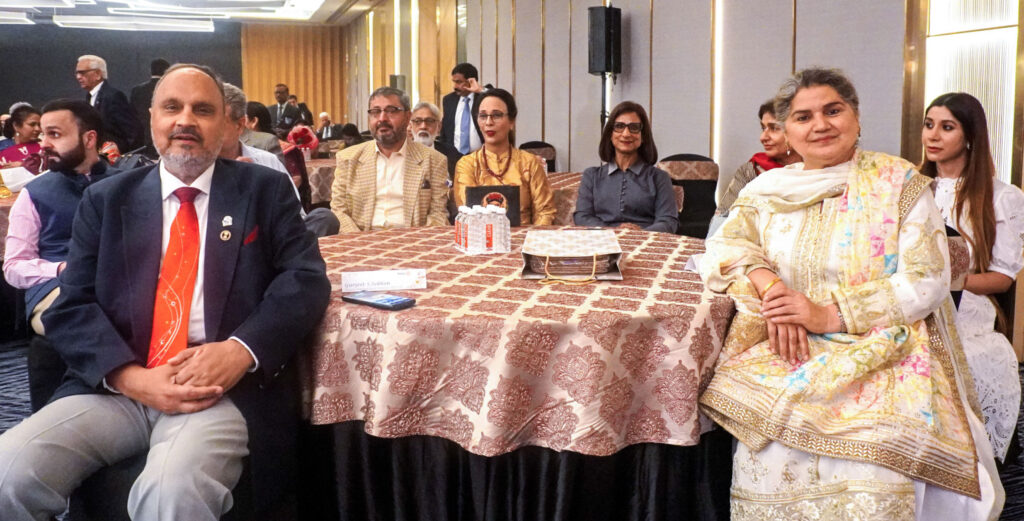
Warm applause and fond anecdotes marked the felicitation of Gurjeet Singh Sekhon in Amritsar, on his election as RI director for Zones 4 and 7 for 2027–29. Rotary leaders from across India described him as a thoughtful, analytical and humble leader who will represent India with distinction on the global Rotary stage. Sekhon served as governor of RID 3070 for 2014–15.
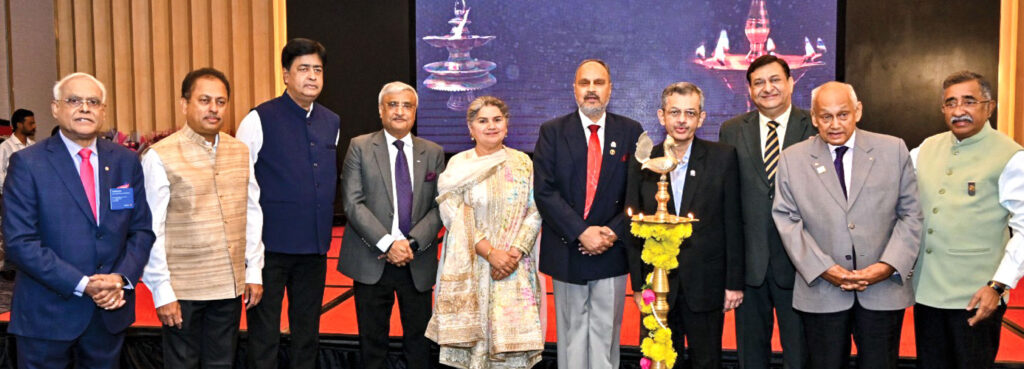
Congratulating him, PRIP Kalyan Banerjee said that serving on the RI Board “would expose you to some of the finest leaders from around the world and provide you with perspectives that broaden leadership thinking. A country like ours will give you the best of times, and the most difficult times as well, during your two years. But your leadership should ensure that India is always on balance, and Rotary will depend on it.” He added, “If your spouse is by your side, it will enhance your ability and multiply your successes tremendously.”
Offering a personal glimpse into their journey, his wife Amandeep spoke warmly about her husband’s life and values. The son of a soil scientist, Sekhon studied agriculture in Ludhiana before beginning his career in the corporate sector and later turning entrepreneur in Amritsar. His Rotary journey began in 1994 as a charter member of RC Amritsar Civil Lines. She said, “the opportunity to serve as an RI director will allow him to apply his leadership abilities for Rotary’s larger good.”
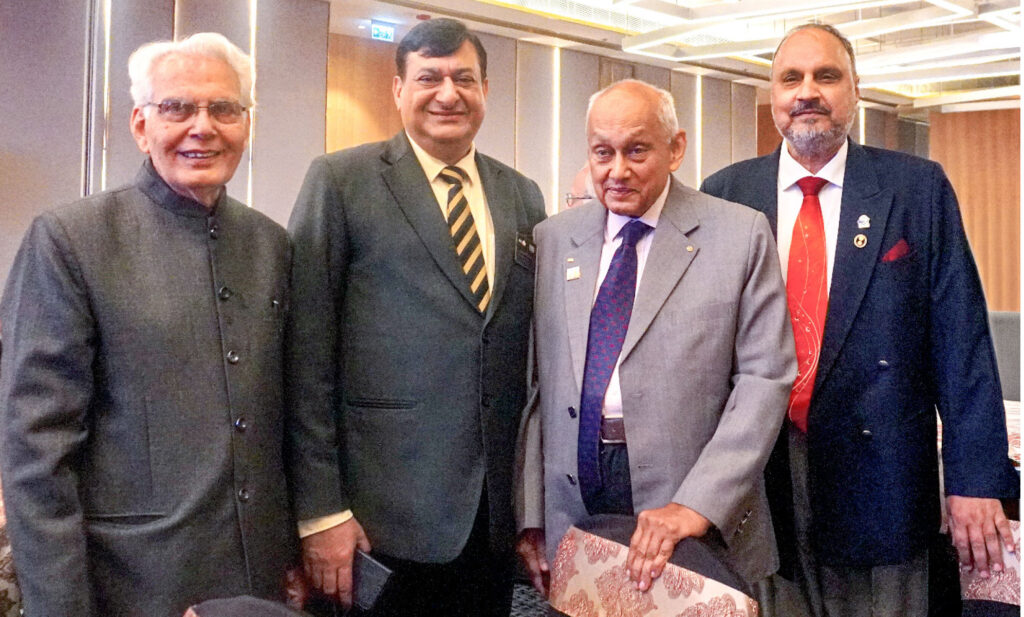
Recalling discussions on membership strategies and organisational data, PRID and TRF trustee-elect A S Venkatesh said Sekhon’s hallmark was “meticulous preparation and analytical thinking, and his willingness to listen, learn and unlearn — a trait that distinguishes strong leaders.”
For PRID Raju Subramanian, Sekhon’s defining traits are precision, discipline and passion for training leaders. He recalled his role in organising learning programmes for governors-elect, where “his attention to detail and relentless follow-up ensured excellence. Leadership for Gurjeet is not about personal importance but about collective success.”
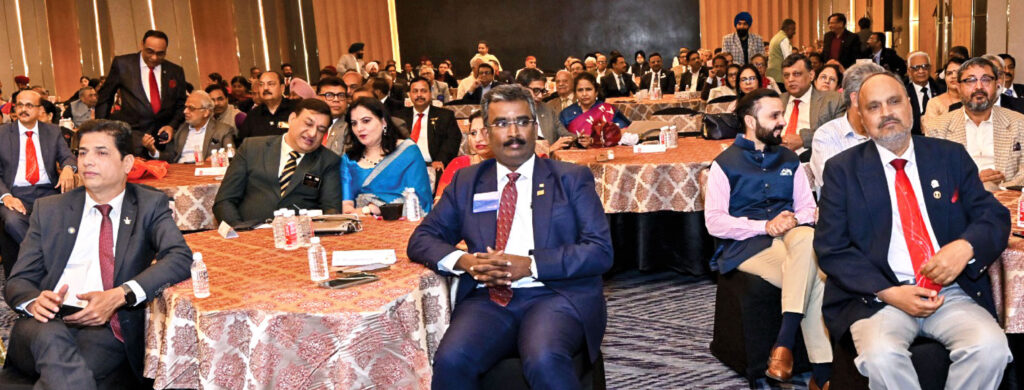
Drawing parallels with athletes who achieve extraordinary milestones, TRF trustee Bharat Pandya said Sekhon possessed the “three Cs” necessary for leadership — commitment, competence and courage. Pandya urged him to remain focused on strengthening Rotary clubs, emphasising that Rotary’s real strength lies at the grassroots level.
Through a video message, PRID C Basker said Sekhon’s journey reflected a blend of compassion and competence. From strengthening membership and service initiatives to nurturing youth leadership, his work has consistently inspired Rotarians around him, he noted.
PRID Anirudha Roychowdhury expressed confidence that Sekhon would bring thoughtful leadership and ethical governance to Rotary at a time when it is redefining its role in a rapidly changing world. PRID Mahesh Kotbagi emphasised his dedication to membership development and unanimous selection for the role, calling it a recognition of years of committed service.
Members give their time, resources and trust. We must respect that.
RI director M Muruganandam highlighted the need for membership growth, stronger collaboration with governments, and greater global visibility for India within Rotary. RI director K P Nagesh said Sekhon’s passion for membership development would contribute to the long-term goal of expanding Rotary’s presence in India.
RIDE Basu Dev Golyan (Zones 5 and 6) from Nepal was present at the event. Sekhon’s batchmate governors wished him good luck. “Gurjeet’s election as RI director is not just a personal milestone, but a proud moment for the entire district,” said DG Rohit Oberoi.
Responding to the felicitations, RIDE Gurjeet Sekhon expressed deep gratitude to PRID Raju Subramanian and trustee Bharat Pandya for encouraging him to take up the new assignment, and his mentor PDG Avinash Mohindru.
“Leadership is not about managing a year or a tenure. It is about strengthening an institution,” he said, noting that while Rotary’s leaders change every year, the organisation’s systems and values must remain stable and enduring. He outlined eight structural shifts that he believes will determine whether Rotary grows intentionally or “drifts comfortably.”
The first, he said, is moving from individual-dependent functioning to process-driven systems. While Rotary often celebrates dynamic leaders, institutions cannot rely on individual brilliance alone. “We must move from individual brilliance to institutional excellence, and the processes must outlast people,” he said.
Next, he called for “professionalising learning and leadership training. Stronger training will ensure that Rotary develops capable leaders at both club and district levels.”
Leadership is not about managing a year or a tenure. It is about strengthening an institution.
Another shift he highlighted was prioritising content over crowd. “Attendance alone does not create impact. Value does. We must re-look at Disha and re-examine our zone institutes.”
Sekhon also stressed the need to broaden participation in TRF- giving. Rather than focusing only on total contributions, Rotary must increase the percentage of members who give. “Every non-giving member is not an untapped donor; he is an untapped believer,” he said, calling for a culture where giving reflects shared commitment.
On projects, he emphasised stronger stewardship and time-bound global grants, ensuring that initiatives remain sustainable long after funding ends. “Clubs and districts must remain in touch with the beneficiaries much after the global grants are over. Long-term sustainability must become a mantra for us.”
Rotary must also invest more seriously in leadership development and club viability, he cautioned, warning that without nurturing new leaders, “we will decline. As top leadership, we need to ask ourselves, are we preserving Rotary’s reputation or quietly diluting it?”
He further advocated structured mentorship across districts and clubs and highlighted member engagement and belonging as the core of Rotary’s sustainability. Retention, he said, is not merely numerical but emotional. “Members give their time, resources and trust. We must respect that. Membership satisfaction cannot be an annual exercise; it must be a continuous engagement. Then we will not need to chase the growth; it will happen organically,” he said.