




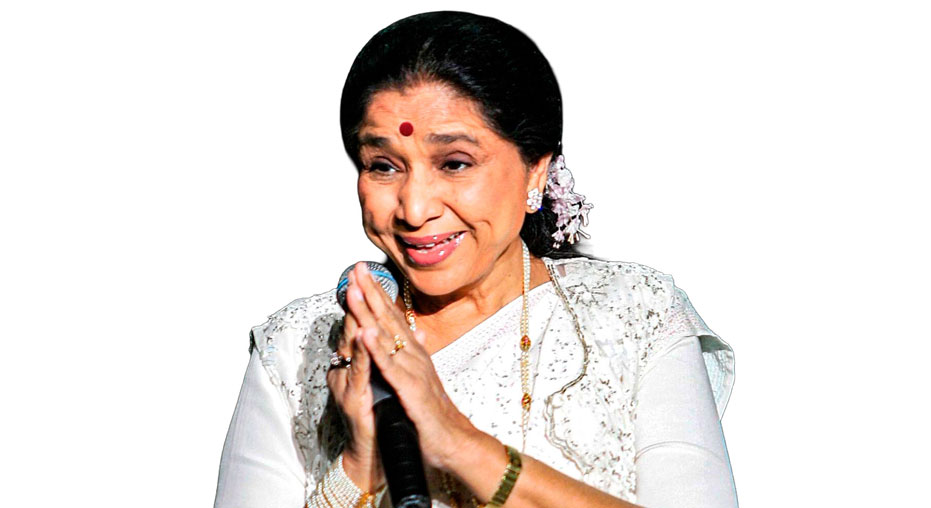
The word asha means hope. For seven decades, Asha Bhosle’s spirit of joie de vivre energised and entertained millions of music lovers with songs of hope. But her voice was stilled on April 12, 2026 at the age of 92.
Let’s recall the voice of hope — and of energy, sensuality and oomph — by naming a handful of the thousands of songs that hypnotised India. (Nearly 20,000 in 20 languages according to a recent estimate.)

Dum maro dum (Hare Rama Hare Krishna,1971)is one of the most impactful songs of all time! Kishore Kumar said it was so powerful that it could bring a dead person back to life!
Aayiye mehrban (Howrah Bridge, 1958), the nightclub song that wowed the world! Asha’s voice captured the impishness and mischief that Madhubala radiated, which invited comparisons with Marilyn Monroe.
Abhi na jao chhodkar (Hum Dono, 1961, Asha-Rafi, Jaidev). A song that will be sung so long as romance lives, said Dev Anand.
Jaaiye aap kahan jayenge (Mere Sanam, 1965, O P Nayyar). Effervescent, ageless, enchanting. Her didi Lata Mangeshkar’s favourite. Lata frequently hummed this song and complimented Asha on her rendering.

Aaja aaja,main hoon pyar tera (Asha-Rafi, Teesri Manzil, 1966, R D Burman). An electrifying action-packed song, When Asha sang for Helen, it was music mayhem. This one marked a turning point in Bollywood’s rock and roll history. The hurricane tempo made viewers and listeners dizzy.
Chura liya hai tumne jo dilko (Yaadon Ki Barat, 1971, R D Burman). Zeenat Aman dazzled, Asha Bhosle sizzled, in this “princess of love songs”.
Versatility was the mantra of the Asha mystique. Her talent poured out in every genre of music — pop and jazz, ghazals, bhajans, qawwalis, folk songs, classicals and Rabindra sangeet. And she gave melodious expression to every mood. She was the voice behind the twinkle-toed brilliance of cabaret queen Helen in Piya tu ab to aaja (Caravan, 1971), the worshipful serenity of Meena Kumari in Tora man darpan kahlaye (Kaajal, 1964), the heart-rending melancholy of a prisoner’s lament in Ab ke baras bhejbhaiyya ko babul (Bandini, 1963), the romantic abandon of Asha Parekh in O mere sona re sona re sona re (Teesri Manzil, 1966). “Asha’s voice can change its colour like a chameleon,” Gulzar remarked once.

No wonder Asha won honours aplenty. Two national awards for best playback singer and seven Filmfare awards; a special Filmfare award for her songs in the 1995 Rangeela, and a Filmfare Lifetime Achievement Award in 2001. Special honours included the Dadasaheb Phalke award in 2000, a BBC Lifetime Achievement Award in 2002 (presented by then UK Prime Minister Tony Blair), and a Padma Vibhushan in 2008. In all, she bagged a few hundred awards, major and minor.
Versatility was the mantra of the Asha mystique. Her talent poured out in every genre of music — pop and jazz, ghazals, bhajans, qawwalis, folk songs, classicals, Rabindra sangeet.
Musicologist Pandit Ashok Ranade described Asha’s voice as “vibrant without a trace of tremble; it is quick-moving without being slippery; it covers high and low ranges with equal ease and expression; it is full of tone, yet does not lack in feminine grace.”
Asha was born in 1933 in Sangli, Maharashtra, a town of goldsmiths and sugar refineries. Her father, Dinanath Mangeshkar, owned a travelling theatre company that performed in small towns of Maharashtra. “My whole education was watching actors and singers perform,” she once said.
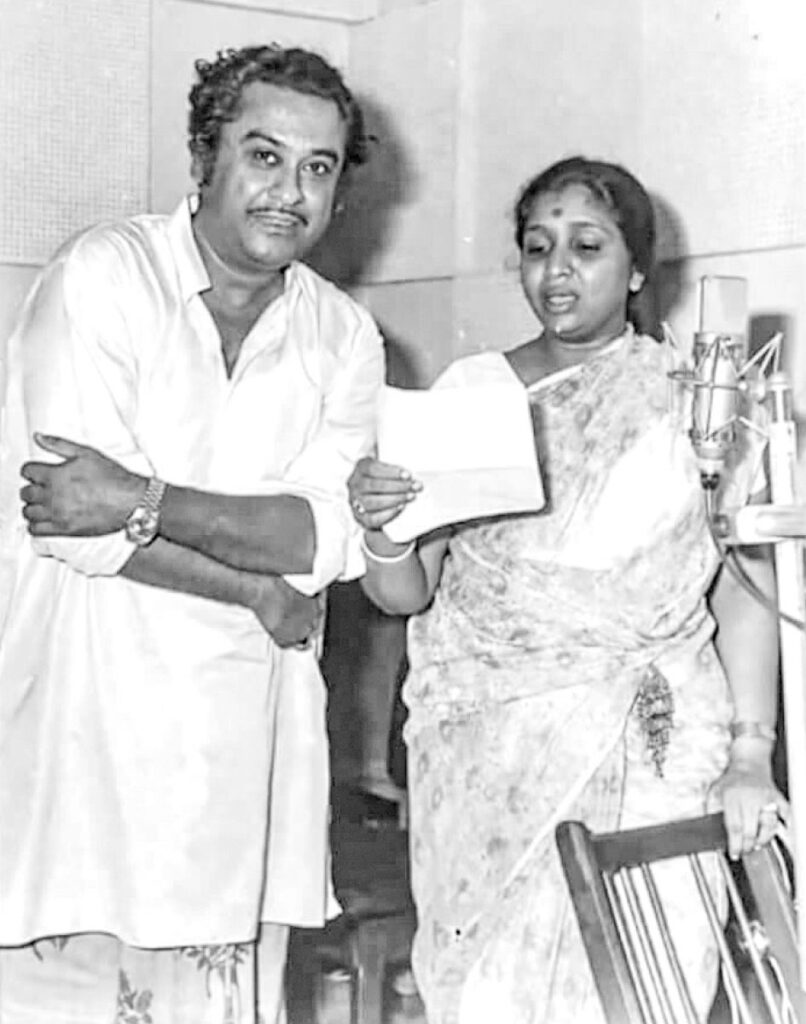
Asha was nine when her father died in 1942. Lata became the family breadwinner through playback music, and Asha helped out. In 1949, when Asha was 16, she made the worst blunder of her life, getting into an abusive and exploitative marriage. She walked out of it in 1960, after two children, while being pregnant with a third.
The early 1950s were a nightmare for Asha, as she was the one who kept her family afloat, while being jobless. She struggled for music assignments, and worked herself to the bone, accepting any music crumbs that fell her way — such as cabaret and nightclub songs for Helen and Bindu. Lata, on the other hand, had become a sensation after the 1949 Mahal and Barsaat and had acquired a god-like status in Bollywood. This didn’t benefit Asha, who was too proud to ask her sister for help. She tried to cultivate her own singing style, distinct and different from that of Lata. She heard and absorbed a lot of western music, empathised with the Beatles, Michael Jackson, Frank Sinatra and her favourite Barbara Streisand.
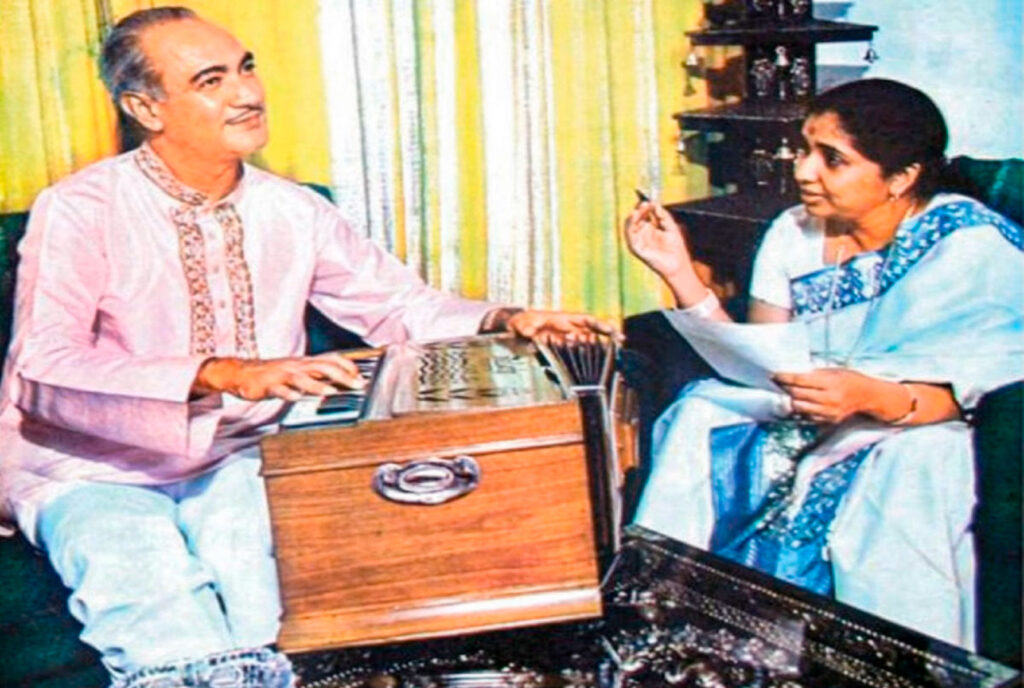
The year 1957 was transformative for the singer; she got to sing for S D Burman in two Dev Anand films (Nao Do Gyarah and Paying Guest). More importantly, she sang for O P Nayyar in the 1957 blockbuster Naya Daur, which starred biggies like Dilip Kumar and Vyjayanthimala. Songs like the Asha-Rafi duet Maang ke saath tumhara were huge national hits.
The Asha-Nayyar partnership grew and flourished. According to music critic Raju Bharatan who wrote a biography of Asha, Nayyar said that for many years Asha suffered from a Lata complex and he helped her combat it. He once got Asha to sing a Bade Ghulam Ali Khan thumri, secretly taped it and played it back to her. She herself was amazed at how good she sounded!
Asha heard and absorbed a lot of western music, empathised with the Beatles, Michael Jackson, Frank Sinatra and her favourite Barbara Streisand.
The Asha-Nayyar combine created 324 songs in some 70 movies, some of them songs of intoxication and lilting melody — in films like Howrah Bridge, Ek Musafir Ek Hasina, Phir Wohi Dil Laya Hoon, Kashmir Ki Kali, Kismat. Nayyar said he needed “a powerful full-throated, sensuous voice” for his music, and he found it in Asha.

The two had a live-in relationship for 13 years. It ended in 1972 following several differences and ego issues. The emotional turmoil in her life was captured in the song Chain se hum ko kabhi (Pran Jaaye Par Vachan Na Jaaye, 1971.)Asha’s tearful voice and the ineffably beautiful melody make you close your eyes and listen in silent ecstasy. The song won a Filmfare award for the best song — but Asha got the song deleted from the film. She refused to accept the award. Nayyar accepted it at the Filmfare award function on her behalf — but threw the award statuette into the Arabian Sea while returning home. It was a bitter parting. Nayyar didn’t recover professionally from Asha’s exit, but her career thrived.
The R D Burman phase
R D Burman (Pancham) entered Asha’s life professionally in 1966 with the sensational Teesri Manzil, and its unorthodox songs and sounds which demonstrated his genius. Asha’s splendid solo O mere sona re sona re sona in Teesri Manzil captivated critics and laymen alike. A string of Pancham-Asha chartbusters followed — the sprightly Piya tu ab to aaja in Caravan (1971), the epoch-making Dum maro dum in Hare Rama Hare Krishna (1972), and the heart-stealing Chura liya in Yaadon Ki Baarat (1973).
O P Nayyar once got Asha to sing a Bade Ghulam Ali Khan thumri, secretly taped it and played it back to her. She herself was amazed at how good she sounded!
Pancham was the top composer of the 1970s. He enriched and invigorated Asha’s career. It was a marriage of music and companionship. “I didn’t marry Asha, I married her voice,” said Pancham. Both had eclectic tastes. They would sometimes listen for hours at night to music of all genres — folk, pop, jazz, Bismillah Khan, the Beatles, Latin, Arabic, Bengali folk. Asha would say “Let me go to bed, you’ll get up only at 11am but I have a recording at 10am.”
After Pancham
Pancham’s death in 1994 was a massive blow for her. Further tragedies were to come. She doted on her children. In 2012, daughter Varsha, who was 56, committed suicide by shooting herself when Asha was in Singapore. In 2015, her second son Hemant died of cancer in Scotland at 66. In recent years till her own death in April, Asha’s family consisted of elder son Anand, his daughter Zanai Bhosle, 24, and her twin brother Ranjai. “Zanai is my life, Meri jaan hai,” Asha said.

She remained resilient as a singer, making a splash with the 1995 Rangeela. Singing for Urmila Matondkar under the baton of A R Rahman, she sang two expressive songs of youthful longing and playful sensuality — Tanha Tanha and Rangeela Re. She won a special Filmfare award for the film.
In 2001, she sang the elegant and classic Radha kaise na jale for actress Gracy Singh in Amir Khan’s award-winning Lagaan. A R Rahman’s composition blended classical Indian rhythms with folk influences, and Asha sounded 28 rather than 68.
I’ve enjoyed my life. There has been great tragedy but also moments of great happiness. If I were to replay my life, I would do it all over again.
In 1996, Asha produced Rahul and I, a remix of songs she had done with R D Burman. She disliked the remix business but put this album together to prevent someone else from coming up with a terrible remix.
International concerts and collaborations
During the 1980s and 1990s, Asha went globe-trotting and staged several concerts in the US, UK, Canada, UAE and other countries. She performed to wildly cheering audiences who were very familiar with her work. These were the first of several foreign tours for live shows.
Asha engaged in several international music collaborations. In 1991, for example, British singer and song-writer Boy George produced a single titled “Boy George Sings, Bow Down Mister”. It consisted of colourful visuals from the Mahabharata, Asha’s recitation of verses from the Gita, and Boy George’s own interpretation of Indian spirituality.
Says Asha about herself: “I’ve enjoyed my life. There has been great tragedy but also moments of great happiness. I’ve taken both in my stride, and if I were to replay my life, I would do it all over again.” A statement characteristic of Bollywood’s most innovative, prolific, versatile and resilient singer.
S R Madhu is a senior journalist and a member of the Rotary Club of Madras South.