
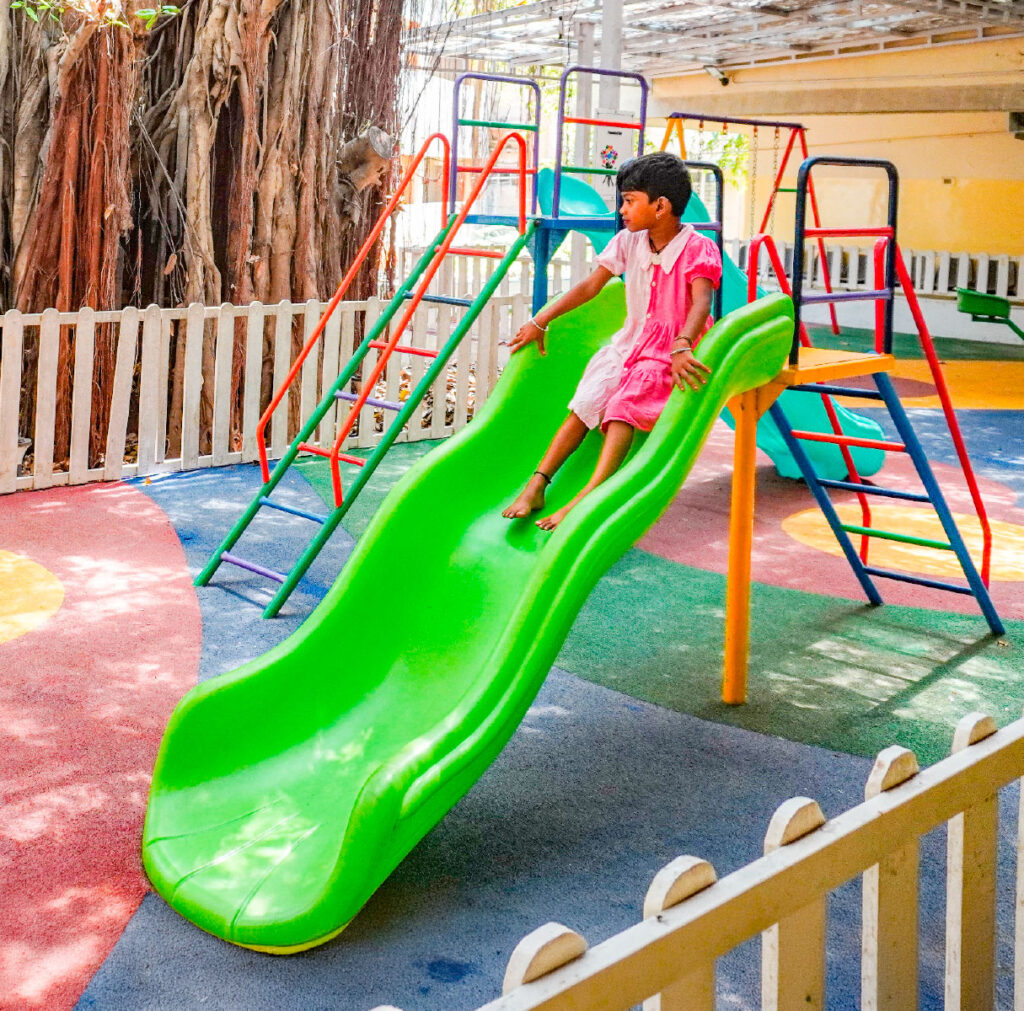
Seated beneath a shed where the trunk of a sprawling banyan tree rises through the roof, a pregnant woman waits quietly at the Rotary Central TTK VHS (Voluntary Health Services) Blood Bank in Chennai. Every now and then, she calls out to her five-year-old daughter, who is absorbed in the delight of climbing up and sliding down a slide in the play area near the waiting area.
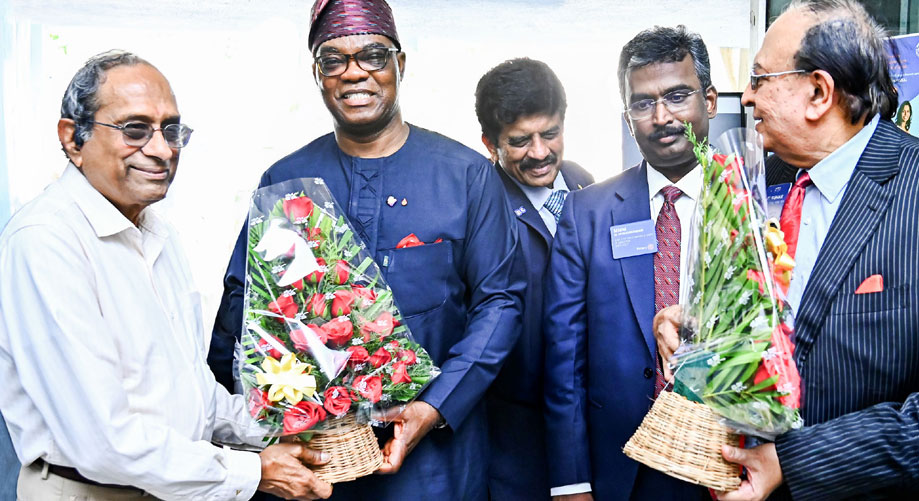
Referred from a hospital in Adyar, she has come to receive blood to manage iron deficiency during her second pregnancy. One hand resting gently on her stomach, she says, “Here, the process is straightforward and free. It was easy to apply and receive the blood. We didn’t have to spend anything. Since treatment at a private hospital is expensive, we came here.” Her daughter continues to play, untouched by the weight of their circumstance. This care and dignity are exactly what RIPE Olayinka Babalola had come to witness in action.
Over the years, other Rotary clubs, including Chennai Thiruvanmiyur and Madras East, have contributed equipment, upgraded operating theatres, and supported diagnostic services, strengthening VHS’s ability to serve low-income communities.
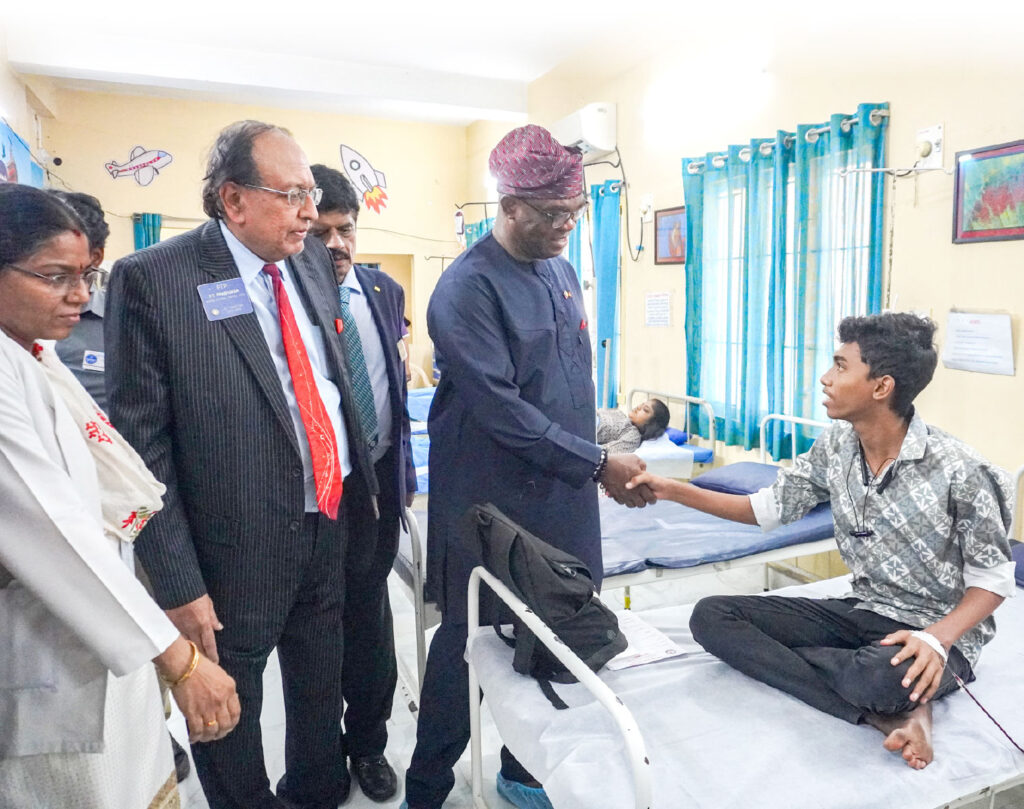
During his visit, Babalola met a 20-year-old who has depended on regular blood transfusions since being diagnosed with thalassemia as a child. For nearly ten years, he has been coming to the blood bank twice every month — each visit essential to keeping him alive.
Moved by the interaction, Babalola said, “When you meet someone like him, you understand why this work matters. This is not just service, it is life itself. Rotary has given this young man life. Every donation, every effort that is made by Rotarians is the reason someone gets to keep going.”
Started in 1962 under Dr K S Ranganathan, the blood bank has, from the beginning, promoted voluntary blood donation. It is licensed, screens every unit for infections, including HIV and hepatitis, and operates around the clock with trained medical staff and technicians. It also runs blood donation camps across the city — 167 camps in a single year, collecting nearly 15,000 units. Its services are structured around access. Blood and components are given free to patients with haemophilia and thalassemia, regardless of income. General ward patients receive blood at subsidised rates.
Much of this capacity has been strengthened through Rotary’s long association with VHS. In the 1990s, a three-way partnership between VHS, the Rotary Club of Madras Central, and TTK helped modernise the blood bank. Rotary secured a $300,000 grant for equipment, raised additional funds, and contributed to building the current 8,000sq ft facility. VHS provided the land and continues to run and staff the centre, while TTK supported equipment and operations. PRID P T Prabhakar, who was closely involved in setting up the facility, and who briefed Babalola on the details, describes it as “a partnership built on shared responsibility.”
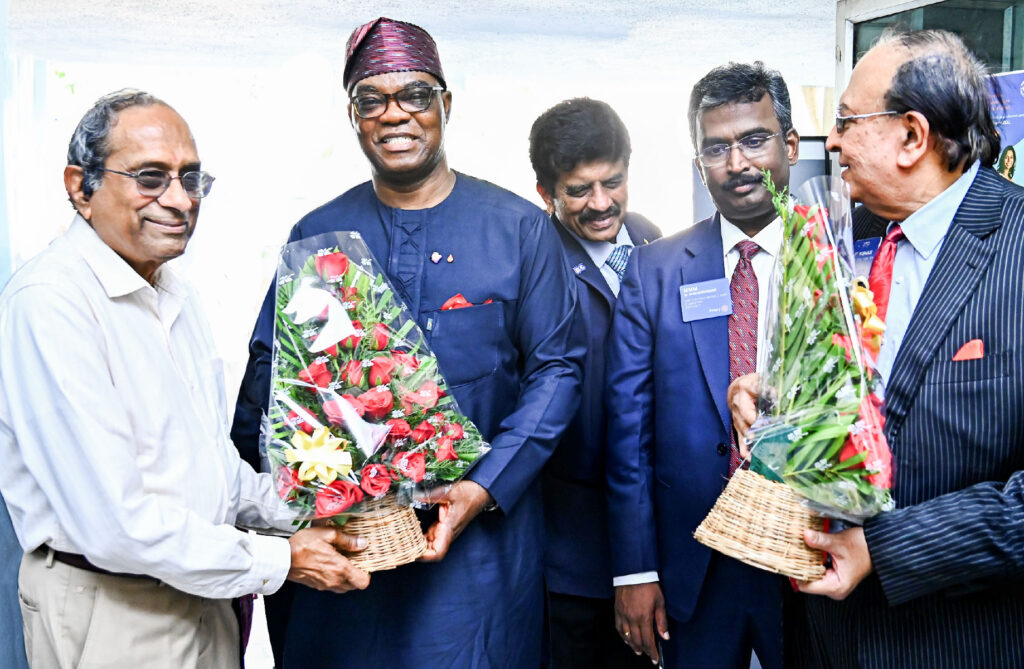
RI Director M Murganandam, DG Vinod Saraogi and PDG J Sridhar accompanied Babalola.