

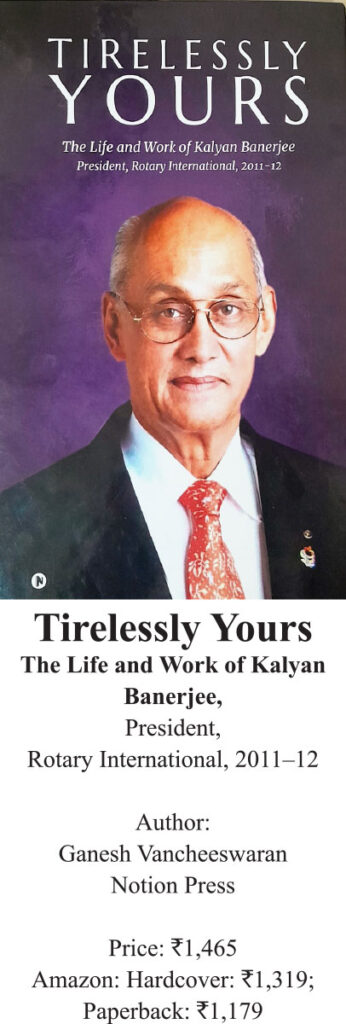
He was born on a makeshift bed under a staircase in his grandmother’s home in Calcutta, even as threats of bombs landing from Japanese forces during World War II loomed large. He was sent to a boarding school at the young age of six due to parental discord, only to be moved again to another school over 1,200km away from home. Past RI President Kalyan Banerjee’s early years could have resulted in limitations, but instead, they built resilience. Through the 200-odd pages of his biography titled Tirelessly Yours – the life and work of Kalyan Banerjee, written by Ganesh Vancheeswaran, what we come across is a journey of a fighter, who prefers to look within, believes in himself and takes action.
From marrying Binota, a girl of his choice, going against the family’s wishes due to financial, educational and caste background of the girl to opting for a small 10-year-old firm to starting a career after graduation from a prestigious institution like IIT Kharagpur, or leaving the bustling city of Mumbai, most suitable for one’s professional growth, to join a new company in an indescriptive tiny place called Vapi (in Gujarat), Banerjee has always believed in himself and his strengths, this book tells you.
What makes him stand out from other successful people is his compassion towards fellow humans and his tireless efforts to not just look beyond himself but act upon it as he continued to grow in his profession.
Schooling in three different institutions, the young student made the best out of each of those schools. From mastering stage through poetry recitations and elocution at Tagore’s Shantiniketan, learning life etiquettes in Lady Hartley, a British school, to honing public-speaking skills at the Scindia Public School in Gwalior, Banerjee, a boy with a twinkle in his eyes, as fellow schoolmates recall, excelled in many fields during his early years.
The young Banerjee was a favourite of the senior boys at Shantiniketan, also for another interesting reason — he was adept at carrying their love letters to the girls’ hostel located two blocks away!
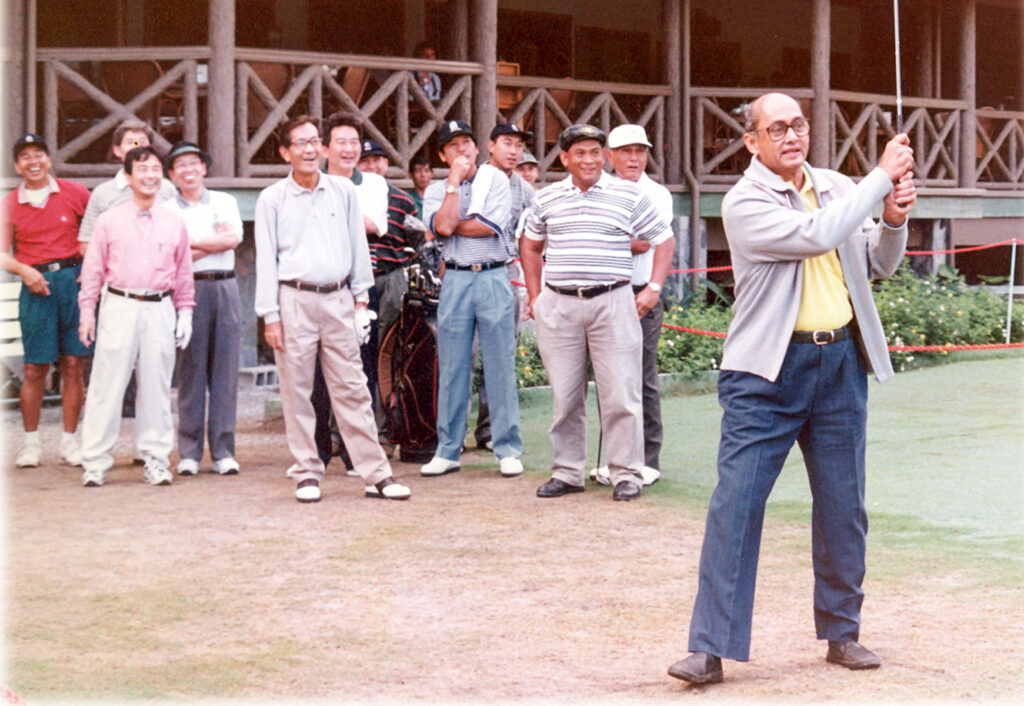
While Shantiniketan laid the foundation of ideals and ethics, the Scindia School developed love for sports in young Banerjee. An athlete and a good football and hockey player, he is a big supporter of the East Bengal football team.
He also stood first in the Senior Cambridge Exam at the Scindia School. His friendship with the late former Union minister Madhavrao Scindia and sitar maestro Anand Shankar, forged at the school, played an important role subsequently in his life.
In 1960, he secured admission to IIT Kharagpur. After graduating in Chemical Engineering from IIT-K, Banerjee took a bold decision on the advice of his cousin to join a fairly new company in Mumbai, Excel Industries, owned by K C Shroff.
Impressed with his talent and hard work, Rajnikant, Shroff’s cousin, invited Banerjee to join the founding team of a new company from scratch in the small town of Vapi in Gujarat. Here too while his father was unhappy over his decision to leave Excel Industries, the young man stuck to his decision, shifted to Vapi and gave his best for building a new company, United Phosphorus Ltd (UPL).
That was in 1967; ever since Rajju Shroff and his wife Sandra Shroff, the founders of UPL, have been mentors and great supporters of Banerjee both in his professional and Rotary life. Moving on, Banerjee continued to accept new challenges, proved his mettle and helped UPL grow across India, and eventually at the global level.
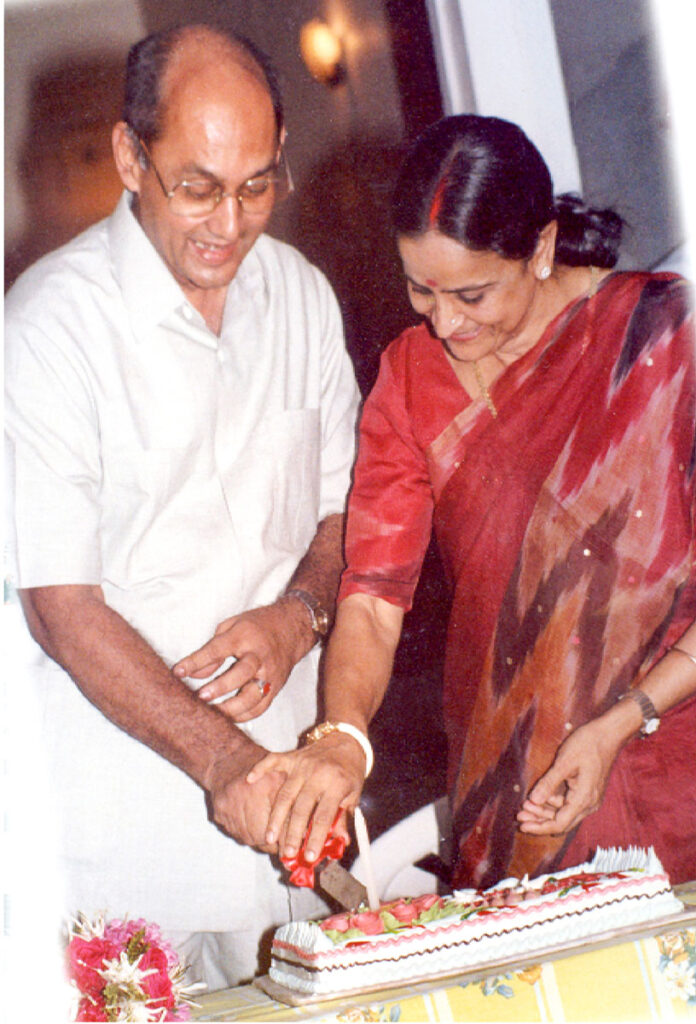
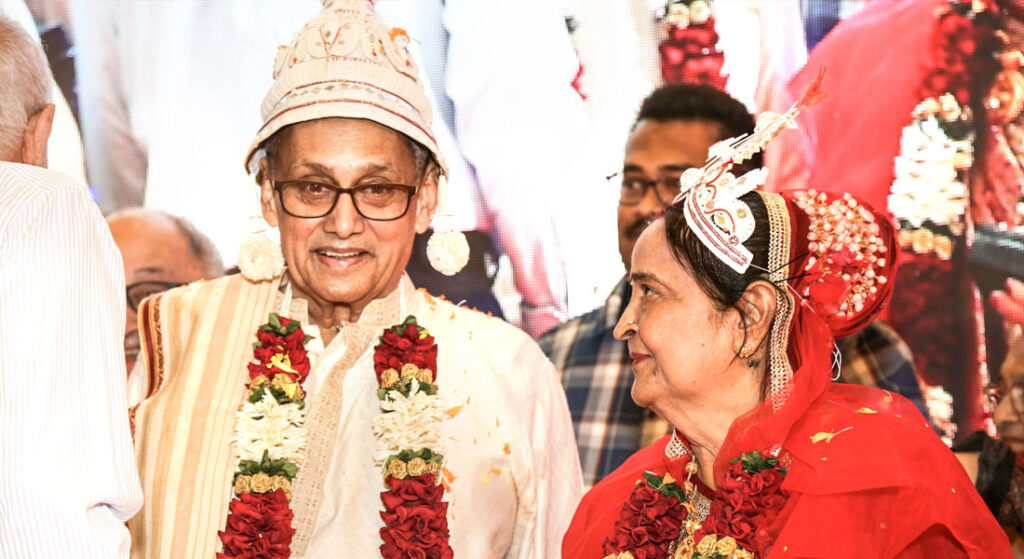
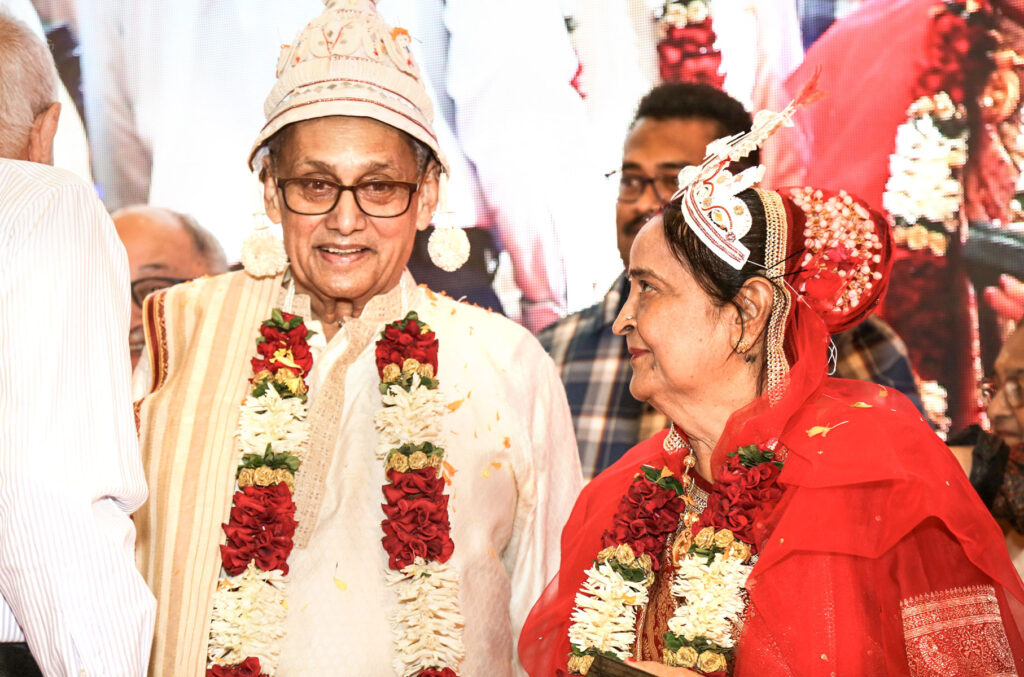
A dynamic person all through, Banerjee’s wedding to Binota and the circumstances leading to their court marriage, amply show his belief in himself, trust in fellow beings and passion for life. Starting a new life with a partner in an unknown small town, culturally and linguistically so different from what he was used to, shows strength of character and trust in his spouse.
Rotary: World of fellowship and service
In 1972 the Rotary Club of Vapi invited Banerjee to become a member. This opened new horizons both for him and the club. Over the years, supported by the Shroffs, Banerjee started building infrastructure for the betterment of the company’s workers in sports, education and healthcare, and Rotary’s canvas provided a new platform for his vision of doing good for the larger society. Eventually, he played an important role in Vapi’s transformation from potholed roads, no restaurants and water scarcity to the modern town it slowly became.
While their own company made good progress, Banerjee understood the importance of having an industry body for voicing concerns to the government, and he played a crucial role in the formation of the Vapi Industrial Association along with Rajju Shroff and a few other industry leaders. His leadership and ability to pursue with the authorities to address the industry’s concern resulted in his becoming the association’s president.
Along with his growth in UPL and appointment as director on the UPL board, Banerjee’s deeper involvement in Rotary increased and led to bigger responsibilities such as club president in 1975–76 to district governor in 1980–81.
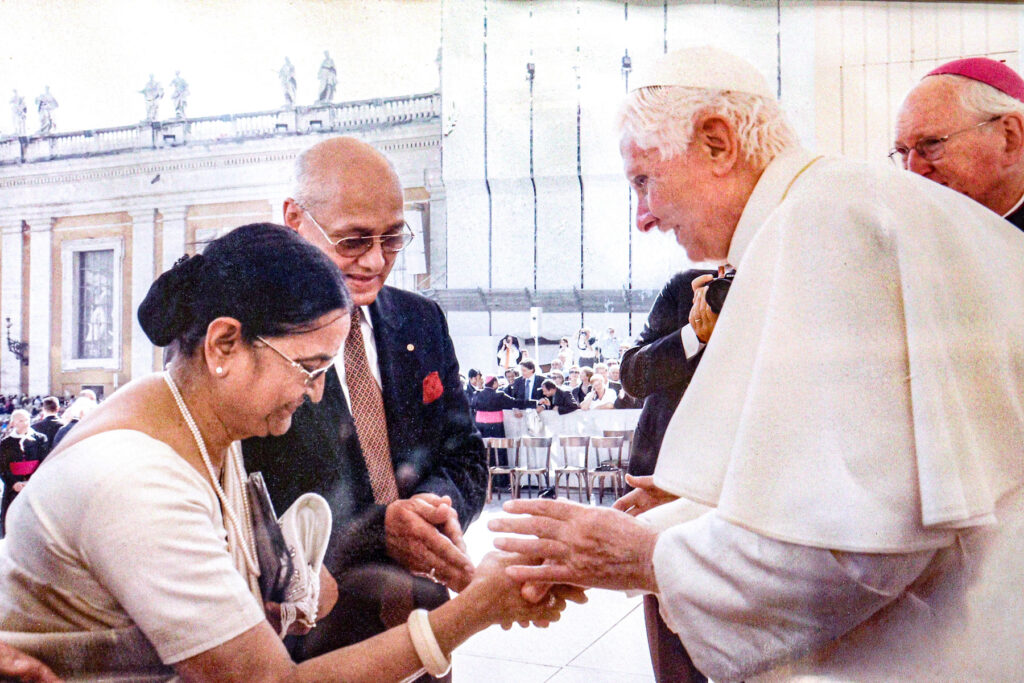
As Rotary governor, he achieved the feat of getting a current RI President to attend his district conference which saw a record 1,500 registrations. Soon he was noticed at the Rotary headquarters and thanks to his deep knowledge of Rotary and great articulation skills, he was invited as a trainer at the 1983 International Assembly.
His active involvement in not just building healthcare and educational facilities but also maintaining the high quality of the service projects he initiated through Rotary are all worth reading and emulating. His minute observations about the community’s needs also led him to undertake initiatives such as providing a better underground drainage system for Vapi.
Many Rotary leaders do support large infrastructure projects for community service but Banerjee’s personal involvement in ensuring the highest quality projects was rare and set him apart. Even today, as an octogenarian, he continues to visit hospitals, schools and colleges built by Rotary to monitor and guide their operations.
The expansion of the Rotary hospital in Vapi from a 2-bed clinic to a 200-bed multispecialty institution, the setting up of educational institutions, and the initiatives he drove for the farmers in Dang district are truly inspiring.
“People establish transactional connections, Banerjee establishes real relationships,” says Rtn Madhav Mohan, aptly describing what friendship means to Banerjee. No wonder this soft-spoken, classical music lover (Indian and Western — Amjad Ali Khan to Yanni), could get Indian Railways on board, through his school friend Madhavrao Scindia, to get important trains to stop at Vapi.
Banerjee’s humungous efforts in both polio eradication and literacy are listed in this book. His monumental work including personally visiting rural areas, meeting Muslim communities to overcome their resistance to polio vaccination, and stubbornly travelling to a war-torn Afghanistan as RI President, against the advice of RI, which even sent Binota back home, while he was in Afghanistan to meet its President to discuss the importance of polio vaccination for Afghanistan’s children, shows he has always walked the extra mile for Rotary’s service initiatives across the globe.
The book has interesting nuggets on his tenure as RI President, and how he became an Arch Klumph Society member before assuming charge as trustee chair of TRF, so that he would have moral ground to ask for similar donations from others. There are also numerous anecdotes from Rotarians, based on interviews with club members and world leaders, Kanubhai Desai, the former accountant in UPL and now Gujarat finance minister, personal friends and relatives, which make the book really interesting. The role and importance of his late wife Binota in Banerjee’s life — personal, professional and in Rotary — comes out vividly through these interviews. The way he took care of her during her illness reveals another side of the man as a loving and caring partner. The book also has interesting pictures from various periods in Banerjee’s life
The narrative begins with foreword by Mohan Patel, an industrialist, friend and ex-Sheriff of Mumbai, and ends with observations from Rtn Krushit Shah, who came up with the idea for this book, which was commissioned not by Banerjee but the Rotary Club of Vapi. “Vapi would not be Vapi without Kalyan and Kalyan would not be Kalyan without Binota,” shares Rtn Sandip Shah.
Kalyan Banerjee’s story is about choosing purpose over comfort —again and again. Like the Milkman of India Dr Verghese Kurien from the same land of Gujarat, Banerjee did not just build a career; he built and empowered communities, an ecosystem and a legacy that will continue to serve for long years.
His is an ideal example of transformative leadership.
The writer is a member of RC Thane Hills