





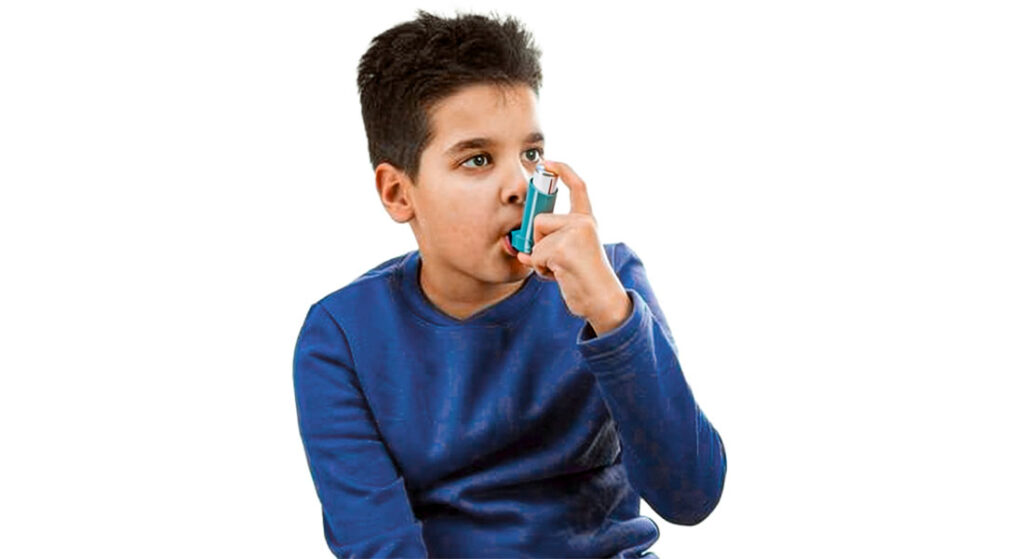
I can’t breathe.” The words may come out jerkily and be accompanied by a paroxysmal cough, followed by a whistling sound. The nostrils may flare due to air hunger. In children, rib retractions may be clearly visible.
These symptoms are typical of bronchial asthma. The severity can vary from a minor irritation that makes daily activities difficult to a life- threatening attack with gasping, inability to speak in full sentences, and bluish discolouration of the tongue and fingertips. It can be fatal.
Asthma affects around 2 per cent of adults and nearly 20 per cent of children in India. Fortunately, many children outgrow their asthma. In India, asthma still carries a stigma. Treatment is often unscientific and erratic, involving a mixture of allopathy, homoeopathy and naturopathy. Since the disease itself has spontaneous remissions and exacerbations, a sudden ‘miracle cure’ may appear to result from treatment, however unscientific. As asthma is a chronic condition with no permanent cure, these ‘miracles’ are soon followed by relapses.
Asthma can occur at any age but tends to start in childhood and is more common in boys. Its incidence is increasing worldwide, probably due to the cumulative effects of population growth, overcrowding, urbanisation and environmental pollution, especially from petrol and diesel fumes.
Traditional yoga can improve lung capacity and breathing techniques. The cobra pose, bridge pose, and alternate nostril breathing are particularly helpful.
Everyone’s airways are lubricated with a small amount of mucus. The amount increases in response to respiratory infections, exposure to strong odour, cleaning agents, air purifiers, vaporising mosquito repellents, temperature change, and inhaled allergens such as cockroach dander, dust mites, wood particles and cigarette smoke. Pets (birds, cats and dogs) can shed particles of saliva, hair and dead skin into the air, which can get inhaled.
Asthma can flare up during exercise, especially in cold, dry air (for example, in air-conditioned gyms). It may also be an occupational hazard in workplaces with chemical fumes, paint vapours, gases, or dust. Strong emotions such as anger, laughter, crying or stress can cause the airways to constrict. Many people suffer from GERD (gastroesophageal reflux disease). When they lie down, especially at night, stomach acid can be aspirated into the airways, causing inflammation, chronic coughing and wheezing.
Allergens may be ingested and not necessarily inhaled. The culprits may include food additives such as preservatives, colouring agents or monosodium glutamate. Certain medication, including beta-blockers, aspirin and ibuprofen, can cause bronchospasm as a side effect.
Asthma flare-up can be triggered by infections. An annual flu vaccine is recommended, and older adults should receive the pneumococcal vaccine.
In non-asthmatic individuals, these triggers activate a cough reflex. The smaller airways expand, the diaphragm (which separates the lungs from the abdomen) moves upward, and mucus is coughed out. In asthmatics, however, the airways collapse rather than expand, stick together and get narrow. As air is forced through these narrowed passages, the characteristic wheezing sound occurs. The diaphragm also moves downward in an uncoordinated manner, making coughing and lung clearance less efficient.
The diagnosis of asthma requires basic tests: a blood count to check for increased eosinophils, a chest X-ray to rule out other causes of cough and wheezing, a cardiac evaluation to exclude heart failure, spirometry and peak flow measurements, and allergy testing to identify triggers.
Before the advent of inhaled therapy (nebulisers, inhalers and rotahalers), treatment of asthma attacks involved tablets and syrups. These medicines were swallowed, absorbed into the bloodstream and eventually reached the lungs, where they relaxed bronchial muscles, making it easier to cough up mucus and breathe.
Today, medication is delivered directly into the lungs, providing rapid relief with minimal side effects. Nebulisers are now available in convenient handheld sizes. Inhalers are highly effective but must be used correctly. Face masks and spacers improve drug delivery, and proper inhaler technique must be learned.
‘Quick-relief’ inhalers provide immediate bronchodilation during an acute attack or may be used prophylactically before vigorous exercise. Maintenance therapy usually includes a long-acting bronchodilator combined with a non-absorbed steroid. This must be taken regularly to prevent lung damage. The mouth should be rinsed after using an inhaler to remove any residual medication. Tablets and syrups may also be prescribed. Medications should be taken exactly as directed, without self-adjustment.
Asthma flare-up can be triggered by infections. An annual flu vaccine is recommended, and older adults should receive the pneumococcal vaccine.
A peak flow meter is a useful investment to monitor lung function at home. Early warning signs such as slight coughing, wheezing, or shortness of breath should be recognised before a full-blown attack develops.
Regular exercise, such as walking, cycling, jogging and swimming, is beneficial as it increases lung capacity. It is important to warm up and cool down properly and to use a quick-relief inhaler about 15 minutes before exercise. Always carry your inhaler while exercising.
Traditional yoga can improve lung capacity and breathing techniques. The cobra pose, bridge pose, and alternate nostril breathing are particularly helpful. Consistency and regular practice are essential.
The writer is a paediatrician and author of Staying Healthy in Modern India