



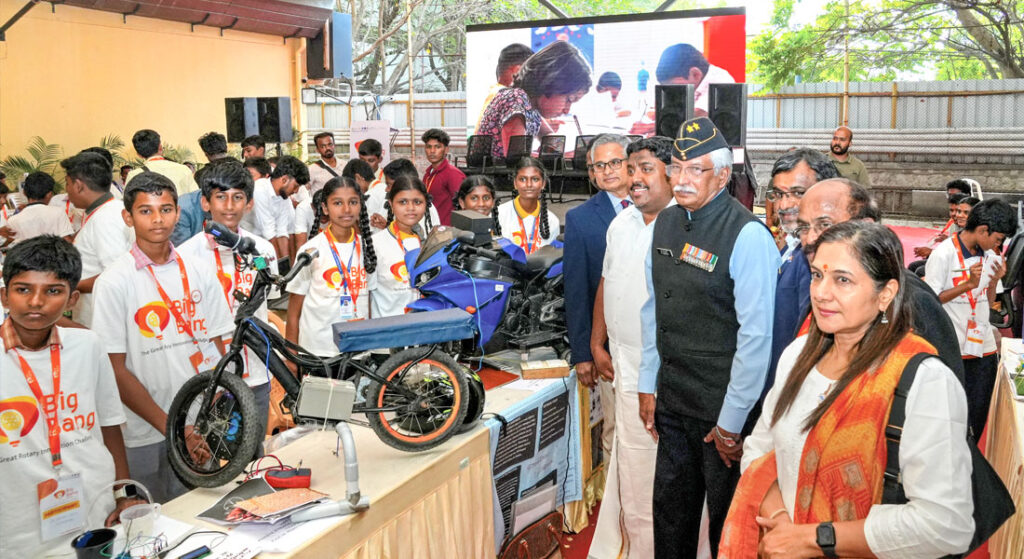
Is science a reliable guide for mankind to explore, set foot on other planets, thus expanding the human habitat across galaxies? Do the endless inventions, discoveries and innovations make the Earth a better place for us all? For all these existential questions, and more, around 600 students (Class 6–12) grouped into 150 teams from 130 schools across India gave stunning answers through project models, experiments, design charts and tech prototypes at the Big Bang 3.0.
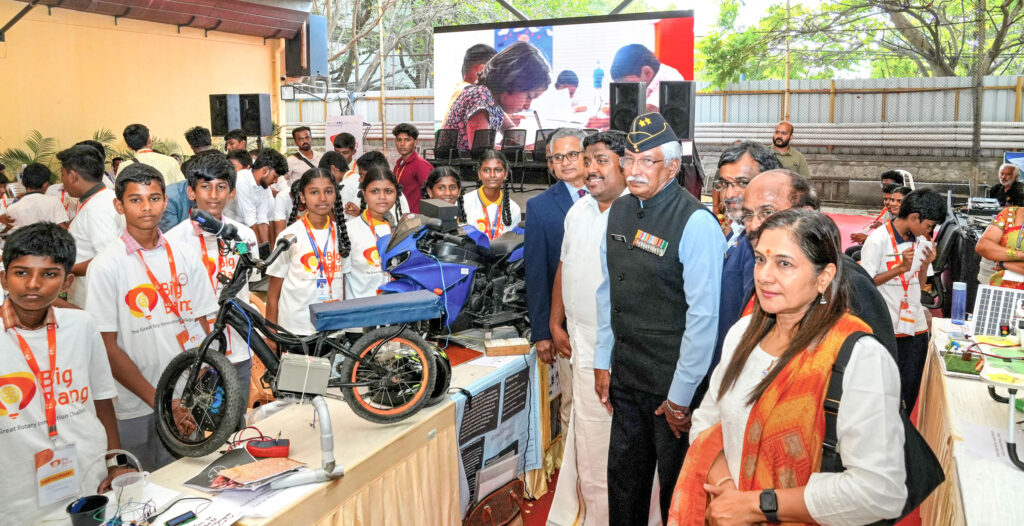
This third edition of science exhibition, a flagship programme of RC Coimbatore West, RID 3206, attracted 712 project submissions from school teams, each having four students and a mentor, across 22 states. “In the first-tier scrutiny, a 20-member jury from India, Sri Lanka, South Korea and the US shortlisted 157 teams for the Big Bang 3.0, held for two days in January at the National Model Schools in Coimbatore.
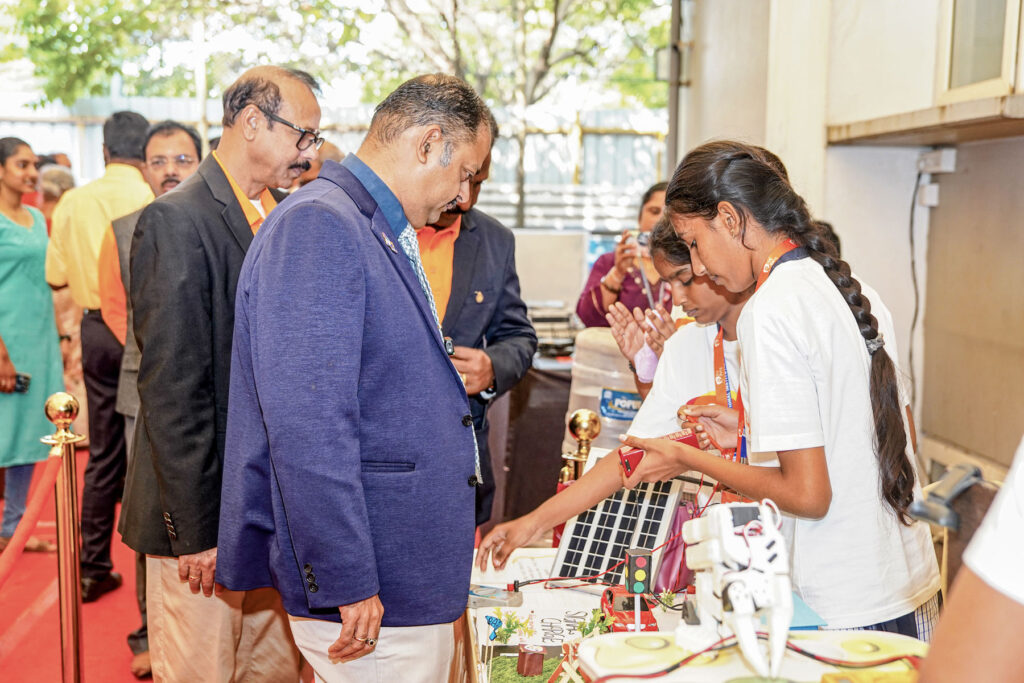
During the exhibition, “a 10-member expert jury drawn from industry, academia, government and research bodies visited each stall and interacted with the students to understand their project concepts and innovative ideas,” said R Navaneethakrishnan, convener, Project Big Bang.
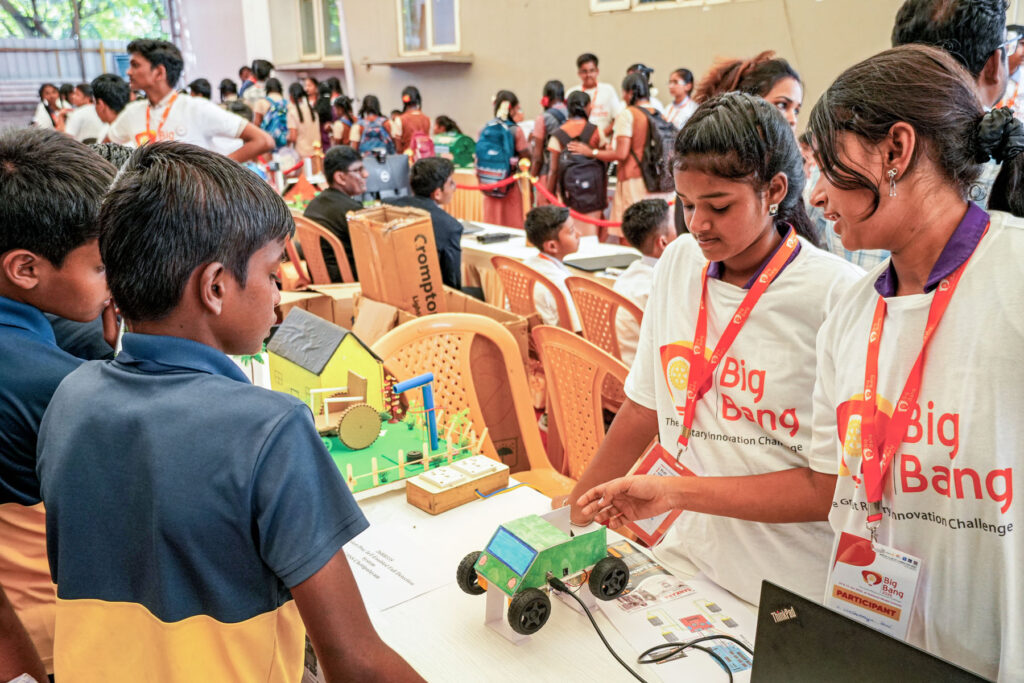
In the last three years, 6,000 students from 1,200 schools have made online presentations of their scientific projects, “among them 450 teams from 350 schools were chosen for the Big Bang exhibition,” he said. Adds club president C V Devadas, “we started in a humble manner in 2024 when it was decided at our club meeting by the then president Durai Narayanasamy to organise a school programme that kindles scientific temper and innovative thinking among students. This collective decision led to the idea of the Big Bang science expo for schools across the country.” The first edition had 120 online project submissions from schools in Tamil Nadu, and finally 80 teams displayed their scientific concepts at the Coimbatore school.
However, in the second edition (2025), “Big Bang grew across South India with 120 project teams, and also one from Maharashtra, selected from over 300 online submissions. The first two Big Bangs were one-day events; and later we stretched it to two-day exhibitions thanks to the good response,” said the club president.
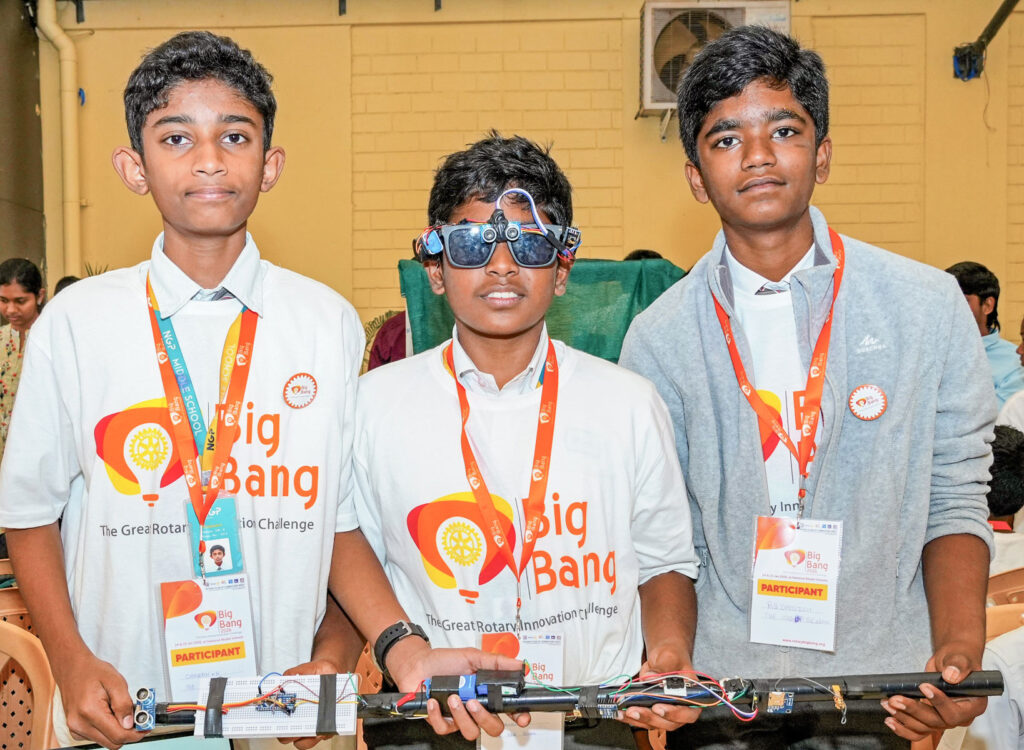
It was PDG A V Pathy who coined the event name ‘Big Bang’ with the tagline: The great Rotary innovation challenge, that caught the imagination of students.
The contesting teams are required to have innovative concepts offering solutions that meet the needs of communities, and how their products (or services) will contribute towards UN’s 17 Sustainable Development Goals,” said Navaneethakrishnan, also a director of iExplore Foundation, the knowledge partner of Big Bang. “Our exhibition has created an impact on government schools across Tamil Nadu as some of them were selected under the Best 20 Performing Teams category which has cash prize of ₹2,000 and a trophy each,” said D Gowtham, project secretary.
Trip to Indonesia
The Army Public School, Delhi, emerged winners and their team will travel to Indonesia for taking part in the IEEE Junior Einstein Competition in August 2026. “Their flight, accommodation and other logistics will be sponsored by our club with a travel grant of ₹5 lakh. In addition, they will get a cash prize of ₹40,000,” said Navaneethakrishnan.
Last year, the winning team was sent to Malaysia with funding support of ₹3.5 lakh to compete in this global event for school students, and they won the first prize.
Sharing her experience, Richa Pathania, a team mentor from the Army Pubic School, Jammu, said, “It was really inspiring to see many young minds thinking creatively and working hard to solve real-world problems. The mentoring sessions with the judges helped the students to further develop their innovative ideas and presentation skills.”
Elated with her Big Bang experience, T Divyadharshana (Class 10), from Devangar Girls HS School, Aruppukottai (TN), said, “I had a great time presenting our team’s project, and interacting with students from other states. We learnt many new ideas by sharing notes with the teams from North India.”
As a parent, Anushka, mother of Devesh Gupta from Balvantray Mehta Vidya Bhawan, Delhi, said, “I didn’t realise the knowledge and creativity of my son, till he presented his ideas with confidence. That made me really proud.” With a pan-India impact of its science fair, “our club is expecting over 1,000 project submissions for the next year’s edition which may attract a large number of students from North India. In the last edition, 40 per cent of project teams were from Tamil Nadu, and the rest came from other parts of India, some even as far as Kashmir,” said Devadas. Around 5,000 educators, students, domain experts and parents visited the two-day project exhibition.