



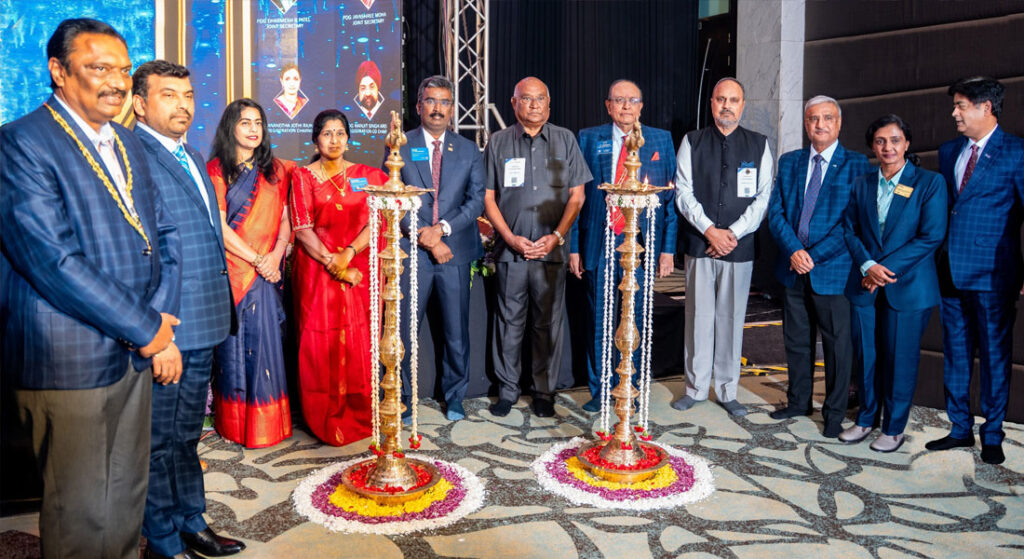
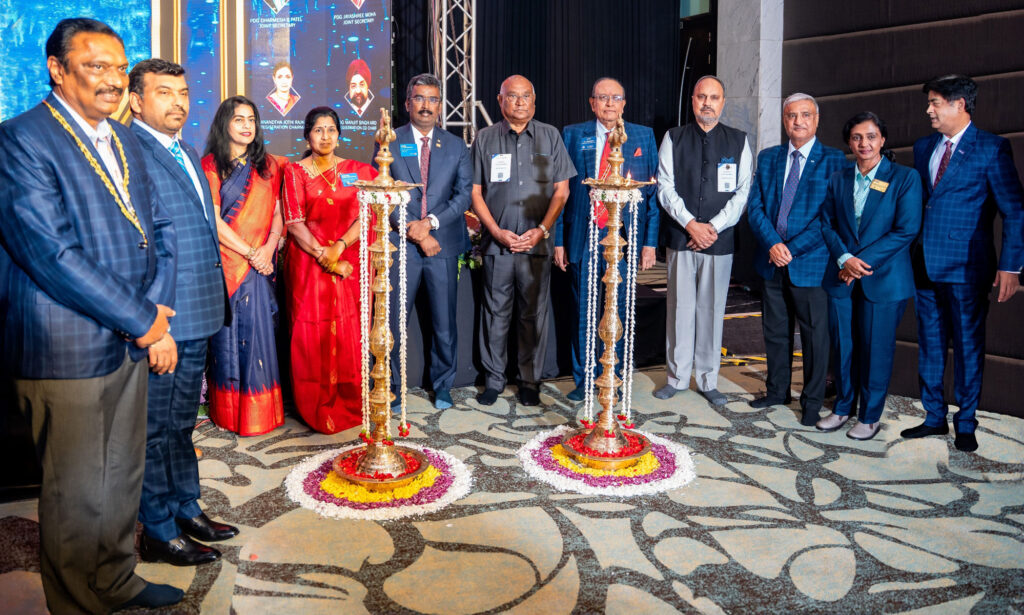
The beauty of Rotary stands in the transition of leadership. Even after 120 years, we are relevant,” said RI director M Muruganandam, inaugurating Disha, a three-day goal-setting seminar held in Coimbatore for incoming district leaders of Rotary zones 5 and 6. Tracing his journey from a 16-year-old Rotaractor, he highlighted that Rotary’s strength lies in empowering individuals. “Taking responsibility is the only way to lift yourself… you are lifting your club, your district and your community,” he said.
Presenting a data-backed approach through an RAG (Red-Amber-Green) analysis, where clubs with less than 25 members were marked in Red, 25–50 members in Amber, and above 50 members, in Green, he noted, “We are living in a myth… we think we are growing. But according to factual data, in India, 42 per cent Rotary clubs are in Red category; 35 per cent in Amber, and 33 per cent are in Green.”
He urged the district leaders to “work to move clubs from red to amber, and amber to green.” He also proposed a simple but scalable 1:2:3 formula — “Every Rotarian should add 1 Rotarian, 2 Rotaractors and 3 Interactors; and every Rotary club should aim to charter at least two Rotaract and three Interact clubs.” Noting that many clubs have not chartered even a single Rotaract or Interact club, he said, “If we want to see Rotary grow for the next 50-plus years, we must introduce youngsters into our organisation.”
Muruganandam urged the delegates to motivate Rotarians to contribute liberally to TRF. “Execute more projects, but ensure strong stewardship,” he said and suggested collaboration with government organisations and building strong relationships with corporates. He cautioned against unhealthy comparisons. “Don’t compare yourself with other districts… compare today’s district with yesterday’s and tomorrow’s.”
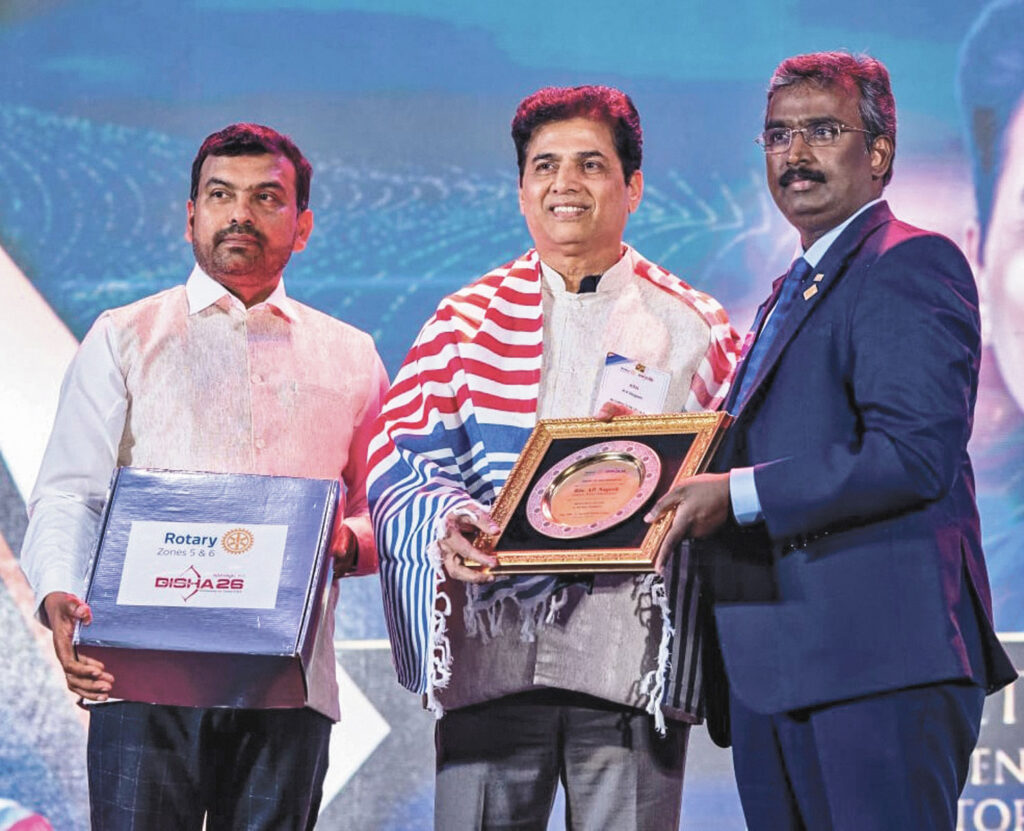
RI director K P Nagesh suggested the incoming leaders to consider bifurcation of districts for better management of the clubs. He urged them to increase women membership and weed out clubs with less than 15 members. “Such clubs are bad for Rotary’s public image. For a club to be vibrant and productive, it should have at least 40 members,” he said. RI has set the global membership target at 1.25 million by 2030 when Rotary celebrates 125 years and for that “each of our contribution is vital.”
TRF trustee-elect A S Venkatesh reframed leadership saying, “In Rotary, titles mean nothing, but they give you an opportunity to make a difference, to do something worthwhile.” Drawing from former US president John F Kennedy’s famous moon mission statement in 1961, he said: “JFK did not say we hope… he said we will land on the moon before the end of the decade.” He connected this clarity to Rotary’s greatest success. “Rotary did not say we will try to eradicate polio… we said we will. If you have clear goals and a timeline, everything else will fall into place.”
Recalling his visit as RI director to a club in Uganda, he said that the club, “with just about 20 members, took pride not in scale but in ownership.” After years of modest efforts like sponsoring a few students, they came together with a shared sense of responsibility to provide clean drinking water to 10 schools in their community. “What made the difference was not resources but collective ownership: every member aligned on one goal, set an ambitious target, and committed to a clear timeline.”
Capturing the essence of focus, he said, “Set your eyes on one rabbit… otherwise you will spend 30 minutes chasing all and catch none.”
Describing Disha as “a preparation platform for leadership,” PRID C Basker emphasised that Rotary leadership is not about individuals; “it is about teams working together.” He added a crucial reminder: “Setting goals alone is not enough… what matters is how consistently we review and monitor them.”
Through the story of a Mumbai- based social entrepreneur Harakhchand Savla feeding 1,000 cancer patients daily, PRID P T Prabhakar challenged leaders: “If he could do so much with limited means, imagine what can we Rotarians do? Let’s set impossible goals and make them possible.”
R IDE Basu Dev Golyan stressed sustainability and retention. “We should not count how many projects we do; we should count how many lives we changed. Membership growth without retention is incomplete,” he said, and called for collective ambition. “Let us think bigger, work together, and increase our impact.”
RIDE Gurjeet Singh Sekhon outlined six dimensions of expansion that will decide Rotary’s future — membership, demographics, geography, partnerships, digital presence and leadership pipeline.
“Membership is not just a number; it is Rotary’s capacity to serve.” He warned against stagnation: “For decades, Rotary clubs have looked the same, but the world has changed. If Rotary does not reflect modern society, we will become irrelevant.”
He urged the district leaders to charter Rotary clubs at unrepresented regions. “There are still thousands of cities and towns without Rotary clubs. Rotary must meet people wherever they are, and we must embrace new club models. Rotary was designed to adapt and grow. At times we tend to become prisoners of our traditions.”
Highlighting the need for visibility, he said, “In today’s world, visibility equals influence. If Rotary’s work is invisible, our impact will be limited. We have come through the ages where we said let our work speak for itself. Those times have changed. Every club must learn to tell powerful stories. Use social media effectively.”
On expanding Rotary’s leadership he said, “The most successful clubs are those that empower young leaders, encourage innovation, allow new ideas to flourish, mentor future presidents and district leaders.” Rotary’s future, he said, “will not be decided by the members we have today, but by the people we invite tomorrow.”
Welcoming the delegates, Disha chairman PDG P Gopalakrishnan said, “Disha is to understand roles, analyse status, and set meaningful and ambitious goals. Great achievements always begin with great goals.”