


The Rotary Club of Bombay, RID 3141, one of India’s premier, most admired and oldest clubs (chartered in 1929, is in a class by itself when it comes to doing striking, meaningful and massive community service projects. Recently in Mumbai I visited its iconic Dharmashala project, which operates a 100-flat temporary housing facility in Bhoiwada-Parel for cancer patients who come to the Tata Memorial Hospital, an advanced cancer treatment centre. Here, as though in a fairy tale, each patient and his/her attendants are given a simple, but neat, clean, comfortable and furnished one BHK for one month at a throwaway average monthly rent of ₹300.
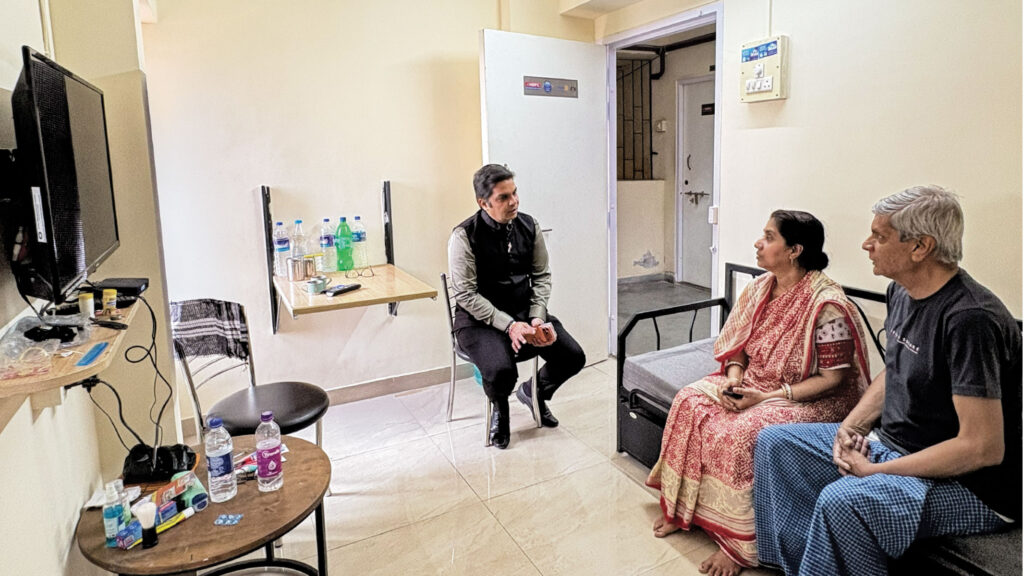
At this facility, complete with swanky and spacious elevators, freshly cooked, delicious and healthy meals are offered at a nominal price to the attendants and patients who are undergoing chemotherapy or radiation at the nearby cancer hospital. In addition to the accommodation and food, a laundry service and shuttles are also available to take the residents to the hospital and bring them back.
The project, which has completed three years, is executed from a multi-storeyed building that belongs to MHADA (Maharashtra Housing and Area Development Authority) and is known as a transit camp, which is used to temporarily house slumdwellers when their slums are taken over for redevelopment by the state. The club has taken over 100 flats located from the 16th to the 21st floors on a 30-year lease, and converted them into basic 1BHK units. Roping in HDFC as a CSR partner this project has got a 10-year commitment from HDFC for an annual amount of ₹1.5 crore to meet expenses for maintenance, staff and state levies.
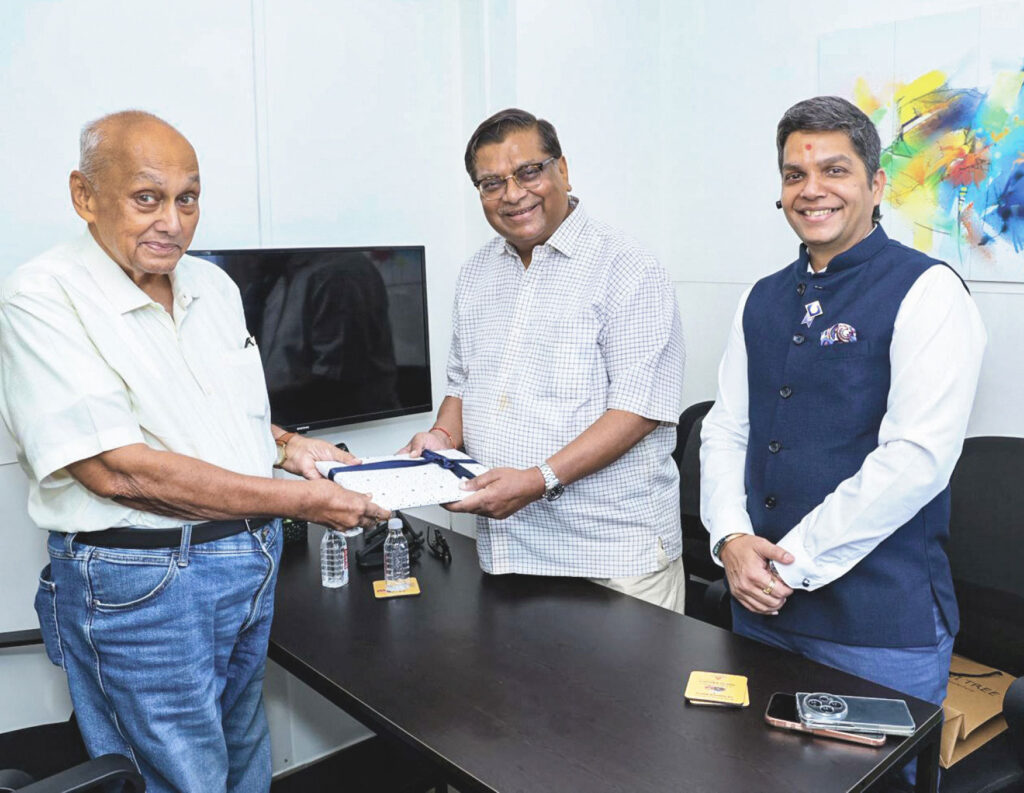
Project chair and club member Miral Shah explains that all the 12 apartments on a higher floor of this multi-storeyed building have been done up as 1 BHK studio units and given to doctors of the Tata Memorial Hospital who need accommodation. These are similar to those occupied by the patients, except for an AC unit.
From the remaining, 84 flats house patients and their families, one is converted into Shah’s office, another given to the Tata Memorial hospital for its office, and two have been converted into a kitchen which prepares food for the residents.
Tracing the genesis of the programme RID 3141 PDG and club member Sandip Agarwalla said that prior to heading the district in 2022, he was in touch with the Tata Research Centre (TRC), the umbrella organisation that runs all Tata cancer hospitals, to carry out oral, cervical and breast cancer camps in the tribal district of Palghar. “In our meetings, they requested several machines for cancer patients. During Covid, the Rotarians had helped with special vaccinations to be administered to cancer patients. “We were able to help with a sizable contribution. But every time I passed the roads leading up to the Tata Memorial hospital, I was disturbed by the sight of so many cancer patients actually living on the footpaths or under the flyover. We know that cancer is a debilitating disease that bankrupts middle and lower-class families because of high recurring expenses.”
That set him thinking about what Rotary could do to make comfortable the underprivileged cancer patients who come from far-flung places all over India to Mumbai for treatment, but cannot afford accommodation. A breakthrough came when “we were offered via Tata Hospital itself, 100 flats of MHADA, within striking distance of this hospital, just a 10 to 15-minute walk. These were bare-shell flats; they requested us to furnish them with all amenities, and also run them. We were very happy to take on this commitment and with lightning speed, equipped and furnished all the flats.”
About Rs.4.5 crore was spent to renovate and refurbish them. This lumpsum was also given by HDFC from its CSR funds. “We made sure that the accommodation was nothing less than a three-star hotel grade, because regardless of the class or strata of society the patients came from, we wanted them to feel at home.” Each flat was given a double bed, one sofa-cum-bed, so, three people could stay, the Indian bathrooms were converted to western closets for convenience, and water heaters and tanks for water storage for over 600 litres were provided. In addition, a refrigerator, writing table and TV with a cable connection were given. A fully-equipped kitchen with induction cooking facilities, utensils, etc, was also provided.
Agarwalla adds that once this was done, TRC director Dr Sudeep Gupta “asked us that as you have so many cancer patients staying here, can we have the upper floor of 12 flats for doctors to reside in, so that they can take care of any emergency should it arise? This was done, with an extra facility to express gratitude for the doctors’ service. Their units were air-conditioned!”
Gradually more services were added to all the flats; laundry is done on alternate days and the bedsheets and towels changed. Within six months the Rotarians realised that for cancer patients even a 15-minute walk to the hospital is challenging if not impossible. “So, we bought our own vehicle and started a free transport shuttle service between the hospital and the Dharamshala at periodic intervals.”
Expectedly, the demand for accommodation for patients who come from all over India to the Tata Memorial Hospital is overwhelming, so the club goes strictly by the referrals from the hospital. “We allow them to stay only for one month, unless in an exceptional case where the treating doctors recommends extension of stay.”
The patients who are housed here are not critical and don’t need emergency medical treatment. “Most of the patients referred here have already undergone surgery and require follow up chemotherapy or radiation sessions. Almost 70 per cent of the people housed here come from Kolkata and the rest of Bengal and cannot afford accommodation at market rates. The Tata Memorial Hospital, which is just 10 minutes from here, refers the patients to us after deciding what they can afford to pay,” says Shah.
Those who cannot afford to pay anything are given free accommodation, while others are charged ₹300 a month, and those who can afford to pay a little more at ₹600 a month. Though two relatives are allowed with each patient, the average occupancy is two people. Most patients are in the 35-55 age group, though they do see younger patients, including an odd teenager. The most common cancer among women is breast cancer, he adds.
Around 12 housekeeping staff and 12 security personnel are stationed at the Dharmashala floors; the security personnel are here mainly to ensure that if something happens suddenly to a patient, there is help available on the premises to shift that patient to the hospital.
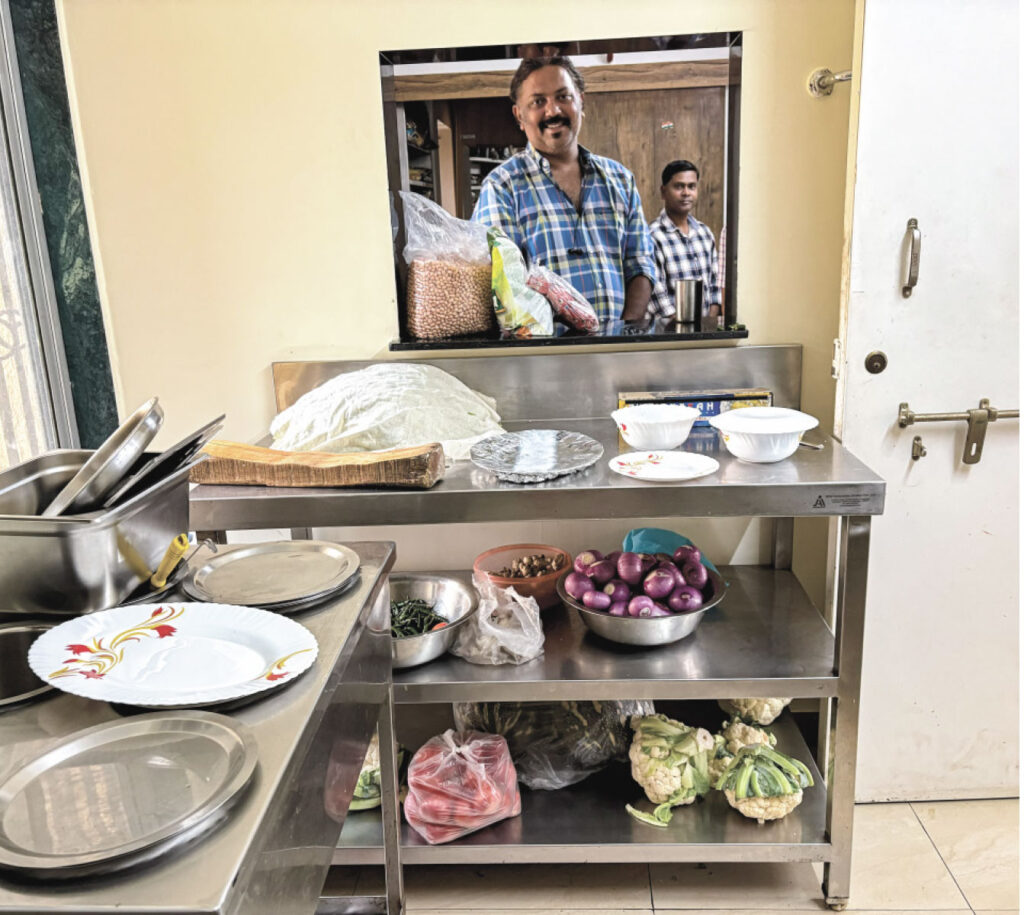
The employment of the housekeeping staff explains the spanking clean corridors; the kitchen too is neat and clean. At the end of our visit, we have a surprise waiting… the most delicious and ubiquitous Mumbai’s batata-vada and mouth-watering tasty poha, complete with seasoning. When we lap it up, Shah smiles and says, “Every time Rotarians visit this project, they love to have our food. It is so tasty!”
Agarwalla recalls that once the flats had been readied and all the amenities, including a kitchenette, were given, the project team realised that the patients and caretakers were not eating wholesome and hygienic food, as most of them were ordering from outside, and very few were cooking on the induction stoves apart from preparing breakfast, tea or coffee.
So, they decided to start a full-fledged kitchen, taking two of the four units for this purpose. “We started offering subsidised wholesome meals with different menus through the week; the food includes chapatis, vegetables, rice, pulses, and yoghurt. For breakfast, on different days there is poha, idli, dosa, upma and a glass of milk. Fruits are also given often as donors come forward to offer the cost. And all this for a princely sum of only ₹25 — ₹5 for breakfast and ₹10 each for lunch and dinner. Our cost is ₹150 a day.”
The food, which has less oil and spices, is yet very tasty as we found. Those who can’t afford even ₹25 a day, are given free food, with WeCare their partner, or some club members picking up the tab.
Shah adds that the kitchen is being run in partnership with a wonderful couple Sheetal and Vikrant Bhatkar, who run a food service called Don Ghaas (two bites), near the Tata Memorial Hospital, to provide affordable and nutritious, home-cooked meals to cancer patients and their relatives at a heavily subsidised price.
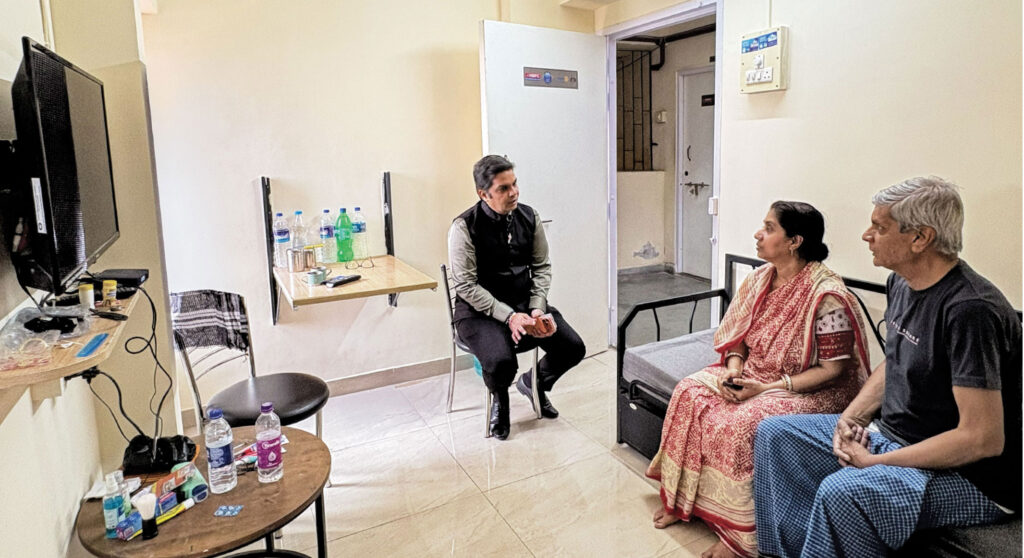
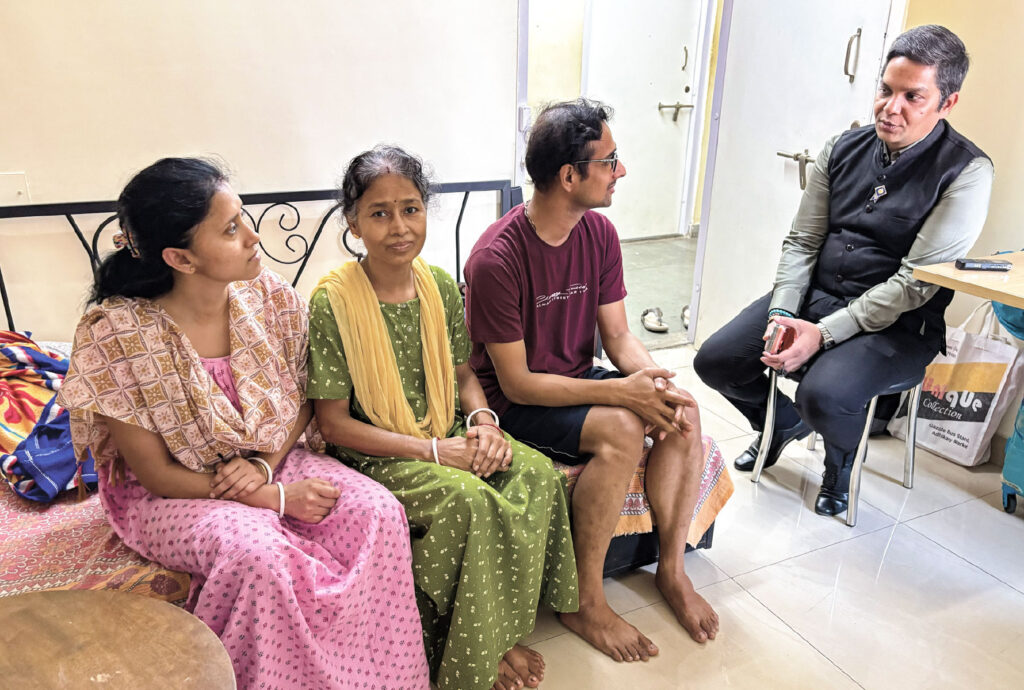
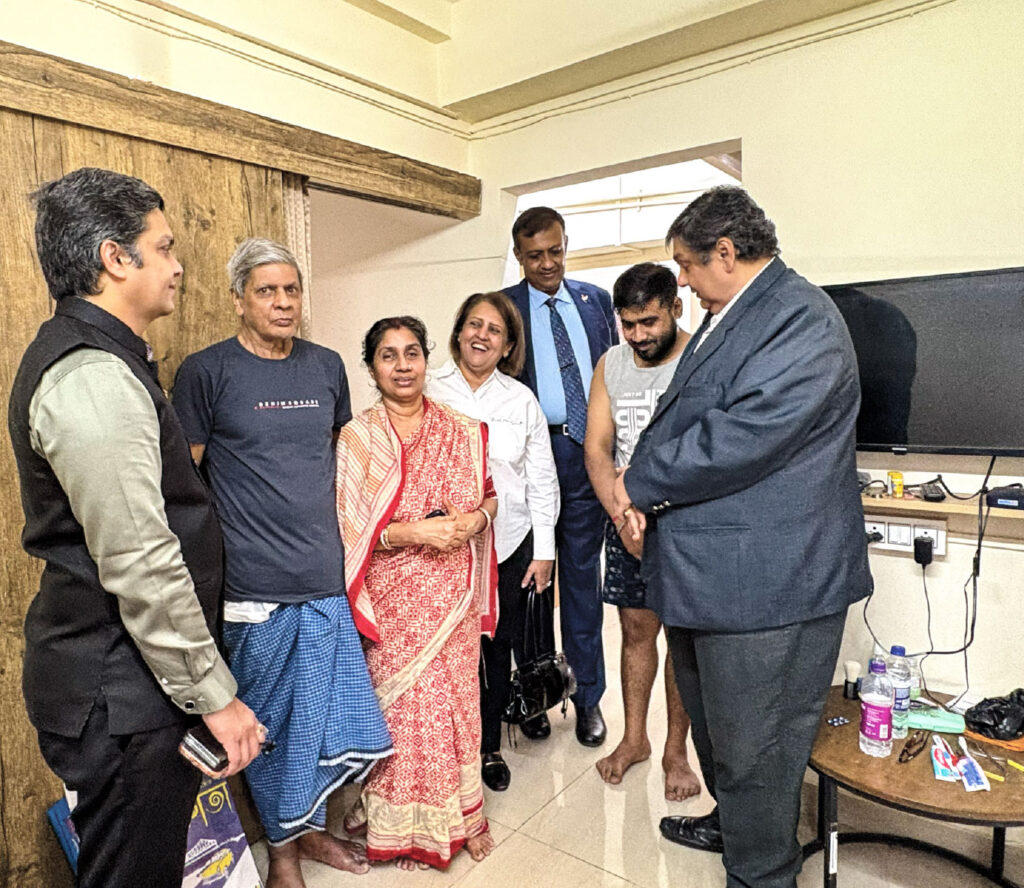
In one of the small flats, I meet Roma Bhaumik from West Bengal; she is 51 and two months ago, after a lump was found on her appendix after a CT scan, she was referred here for further diagnosis and tests. She is here with her son Vishwajeet and daughter-in-law Shivli. They all live about 3 hours away from Kolkata. Sadly, Shivli too was diagnosed with cancer in 2024. “We came to the same hospital; she had a problem in her thyroid gland, took the treatment and is completely cured now,” he says.
While his wife was undergoing treatment they had to stay in Mumbai for four months and also stayed here. As the rules permitted stay at this Dharmashala only for 30 days, they had to find another accommodation. “We found a very ordinary room for ₹700. It was nowhere near this; we had to share the room with a couple of other people and pay much more…”
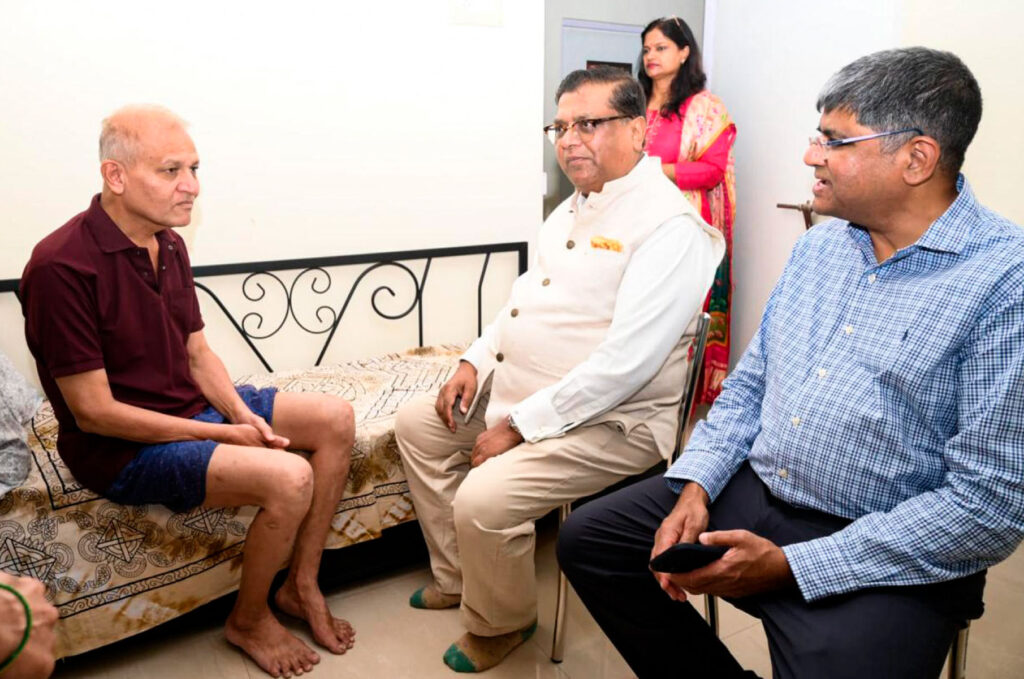
a cancer survivor.
Even the food was more expensive, and nowhere the quality offered here, he adds. But he is on tenterhooks about the 30-day deadline fast approaching. He is sure the doctor is going to recommend an extension of their stay. “We may have to stay for 15–20 days extra, but the rules won’t allow it, and once again, I’ll have to find another place. There is no way we can find something like this at that price,” he sighs.
Shah, who is listening to the dialogue assures him that if he gets a recommendation from the Tata Memorial Hospital, he will try to extend their stay here.
Another patient I interact with is Krishna Gopal Mukhopadhyay, who is from East Mirzapur, West Bengal, and has a lung problem. His tests have been completed and his chemotherapy will begin shortly. A former state government employee, he is now a pensioner and is staying here with his wife Swati and a nephew. She is very happy with the accommodation and says the food is hygienic and tasty. As I glance into the little kitchenette and see the induction stove, she says, “Oh yes, I use it to make tea and coffee and some sabji. Everything is fine, but if they can give us an exhaust fan, it will be good because after I cook, there is smoke in the kitchen and the smell of the food lingers in the apartment.”
As we walk out, Shah smiles and says, “we give them vegetarian food and many Bengalis yearn for fish, so they cook it in their flats. We will examine the possibility of putting in exhaust fans.”
Recently past RI President Kalyan Banerjee visited the Dharmashala and spent two hours going around the place and interacting with the patients.
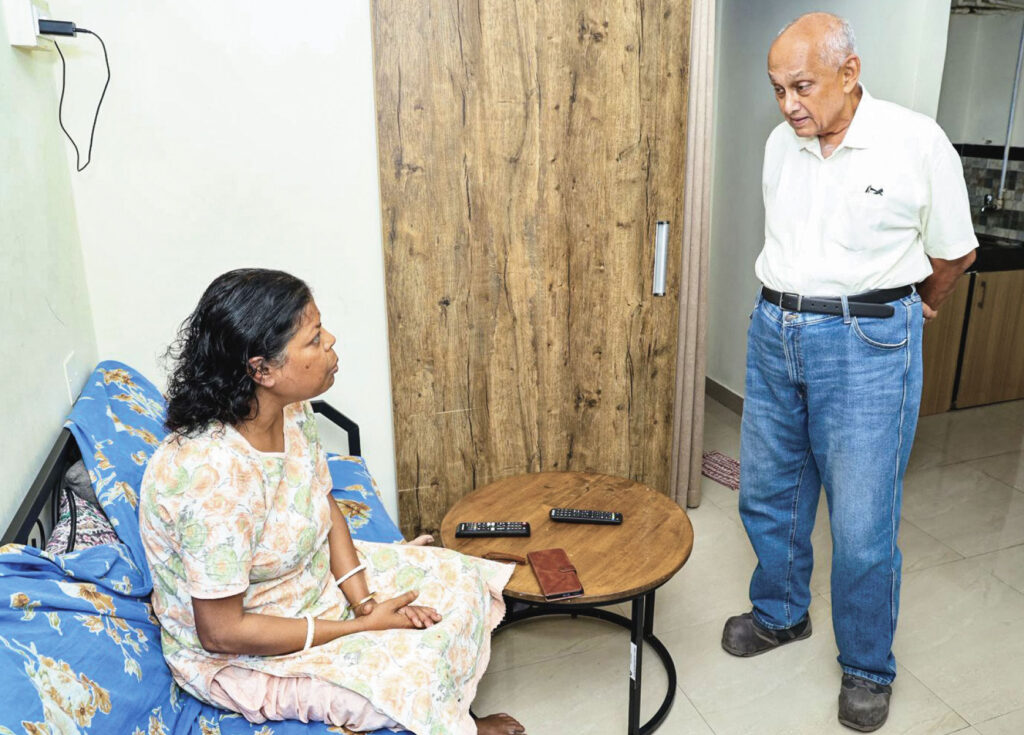
Till mid-February, this facility had benefitted 2,530 cancer patients; every Wednesday the project chair is here for a few hours to ensure that the facility is running smoothly and without any glitches.
After getting rave reviews and gratitude of the patients and their families, RC Bombay is now looking to expand this project. “We hear that in the next 10 months, this building will get vacant and we are planning to expand our Dharmashala from 100 to a 300-flat facility.
What about the funds? Shah smiles and says, “Sandip (Agarwalla) has given me that huge task… to find a donor!”
Agarwalla himself admits, “By no means have we taken all the people off the footpaths and the flyovers, but we’ve at least alleviated the suffering of some of them. There’s need for many more such Dharmashalas. Of course, RC Bombay is very happy to look at even more Dharmashalas, but keeping in mind that real estate in Mumbai is very difficult to come by. We are paying over ₹50 lakh annually to BMC and MHADA for taxes and other levies, even though they don’t charge us any rent. But we are determined to do our best.”
Pictures by Rasheeda Bhagat