



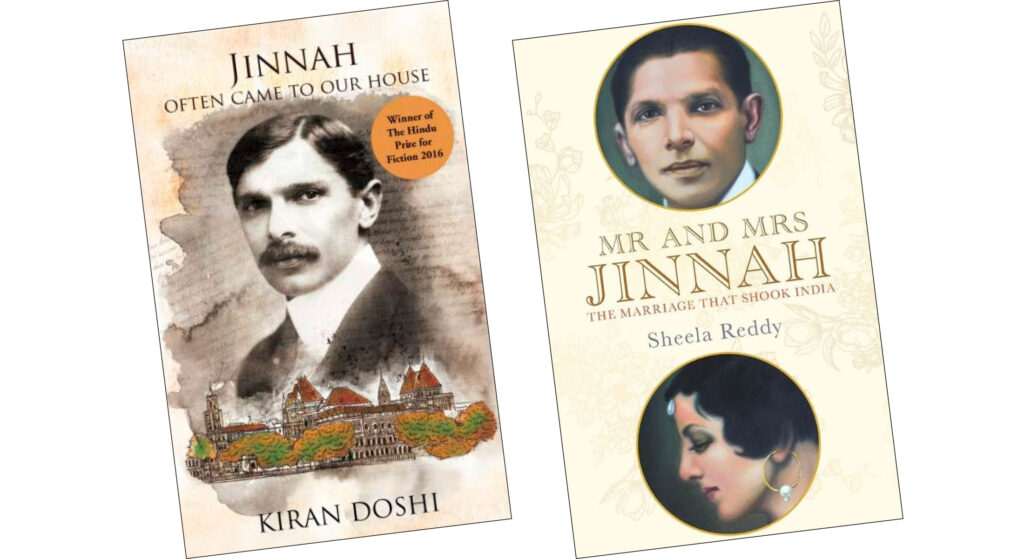
Read about them in two books that introduce us to persons swept behind personas of history textbooks. Living, loving, breathing, battling…
Rattanbai ‘Ruttie’ Petit had just turned 18 when she married Mohammed Ali Jinnah, 24 years her senior, the future founder of Pakistan. When the ‘confirmed bachelor’ (he had been married many years earlier but his young wife had died very early), successful lawyer and upstanding nationalist suddenly eloped with the beautiful, impetuous, madly-in-love only daughter of Sir Dinshaw Petit, a big name in the Parsi community of Bombay, there was mayhem. A Parsi marrying a Mohammedan, marrying outside her community? Unheard of. Absolutely unacceptable. But when Ruttie refused to give in to any and every kind of threat, Dinshaw Petit formally charged Jinnah with abducting his daughter with a “mercenary eye on her fortune”. What did Ruttie do? Standing before the judge, “with a bold defiance that smote Sir Dinshaw even more than her elopement, she jumped impetuously to Jinnah’s defence. ‘Sir,’ she said with that fierce protectiveness she had already developed for her J, ‘Mr Jinnah has not abducted me; in fact, I have abducted him.’” A union that began with such drama ended tragically barely 11 years later when Ruttie succumbed to an overdose on her 29th birthday, leaving Jinnah heartbroken, despite all the tensions in their marriage. Outwardly cold and composed, inwardly remorseful, “he did confess to a friend’s wife, many years later: ‘She was a child and I should never have married her. The fault was mine.’”
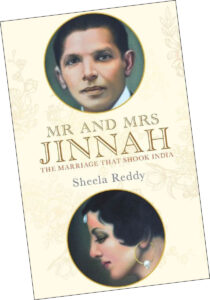
The eminent journalist Sheela Reddy tells their story in Mr and Mrs Jinnah: The Marriage that Shook India, a book I might have missed but for Sam Dalrymple (and more about him and his book sometime soon) mentioning it in an interview. To place things in context for our readers, their daughter Dina (who, for the longest time, had remained unnamed by her parents mainly because they were otherwise occupied, and who named herself around age nine, after her grandmother) married businessman Neville Wadia, founder of the Wadia Group with interests in textiles, aviation and more. The family remains well entrenched in India’s business world today.
With research based extensively on private letters written by Ruttie, Sarojini Naidu and her daughter Padmaja Naidu, and information culled diligently from various other sources, Sheela Reddy paints an engaging, intimate picture of not just the ‘marriage that shook India’, but also the social ‘gup’, to use Jinnah’s word, and political intimations of the time. There are no letters written by Jinnah himself that have as yet come to light. While this is a major handicap, the writing is so seamless, so lucid, that this gap is not felt. The book is fundamentally a love story; it is also the story of a time when ideas of freedom and nationhood had begun to stir a people still in the grip of colonial rule. But the light of the British Empire was definitely beginning to dim. Therefore, we also catch revealing glimpses of a whole gamut of other famous personalities, such as Motilal Nehru, Mahatma Gandhi, the Ali brothers. Sarojini Naidu and her children, who feature prominently in the narrative. She was a great admirer of Jinnah and the go-to person for Ruttie; her daughters were close to Ruttie and they wrote regularly to each other.
As Kiran Doshi mentions in his review in The Hindu of April 1, 2017, the book owes its life to the happy circumstance of the author stumbling upon “a bundle of private letters preserved by Padmaja and Leilamani Naidu, daughters of that most remarkable woman and indefatigable letter-writer, Sarojini Naidu…” He goes on to add that while the letters could themselves have made an absorbing booklet, “Happily, the author…has made a whole book out of them by blending them with two excellent ingredients: one, vignettes of those times, political as well as social, which, though known to history buffs, should nevertheless be of interest to the general reader; and two, the author’s interpretations of what the letters say — as well as some general observations and conclusions. The final product, even if some of it is old wine, is a heady cocktail that is difficult to put down till after the last drop of it is drunk.”
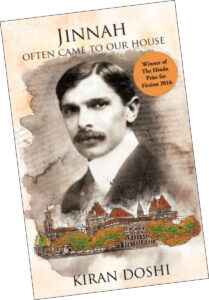
Doshi should know, considering he himself has written a fabulous book, historical fiction that overlaps with and extends beyond the same time period — the first half of the 20th century in India — featuring many of the same personalities and including some fictional characters no doubt inspired by real life. I had just gone through a few pages of M&MJ when the penny dropped: Wasn’t there a Jinnah book in one of my cupboards? Yes indeed! Jinnah Often Came To Our House (JOCTOH) by, you’re right, Kiran Doshi! What I discovered soon thereafter was that this book had won The Hindu Lit for Life Award in 2016. This amazing book had been sitting on the shelf for 10 years, unnoticed, untouched! More fool I.
JOCTOH begins in 1904 and ends in 1948. It tells the story of another marriage, that of the dashing Sultan Kowaishi, just back from passing the bar in London, settling into the easy life of an affluent family, and Rehana, the perfect amalgam of beauty and brains. Sultan meets and strikes a friendship with Mohammad Ali Jinnah, well-known in legal circles and a rising star of the Indian National Congress. Their story too unravels against the background of the freedom struggle. While Sultan is indifferent to all causes except that of beating Jinnah at the legal-eagle game and growing his wealth, Rehana gets drawn into issues of freedom, emancipation of women and education, and becomes a devout follower of Gandhiji.
Meanwhile, life happens. Significant events such as the Khilafat movement, the Jallianwala Bagh massacre, political gamesmanship take place, even as love and betrayal punctuate people’s lives. There are also long periods when seemingly nothing happens; and we realise that that’s how time flows even though history textbooks give the impression that events follow hot on the heels of each other. Of course, these are just the bare bones of the story, but Jinnah is a crucial player in it, friend to Sultan and Rehana, and supporter of Rehana’s efforts to educate girls. Freedom finally dawns; Pakistan is born.
Many marriages suffered; the Jinnahs’ collapsed. Perhaps Gandhi’s movement gave them a sense of purpose that compensated for the personal sacrifices.
This book too ends poignantly: “And the girls observed a minute’s silence when a former trustee of Ekta (a school) called Jinnah passed away one hot September day in a faraway land. The Evening News said that he had breathed his last in a stalled ambulance on a desert road with nobody by his side except his sister Fatima, struggling to keep flies away from his face with a folded newspaper. ‘Dadi, did you know this man Jinnah?’ Mira asked Rehana as they sat down for dinner. ‘Yes, darling,’ Rehana said. ‘A long long time back, he often came to our house.’”
In an interview published in the National Herald of April 2, 2017, Sheela Reddy offers an important insight when she says that “other spouses were equally negligent of their husbandly and wifely duties and their marriages suffered as well, but it didn’t destroy them as it did the Jinnahs and I think this had something to do with Gandhi’s movement which gave a sense of purpose and meaning to everyone’s life and compensated for the personal sacrifices.” Something to mull over, even as we revisit, kindly, the lives of our freedom fighters.
The columnist is a children’s writer and senior journalist