




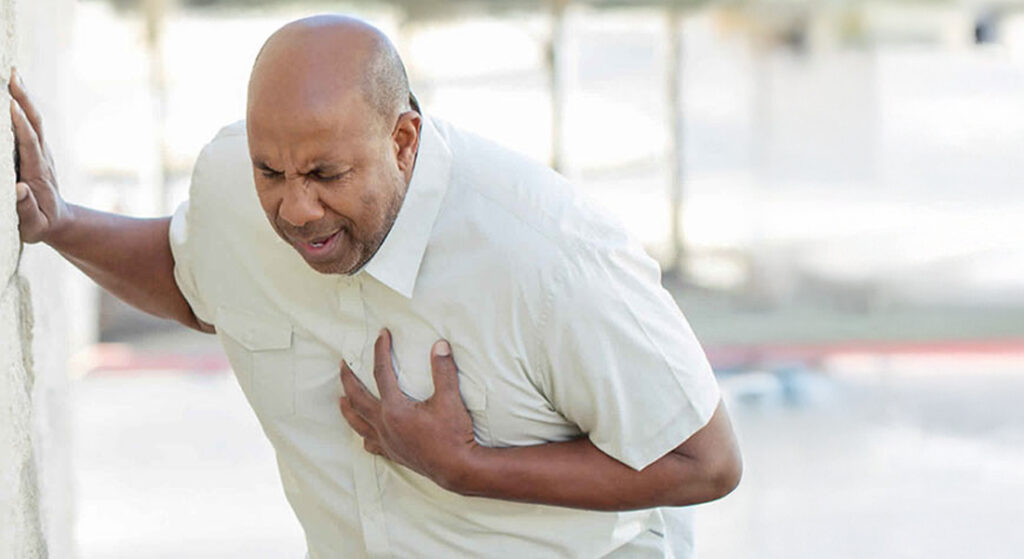
Chest pain is frightening, especially if it occurs on the left side. After all, everyone (even children) knows that is where the heart is situated. This fear is reinforced, especially in middle-aged and older people, by graphic images, seen in the media, of people receiving bad news, clutching their chest, keeling over sideways, gasping for air and falling down dead. It is okay in a movie, but scary in real life, when you think it is happening to you or a loved one.
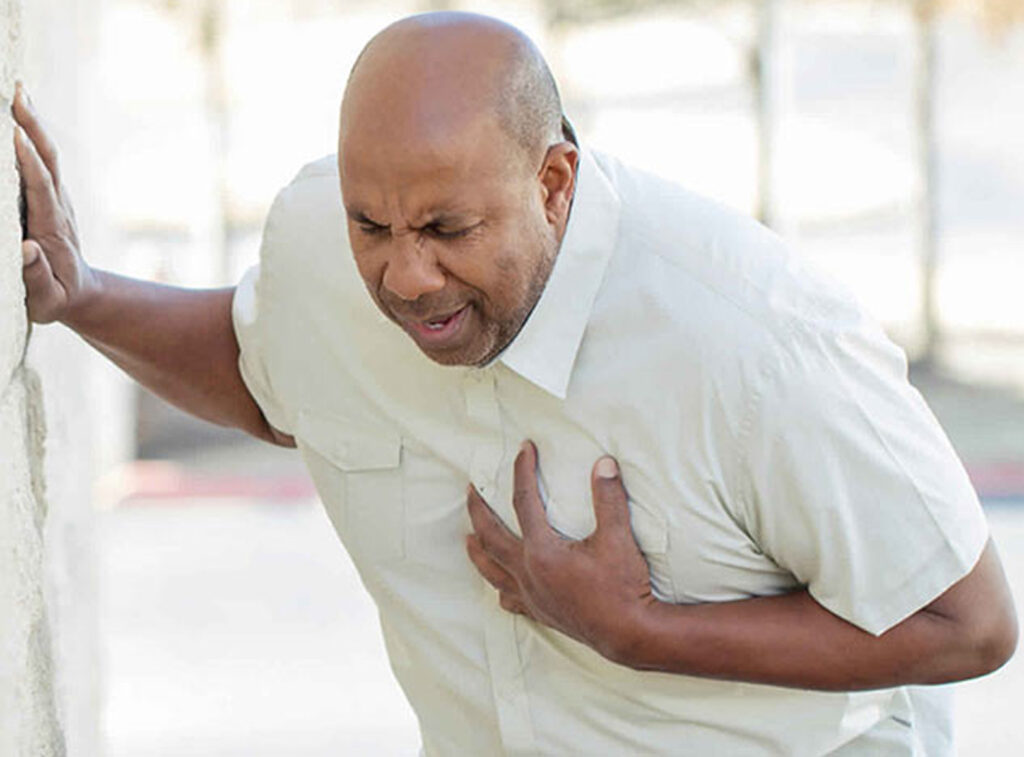
Heart attacks can occur at any age, even though they are more common in men over 45 and women over 55 (post-menopause). However, they are increasingly occurring in younger people. Nearly half of heart patients today are under 40.
The pain in a heart attack is severe and crushing, not necessarily on the left side of the chest and over the heart. It may be felt behind the breastbone and may radiate down the left arm, neck, or back, and be accompanied by sweating and giddiness. It may be precipitated by sudden, untrained exercise or exertion in an unconditioned person, or even by a heavy meal. Women may present atypically with no pain at all. Instead, there may be unexplained fatigue, anxiety, nausea, or pain in the jaw, left arm, or even the right arm.
A heart attack occurs when the blood supply to a portion of the heart muscle is reduced or blocked, causing it to die. This can be because, over the years, fatty, cholesterol- containing deposits can build up and narrow a coronary artery. The fatty plaque itself may rupture, releasing a clot that blocks another narrower artery. The portions of the heart supplied by the affected artery die and are eventually replaced by scarred tissue. Electrical signals in the heart, essential for its efficient functioning, are disrupted at the scar site. Following this, the heartbeat can become irregular or stop altogether.
If a person complains of chest pain, immediately crush one adult aspirin (375mg) or four tablets of baby aspirin (75mg), dissolve it in water, and make her swallow it.
Heart attacks are likely in people who are obese (even if they are young) and inactive (with video games being their primary sport), those who use tobacco (smoke, chew, or inhale), have diabetes or hypertension, or have a family history of early heart attacks.
People who are aerobically active, exercising for 150 minutes a week, develop efficient collateral circulation in the heart, which can bypass major blocks in the coronary arteries.
Chest pain should be taken seriously. Immediately crush one adult aspirin (375mg) or four tablets of baby aspirin (75mg), dissolve it in water, and make the person swallow it. Then proceed to the hospital. With this emergency treatment, you can save a life.
Evaluation of chest pain requires an ECG (electrocardiogram), chest X-ray, and blood tests such as troponin, CK (creatine kinase), CK-MB and serum myoglobin. These blood tests may be repeated to check for changes over time. This may be followed by CT or MRI scans to determine if the person is having a heart attack. An angiogram can discover the site of the block. A stent can be inserted to bypass the block at the same time.
Not all chest pain has a cardiac cause. Nearly 30 per cent of people who reach emergency care do not have heart disease at all. Their pain, which can mimic a heart attack exactly, may arise from other structures in the chest, such as the chest wall muscles, due to strain or sudden awkward movements. It may originate in the sternum (breastbone) or at the junction between the ribs and the sternum (costochondral junctions). Viral infections can also cause chest pain. The herpes virus, in particular, can cause herpes zoster along the chest wall with severe pain. Pneumonia, other lung infections, pleural diseases (the covering of the lungs), or lung clots can also cause chest pain. The oesophagus, situated just behind the sternum, can cause ‘non-cardiac’ chest pain due to GERD (gastro-oesophageal reflux disease), uncoordinated motility, or a heightened pain response.
If the pain cannot be localised, is associated with pressure or tightness, is aggravated by activity, and is accompanied by shortness of breath, dizziness, sweating, nausea, or vomiting, it is likely to be a heart attack requiring urgent medical treatment. If, on the other hand, pressure on the chest wall reproduces the pain, it is more likely to be non-cardiac chest pain. Even then, it is safer to administer aspirin and proceed to the hospital so that trained professionals can evaluate the patient and reach a diagnosis.
All causes of non-cardiac chest pain are aggravated by stress and anxiety. If these issues are not addressed, the person may have repeated, unsatisfactory hospital visits.
To keep yourself healthy and safe:
- Exercise aerobically (walk) for 150 minutes a week
- Achieve ideal body weight (weight divided by height in metres squared × 23)
- Avoid tobacco use and passive exposure to tobacco smoke
- Avoid processed foods containing trans fats
- Control diabetes, hypertension and lipid levels
- Take your medication regularly and do not skip doses during festivals or events or if you are feeling better.
The writer is a paediatrician and author of Staying Healthy in Modern India