



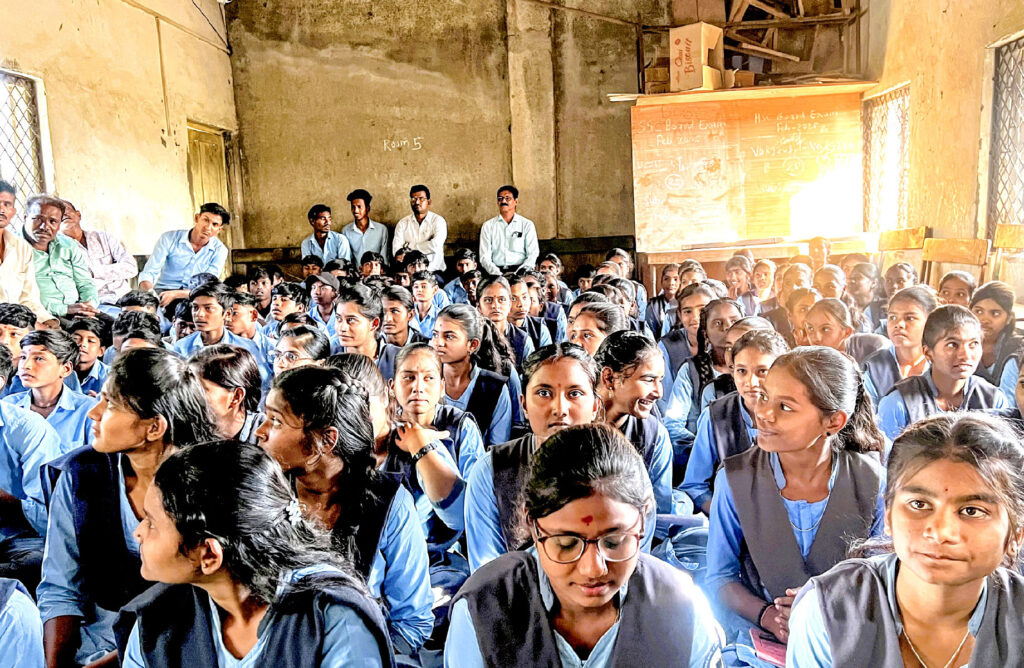
Believing firmly that just as children studying in urban elite schools, those studying in modest schools in villages deserve a decent classroom, computer education, well-equipped library and other related facilities, the Rotary Club of Akola, RID 3030, has adopted a rural school with 250 children in Gaigaon, a small village 15km from the city of Akola.
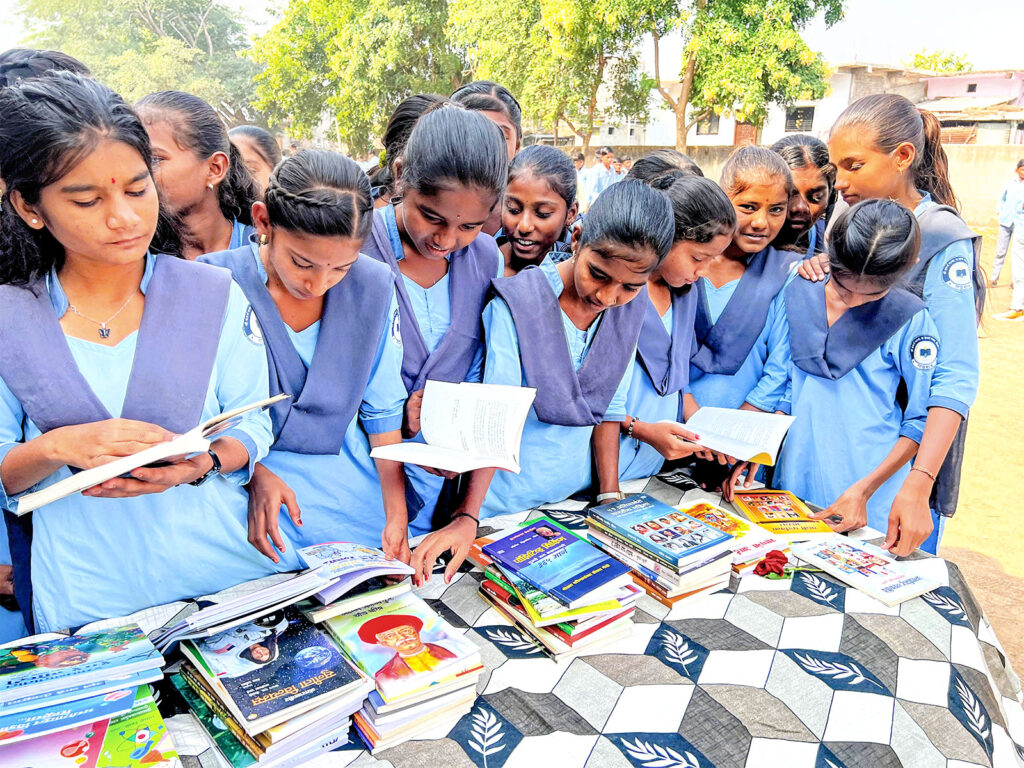
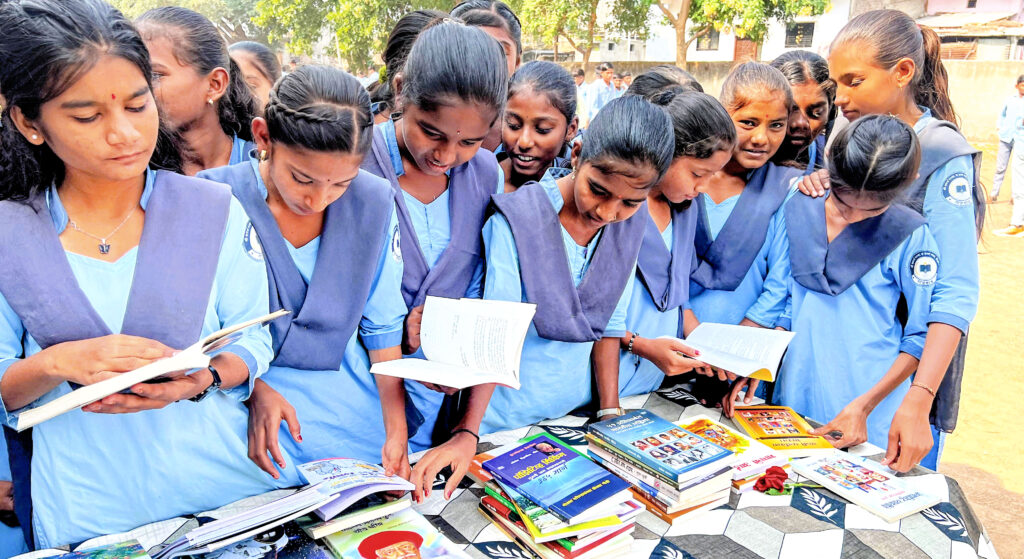
Taking baby steps to improve the learning facilities available in this school, the Rotarians first provided 100 books with pictorial content to the students and quietly watched their response to this gift. Past president of the club Radheshyam Modi who frequently visits this school and interacts with the students, found to his delight that the students, particularly the girls, embraced these books and started reading them with interest. He explained that the decision to acquire books which were rich in visual content and with lots of pictures and illustrations was taken because till then the school had only books with grey text.
And in their interaction with the students, the Rotarians had found them very interested in learning and getting a good education. “But lack of books, that too visually attractive books, has always been the restrictive factor in learning for these children. So when we gave them access to a library filled with books such as the Panchatantra, books by R K Narayan, Sudha Murty and the Marathi writer Pula Deshpande, they immediately got hooked and started reading them.” The project cost a modest ₹12,000 which was given by some donors.
When unemployed youngsters are available, politicians use them for this campaign or that, to raise slogans here or throw stones there. That is the worst way to harness the energy of the young.
When it was feedback time, expectedly, the Rotarians found that more than 50 per cent of the girls had shown immediate interest and read the books. “From the boys’ side, the response was very poor, but we weren’t surprised, because we find all the time that girls are much more interested in studying and coming up in life,” he chuckles.
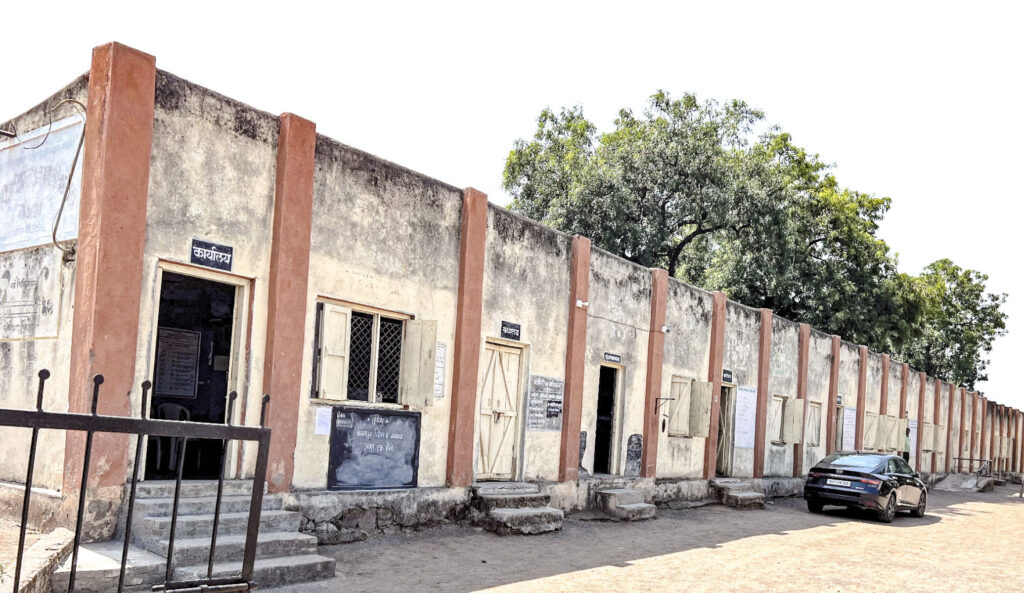
This co-education school — Swami Samarth High School — is in name a private school but the teachers are paid by the government. Apart from this, it has seen little interest from either the entity owning it or the government to improve either the infrastructure or the learning facilities. The children come from poor families of mainly farm labourers, and though the number on the rolls is 250, on an average only 150 to 200 children attend classes, with the missing ones being pressed in to lend a hand to their parents whenever field work is available.
Modi, an octogenarian, is a passionate Rotarian, and has been a Rotarian for 50 years now. He has very strong views on how the “quality of education a child gets should not be defined by her pin code, and girls should be particularly encouraged to go to school because they have so many social and cultural barriers that restrict their education. This perpetuates the cycle of poverty and limit opportunities for women.”
An income tax consultant till recently, he has now hung up his boots but is always thinking of ways to help rural youth. Though 85, he regularly visits this school, driving the 15km either himself or with his driver, now that he has more free time.
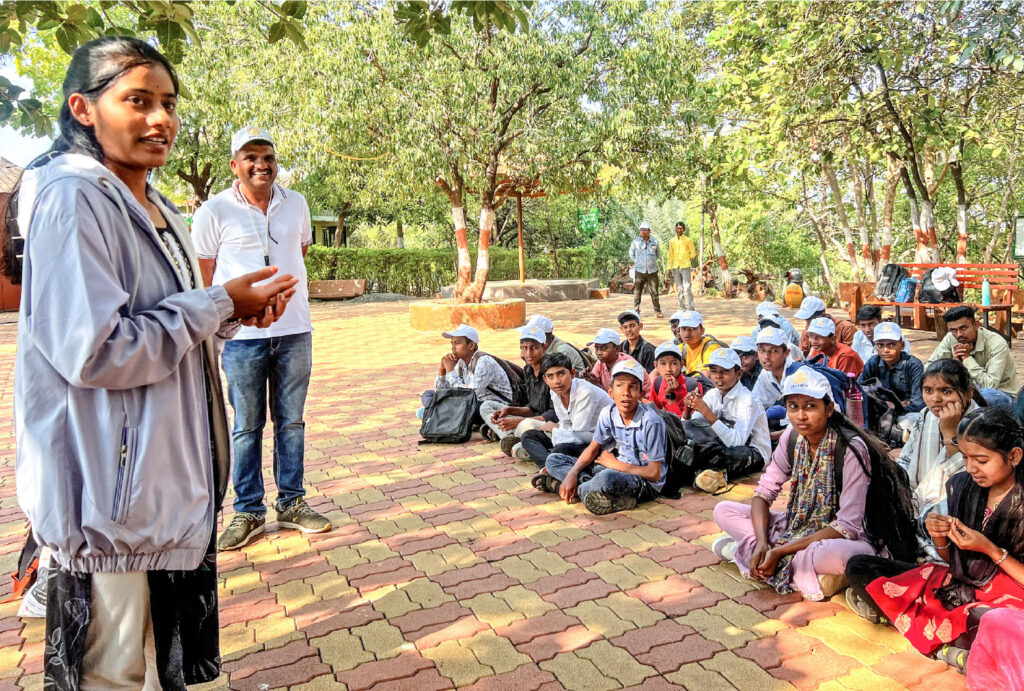
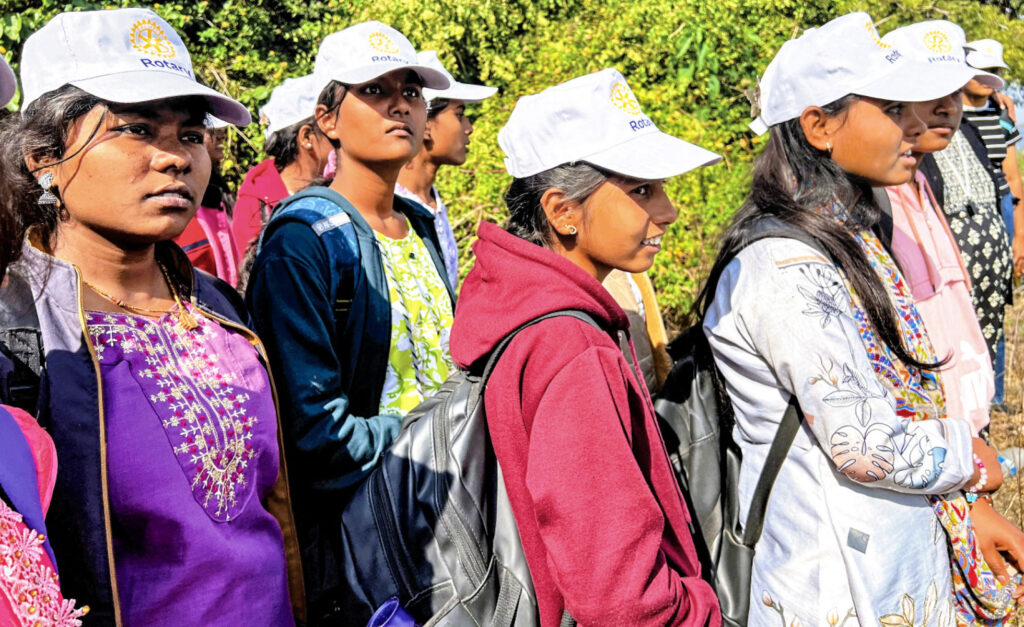
Another project the club organised for this school was a nature study camp in which a busload of about 50 students was taken to the Katepurna Wildlife Sanctuary, about 50km from Akola. The objective was to give them practical knowledge about the diverse flora and fauna, the birds and wildlife in this sanctuary. Interacting with the children during this excursion, the Rotarians found that these students were seeing a forest cluster and its varied vegetation for the first time. The youngsters learnt about how everything on our planet was meant for both human beings and other living beings, and needed to be shared equitably. The students were mesmerised when they saw the wide expanse of the brimming water in the Mahan Lake.
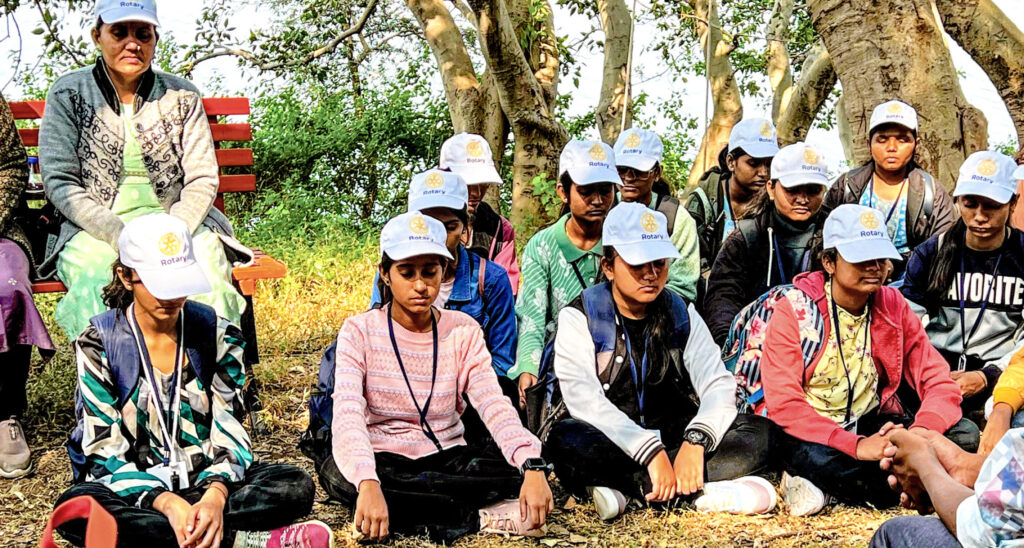
“We made them walk around the designated trekking range in the jungle area of about 2km, after which we asked them to sit down for 10 minutes, close their eyes and listen to the chirping of the birds and the sounds being made by the cricket and other creatures in the forest. They saw spotted deer, monkeys, and other wildlife while trekking through the forest. Finding spider webs in the tree branches was a mesmerising experience for them,” said club president Naryosang Taraporewala.
The children were sensitised to the environmental concerns of planet earth, and when asked to spell out their takeaway from this trip, said they will no longer carelessly throw around candy wrappers, or empty plastic water bottles or polythene bags which are choking our planet. “These are the messages we are trying to plant in these young minds; even if we get 10 per cent success, we will be happy,” he added.
Many Rotary clubs begin the academic year giving educational material… uniforms, books, stationery etc. How long can we continue like this? We have to give knowledge, not charity, to these children.
When collecting the children’s feedback, the Rotarians were thrilled to find that 7–8 girls voluntarily got up and gave a small impromptu talk expressing their gratitude for the steps taken by the club members for their overall education. Neelam, Jayashree, Shubhangi, Nandini, Yash, Gauri, Shubham, Meena and Dhanashree expressed their gratitude to their benefactor Vinod Toshniwal. (This project was sponsored by Shri Radhakisan Toshniwal Public Trust, Akola). “Now it is not easy for rural girls to get up and give a speech; we really appreciated that and thought we have to do much more,” said Taraporewala.
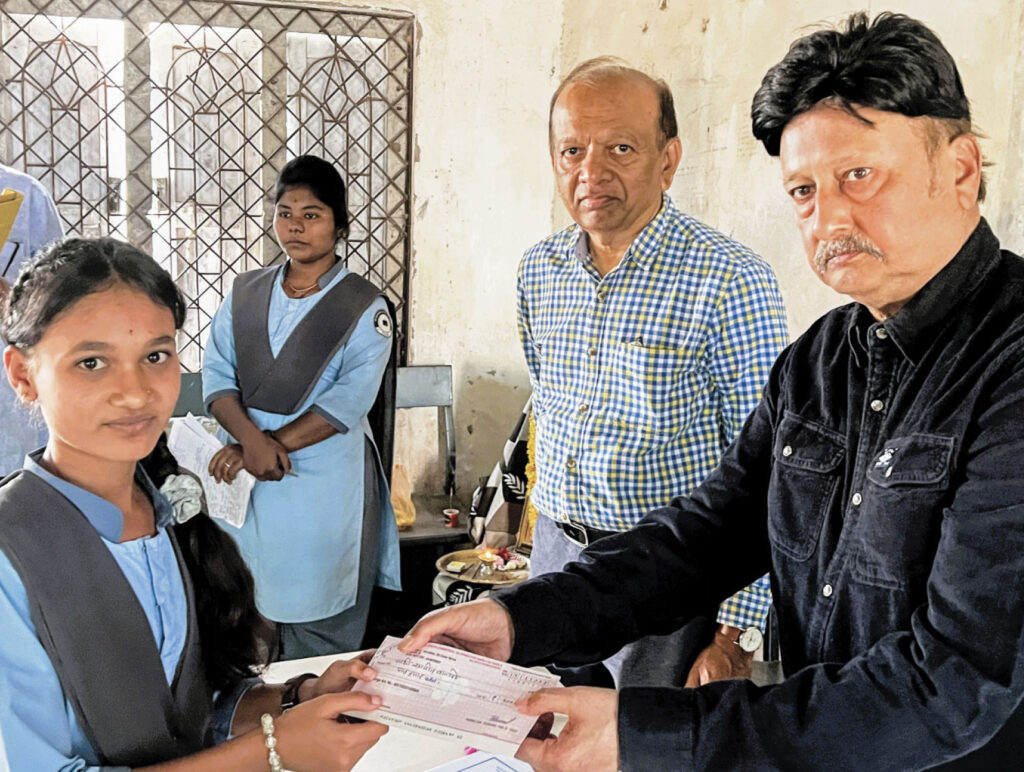
While scholarships for ₹5,000 each have been given to 20 girl students from Class 10–12 already, many more ventures for the students’ welfare are in the pipeline. Apart from an eye camp which is being held regularly by the club in the village for the general public, where over 150 eye operations were performed till now, the club members next want to give the school a computer lab with some 4–5 computers. This will cost ₹2.5 lakh, “which is not a problem at all, because there is always enough and more money available in India where charity is ingrained into our very being. But there are other challenges,” says Modi.
A major challenge is related to putting in good quality computers costing around ₹2.5 lakh in the school, but the main concern is the building having zero security. While discussing their plans with the teachers, the Rotarians expressed their concern on the computers being stolen in the night, and the teachers assured that the security cameras were in place. “But I told them, these cameras will not get us back the computers if they are stolen,” Modi quipped.
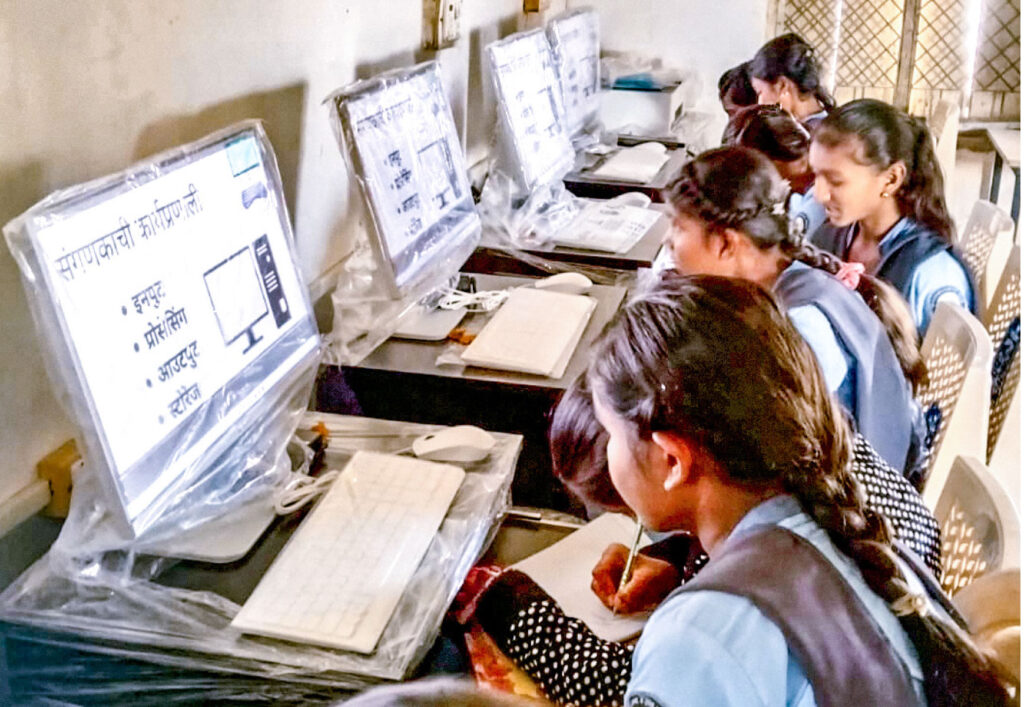
But when there’s a will there’s a way. The unfazed Rotarians did find a solution and have provided the school with five computers, a printer and some associated IT accessories. “We knew we had to find a solution because we were hell-bent on these children getting computer literacy as this is the call of the day and very much necessary. There are already so many obstructions in their way… if we don’t remove these obstructions, who else will,” he asks pointedly.
Next on the cards are a bunch of skilling programmes; “there is so much scope for them, classes in tailoring, cooking and so many other vocations. Our emphasis is that these children should be able to generate employment for themselves instead of being job seekers, and perhaps employ a few others too.”
On the horizon are one or two-day workshops to give them culinary skills to make food products which can be easily marketed. Such as the famous and very tasty banana chips available in Kerala. “We get them in Maharashtra too, but the taste is nowhere near the original. Like this there are so many products which can be marketed and give youngsters an opportunity to start their own small ventures. Why should Haldiram alone be marketing such snacks all over the country? Similarly, there is such a huge demand for chefs, so boys can benefit too from cookery classes.” Many other agriculture-related avenues are also open where youngsters can be skilled to earn their livelihood.
This veteran Rotarian advocates that all Rotary clubs in India should adopt village schools or do something concrete for rural youth. “If our incoming district governors can promote this idea instead of concentrating only in promoting their district conferences which will anyway come only 6–7 months later during their term, such projects will get a boost and Rotary can really make a huge difference in India.”
It is well-known that there is no money crunch in India; every Rotarian should act as a catalyst and find that money. “There is a lot of money with and around us… with our friends, acquaintances, business partners and relatives. Also, there are so many private charitable trusts, not to mention the CSR funds available. And they trust Rotarians like us!”
Modi is proud that he has convinced one of his colleagues to build a skill development academy in Akola which can cost between ₹1 and ₹2 crore. “He is ready with the money and the resolve and has told me that with your efforts, direction and involvement, this can be done. He said let’s teach different types of skills — auto industry, tailoring, fashion designing, beauty care, etc — to youngsters.” Women from the village will also be involved in these skill development projects to enable them to start their own self-employment programmes.
The children said they will no longer carelessly throw around candy wrappers, empty plastic water bottles or polythene bags which are choking our planet.
He adds that in and around Akola there are many dhal mills… specially for processing and packing toor dhal, and skilled workers are always required for this industry. “We can also train youngsters in IT skills, and vocations such as plumbing, carpentry and electrical services. I am a member in an educational society where several members run institutions and they are helping us in putting up this skilling centre.”
Akola, Modi adds, has a population of around 10 lakh and a floating population of one or two lakh. And too many youngsters have no jobs; “because they have no skills. And when unemployed youngsters are available, politicians use them for this campaign or that, to raise slogans here or throw stones there. That is the worst way to harness the energy of the young.”
So many Rotary clubs begin the academic year giving educational material… uniforms, books, stationery etc. “But how long can we continue like this? We have to give knowledge, not charity, to these children, so that they can earn their livelihood.”
He acknowledges that his club gets “many ideas to do service project after reading about the good work some of the clubs do around the country. One project in the South where 50 sewing machines had been given to poor women inspired us to start such a project in one of our villages.”