

While there is good progress in the global effort to eradicate polio, almost nil at 99.9 per cent, “we are concerned over the two endemic countries, Pakistan and Afghanistan that are getting new cases of wild poliovirus each year. Political instability, conflicts and militancy affect immunisation drive by health workers and Rotary volunteers,” said Michael McGovern, chair, RI’s PolioPlus Committee.
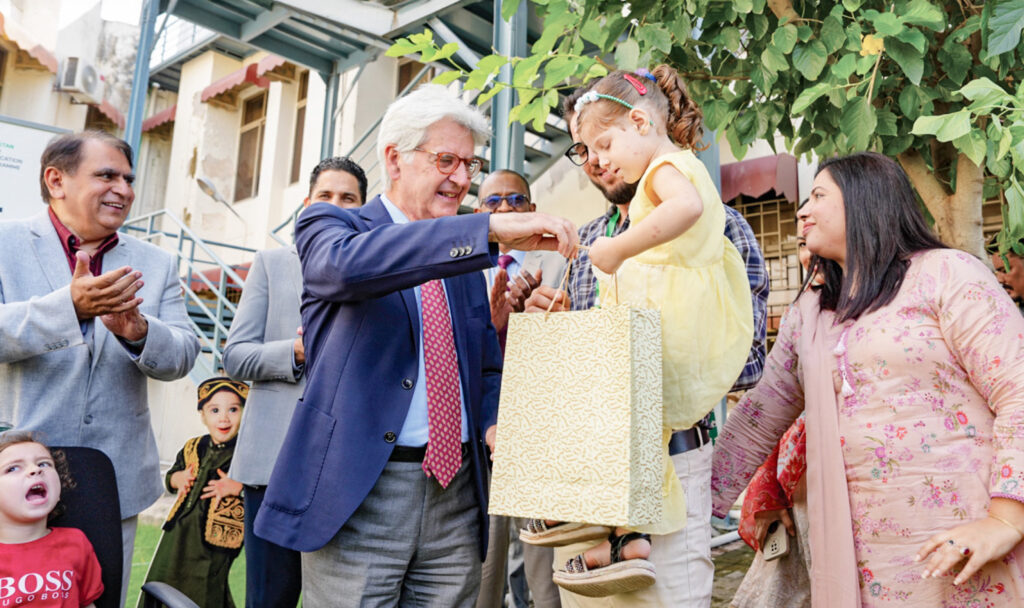
Speaking at a webinar on ‘The last mile in the war against polio,’ jointly hosted by RID 3234 and The Hindu daily, he urged Rotarians to keep up their engagement at their club and national-level; focus on eradication activities at the high-risk areas; “ensure better accountability among partners to achieve the objectives, and take part in advocacy groups to work with local governments, that will help in funding the PolioPlus campaign,” he said.
At present, 62 per cent of the global Rotary clubs are contributing to the Polio Fund, and “Rotarians in India have set an example for others through their awareness drives and advocacy efforts with the government.” He added that Rotary has contributed $25 million to GoI’s steps to migrate from OPV to an injectable polio vaccine.
After taking charge as Rotary President, Francesco Arezzo’s first trip was to Pakistan where he met the political and Rotary leaders engaged in the fight against polio. “Every five years, there is a spike in polio cases in Pakistan during elections as the work of health volunteers and the immunisation drive are affected during this time,” he said. Till October 16, there were 35 cases of wild poliovirus (WPV1) worldwide — 29 in Pakistan and six in Afghanistan. Last year (2024), the world saw 99 cases of WPV1 in these two countries, he noted.
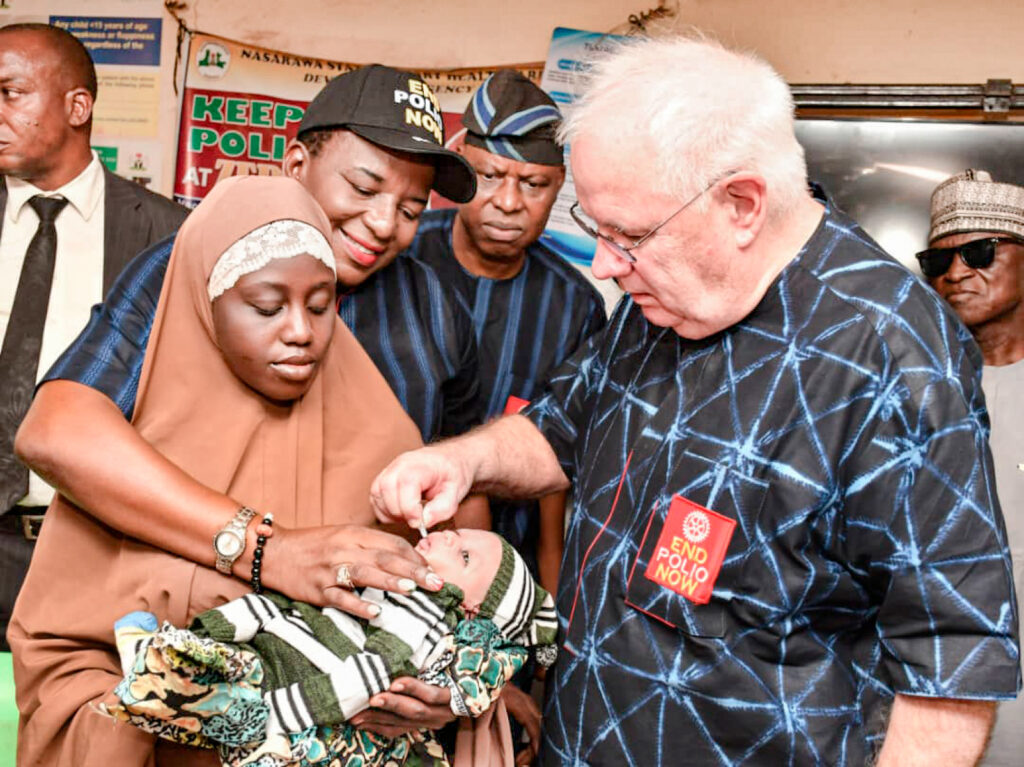
There is a spurt in the cases of polio variants (circulating vaccine-derived poliovirus2 — cVDPV2) in many African and Middle East countries like Ethiopia, Yemen, Chad, Angola, Gaza, Nigeria and Somalia which are in dire need of immunisation drive and surveillance by Rotary teams, said McGovern. Each year, Rotary raises $50 million for its PolioPlus campaign, and this amount is matched 2:1 by the Gates Foundation. The US government is the largest donor, having contributed $265 million each year in the last two years, and will provide the same amount in 2026 too. “Since 1985, the US government alone has spent more than $5 billion in polio eradication initiatives,” he said.
Through its advocacy efforts, Rotary has brought in the WHO and the Gates Foundation who are now partners of the rainbow alliance called GPEI (Global Polio Eradication Initiative) formed in 1988 with RI as the founder member, along with other global health bodies. No other organisation in the world has taken on such a challenging project as Rotary did by taking up polio, McGovern said. “Until we finish polio completely, we can’t move on to the next big corporate project.”
DG Vinod Saraogi said Rotarians and the Chennai Corporation gave oral polio drops in Chennai on two days in November. “At metro stations, Rotarians sensitised commuters on Rotary’s global efforts to end polio. We must continue with social media campaigns and surveillance to prevent the re-emergence of polio in vulnerable, high-risk areas, until the last child in the world is immunised.”
Around 700 Rotarians and readers of The Hindu watched the live streaming session on various social media channels.
Madras was the pilot study
Speaking to Rotary News, N K Gopinath, a veteran EPN campaigner and past president, said RC Madras was the first in the country to start the PolioPlus campaign in the then Madras in 1984 by importing vaccines from Canada, thanks to the help from the state government. Club member, the late Kris Chitale, PDG Ken Hobbs from RC Whitby, Canada, and Dr Jacob John from RC Vellore were pioneers in the very first immunisation drive in India. “Based on the success of the maiden 1984 campaign in Madras, a national-level PolioPlus campaign was launched by the then RI President Mat Caparas with the GoI’s support on May 1, 1987,” he recalled. “GoI chose Tamil Nadu as the pilot state and Rotary offered a grant of $2.5 million for this nascent campaign then.”