
Ever wondered how different school science would have felt if the lab experience had been more lively?
If learning physics meant ‘watching’ a beam of light bend through a concave lens… if biology was ‘experimenting’ with how the human heart pumps, if chemistry meant feeling the excitement of chemical reactions bubbling over right in front of you? Many of us might have fallen in love with science much earlier.
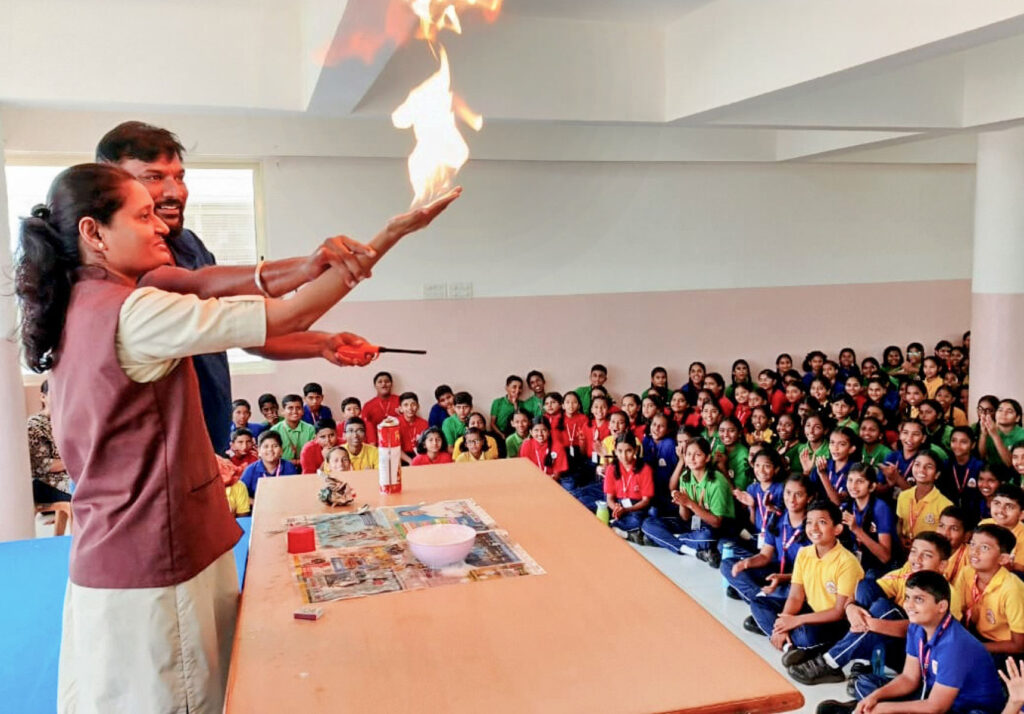
For thousands of schoolchildren today, that excitement arrives on wheels. When the Vigyan Rath, a mobile science laboratory, pulls into a school campus, the atmosphere shifts. Curious faces, restless energy, and, within minutes, an almost magical silence as students immerse themselves in physics, chemistry and biology experiments. Three hours pass before they even realise it.
Behind this enthusiasm are Naveen and Arivarasan, science educators with 16 years of experience transforming textbook concepts into memorable, hands-on demonstrations. “Children understand better when they ‘see’ a concept rather than simply read about it. Once they see it, it stays with them for life,” says Naveen.
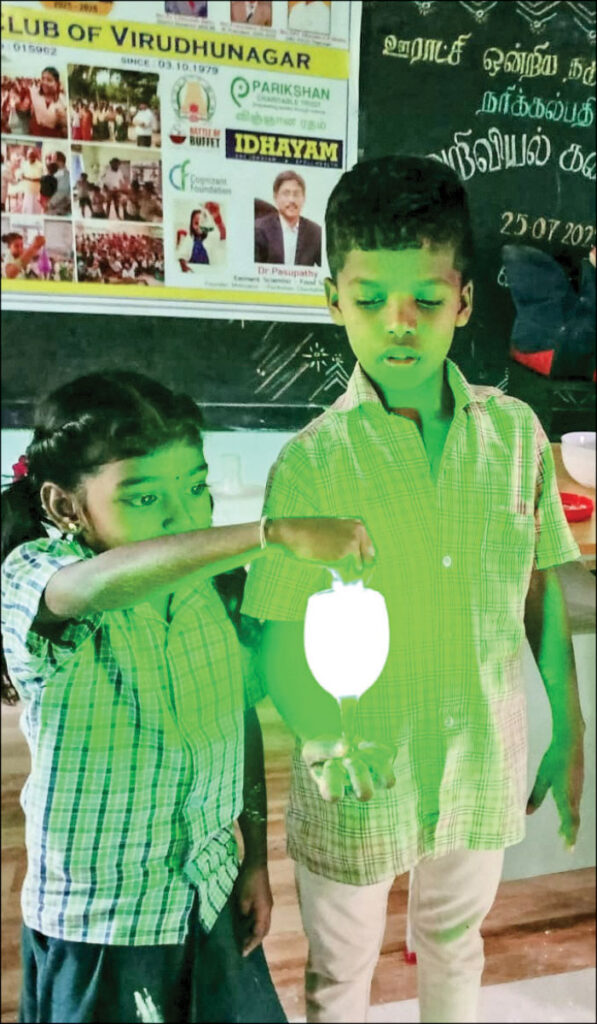
The Vigyan Rath initiative began in 2009, conceptualised by Dr Pasupathi, a food scientist and trustee of the Parikshan Charitable Trust. His vision was to take quality science education to village schools that lacked even basic infrastructure. “In many rural schools, expecting a full-fledged lab, when even new science textbooks feel like a luxury, is unrealistic,” says Naveen.
Initially supported by public donations, the programme received a new lease of life in 2021 when RID 3212 PDG V R Muthu adopted the project through his corporate Idhayam. His home club, RC Virudhunagar, now oversees its operations.
Since 2021, the Vigyan Rath has travelled 50,000km, reaching nearly three lakh students and 15,000 teachers across multiple states.
“Idhayam maintains the bus, pays staff salaries, and supplies lab chemicals. The sponsoring Rotary clubs provide food and accommodation for the team,” explains project coordinator Vadivel Ramaiah of RC Virudhunagar. Rotary clubs across India frequently invite the bus to their local government schools and colleges. In schools, the programme extends to students from Class 6–12.
Over the last three months, the Vigyan Rath has covered schools in Karnataka and Maharashtra, supported by Inner Wheel clubs of RID 317. As it heads to Goa next, Naveen says, “We have about 700–1,000 experiments lined up for the schools there.” Each session accommodates around 250 students for an immersive three-hour learning experience. Inner Wheel district chairperson Utkarsha Patil and project coordinator Shilpa Shetty are coordinating the schedule across both states.
In September, the mobile lab visited 22 schools in Pollachi, Tamil Nadu, reaching over 2,940 students and 100 teachers, with support from RC Pollachi, RID 3203. “The programme sparked scientific curiosity and opened children’s eyes to future opportunities,” says club president V Satish Chandran.
Since 2021, the Vigyan Rath has travelled 50,000km, reaching nearly three lakh students and 15,000 teachers across multiple states. “Science should not be seen merely as a subject. It is a way of exploring and understanding the world. We want to ignite a lifelong passion for learning, and dispel superstitions by helping children see the real science behind things,” says Vadivel.
Experiments that make Science come alive
Naveen shares some favourites that leave students wide-eyed:
The Elephant Toothpaste experiment
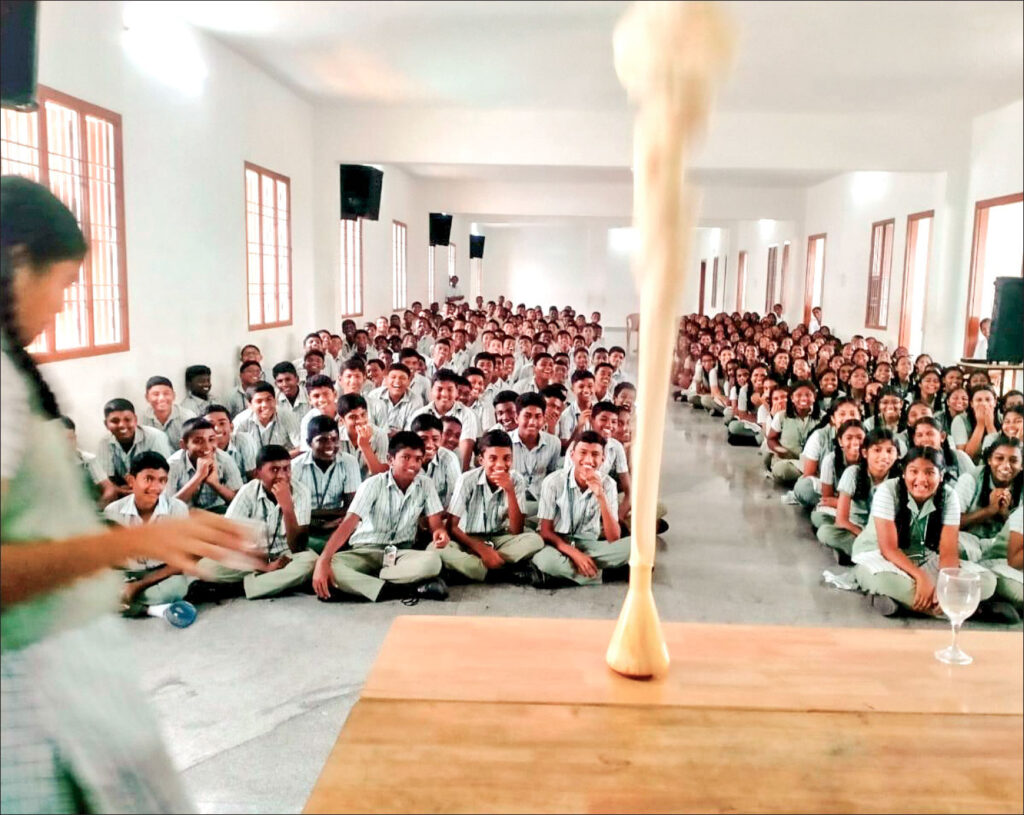
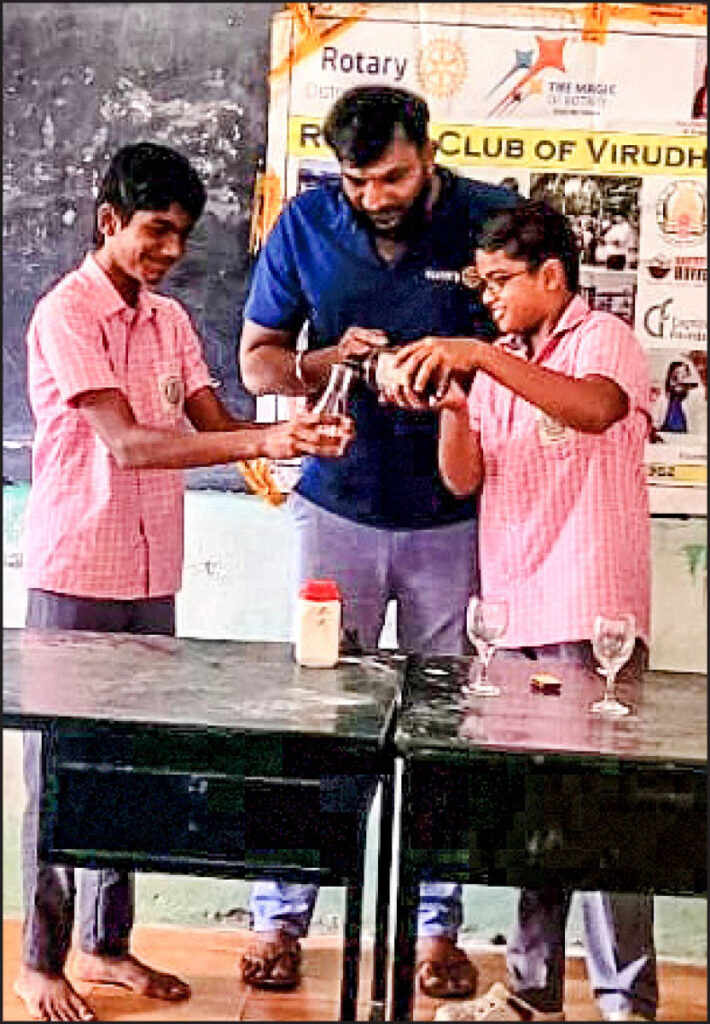
Hydrogen peroxide and dish soap are mixed in a conical flask — nothing dramatic happens. To speed up the reaction, water is added to potassium iodide (catalyst) in another beaker. This makes the mixture turn cold — here he introduces endothermic and exothermic reactions. When this mixture is added to the flask, a giant column of foam gushes out — like toothpaste meant for an elephant! He uses this experiment to explain decomposition reactions and catalysts. Hydrogen peroxide breaks down into water and oxygen; the soap traps oxygen bubbles, creating foam.He also connects it to real life: “During an accident, a car’s airbag inflates due to a similar decomposition reaction involving sodium azide, releasing nitrogen,” he explains.
Fire on Hand
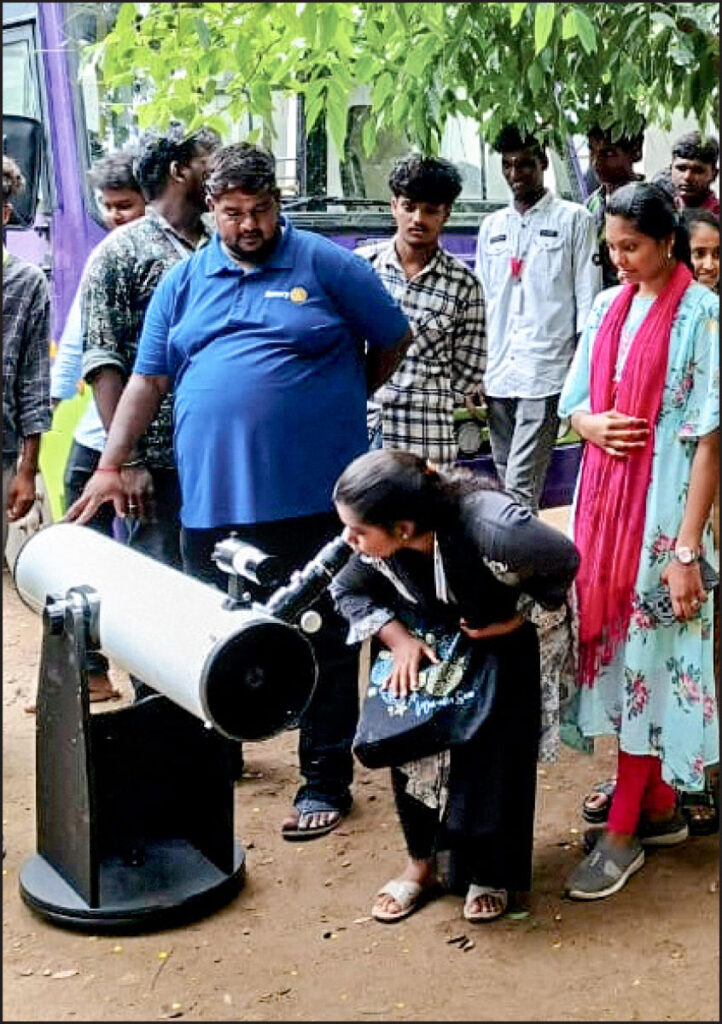
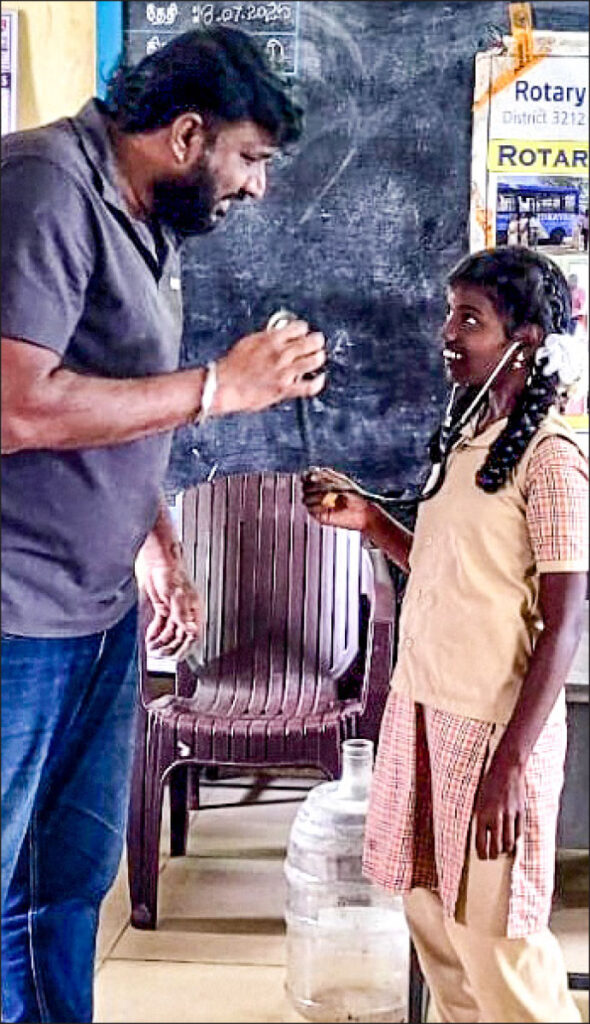
Students watch in awe as Naveen lights a handful of bubbles filled with a flammable gas such as butane, without burning himself. A coating of water on his hand absorbs the heat, making the reaction safe. “It’s an unforgettable way to teach principles of combustion and heat transfer.”A stethoscope helps students hear how their heartbeat changes with activity, while a telescope opens a window into the night sky.