

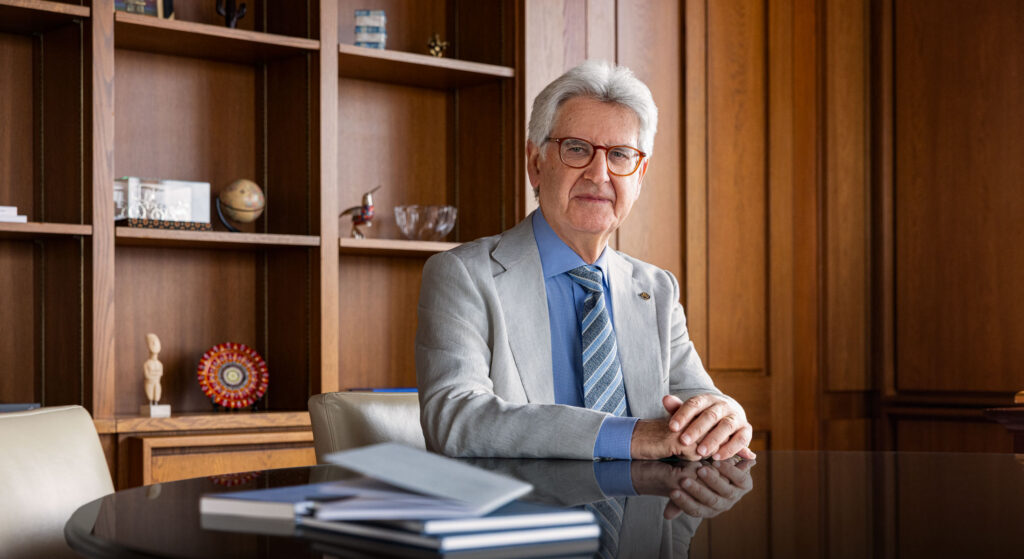
October is Rotary’s Community Economic Development Month, a time to spotlight our efforts to help communities build thriving, sustainable future. This month’s observance aligns perfectly with the Rotary core value of leadership.
Leadership means empowering people to guide their own progress. That is precisely what Rotary’s economic development projects aim to achieve.
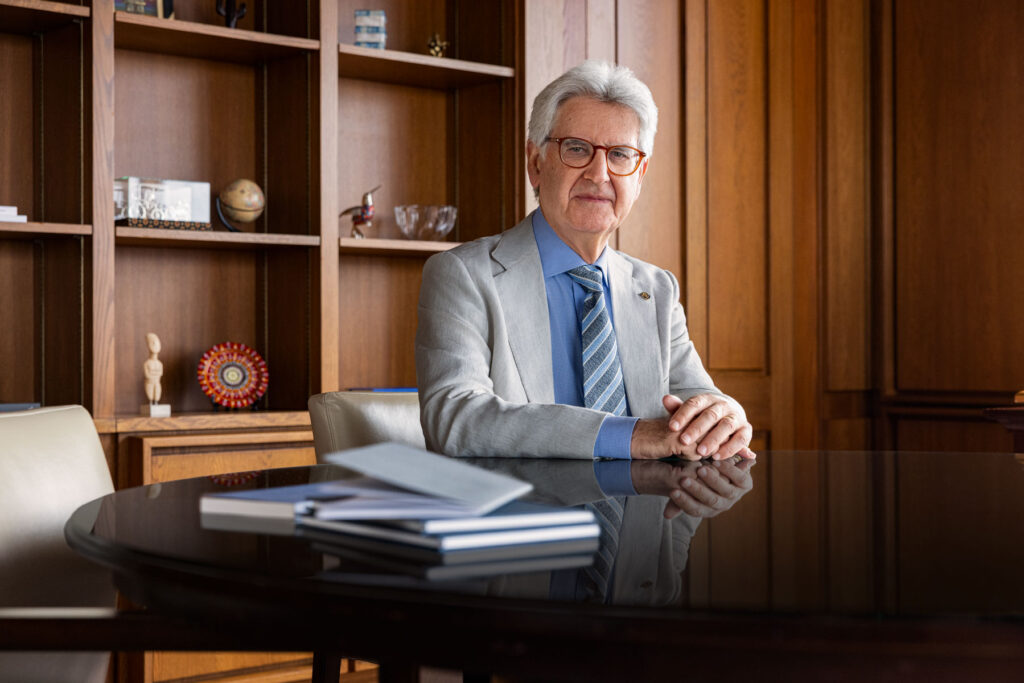
Take, for example, a recent initiative in southern India in which Rotary members unlocked the power of women of the Adivasi tribal groups through sewing training to earn a living and regain social inclusion. Historically, widows and abandoned women in this region lose social standing and are shunned by society or blamed for their misfortunes. Opportunities to support themselves or obtain training are minimal.
This year, the Rotary Club of Windsor Roseland, Ontario, partnered with clubs in Districts 3203 and 3234 in India — and with the Indian organisation Sevalaya Trust — to provide sewing machines and training to 80 Adivasi women. They learned to stitch saree blouses, kurta tunics, and salwar suits, enabling them to support themselves and their families. Each woman received a certificate for completing the programme, and the sewing machine-provider offered free long-term maintenance for the machines. The project offered vital income and dignity to women ostracised by society after widowhood.
This story is one example of Rotary leadership in action: local people guiding solutions that address their community needs. Our role is not to deliver charity or to impose outside models, but to foster self-reliance by investing in leadership, skills, and sustainable enterprise.
This October, I invite Rotary members worldwide to reflect on economic leadership in their communities. Who is stepping forward to lead local economic initiatives? Where is untapped talent that could be supported with training or mentorship? How can your club catalyse opportunity through partnerships with local businesses, vocational schools, or savings groups?
Leadership is not always about being visible. Sometimes it means listening, working collaboratively, and amplifying the voices of others. That approach lies at the heart of Rotary’s philosophy and our lasting impact on economic development.
By building capacity — whether through microcredit groups, vocational training workshops, or entrepreneurship programmes — we enable communities to lead their own transformation. When people take ownership of their progress, change becomes sustainable.
Let us lead with good intention and provide support with heart. By nurturing local leadership, we can create opportunities that ripple through communities, empowering individuals, families and societies.
Together, we can support economies that work for everyone and enact community development projects that last.
Francesco Arezzo
President, Rotary International