
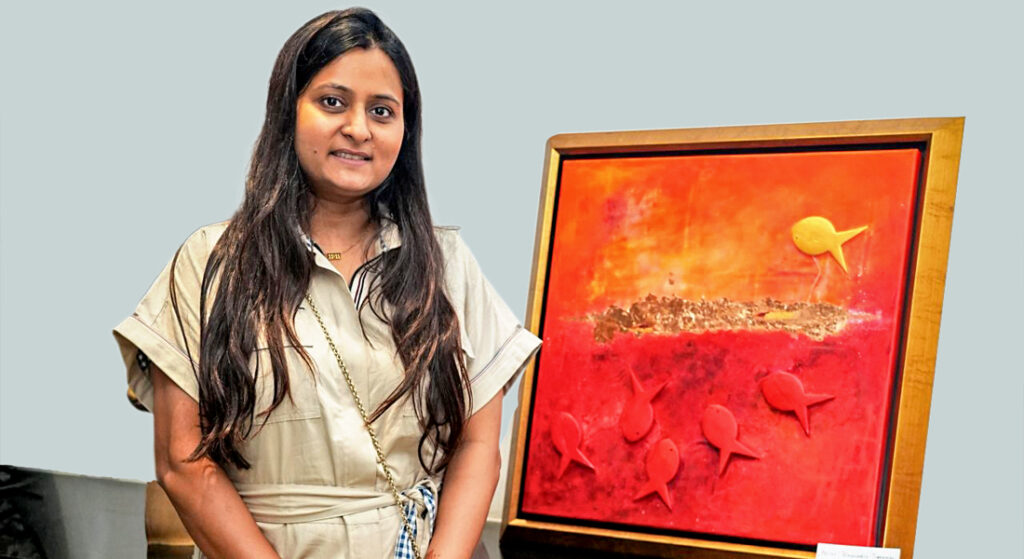
The sale of a painting titled Crimson Depth, Golden Dreams, has helped in funding the education of children at the Rotary Bangalore Vidyalaya, a school for underprivileged students in Bengaluru. Thirty per cent of the proceeds from the artwork were given to the school through Kala for Vidya, an art-based fundraising initiative of RC Bangalore (RCB), RID 3192.
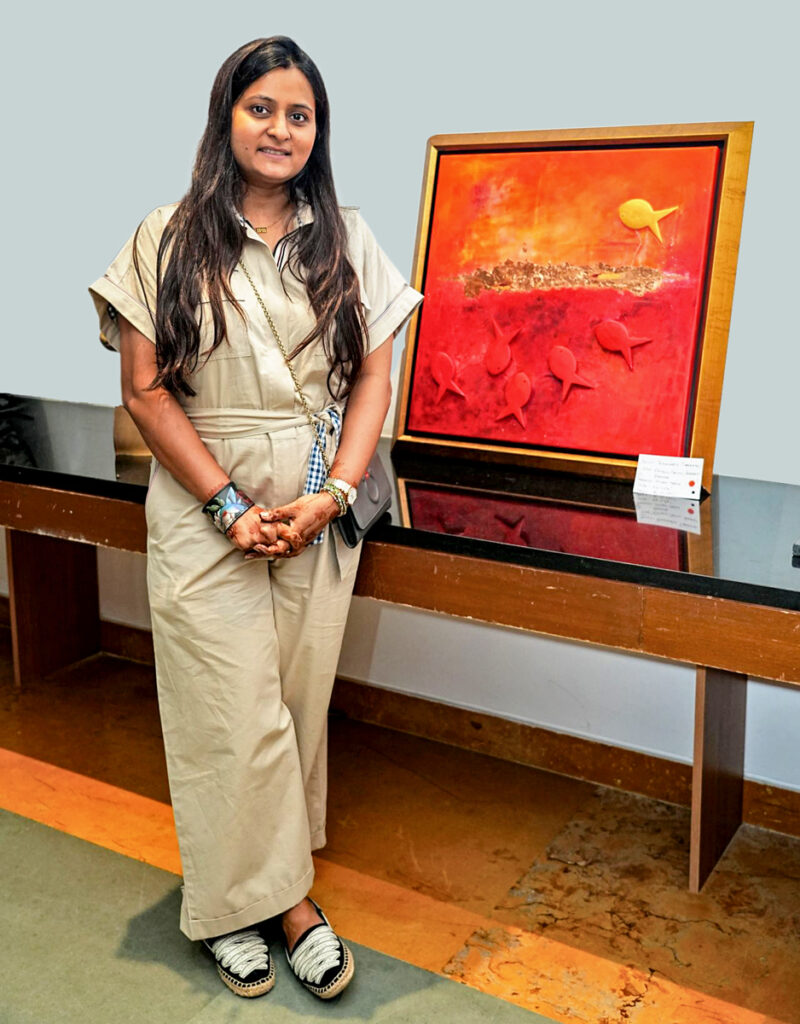
The painting was created by Bengaluru-based artist Khushboo Tibrewal after she visited rural Karnataka under the government’s Dr B R Ambedkar International Scholarship Scheme (a fully-funded initiative by the state government to support SC students in pursuing master’s and doctoral studies in foreign universities). During these visits, she interacted with SC/ST students who were eager for an education but had limited exposure to higher education pathways. “Many students had never considered studying in Bengaluru, and international education was largely out of the question. Those encounters shaped the theme and intent of the work,” she says. Her artwork was sold for ₹41,000.
Kala for Vidya uses the sale of artworks to raise funds for education. Rather than relying on traditional donation-based appeals, the initiative channels a fixed portion of art sales toward funding education, while ensuring that artists retain the majority share of the proceeds.
RCB recently concluded the 2025 edition of Kala for Vidya, its 18th annual art fundraising exhibition, which was held at the Bangalore International Centre. The exhibition raised funds for Rotary Bangalore Vidyalaya in Nagadevanahalli, which supports the education of over 450 children from underserved communities.
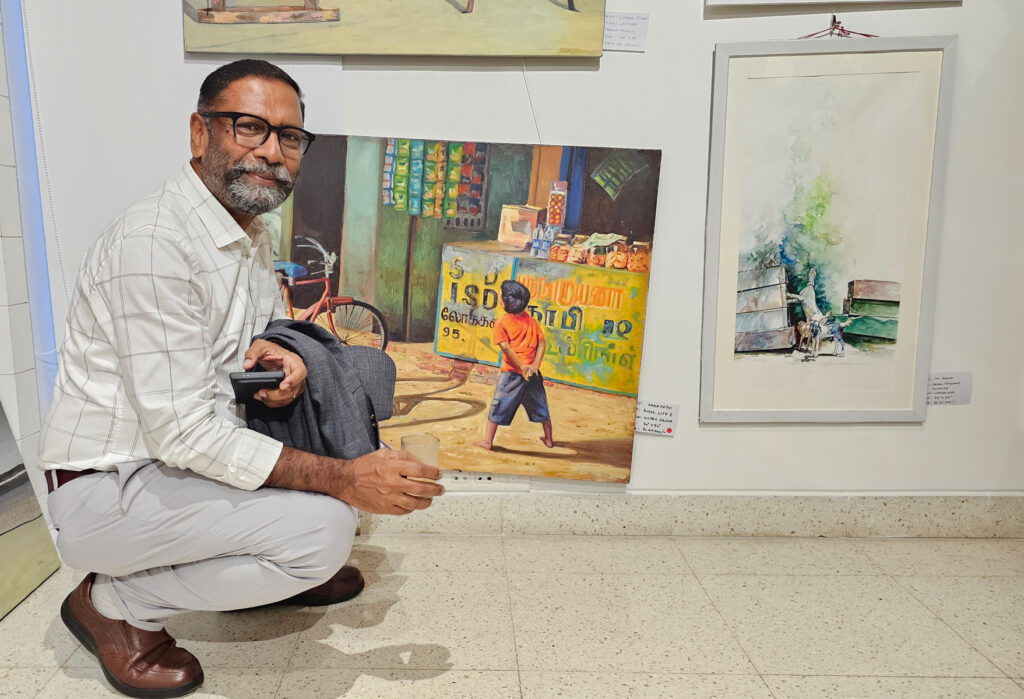
The exhibition was inaugurated by Rotarians Sitalakshmi Chinnappa, Meera Shankar, Srichand Rajpal and Shanti Baliga. DG Elizabeth Cherian and DGE Ravishankar Dakoju were present. This year’s edition featured 201 paintings and 21 sculptures contributed by 155 artists, representing a wide range of media and styles.
This year, the club adopted an extended sales model, says Sandeep Ohri, the club’s International Service director. While the physical exhibition concluded in October, the artworks continued to be available through an online platform till end 2025.
To support the online phase, the club developed a structured digital campaign, including professional documentation of artworks and artist testimonials. “The objective was to improve visibility while maintaining consistency in presentation and pricing.”
Kala for Vidya operates on a financial structure different from commercial galleries, “which typically retain 50–60 per cent commission on sales. Under this model, after statutory taxes and payment processing charges, approximately 30 per cent of proceeds are given for education, with artists receiving the majority share. Unsold works remain the property of the artists, who retain full ownership and copyright,” says Ohri.
Participation fees were structured to accommodate artists at different career stages, with lower entry costs for printmakers and emerging artists. “These fees were designed to offset basic operational expenses such as venue hire, insurance and logistics, rather than generate surplus revenue.”
The exhibition included works in oil, watercolour, charcoal, terracotta, stucco and mixed media, and priced from ₹7,000 to ₹13.7 lakh. Encouraged by the response to the 2025 edition, RC Bangalore is exploring the possibility of expanding the programme into a year-round platform rather than an annual event. The objective is to provide artists with sustained visibility while generating continuous funding for education at the Rotary Bangalore Vidyalaya. “Discussions are also underway on potential collaborations with art institutions and schools, including the integration of art education into community-based service programmes. While these plans remain at an early stage, the initiative reflects a broader shift toward models that combine cultural production with long-term social investment,” explains Ohri.
The beneficiary school
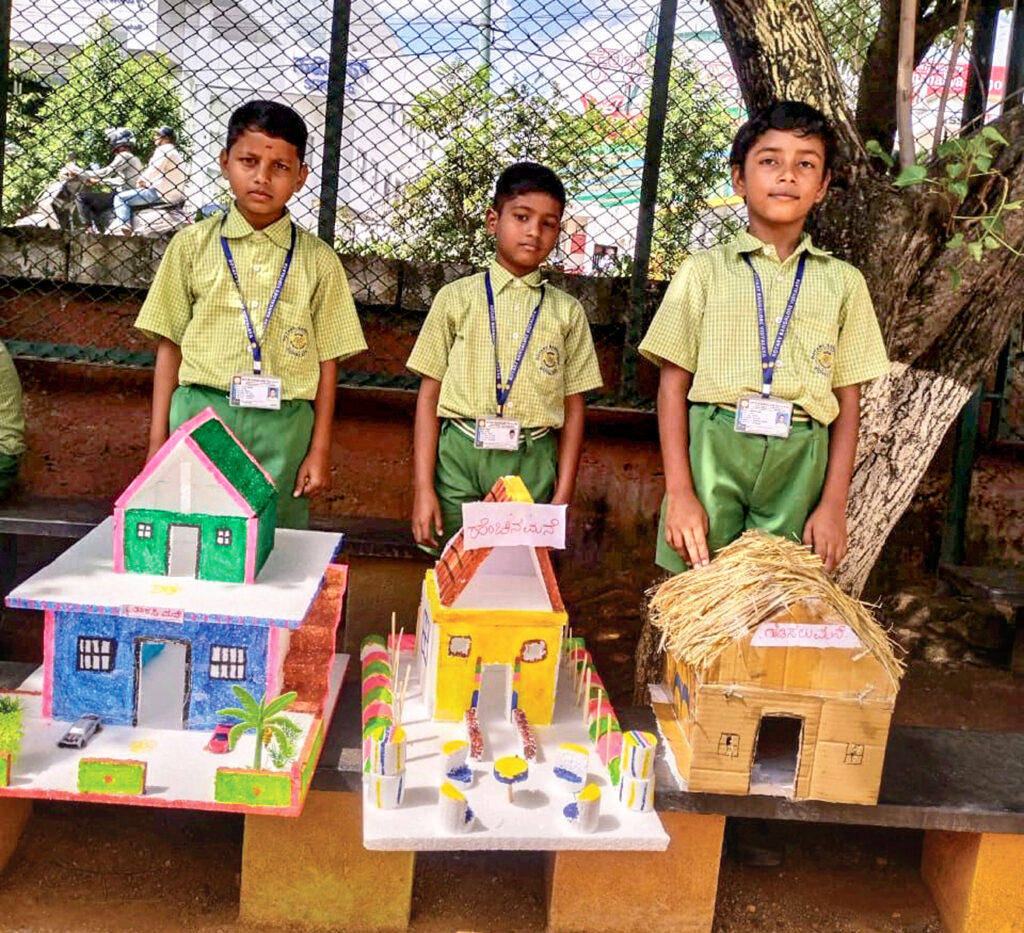
Funds raised through Kala for Vidya support Rotary Bangalore Vidyalaya, an institution operated by the Rotary Club of Bangalore Charitable Trust. The school offers education from pre-nursery to Class X in both Kannada and English medium.
Located in Nagadevanahalli and accessible by public transport, the campus includes classrooms, science and computer labs, a library, a playground and an auditorium. The school’s computer lab was upgraded in 2023 with modern systems, licensed software and digital learning facilities. E-learning content is provided for students from Class 1–10.
Academic progress is supported through regular assessments, experienced teaching staff and scheduled parent–teacher interactions. The school also emphasises extracurricular participation, field visits, hygiene and annual medical check-up.
A task force committee comprising members of RC Bangalore meets monthly to review administrative, academic, safety and statutory matters, with representation from the school’s chief executive officer and the headmistress.