





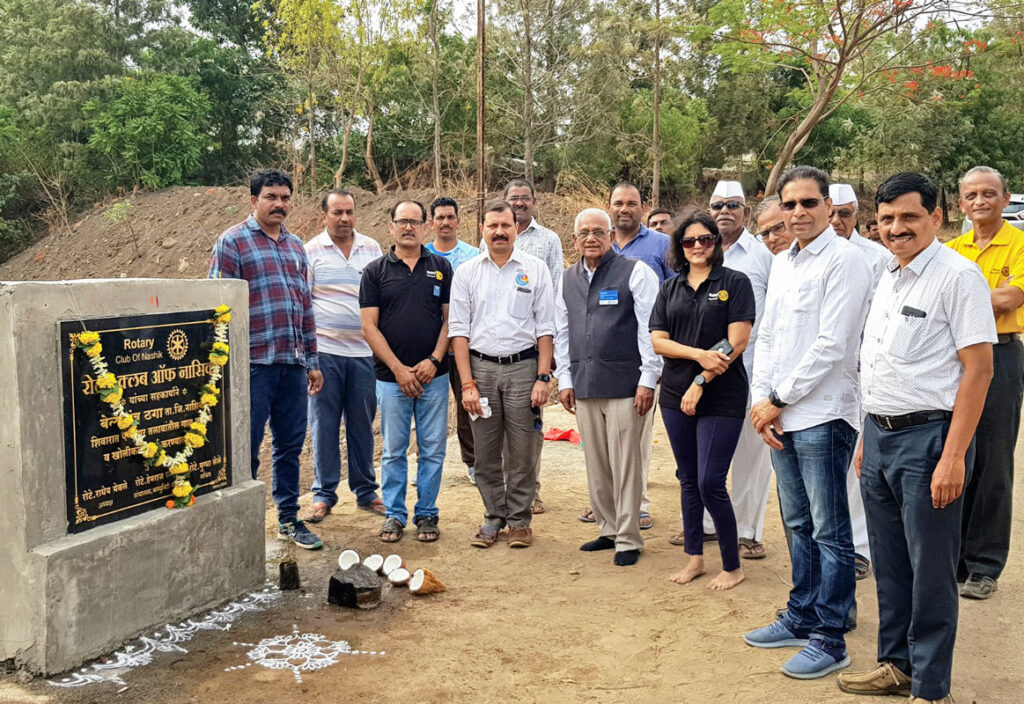
Around 45 families have benefitted from a river desilting service project carried out by the Rotary Club of Nasik, RID 3030, across the Nandini River near Mahiravani village. Excavators were engaged to remove silt down to a depth of 2m deposited across the 1.5km stretch of the river which also has a bund to store water. “At least 60 million litres of water can be stored in the bund after this desilting activity,” says club member Vinayak Deodhar.
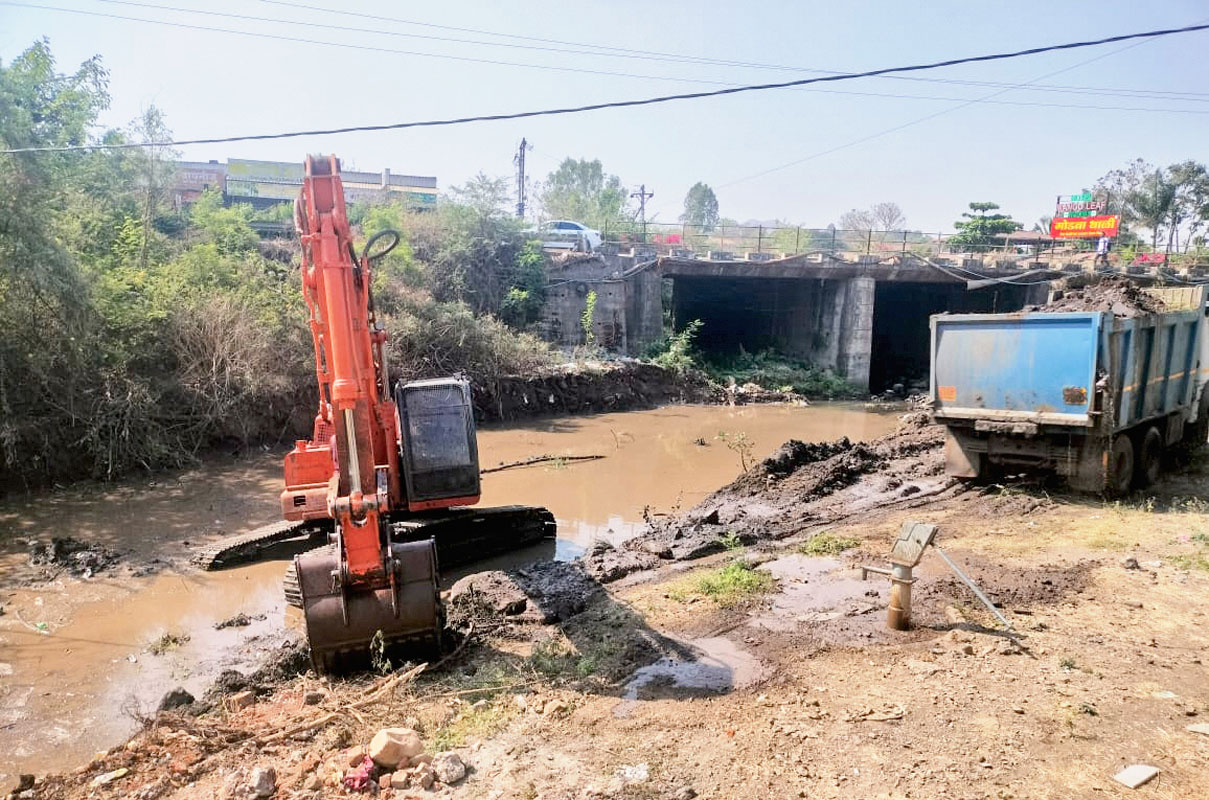
For the past four years, the club has been desilting at least two check dams or bunds each year, always just before the onset of the monsoon. Timing is critical. “If you clear the waterways before the rains, you prevent rainwater from going waste. The rivers and rivulets flow better, and the ground water gets recharged,” he explains.
Around 25 villages have benefitted from this service activity. Farmlands that once lay fallow are now rich with crops; wells stay fuller for longer and families that once had to migrate in search of work are now finding sustainable livelihoods in their own backyard.
Nashik’s rural regions are marked with thousands of small check dams, locally called bunds, built across rivers or rivulets to store monsoon rainwater. These structures help in replenishing the water table. However, over time, rivers and nullahs collect silt, sand and debris, reducing their capacity to store and carry water. Left unchecked, this sediment buildup can lead to flooding during the rains or water scarcity in dry months, explains Deodhar.
Desilting is the answer. “It has to be done in summer, when the water levels are low and the sediment is accessible. This ensures maximum storage when the rains come.”
Club member and horticulture scientist Hemraj Rajput, who is with the Krishi Vigyan Kendra in Nashik, visits rural areas in the district as part of his job. “He flags waterbodies in need of desilting. Based on his inputs, the club shortlists projects each year,” says Deodhar.
The entire operation costs around ₹3–4 lakh every year which is met through CSR grants from corporates. This year the project was supported by Acron Plast, a packaging industry in Nashik. The benefits extend across 20km downstream and 10km on either side of the bund, impacting hundreds of farmers and their families.
After desilting, the water table rises significantly. “Farmers are able to grow crops throughout the year. Their income has increased, and there is less need to leave the village in search of work,” he says. Even the excavated soil doesn’t go waste. “Rich in minerals, it is in high demand among local farmers who use it to enrich their fields,” he adds.
Earlier this year, Rajput also led the planting of a Miyawaki forest. Over 1,000 saplings were planted on a plot of land at the Janata Vidyalaya in Gandhinagar in the city. In just six months, the forest is already showing promising growth.