




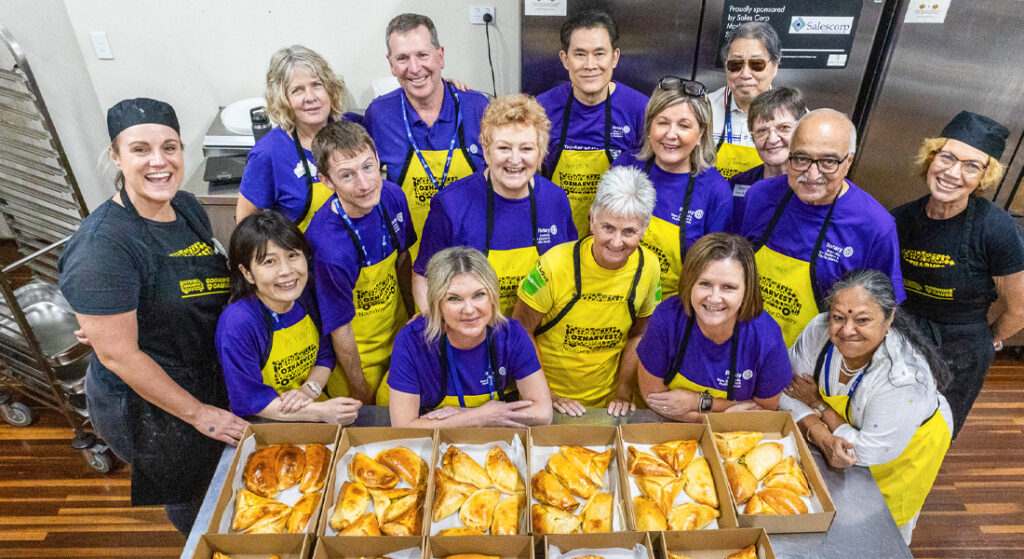
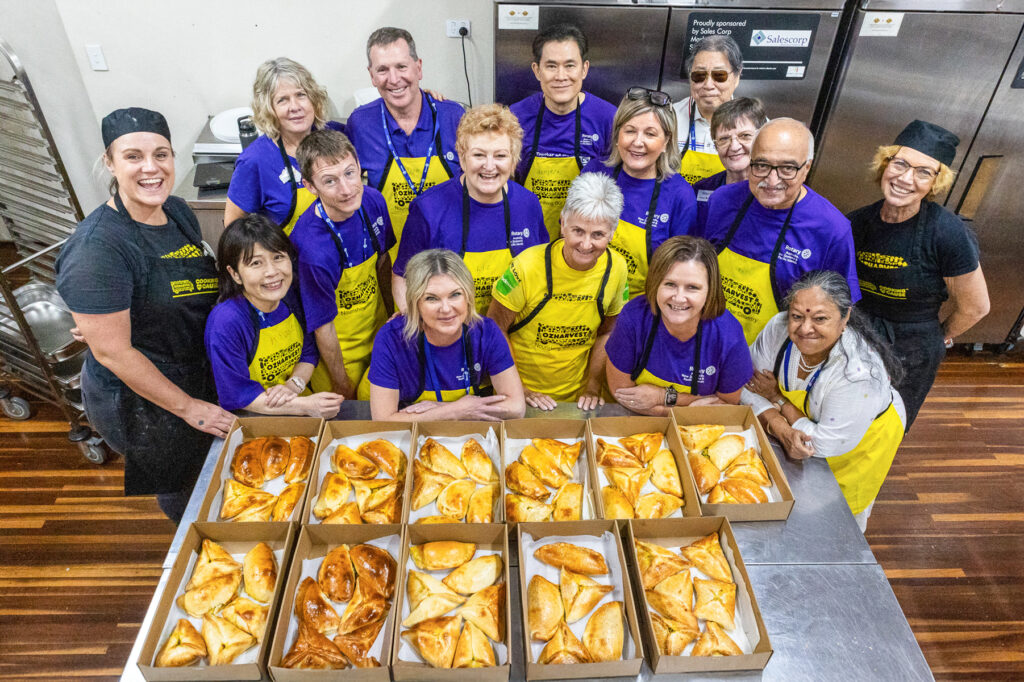
One of the most interesting and educative sessions at the Asia Pacific Editors Seminar hosted recently at the Gold Coast, Australia, by the Rotary Down Under team, was a cooking experience at one of the kitchens run by OzHarvest, a remarkable charity that reaches fresh, healthy and nourishing food to the country’s needy people.
The charity began on a modest note in 2004 when Ronni Kahn, a social entrepreneur, noticed a lot of food being wasted at the events she organised. “So she set up OzHarvest to ‘rescue’ surplus food and reach it to those who needed it. She did not set out to create this big charity; she saw a problem and thought of a simple solution. She’d herself go around in a van collecting the leftover food from big events and delivering it to a charity,” Marika Mammen, OzHarvest’s engagement coordinator for Queensland, told Rotary News in an interview.
What began with one van in Sydney grew into a big charity that today has 400 paid staff, including 120 van drivers, 4,000 volunteers and 70 vans, operating in 20 locations across the country. Today, OzHarvest’s iconic yellow ‘food rescue vans’ are involved in saving over 250 tonnes of good food every week from over 2,600 food donors and delivering it directly to over 1,500 charities that feed needy people in Australia.
Ronni’s small venture quickly grew and has now become Australia’s leading food rescue organisation. As OzHarvest grew, Ronni and a team of pro bono lawyers lobbied state governments to amend legislation allowing potential food donors to give their surplus food to charities without fear of liability. The Civil Liabilities Amendment Act was passed in New South Wales in 2005 and other states followed.
In a nutshell, OzHarvest’s core activity is to “rescue” food which will otherwise go waste, from supermarkets, grocery stores, events, bakeries and eateries, and deliver it either as ingredients — fruits and vegetables, food grains etc — or turn it into cooked meals through its Cooking for a Cause programme and reach it to needy communities or charities. In this massive endeavour to stop food waste, OzHarvest, “renowned for disrupting the food waste landscape in Australia,” has an arrangement with large organisations and other food donors.
“We operate with very high food safety standards. When they go to the store, our drivers check every single item to make sure it’s not expired and is edible. In many cases, it’s surplus or extra food that some organisations have, and these include local bakeries which give us bread and cakes.”
As opposed to the expiry date, the non-perishable ‘best before’ food can be picked up for safe usage and consumption for up to three months after that date. But not perishable products like milk. OzHarvest requests all donors to ensure that the food items are “kept safe until the collection. We cater for the most vulnerable in the community and follow strict food safety standards. Our drivers are trained to spot hazards and are instructed to refuse any items they find unsafe,” says the website. The cherry on the cake… “By saving quality excess food, you are not only reducing your own waste and disposal costs, but greatly assisting people in need in your community!”
The service-oriented organisations in Australia which have got involved with OzHarvest include some Rotary clubs, and till last month Terri Taylor, a member of RC Burleigh Heads in the Gold Coast, a professional chef who once ran a cooking school, was a passionate volunteer.
Cut across to May 2025, and a bunch of us, regional Rotary magazine editors from the Asia-Pacific region — Japan, Thailand, Taiwan, Australia and India — and the flagship Rotary magazine, senior leaders from the host magazine Rotary Down Under (RDU), including RDU chair PDG Kalma McLellan, its editorial chair PDG Liz Courtney and general manager Gay Kiddle, and a few passionate Rotarians, enthusiastically made our way to one of the OzHarvest kitchens run under its Cooking for a Cause programme.
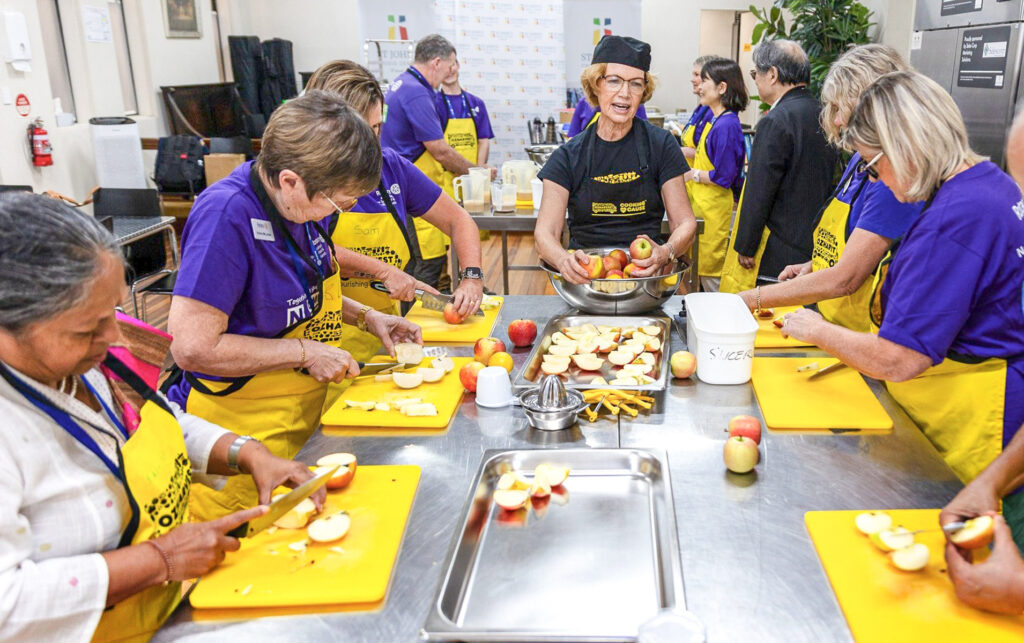
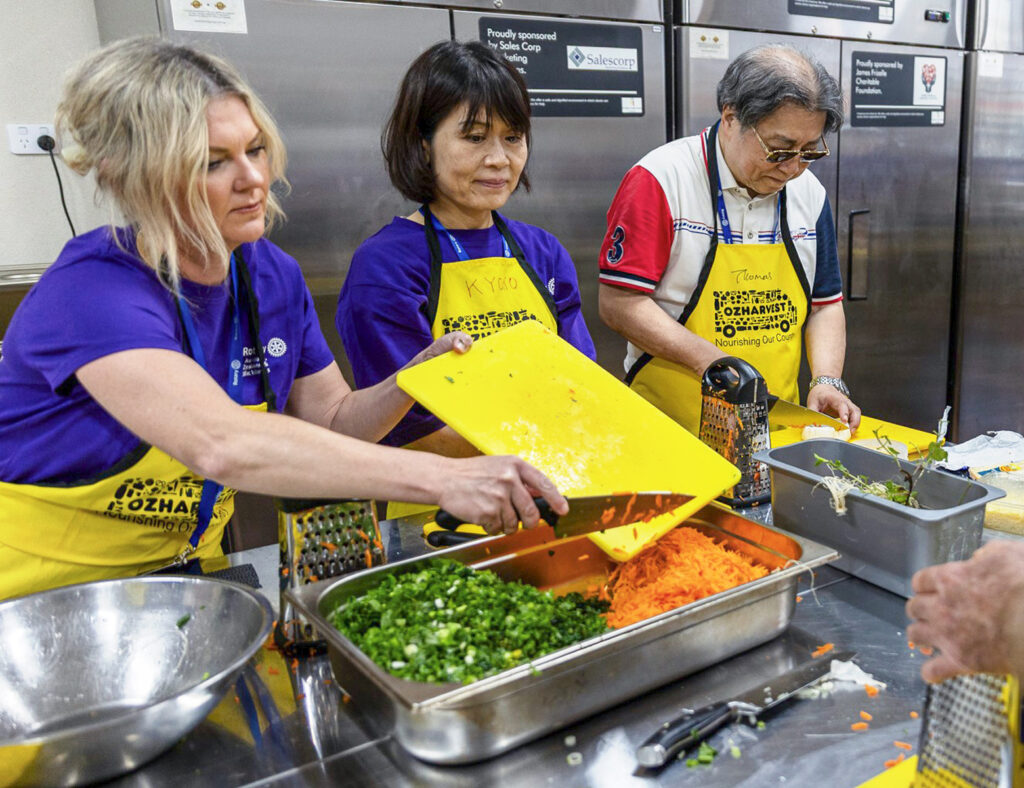
Terri Taylor received us there and guided us through the next couple of hours as we picked extremely sharp cooking knives (always fascinated by sharp kitchen knives, and a sort of hoarder of this precious commodity, I later found a similar one in a store and carefully packed it in my suitcase to bring it back home!), chopping boards and other kitchen implements. But not before she had first sent us packing to the washing area to thoroughly wash our hands with soap. No compromise on hygiene, we were told firmly.
We’ve heard stories about parents skipping meals so that their children can eat. Or children skipping school because they don’t have anything to take for lunch.
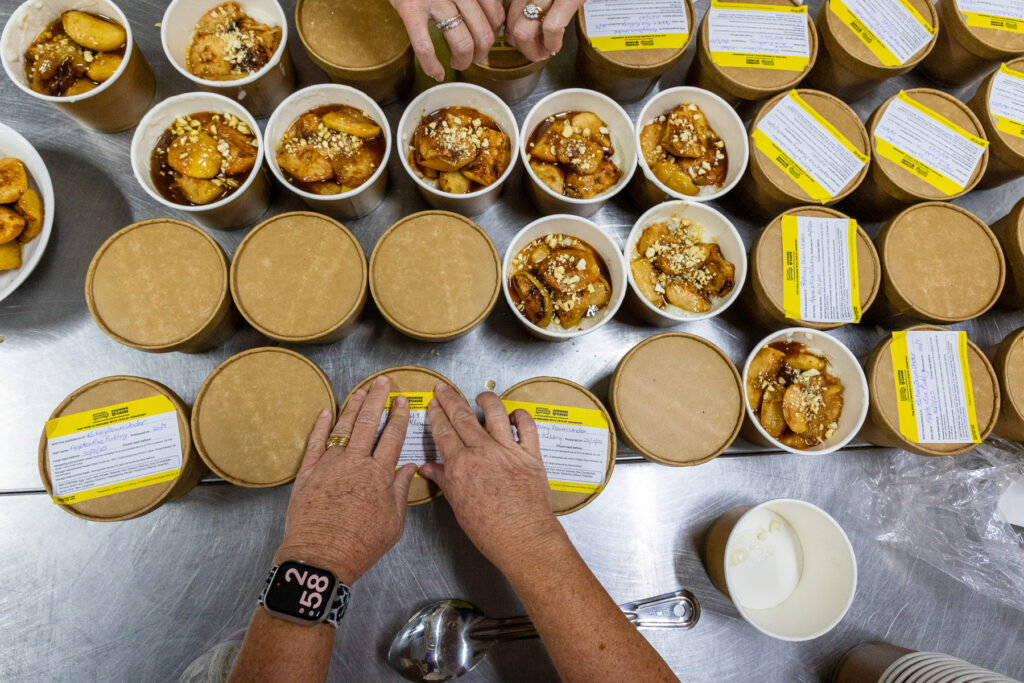
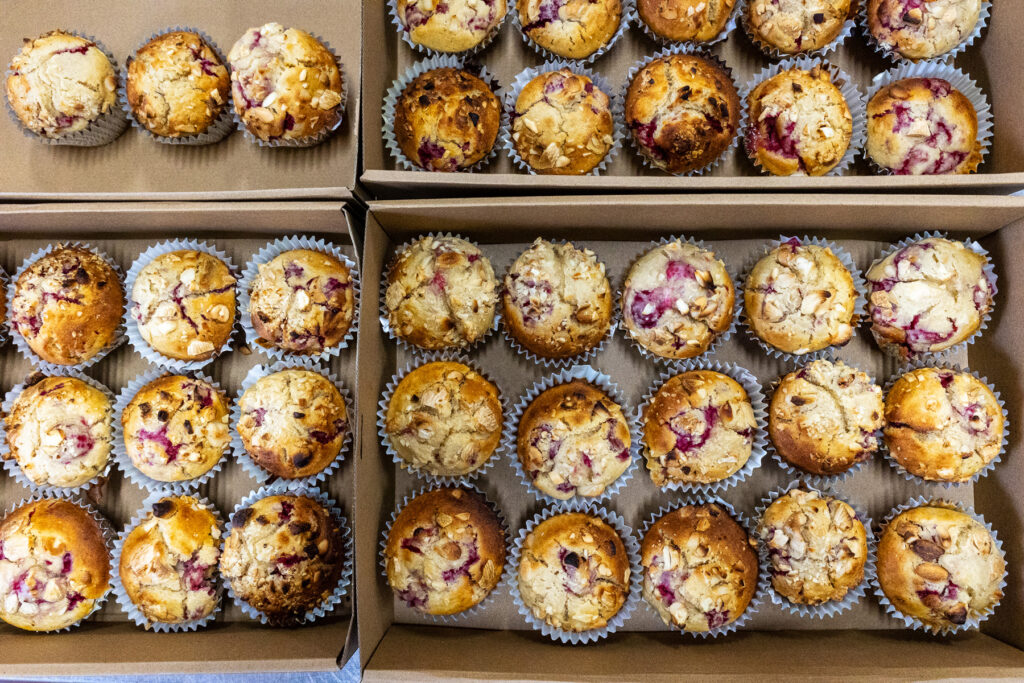
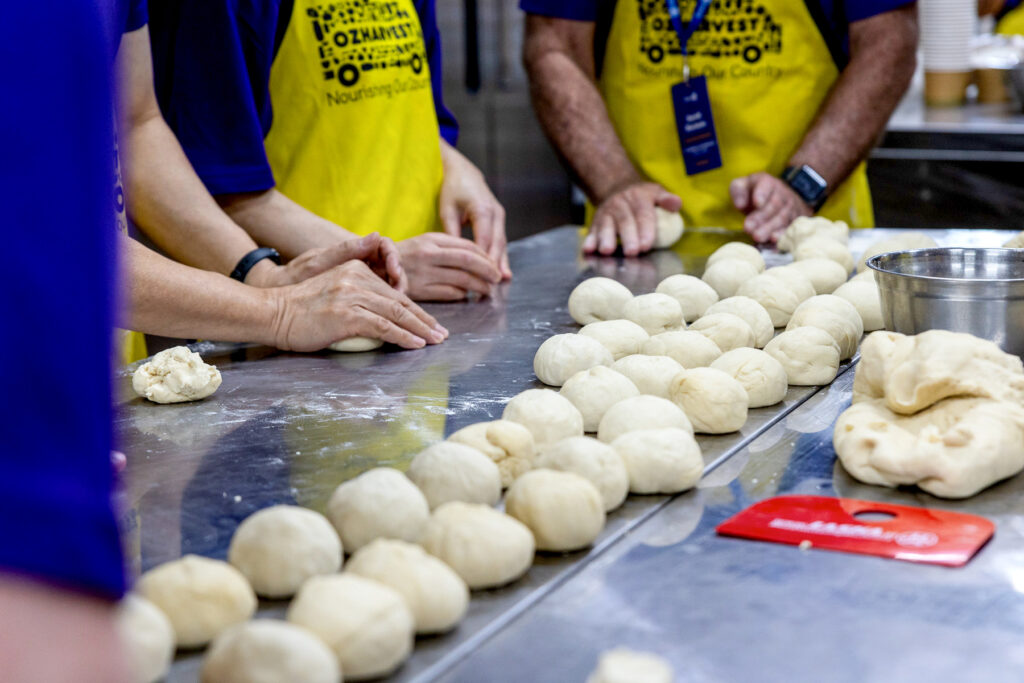
She told us that we would be preparing an apple and rice pudding, muffins and a savoury packed with nourishing nutrients such as lentils, vegetables and cheese. Believe it or not, seven different types of cheese went into it! What stood out during the next two hours was the love and care that went into the entire preparation… the apples, greens, carrots etc had to be chopped in a certain way so that there was zero wastage. No short cuts were allowed… every little detail that goes into turning out the perfect dish was followed. From the kneading of the dough to the chopping, baking and packing… but not before the muffins and the apple pudding were generously sprinkled with nuts… the protocol prescribed in a fine-dining restaurant was followed. It gave a new meaning to the term dignity in giving… and receiving!
Later, when asked how beneficiaries are identified, because one had thought hunger or nutritious food deprivation wouldn’t be a big issue in Australia, Marika says, “We don’t directly deliver to individuals, but different charitable agencies or communities deliver to people in need.” A community centre may package the food into hampers, and give it to families coming every week to receive those food hampers.

She clarifies that more than cooked food, which is delivered only through its Cooking for a Cause programme, “our primary task is to rescue fresh fruit and vegetables. We prioritise fresh produce and nutritious food which are given to charities that could turn them into meals or hampers for families.”
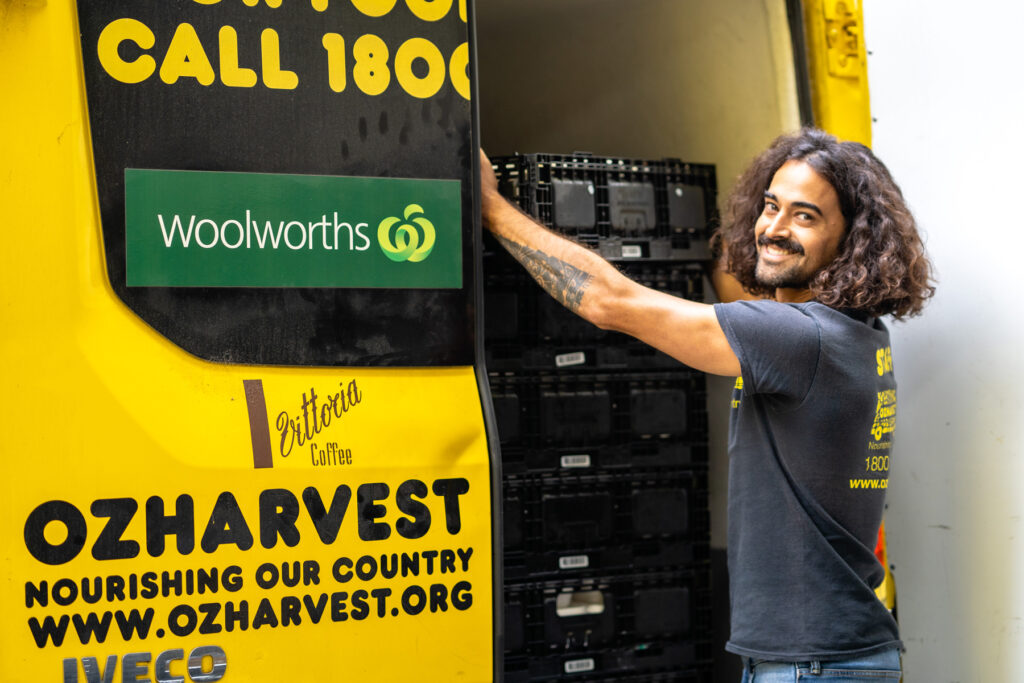
What transformed OzHarvest into a giant Australian charity for rescued food is Ronni getting on board in 2005 a team of pro bono lawyers to lobby with the government to pass legislation that would allow food businesses to donate surplus food without the fear of liability. This helped organisations like the Australian retail chain Woolworths to become its main food rescue partner.
In 2024, OzHarvest, which has a network of 2,400 donors, rescued over 14,000 tonnes of food. While it services 1,500 charities already, 1,000 more are on the waiting list. Such massive operations need big funding too, and clearly there has been out-of-the-box thinking by its founder. Regular fundraisers include the CEOs’ Cookoff every October where senior leaders from corporates participate along with a celebrity chef in the Cooking for a Cause programme. They then serve those meals to the community, sitting down with them to enjoy that meal. It’s a big event. There is also a Giving Day every June.
Other innovations include a food truck which can be ordered at events, catering for private parties or office events with a promise of zero wastage. The tagline is tempting: “Every booking helps us feed communities in need.”
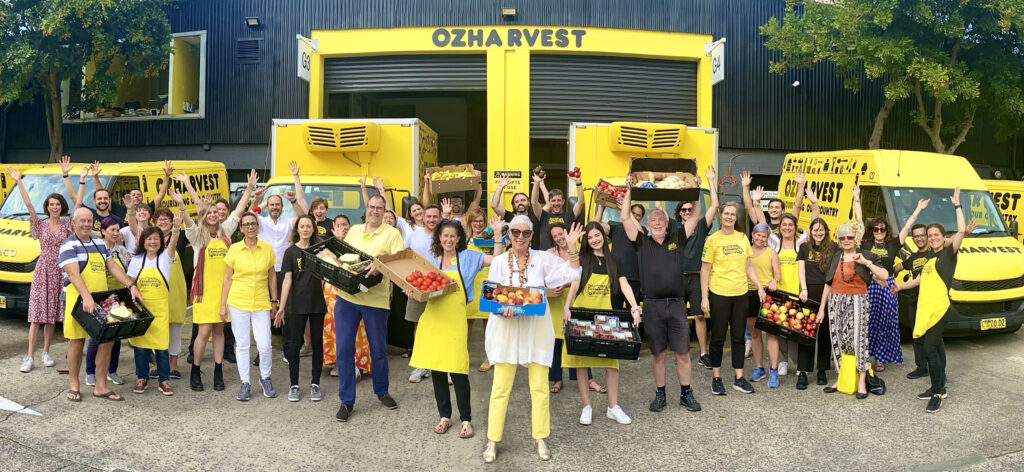
Apart from Terri Taylor and her club, other Rotarians across the country have an ongoing relationship with OzHarvest either through participation in events or donations. “We would of course love to get more Rotary members involved because we’ve found that they don’t want to just donate, but really want a hands-on experience,” says Marika.
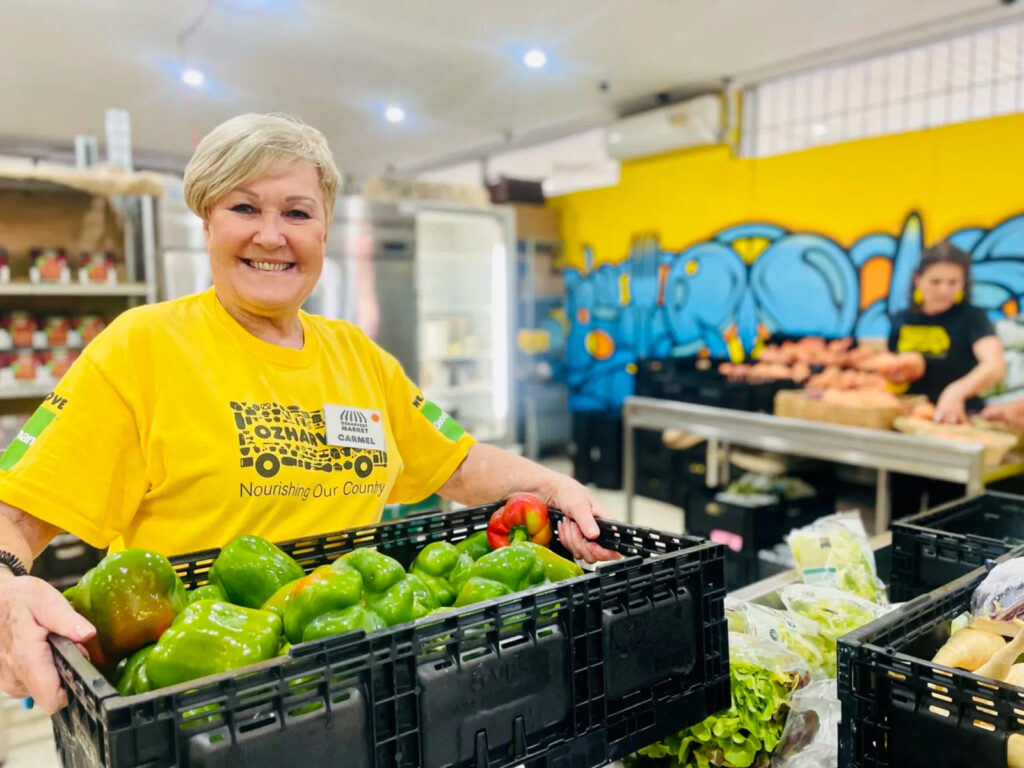
OzHarvest is also invested in the next generation, both in terms of food-wastage awareness and helping the nutritionally deprived children get wholesome, healthy food. “One of our programmes involves going to community centres and teaching both adults and children healthy eating and affordable cooking skills because we realise that often you might donate food, but people coming from different backgrounds may not know what to do with that food,”
She cites the example of giving someone “a sweet potato or a butternut squash; but if you’ve never seen it before and you’re receiving it, you won’t know what to do with it. So the idea is to increase people’s level of food literacy, teach them how to read the labels on the back of ingredients in the supermarket, how to decide which option is both healthier and affordable.”
FEAST (Food Education and Sustainability Training) is a curriculum-aligned education programme for primary and high schools, which explores the issue of food waste and its environmental impact, developing positive food habits and easy classroom cooking. As its name implies, it is designed to be fun, engaging and filled with good food! It also offers professional learning for teachers through an onsite training day at OzHarvest, or with an online training module. “Here we teach the children healthy eating, healthy cooking, how to cook with zero waste techniques and reduce food waste in the home. We also have a programme called Nourish where we teach vocational hospitality and give cookery training to young adults so they can get jobs.”

She adds that the number of families facing food insecurity in Australia are increasing. “You might think how can a family with a house face food insecurity. But that is the reality of today and we’ve heard stories about parents skipping meals so that their children can eat. Or children skipping school because they don’t have anything to take for lunch. In such cases food becomes a luxury, not a necessity.”
The troubling thought she leaves in my head is the need for people to get educated that “when you’re throwing food away in the bin, it’s not just that food that you’re wasting. You are wasting all the resources that went into producing that food… the land that the food was grown on, the water that went into nourishing it, the resources used to transport, package and market that food. So the impact is a lot more significant than people realise.”
On the love and care with which the food was prepared at the Cooking for a Cause session we attended, she says: “Oh yes, in our programmes, apart from the quality of the food we deliver, we always say: Think about the person who is receiving the meal and put your love and care into it, because that could be the only meal that he would have that day.”
Pictures by Rhys Martin and OzHarvest website
Food wastage in
the world
• There is enough food produced in the world to feed everyone.
• One third of all food produced — around 1.3 billion tonnes — is lost or wasted, costing the global economy close to $940 billion a year.
• Up to 10 per cent of global greenhouse gases comes from food that is produced, but not eaten.
• If food waste was a country, it would be the third biggest emitter of greenhouse gases after the US and China.
• Eliminating global food waste would save 4.4 million tonnes of C02 a year, the equivalent of taking one in four cars off the road.
• 1 in 9 people do not have enough food to eat, that means 793 million undernourished people.
• A quarter of the food currently lost or wasted could feed 870 million hungry people.
• Almost half of all fruit and vegetables produced are wasted (that’s 3.7 trillion apples).
• Throwing away one burger wastes the same amount of water as a 90-minute shower!
• It takes 25 years for lettuce head to decompose in landfill.
Food wastage
in Australia
• Every year 7.6 million tonnes of food, 70 per cent perfectly edible, costing the economy (A) $36.6 billion a year, is wasted in Australia.
• The majority of food waste in Australia comes from homes (2.5 million tonnes) costing each household $2,000 – $2,500 per year.
• Over 25 million hectares of land are wasted to grow food that is not eaten.
• Top five most wasted foods in Australia are vegetables, bread, fruit, bagged salad and leftovers.
• 3.4 million households in the country struggled to put food on the table; two million households experienced the most extreme form of food insecurity, regularly skipping meals or going entire days without eating.
• Demand for food growing; OzHarvest-supported charities found a 75 per cent increase in demand in the last six months; 30 per cent were seeking food relief for the first time.
_________________
Replication
When I think aloud about Rotary in India replicating the food rescue programmes of OzHarvest, at however small a scale, its representative Marika Mammen says this programme has been replicated in the UK, where there’s UKHarvest, there’s a KiwiHarvest in New Zealand, VietHarvest in Vietnam, and an SAHarvest in South Africa. They all follow a similar food rescue model, but obviously modified for the local conditions and demand.
Already several Rotary clubs in India are placing refrigerators filled with food items which can be taken by anybody at any time of the day and night.
Food for thought, isn’t it?