


The Rotary Club of Nagpur, RI District 3030, has done some excellent work in raising awareness on a bunch of mental health issues, and focusing attention on the need to counsel people, particularly youngsters, struggling with issues related to fear, peer pressure, anxiety, anger, guilt and related emotions. This is thanks to the passion and involvement of a small group of Rotarians in the club, led by past president Neerja Shukul, Dr Rita Agarwal, and the unstinted support they’ve got from the club leaders.
As the club had run a very popular project titled Wellness in a Box: Prevention of Depression for school students for a few years beginning 2021, its success kindled in Neerja a dream of establishing a counselling facility at their Rotary Centre in Nagpur. This dream became a reality in January 2025, when the counselling centre Chaitanya was inaugurated. “When I stepped down as club president in June 2025, I took a promise from incoming president Parag Date and vice-president Gogi Bhasin, to take our project on mental health forward and ensure long-term continuity and sustainability. This was in accordance with the RI goals of assuring at least three years continuity and not running single-year projects. Now I know that this initiative will never stop and will become a permanent project of RC Nagpur,” she smiles.
Chaitanya was inaugurated by PDG Dr Larry Kubiak, a neuropsychologist from Tallahassee, Florida, US, and a director on the Board of the Rotary Action Group on Mental Health Initiatives.
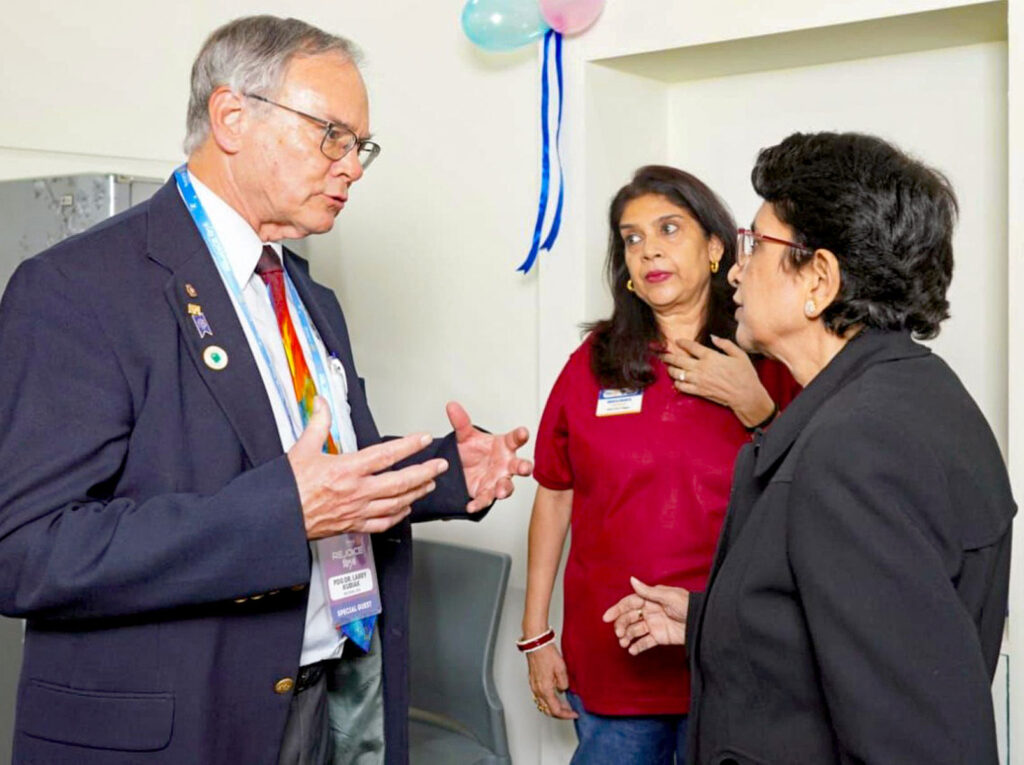
Neerja’s interest in mental health issues began when her older sister was studying psychology in college around 1975 and peaked when her daughter Kanika also decided to major in psychology many years later. Thanks to her own interest in psychology, “I was following her course keenly, and was shocked to find that the content of the study material for both her sister and daughter was almost the same.” She says that while Indian education has made a lot of progress in technology, math and science, in subjects like psychology we haven’t advanced much. This was proved when her daughter went to the US to do a Master’s in psychology at the Chicago School of Professional Psychology, and found herself lagging behind so badly that she had to do another course to upgrade her skills and catch up.
Through constant interaction with her daughter and noting the progress of mental health related issues in the US, and taking note of the alarming rise in suicides among youngsters in India, “I realised how urgently India needs to strengthen this neglected discipline and provide counselling services in issues related to mental health. Meanwhile I also witnessed the impact and success of the Wellness in a Box project; all this prompted me to start this counselling centre.”
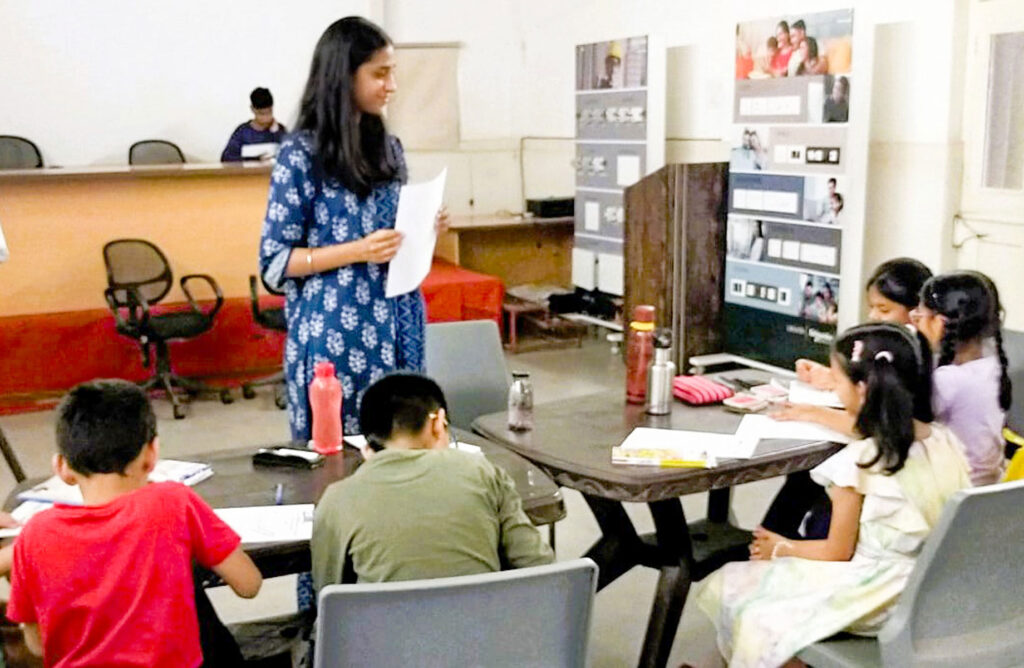
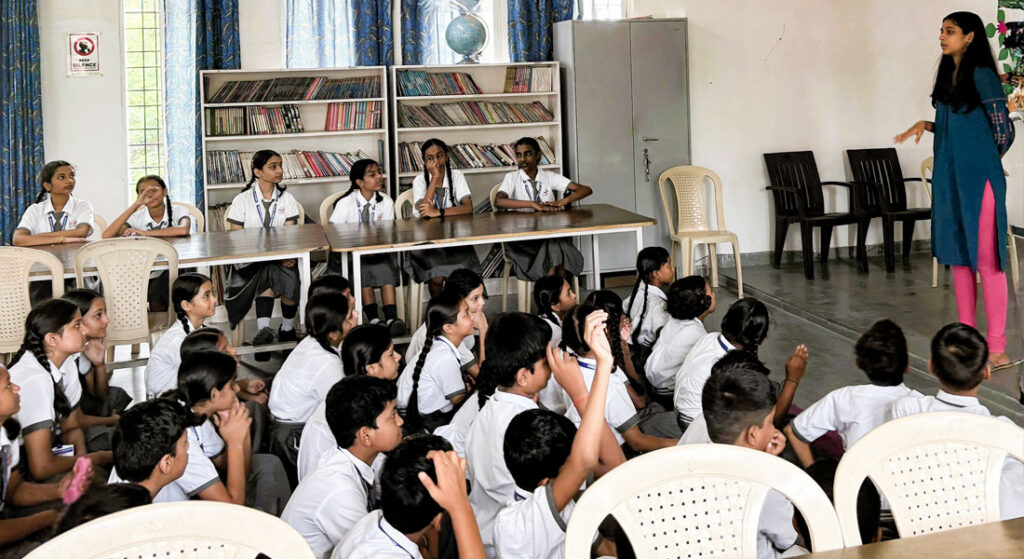
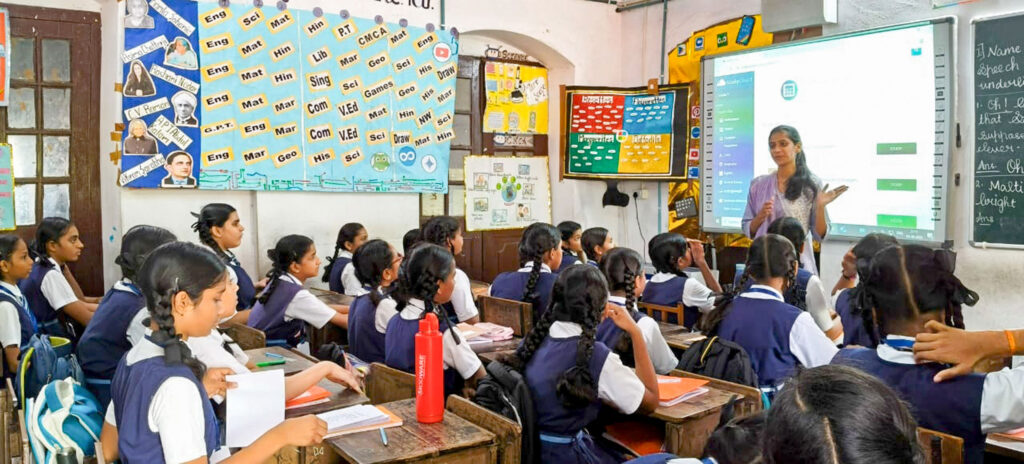
Asked about the kind of impact Chaitanya has made and the interest from the local community, Neerja says that the counsellor employed by the club — and sponsored by her — Devika Gokhale, a Rotaractor who is a trained clinical psychologist, began by visiting schools and colleges and giving in-person counselling to students along with parents and teachers. Several youngsters benefitted, found it useful and opted for regular therapy sessions, all of which is being provided free of cost.
On the response, she says initially it was moderate, but “now that exams are over, the counselling is getting traction and there is overwhelming response; this month alone around 90 sessions were conducted by our counsellor Devika, so much so that she does not find time to go to schools and colleges these days,” beams Neerja.
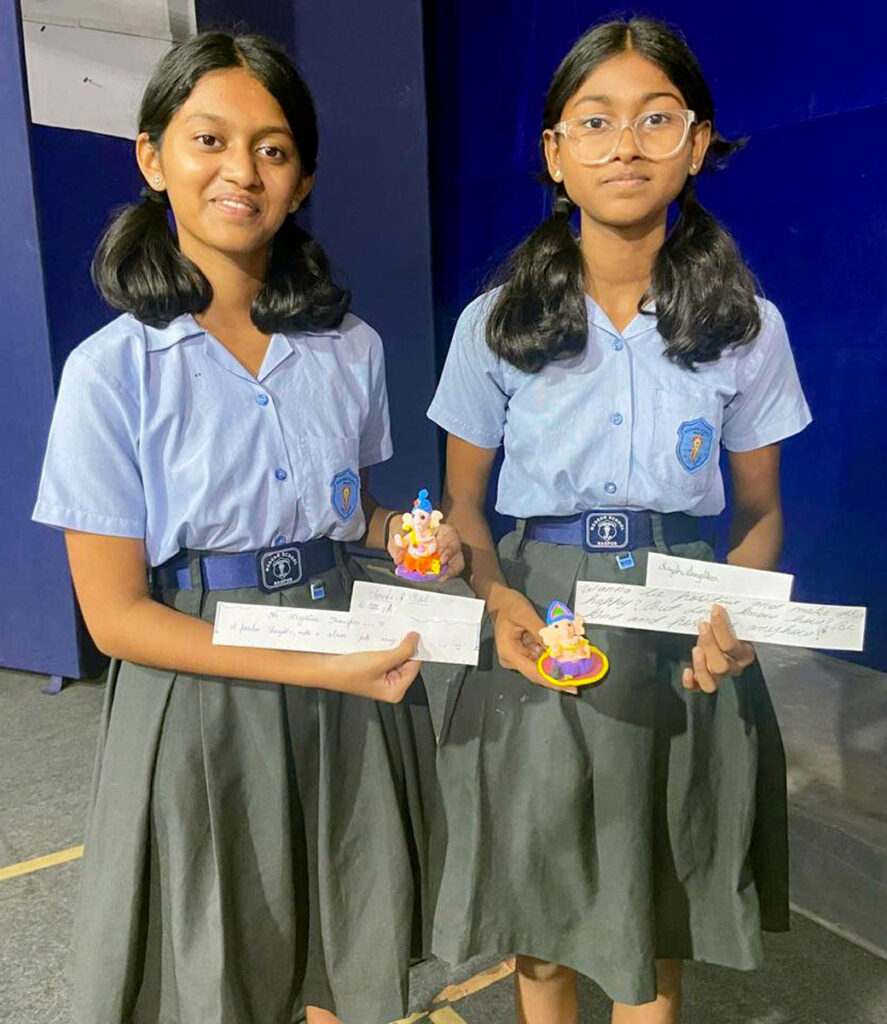
On the kind of issues youngsters face which lead to mental anxiety and other negative emotions, she says most of the problems revolve around peer pressure. And peer pressure in the young is mainly associated with body shaming. “I was closely associated with the Wellness in a Box project, and we had a partnership with a CBSE school in Nagpur, where we conducted sessions for Class 8 students. You won’t believe the kind of problems they faced.”
One major problem is related to mobile addiction and another to body shaming. “The other surprising thing I heard so often was that children’s parents don’t love them. We used to have 200 young people sitting in a session and those who had the courage would come up and say hamarey mummy papa hamey pyar nahi karte. (Our parents do not love us).”
India urgently needs to strengthen mental health services. The success of Wellness in a Box project prompted the Chaitanya wellness centre.
— Neerja Shukul, past president, RC Nagpur
She says that even in a small place like Nagpur so many suicides among the young are reported. Recently a boy who had got a whopping 99.9 per cent in his NEET exam (for the undergraduate medical course) committed suicide because his parents were pressurising him to study medicine, a field he was not interested in. “So the gap in understanding and agreement between the parents and children is a burning issue which is causing a lot of anguish in the young.”
Even after their Wellness project, which club member and a professional psychiatrist Dr Rita Agarwal had started and conducted many mental awareness programmes, was over, “the demand for it continued. So we used to send a counsellor for a whole day to the schools and children who knew about it, would go and talk to her. They became very friendly and comfortable in talking to her and were constantly asking why the counsellor no longer come to the schools. Hence, when Chaitanya was started, Devika used to regularly visit two schools and one college but now she has her hands full at our centre and can no longer visit those institutions.”
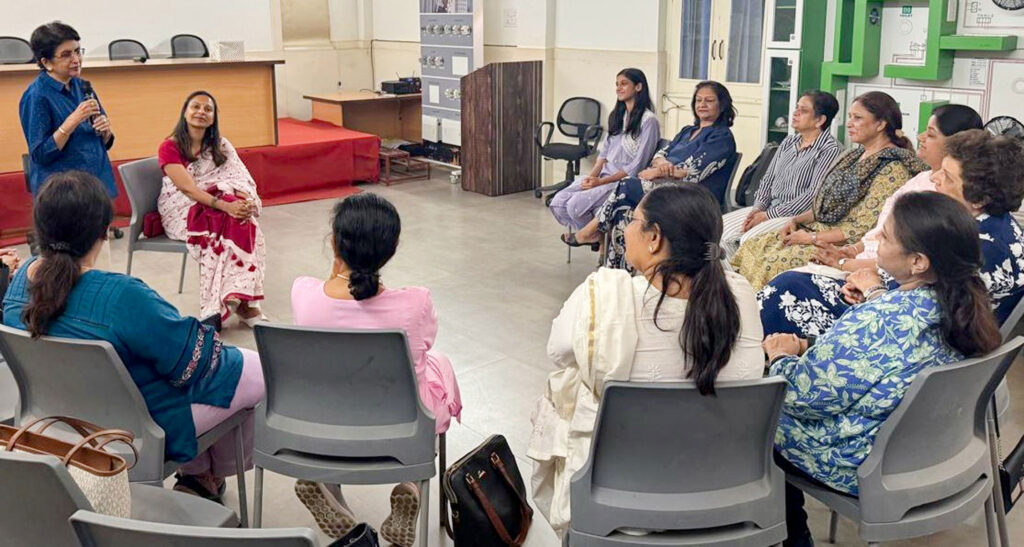
At their Rotary Centre, Chaitanya has been tucked away in a little secluded space — the centre itself is in a secluded space in the city, she says — so that those who are afraid of the stigma associated with mental health issues can visit it comfortably. She admits, though, that slowly but surely, the stigma associated with mental health issues is coming down, particularly in the young.
In the last few months, the centre has conducted several mental health awareness sessions for club members on topics such as ‘Heartfulness’ and ‘Wellness among Women’, concentrating on stress management, lifestyle disorders, etc. The psychiatrist who conducted this session for the women said “our anxiety increases so much during certain times and we need to talk about it.”
Asked about the kind of questions women ask and the concerns they share, Neerja says, “Women don’t come up easily to speak out in the open. But when they do, they talk about their struggle in balancing the house and their jobs. The other thing is middle-age depression related to the empty nest syndrome. For instance, I myself cry for three days when my daughter leaves after a visit, so we tell them there is nothing wrong about this emotion, so speak about it. Also, we are trying to pull such women into Rotary, saying come and join us, we will give you enough interesting work to do!”
A three-day workshop on ‘Emotional Regulation using Expressive Art’ for kids aged 9–12 and various awareness sessions for Interactors and Rotaractors were also conducted.
Is there any difference in the way boys and girls express their struggle with mental health issues? “Oh yes, boys live in a different world, and generally, they do not bother about small things. Right now, Devika is concentrating on girls, who are much more concerned about the way their look, their body shapes, and the fear of being judged if they do not have a boyfriend.”
When I express surprise that this is an issue even in a relatively conservative place like Nagpur, she says, “Oh yes, we have found girls who are distressed and teased by their friends if they do not have boyfriends! We do sessions at a medical college where there is a Rotaract club and they talk about such things… the other girl has a boyfriend and I don’t have one, so I feel left out and the other girls make fun of me.”
Coming to future plans to expand their services, club president Parag Date says, “In just nine months this project has already begun to make ripples of change. We have so many plans to make this centre a vibrant place for mental health solutions and promotion of wellbeing.”
These plans include monthly group sessions, listening circles, and workshops and building a community where conversations about mental health are considered normal talk. “With the demand steadily rising, the centre also aims to function as a full-day facility instead of the current three-hour facility from the next academic year. We want to ensure that help is available when it is most needed. I see Chaitanya growing into a platform that touches many more lives in meaningful ways. There is great scope to bring in new ideas, collaborations, and innovative initiatives that keep the spirit of the project alive and relevant to changing times.”
The club’s leadership is committed to promoting “more open dialogue around mental health and emotional growth, while also making sure that our work is accessible to those who need it most. Going ahead, I want Chaitanya to not just sustain, but to expand its reach so that more individuals and communities can benefit from it,” says Dr Rita Agarwal, consultant psychologist, Chaitanya and club member.
Art therapy workshops for youngsters struggling to give expression to their anxieties, fears, etc and a helpline for those who can’t bring themselves to talk openly about their struggles with mental health issues are also in the pipeline.
“We are happy that people are gradually realising the need to show more empathy and be non-judgmental while dealing with mental health issues. Individuals who once hesitated to seek help now step into therapy with hope. We are so happy that Rtr Devika Gokhale, the psychologist/ counsellor in this project, brings her dedication and compassion in every session. This project is more than a service — it is a promise. A promise that no one in our community should have to carry on with their struggles in silence,” adds Dr Rita. Neerja reiterates her resolve to raise whatever funds are needed for expanding their activities, including hiring a second counsellor to visit schools and colleges.