

Some scary portraits from real life, a request to bookstores, and looking forward to a new year of great books.
I feel so frustrated after my latest visit to the neighbourhood bookstore — a big name, by the way. I had dropped by some weeks ago looking for M S Swaminathan: The Man Who Fed India by Priyambada Jayakumar. They didn’t have the book. So, I placed an order for it and left on a week’s holiday to Odisha. Thanks to the Indigo imbroglio, we returned home after unceremonious flight cancellations and a gruelling 29-hour road trip along the coast from Bhubaneswar to Chennai. NH 16 was smooth, but the van was cramped, the seats narrow, and our driver was nursing a toothache. Luckily our party comprised a doctor with medical supplies and he ministered the young man. Back home, when all the muscles, joints and bones had returned to their respective pavilions, I went back to the bookstore. Guess what? They didn’t have the book! Furious, I vented: M S Swaminathan is among the most famous residents of the city, and you don’t have this book. Shameful!
In my occasional, brief interactions with ‘Professor,’ as he was widely addressed, I had discovered the kind, unassuming, modest, and humane side of this renowned scientist, and I wanted to know more. I had seen the book at the airport bookshop, and I could just as easily have ordered it online. But, in a spirit of supporting neighbourhood businesses, I wanted to buy it at the bookstore round the corner. Looks like that’s not to be, although I continue to wait for a phone call. Meanwhile, here’s a small request to bookstores: Do please give space to local writers, creators and books about local residents, especially if they are of the eminence and accomplishment of Prof M S Swaminathan.
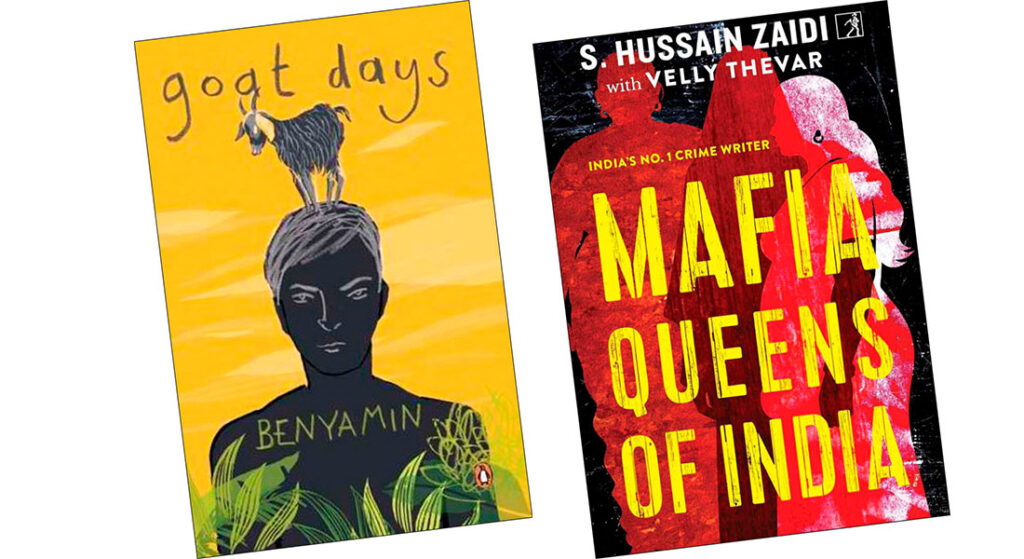
While the wait continues, here’s a book that I did pick up at the airport: Mafia Queens of India by journalist /crime writer S Hussain Zaidi, written in collaboration with his wife, Velly Thevar. The subjects featured in the book, ten of them, elbow each other not only for notoriety, but also for energy and enterprise. I had read Zaidi’s book on Dawood Ibrahim (Dongri to Dubai) with great interest; in it he talks about other dons such as Varadaraja Mudaliar, Haji Mastan, Karim Lala. I had watched films about tough women (Godmother, Gangubai Kathiawadi), and had seen the life of bandit queen Phoolan Devi ebb, flow and end before the nation’s eyes. But, women mafiosi… that was intriguing.
This collection is held together with references — in the beginning, in the middle and at the end — to a person Zaidi calls ‘Cleopatra’ after having promised her that he would not reveal her name. He had known her to have been a confidant and advisor of Varadaraja Mudaliar, and it took him a while to trace Cleopatra. He finally found her in Thrithala, Kerala, where she was living out the last days of her life. He called her Cleopatra because he saw similarities with the Egyptian queen in that ‘our’ Cleopatra “was extremely wise, beautiful to the extent of holding sway over men, and had several incidents in life in which she turned adversity into opportunity.” The stories of women such as the bandit Kusuma who was a peer of Phoolan Devi, drug trafficker Iqra Qureshi, human trafficker Sonu Punjaban, brothel madam Saira, matka queen Jaya Chheda, and feared conwoman Sivakasi Jayalakshmi are written like feature articles: they give the reader a taste of their lives, focusing more on the illegal trade they were engaged in and how they met their end. The stories, widely researched, cover money, drugs, sex, hawala, smuggling, cheating, killing and more. We see how each woman was a queen of her trade, nefarious though it was, and commanded a complex network of loyal followers until both loyalty and following collapsed.
At one level, the stories are fascinating and the ways in which people are duped intricate and innumerable. However, they also send chills down the spine for the ease and simplicity with which ordinary folk get embroiled in their schemes. We cannot take them only for their curiosity or news or information value, they must alert us to the complex world in which we, and, more importantly, our children live, and how seriously we must guard against falling prey to their lures. This is seriously scary stuff that underlines the nexus between business and shady activities, politics and criminality, religion and exploitation. Incidentally, the film Gangubai Kathiawadi made by Sanjay Leela Bhansali is based on Zaidi’s story about Gangubai Kothewali in his book, Mafia Queens of Mumbai.
I also had the privilege of meeting a dream reader at the Little Litfest conducted by the Goethe Institut (aka Max Mueller Bhavan), Chennai, this past November. During a general discussion following a panel on trends on publishing for children, a young lad about 11 or 12 years old got up to share his experience. This is a gist of what he said: ‘There were boxes of books at home. About 1,000 books my mother had bought to start a business but her business failed. So I started reading the books. I read all of them.’ He went on: ‘I read Goat Days. In two days. Someone I know is doing a thesis on the book. She took three months to read it.’ The audience was stunned. Those who have read Goat Days (originally Aadujeevitham in Malayalam by Benyamin) will understand why this reaction. The book is based on the true experiences of a Malayali worker in Saudi Arabia charged with tending goats. Reading the story evokes pathos, loneliness, monotony, despair, desperation… feelings even adults would find challenging to engage with. And this child had read the book!
Which brings me to a beautiful initiative set in place by Hachette which I discovered upon coming to the end of Robert Galbraith’s over-700 pages-long The Hallmarked Man in the Cormoran Strike detective series. Robert Galbraith is the pseudonym that J K Rowling uses to write for adults. Anyway, there’s a note at the end of that book, purportedly from the author, exhorting readers to encourage reading, particularly among children. Apparently, this is part of a drive called ‘Raising Readers’ launched to “encourage everyone to make reading for enjoyment part of children’s daily lives.” The appeal focuses on the positive impact of reading on academics, mental health, communication skills and so on, thus preparing children for a better life in the future. There are many free or inexpensive ways to do this, the letter points out: “…reading to them daily, visiting bookshops and libraries regularly, and giving books as gifts.” What a simple yet effective way of getting out the message!
I read Goat Days. In two days. Someone I know is doing a thesis on the book. She took three months to read it.
An 11-year-old at the Little Litfest in Chennai
In that spirit, here are the names of some books I have waiting to be read: Flashlight by Susan Choi (shortlisted for the Booker and our Book Club choice for January); A Different Kind of Power by Jacinda Ardern (a memoir by the former PM of New Zealand); ‘They Will Shoot You, Madam’: My Life Through Conflict by Harinder Baweja (another memoir, from an award-winning journalist); Tiger Woman by Sirsho Bandopadhyay (translated from Bengali by Arunava Sinha, the protagonist of this slim novel is a trapeze artist); and The Convert by M K Shankar (a gift from a friend; the author is the friend of my friend). Here’s to happy reading in the new year: please make books your friends.
The columnist is a children’s writer and senior journalist