



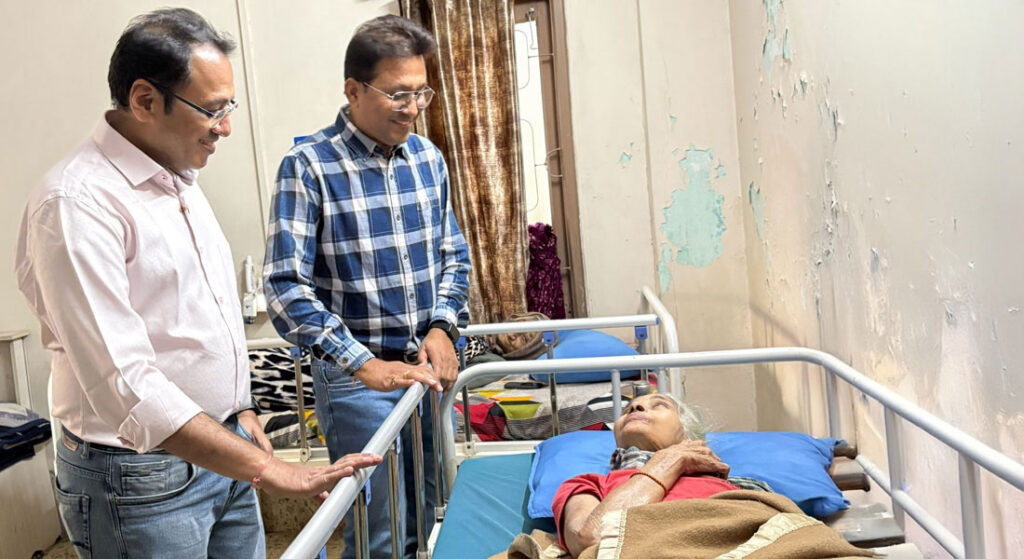
An iconic project of the Rotary Club of Bhavnagar (RID 3060), titled Rotary Karunalaya, is a hospice-cum- rehabilitation centre for terminal stage cancer patients and others suffering from chronic ailments related to the kidney, brain or the heart. Set up in 2022 with the objective of helping middle-class families who have very sick family members, but lack the financial ability to take care of them in a professional facility, or the means and manpower to look after them at home, it is operated out of a rented accommodation where 12 rooms house around 26 patients.
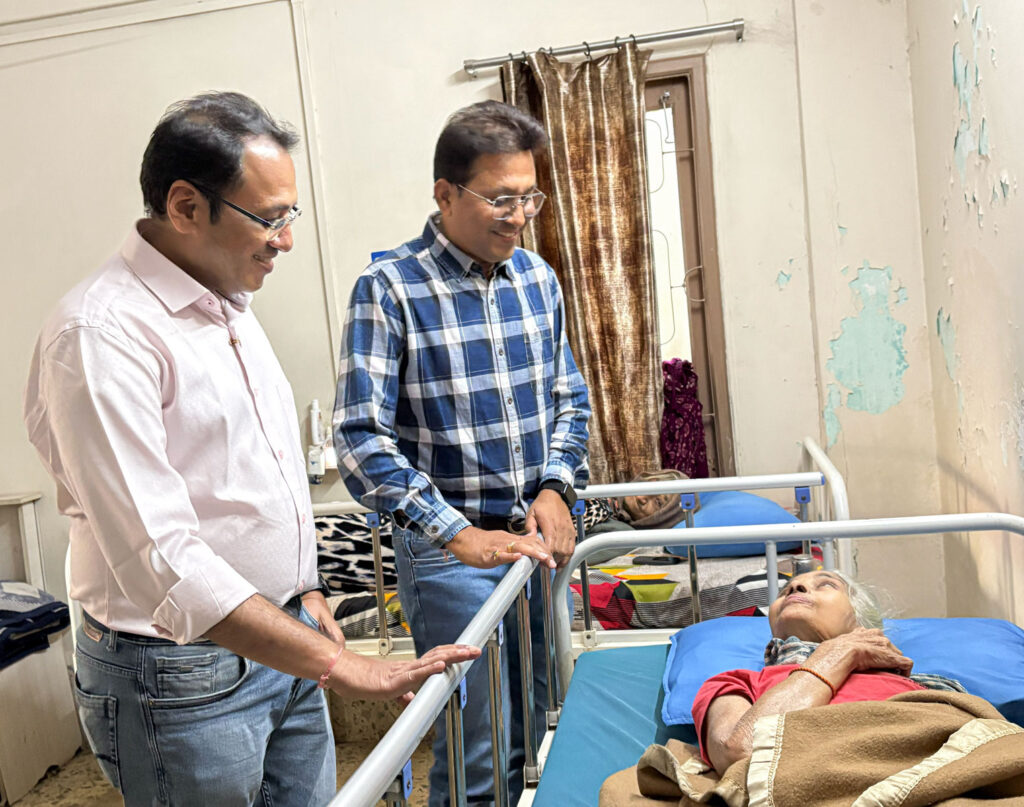
Dr Umang Desai, past president of the club and a cancer specialist, and Dr Neeraj Joshi, an orthopaedic surgeon, are two core team members from the club who provide hands-on service for running this project, which strives to give dignity and as much comfort as possible to these patients.
Taking me around the incredibly clean and well-maintained premises, Dr Desai explains that the Karunalaya takes in patients “whose medical treatment is over but are completely or partly bedridden or dependent on somebody else for their daily needs. It is a very costly proposition to keep them in hospital, and it is not possible for many middle-class families to keep them at home. Either the houses are too small to spare one room for such family members, as this kind of care requires a separate room, or both the husband and wife are working and can’t take care of the sick parent.”
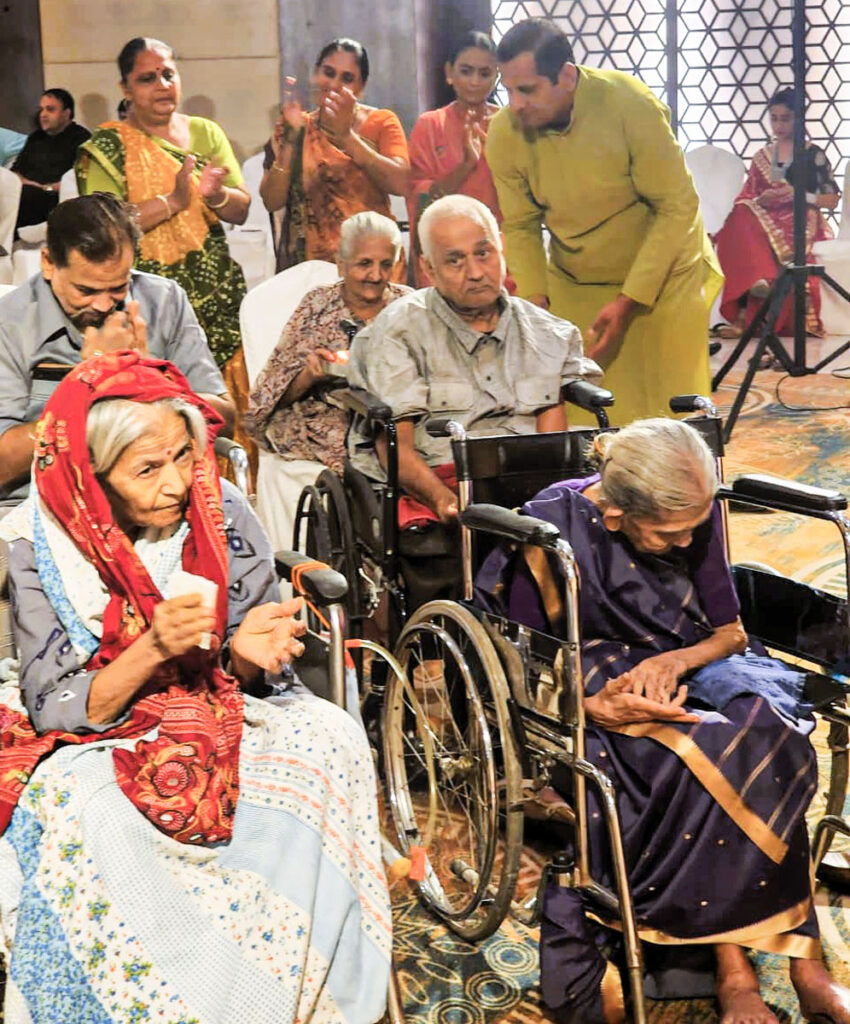
There is severe scarcity of manpower for this kind of work and even in a tier two city like Bhavnagar to get a person for 24-hour care costs around ₹30,000 to 35,000 which most people cannot afford.
On the funding required to run this project, Dr Neeraj Joshi says their annual expenditure on this project is ₹25 lakh. Since the accommodation has been rented, a substantial portion goes into the rent, and the rest for staff salaries and other related expenditure.
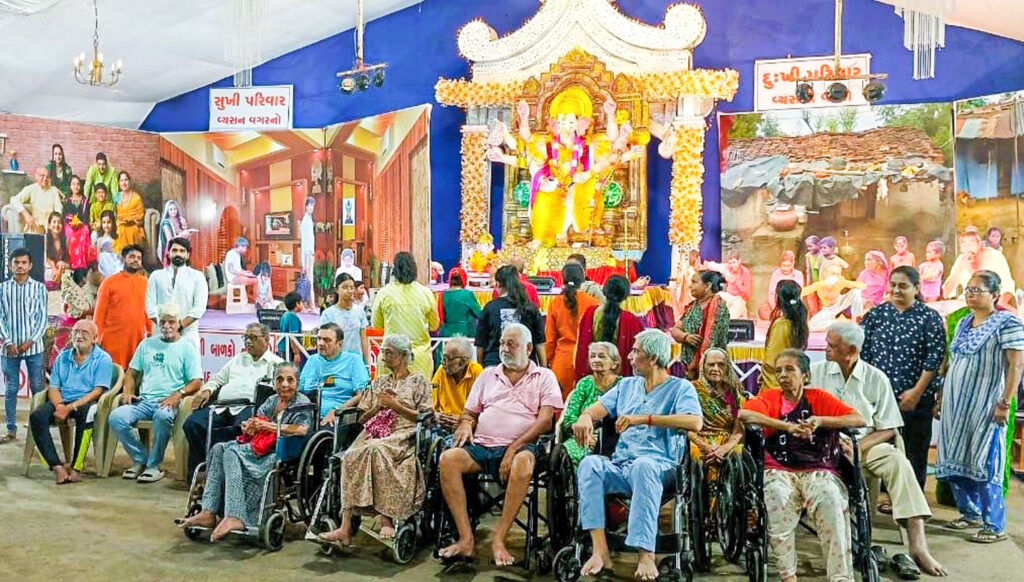
Club president Kaushal Sheth says at this rented accommodation, there are 12 staff members to take care of around 26 inmates. “We have an in-house kitchen. The cook stays here for 24 hours; she prepares breakfast, lunch, evening tea and snacks and dinner. A medical officer visits the facility daily and a physiotherapist takes care of those who need this therapy,” he says.
Dr Joshi and Dr Desai visit the place every day and spend 30–45 minutes here, making rounds just as in a hospital. “We meet the patients and enquire about their condition. If they have any demand or medical need, we try to meet it to the extent possible. And then we spend some time on admin and management and upkeep of the place,” says Dr Joshi.
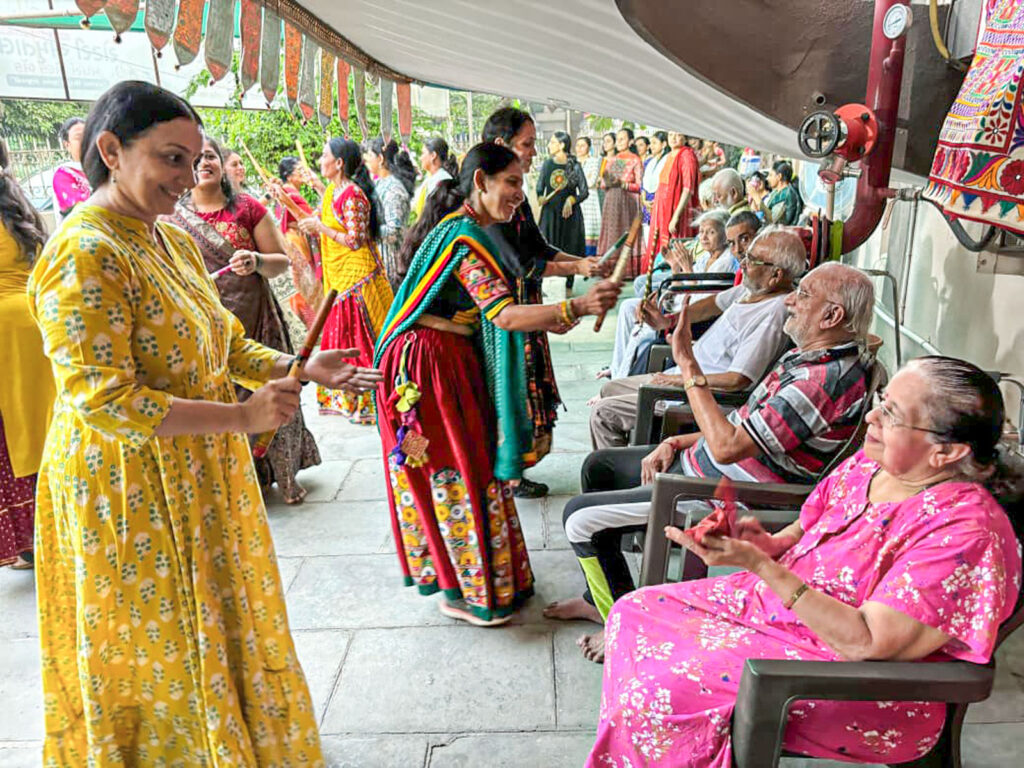
On the most common requests made by the patients, or their needs, he says they have three basic requirements. The physical needs pertain to assistance… right from brushing their teeth, to bathing, to getting out of bed and back into it. About 70 per cent of the patients require such assistance.
Next is their medical requirements… medicines, physiotherapy and advice on the diet. Depending on their medical condition, the patients have specific diets to follow and care is taken to see that this is done. “For example, if you go to our kitchen in the morning or the evening, for something as simple as the toor dhal, you will find four or five different preparations of this dhal. One will be with and another without lemon, or without chilli, or salt. The cook carefully prepares the food like that, keeping the diet restrictions in mind.” Once in a while they are given treats such as piping hot dosa and pav bhaji!
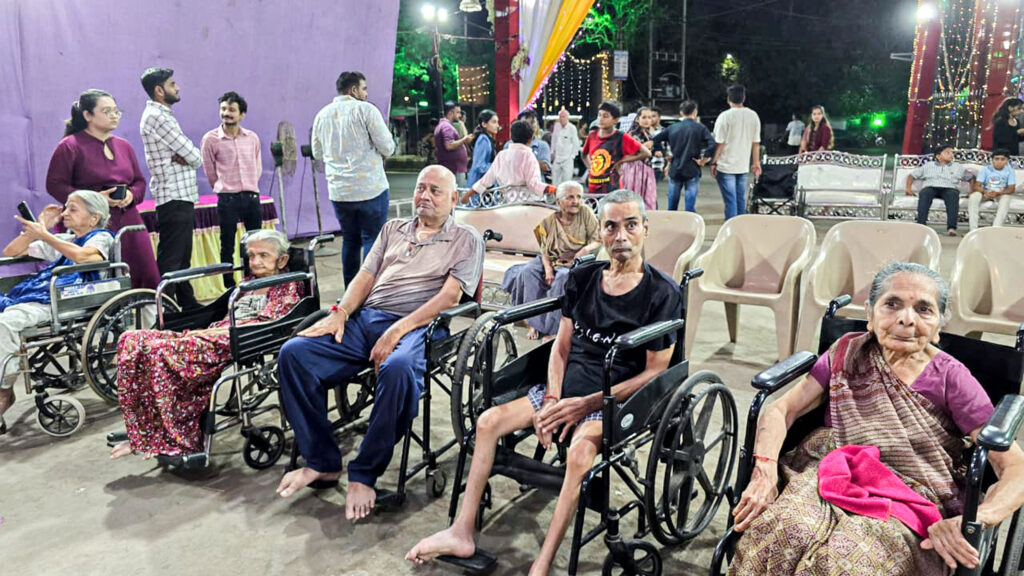
He adds that their third need is “an emotional need; they want someone to talk to, or rather to listen to them and what they are saying. So our Rotary Anns come in groups in the evenings, talk to them, play games with them, or chant prayers or bhajans with them. We celebrate all the festivals here including Navratri and Holi. This takes care of their emotional needs to some extent.”
Most of the patients here are above 60 years old, and are not all from Bhavnagar, with some patients having come from as far as Mumbai. To the best of their knowledge, says Dr Desai, there are only two such centres running a rehab centre for cancer patients on a chartable basis. Others are run as commercial organisations. Even this is not totally free, even though the Rotarians spend around ₹25 lakh a year to run it. The inmates pay ₹450 a day, but this includes all the three meals and snacks, the cost of the medical and non-medical staff who look after them, physiotherapy etc. The monthly cost of around ₹13,500 is paid by their families. Those who can’t afford this price are given a good subsidy.
The annual shortfall is about ₹25 lakh which is raised through donations. “A number of top executives from corporates and businessmen are our club members and that really helps us raise funds. And we’ve found that if we have a good project, there is no dearth of money. As long as people have trust in you, you can find the money,” says Dr Desai with a smile.
At the Karunalaya too, “the donations keep coming, without our trying much. In fact, when we started this facility, we used to charge ₹600 a day, but then people started helping us, so we reduced the charges, despite the cost of living going up!”
Once in a year, during Navratri celebrations, the Rotarians take the inmates out, though that is quite a challenge, as over a dozen of them have to be carried out in wheelchairs. Sometimes they are taken to a famous temple or a resort; “those times men and women over 80 told us, with tears in their eyes, that this was the first time in their lives they were visiting a fine restaurant.”
Dr Joshi adds that each patient is a story… in the last three years, they’ve lost about 20 patients. Sometimes the patient’s end comes amidst heartbreaking stories. Dr Joshi relates the time when one of the men passed away. “We called the relatives… actually the son, and he said I am busy and will come in a little while. We waited and waited, and tried to contact him again and again. Finally, around 10pm the son said: ‘If you cannot manage, just put the dead body on the footpath outside, I will collect in the morning.”
Dr Joshi explains that the concept of this place is that it’s a hospice… which means these patients are not going to get well. Apart from terminal cancer patients, there are also terminal kidney or heart patients. Asked if the terminal kidney patients receive dialysis, he shakes his head and says, “We don’t give any active medical treatment here, these patients will gradually deteriorate. A hospice is for those who are waiting to die, and you just give them a peaceful life. In a hospital if a doctor says nothing more can be done and you take them home, and the relatives can’t manage at home, they bring them over here.”
The second class of patients come here for rehabilitation post orthopaedic surgery, or neurological condition like paralysis and get physiotherapy.
Occasionally, such patients do go back home. He gives the example of a woman with a diabetic foot; her leg had to be amputated. She was brought here for rehabilitation. Physiotherapy was started, she was fitted with an artificial limb, she started walking and eventually went home.
Rotary News’ connect to Karunalaya
Explaining the genesis of the project Dr Umang Desai says, “I’ve always been wondering what more I can do for my cancer patients, particularly those who do not have the means to continue to live in dignity and with the physical and medical support they need. One day, while reading Rotary News, I came across an article that some club in Andhra Pradesh has set up a kind of hospice for cancer patients.”
He got hold of the phone number of the club president and called him; “but he couldn’t speak English well, and didn’t speak Hindi either. But he said he would get hold of a member of his club who spoke English to call me.”
Soon he got the call, and the Rotarian explained to him how the club had donated some equipment to a hospital to establish a rehab centre and slowly got involved in running it. “The idea was already in my mind about doing something for cancer patients and the magazine helped me to take it forward. Actually we get so many ideas from Rotary News,” he smiles.
He adds that they started with just 10 beds, renting only the ground floor. “then we pushed it to 13 beds, and then as the demand increased, we rented the first floor also.”