


We live in a time when the air is heavy with the threat of war, and yet the silence between bombings is often mistaken for peace. Headlines speak of ceasefires, but not of healing. Treaties are signed, but hearts remain torn. And amid all this, one question echoes with urgency: ‘What is the true role of peacebuilders in a world where both good and evil are human?’

Rotary International has long stood as a symbol of global service, leadership and peace. But today, our mission must go deeper. Peace cannot be defined by the absence of violence — it must be understood as the awakening of human conscience, the deliberate act of choosing compassion in a world capable of cruelty. It is not about erasing the shadow, but integrating it with light.
In such a scenario, Rotary’s legacy is more than just service, it’s a moral commitment. From sponsoring schools in refugee camps to convening peace scholars in universities, Rotary’s commitment to Peace and Conflict Resolution has touched every continent. But what distinguishes Rotary’s peace efforts is not only the scale — it is the spirit. Rotarians do not work for applause. They work for alignment — with justice, with truth, with dignity.
They do not pretend the world is perfect. They act despite its imperfections.
In the journey of peace, sometimes the greatest strength lies in stillness. In restraint. In choosing not to cause harm, even when you can.
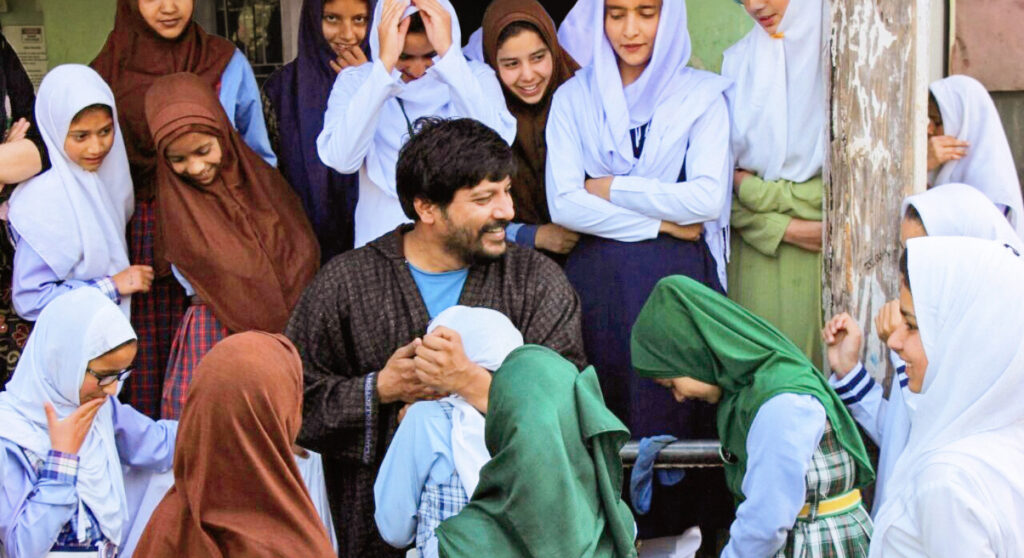
As someone who has worked on the frontlines of conflict in Kashmir for nearly three decades, I’ve seen the horrors that cannot be undone—and the healing that still finds its way in. I’ve seen children raised in the ruins of war choose love, education and hope. These are the quiet revolutions Rotary must continue to nurture.
The illusion of silence as peace
Many believe that when guns fall silent, peace has arrived. But silence, too, can be oppressive. The silence of unacknowledged pain. The silence of unhealed trauma. The silence of forgotten victims.
True peace is not mute. It is alive. It breathes through:
- The voices of children learning again in rebuilt schools
- The hands of doctors in Rotary-sponsored Malfunction Management Units (MMUs) treating conflict-zone injuries
- The courage of women who break generations of fear to build something new.
Rotary’s mission must evolve with this clarity: We are not here to simply end wars. We are here to elevate humanity.

In the journey of peace, sometimes the greatest strength lies in stillness. In restraint. In choosing not to cause harm, even when you can.
Consider this: When elephants are transported by air across continents, their crates are filled with fragile chicks — not for companionship, but as a test of temperament.
And what does the mighty elephant do?
It stands perfectly still.
Throughout the entire flight, the elephant — despite its size — refuses to shift, afraid it might accidentally step on a single chick. It passes this quiet test of conscience with noble grace. Not out of fear. But out of love.
Scientists have found that elephants, like humans, possess rare spindle cells — neurons linked to self-awareness, empathy and complex social understanding.
Peace cannot be defined by the absence of violence — it must be understood as the awakening of human conscience, the deliberate act of choosing compassion in a world capable of cruelty.
They are emotional giants, not just physical ones.
Leonardo da Vinci once observed that the elephant lives with righteousness, modesty and balance. It bathes to purify itself, never mates before the herd, never walks alone, and when death approaches, it leaves the group to die in solitude — out of compassion for those left behind.
What does this teach us?
That peace is not passive.
It is an act of inner clarity and gentle power.
It is standing firm in a world of chaos, simply so the more vulnerable are not harmed.
It is choosing restraint over dominance. Dignity over display. Balance over brute force.

If we, as Rotarians and as global citizens, learn to carry our own weight with such grace — then perhaps the journey of peace, like that elephant’s flight, can remain steady.
Conflict is not alien to humanity — it is a mirror.
It shows us where we are still divided, not just as nations, but as souls.
As my Guru once told me: “Even violence has its place in human evolution. But the true path is not to eliminate it through denial, but to transcend it through understanding.”
Rotary’s work for world peace is not a Utopian dream. It is a courageous confrontation of reality. It calls us to accept:
- That good and bad are both human
- That no peace is sustainable without dignity
- That true transformation requires embracing our wholeness.
Rotary’s role in a time of global crisis
With the world teetering on the edge of multi-regional conflict — from Europe to the Middle East, from Asia’s fragile borders to Africa’s forgotten wars — Rotary cannot be a silent observer. It must be a moral compass.

Here’s how:
- Speak boldly, act fearlessly: Rotary must become a global voice urging not just ceasefires but deep reconciliation — across cultures, ideologies, and histories.
- Build from within: Peacebuilding must start at the level of personal transformation. Youth fellowships, peace scholarships, and leadership programmes must emphasise empathy, emotional intelligence, and interfaith understanding.
- Narrate a new story: In a world consumed by the theatre of war, Rotary must tell new stories — of compassion, of recovery, of how people heal. Let us publish peace victories as passionately as we publish battlefield ones.
- Heal, don’t just help: Support programmes that integrate mental health, trauma-informed care, and community resilience — especially for children of war.
- Bridge divides through dialogue: In every region where polarity grows, Rotary must create spaces for respectful conversation. Peace is often born in listening.
- Convene spiritual wisdom and practical policy: Invite spiritual leaders, indigenous knowledge keepers, and modern diplomats into a shared space of problem-solving. When hearts lead, minds follow.
Kashmir: My living testament
In the foster homes we run in conflict-affected Kashmir, I’ve witnessed this truth: Peace is not given. It is grown.
Rotary has helped us provide education, shelter, and healing in places where children once slept under the echo of gunfire. These girls — many orphaned by violence — are now becoming nurses, teachers, and peacebuilders themselves.
That is the Rotarians’ revolution: not in noise, but in quiet transformation.

Peace as the path of wholeness
Peace is not perfection. It is participation — in life, in truth, in dignity for all.
As Rotarians, we are not here to judge who is right or wrong. We are here to hold space where both pain and potential exist. We are here to be the bridge — not the judge; the sanctuary — not the sword.
Let us not wait for the world to become calm before we speak.
Let us become the calm within the storm.
Let us not seek peace as the end of war.
But peace as the beginning of awakening.
Because ultimately, peace is not about silencing the guns. It is about awakening the conscience of humanity — and reminding the world that we are all, still, becoming whole.
About the Author
Adhik Kadam is the founder of Borderless World Foundation, working extensively in conflict regions of Jammu and Kashmir for the last 27 years. Through orphanage care, mobile medical services, and educational programmes, his work reflects the philosophy that peace begins with dignity. He collaborates closely with Rotary and believes that healing the world begins by awakening the human spirit.