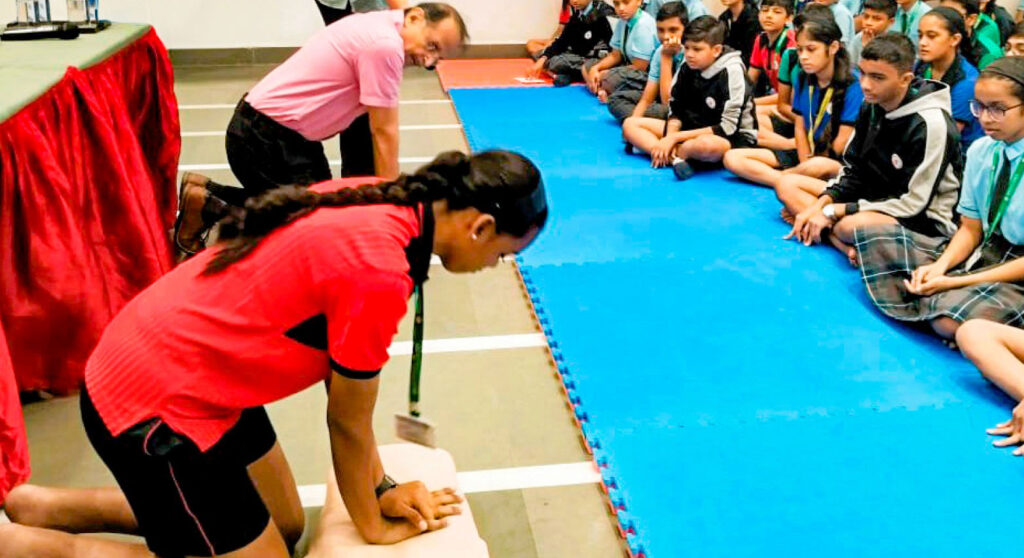
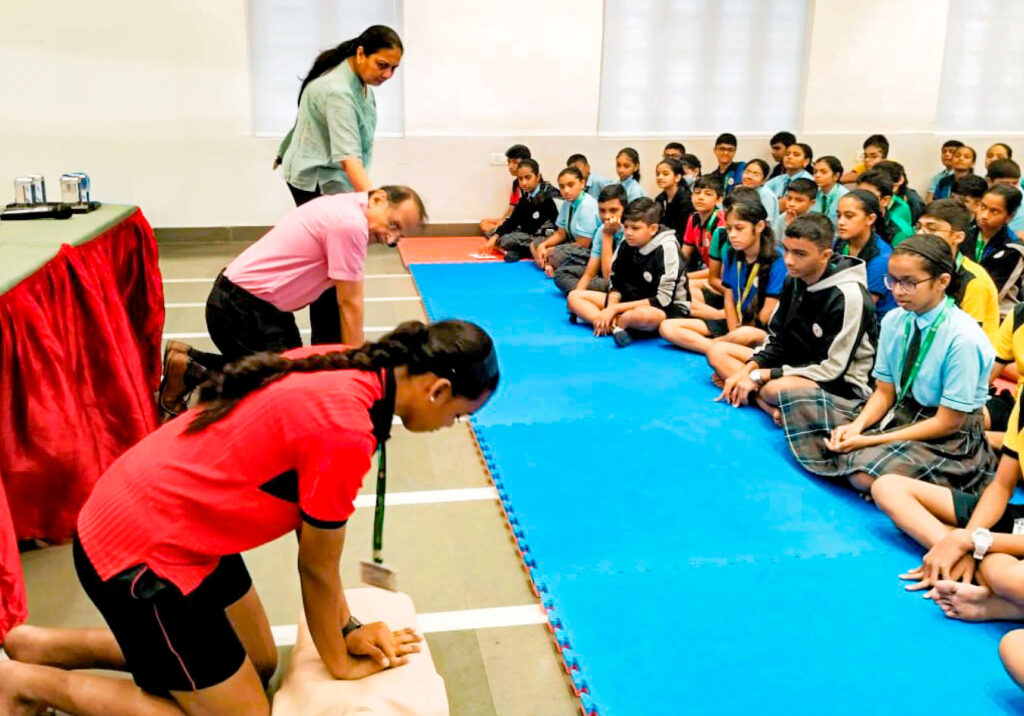
The Rotary Club of Bombay Airport, RID 3141, has made a mark in donating AED (Automated External Defibrillator) machines to various organisations and conducting over 50 CPR (Cardiopulmonary Resuscitation) sessions for many groups in Mumbai. Their most notable achievement is the installation of AEDs at 54 Railway Stations, which includes all stations along the Western Railway route from Churchgate to Virar.
As is well known even a few seconds can make a difference between life and death if timely CPR is not given immediately after a cardiac arrest. The club’s foray into providing this service to people in Mumbai in a project related to heart care began when Dr Akshay Mehta, an interventional cardiologist, took over as club president in 2023.
When he became club president two years ago, he launched a collection drive for putting up AEDs at prominent places in the city of Mumbai, particularly railways stations, by organising a musical event to raise funds. This was attended by club members, their friends and families and his patients. At that event an impressive ₹70 lakh was raised, and the collection drive continued with club members and their friends and families. The kitty has passed the ₹1.5 crore mark and with this money 60 AEDs have already been given.
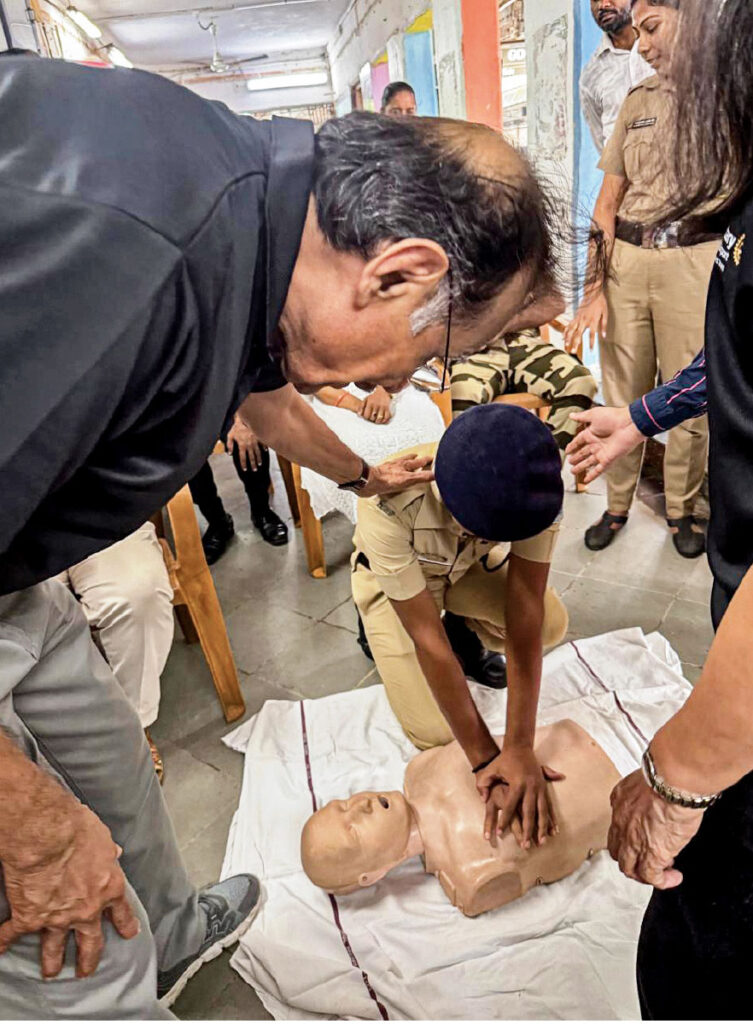
On how this idea came to him, Dr Mehta says, “Whenever I travel by air, I see AED machines at airports and know that these have been used effectively to save lives when a cardiac arrest happens. This made me wonder why railway stations in Mumbai and elsewhere do not have these life saving devices, particularly when stations such as Andheri, Dadar or VT in Mumbai see at least 10 lakh footfalls a day.”
He thought that people of all ages and classes pass through these stations, but there was no help available in case somebody suffered cardiac arrest. Talking to the porters, railway staff, etc he learnt that several incidents of cardiac arrest had indeed occurred at stations, and lives had been lost as the staff watched helplessly.
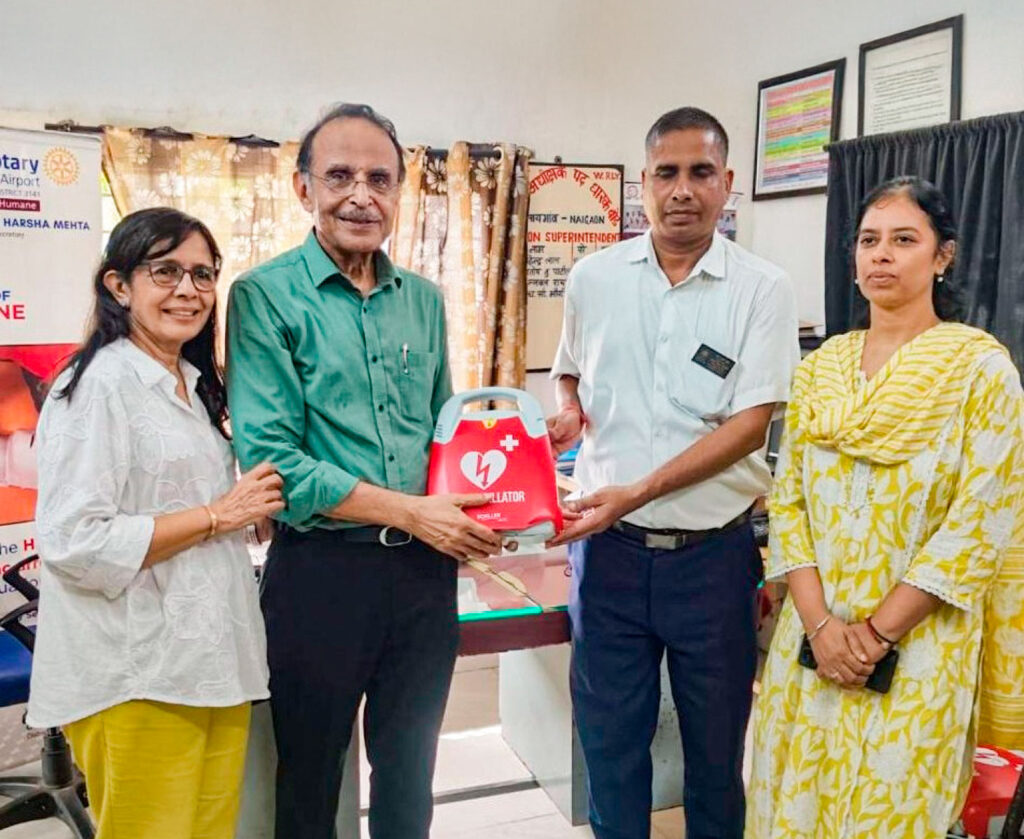
Dr Mehta had also seen that in many countries AED devices were readily available to save victims of cardiac arrest. The AED project began in right earnest, with the club putting up these small, portable machines in railway stations, and prominent places in the city which saw a lot of buzz. The device, which costs around ₹1.1 lakh weighs less than a kg and can be easily rushed to the spot where the cardiac arrest occurs. “It is meant to be used by lay people but they have to be trained. I’m happy to share that two persons who suffered a cardiac arrest at the Marine Lines and Dombivli stations were revived by the station masters, who we had trained along with their other staff, and their lives were saved.”
The news that the club had provided AED devices to several places in Mumbai, particularly railway stations spread and Dr Mehta was pleasantly surprised to recently get a call from the Arthur Road prison, requesting for the donation of an AED machine.
Past president of the club Kevin Colaco explains that this jail houses over 3,500 inmates and an occasional cardiac arrest did occur here, so one or two AEDs, and CPR training and how to use these devices were badly needed here.
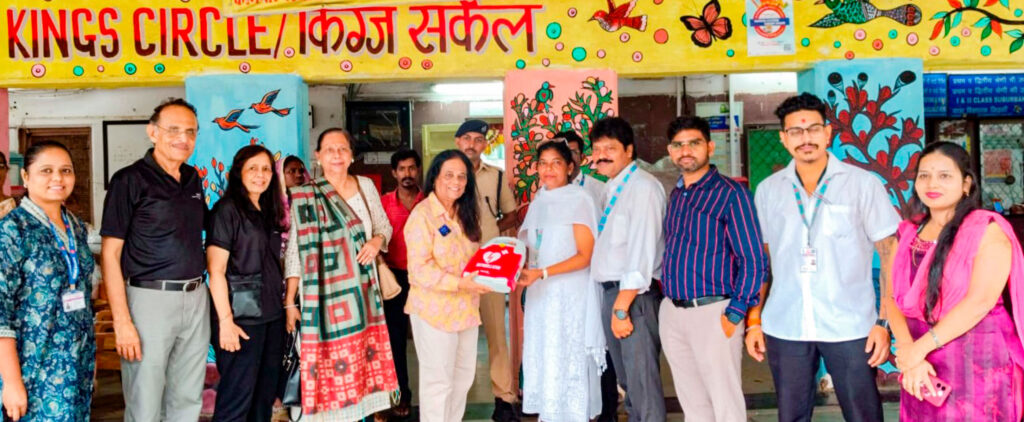
When the 61st AED from the club was installed in the jail in August, in the presence of PDG Rajendra Agarwal and club president Pragna Mehta, and donors PP Shachin and PDC Hima Nanavati, Colaco, who was present said in a lighter vein to the prison authorities: “So now, with the help of these AEDs you will be able to revive them first before hanging them later!” There was laughter all around and the comment was taken in the spirit in which it was made.
“It was a delight to train the medical staff and the jail inmates in CPR and use of these device, which is rather easy as two pads have to be applied; the trainees were both eager and enthusiastic to learn, so that they could help save lives when the need arose,” he adds.
Dr Mehta says that apart from the stations in the Westen Railway corridor, along the Central Railway line also two distant stations like Lonavala and Ulhasnagar have been covered under this project and AED machines given. “At every station, intensive training to recognise cardiac arrest when it happens, and the correct response to it by way of CPR and use of the AED machine were imparted to the railway officials as well as stall vendors, shoe polish men, porters etc. The biggest reward for our efforts were not only the two lives saved by railway staff at the stations mentioned but also a third one saved by a staff member in her neighbourhood after getting trained at a railway station.”
I’m happy to share that two persons who suffered a cardiac arrest at the Marine Lines and Dombivli stations were revived by the station masters, who we had trained along with their other staff, and their lives were saved.
– Dr Akshay Mehta,
past president, RC Mumbai Airport
Besides railway stations and their offices, AEDs have also been installed by the club at other places like police stations and chowkies, office premises, the SRPF ground, a Free Mason Lodge, etc. “We got one installed at the Mount Mary Church (a famous Catholic basilica located on a hill in Bandra) where during the St Mary festival nearly 10–15 lakh people visit this holy place. We are also encouraging large housing societies to have an AED int their complex, with people trained to handle these machines. I do believe that this is a crying need of our country,” says Colaco.
The club wants to install at least 100 AED machines and “I’ve also told DGs Vinod Sarogi (Chennai) and Elizabeth Cherian (Bengaluru) that they should take up a similar project in their district,” he adds.
In conclusion he says that the training differentiates between a heart attack and a cardiac arrest; while the person who suffers a heart attack should be rushed to the hospital, the one suffering a cardiac arrest has to be “revived through CPR or pumping of the chest so that the residual oxygen in the lungs goes to the brain to prevent it from dying before 7 minutes. Because if the oxygen doesn’t go to the brain within that time, the person will suffer a brain death. As the procedure is so simple and the machine so easy to operate, all efforts should be made to save as many lives as possible by making available both the AEDs and the required training,” he adds.
Mehta says this project has continued for two years and will go forward thanks to the generous support of our club members, PDG Rajendra Agarwal and PP Girish Agarwal, who really helped do the project at the railway stations. As we install more AED machines and conduct CPR training sessions, we seek support from everyone reading this to spread awareness about how CPR and AEDs can save lives so that we can cover as many people as possible and as many sites as possible. Because in cardiac arrest, every second and every pair of helping hands can make a difference between life and death.”