
Children living on the streets is not a novel phenomenon in several Indian cities and Bhubaneswar is no exception. Here a large number of children live in street situations across railway station areas, footpaths and near temples and market places. “A common job of these children is ragpicking, in which boys and girls as young as six years old sift through garbage in order to collect recyclable material. If they live with their parents on the streets, at least some food is assured. If not, their next meal is not guaranteed. When personal health and hygiene cannot be assured, education is a remote dream. These children are at high risk of getting addicted to substance abuse and serious illness,” says S Harichandan, past president of the Rotary Club of Bhubaneswar, RID 3262.
With any form of structured or regular education remaining a pipedream for such children, they are exposed and vulnerable to various forms of exploitation and abuse. As they live in small groups, it is difficult to start a formal education programme for them, leaving them exposed to total absence of any kind of education, he says.
To make at least a dent in this huge problem and make a difference to some of these unfortunate children, the Ruchika Social Service Organisation (RSSO) was founded in 2010 by a visionary educationist, late Inderjit Khurana, who was affectionately referred to as Mama by students, and the Ruchika School was set up for such underprivileged children. After her passing, the work was continued by Dr Benudhar Senapati as the CEO of RSSO, who conceptualised the idea of School on Wheels. With the India Tourism Development Corporation providing three battery-operated electric rickshaws, known as Totos in Odisha, in 2021 Dr Senapati approached Harichandan, who was then RC Bhubaneswar president, seeking Rotary’s help to take this project forward.
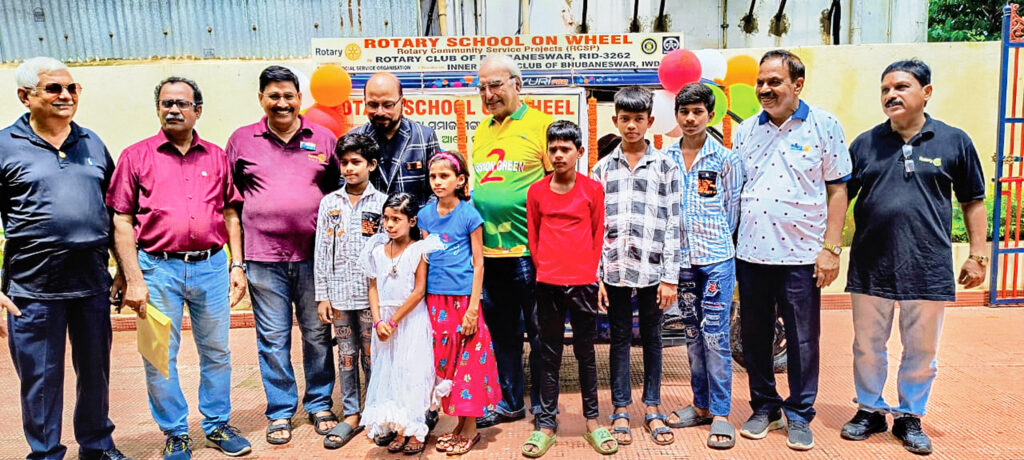
The club president discussed the project with members, got a very positive response and confirmed the partnership. “After a lot of brainstorming between Ruchika representatives and us, we set up an operational budget, and discussed the financial implications of the services that can be provided to these street children. Our past president and director of community services, the late Dr S K Ray, played an instrumental role. The club decided to spend ₹1.5 lakh and an MoU was signed between Ruchika and Rotary in August 2021, and the Inner Wheel members also came on board,” he says.
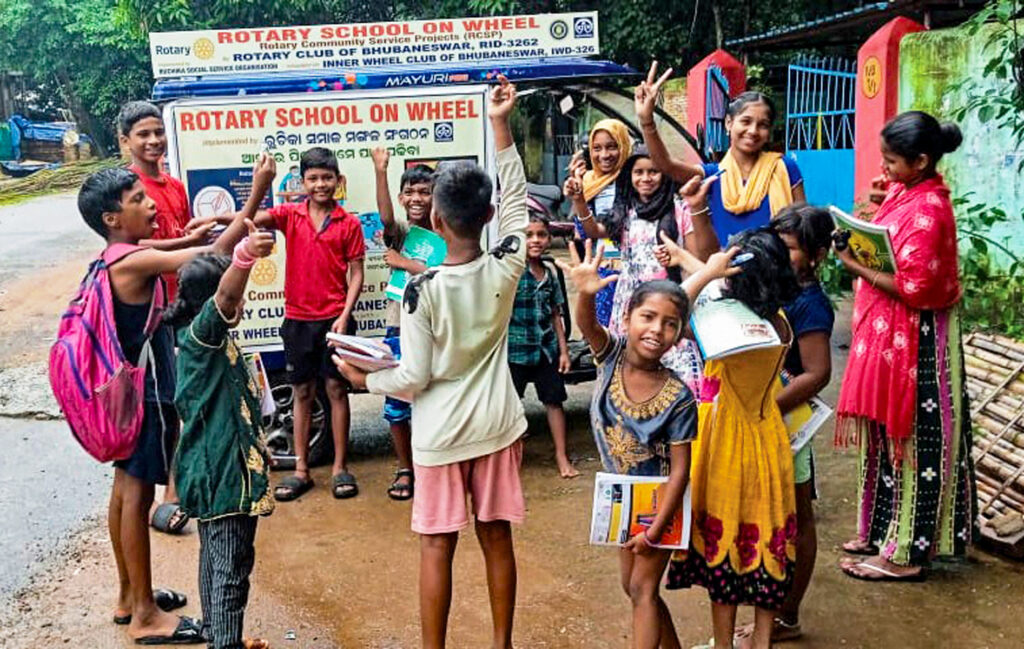
The first Rotary School on Wheels under the chairmanship of Ray came into existence and the Inner Wheel Club of Bhubaneswar joined hands as partners to provide food ration throughout the year. The project was inaugurated on Teachers’ Day in 2021 by the then RID 3262 DG Santanu Kumar Pani.
The club started with one centre and one Toto — today it has two centres and two Totos catering to some 60 students — and continued its engagement with this project, setting aside ₹1.5 lakh every year for it. Along with schooling, basic healthcare needs of the children are also taken care of.
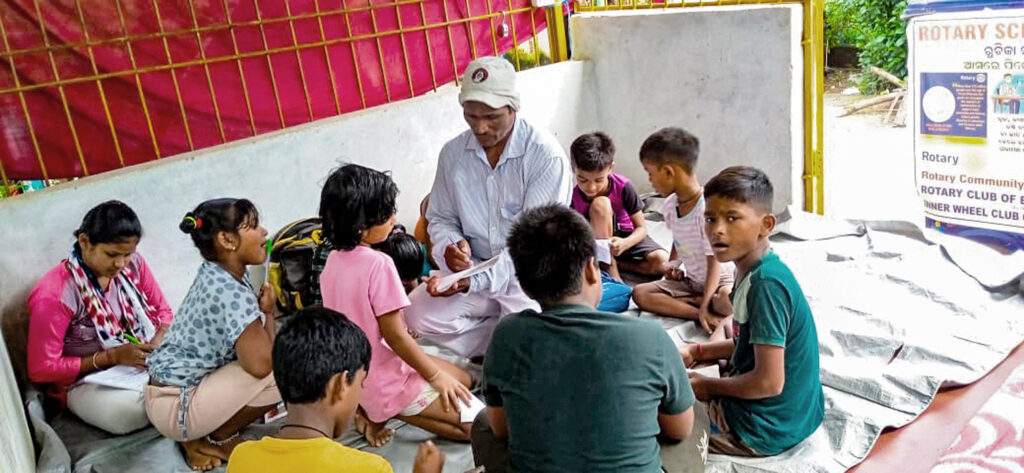
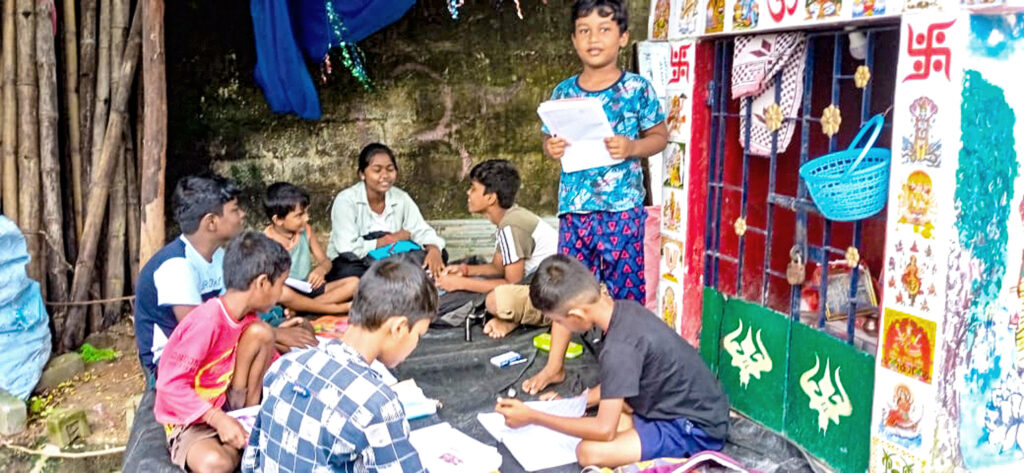
Explaining the way in which this project works, Harichandan says their School on Wheels is an integrated approach towards providing quality basic education to children living in streets or street-like situations. “We have two centres, but the project is implemented in different corners of Bhubaneswar city area, including the street behind the old Bidhan Soudha and the street of Sishu Bhawan Square… wherever the children live in street situations. Basically, it’s a doorstep educational programme for these children, in which a battery-operated E-rickshaw (Toto), decorated like a school and containing learning and play material, toys, some food and first-aid box, visits the children. The two sides of the Toto are used as a chalkboard, and maps and charts are displayed around the Toto. Bijay has been appointed by the club to act as driver-cum-teacher of the Toto. He drives the Toto to the place where the children are, and teaches them for an hour, before moving on to another place where five or more children are available. The Toto visits four such centres in a day and Bijay admits: “I often have to resort to singing and dancing to attract and hold the interest of the children while teaching them some concept or some lesson. Toys are also used to engage the children’s attention and teach them some subjects.”
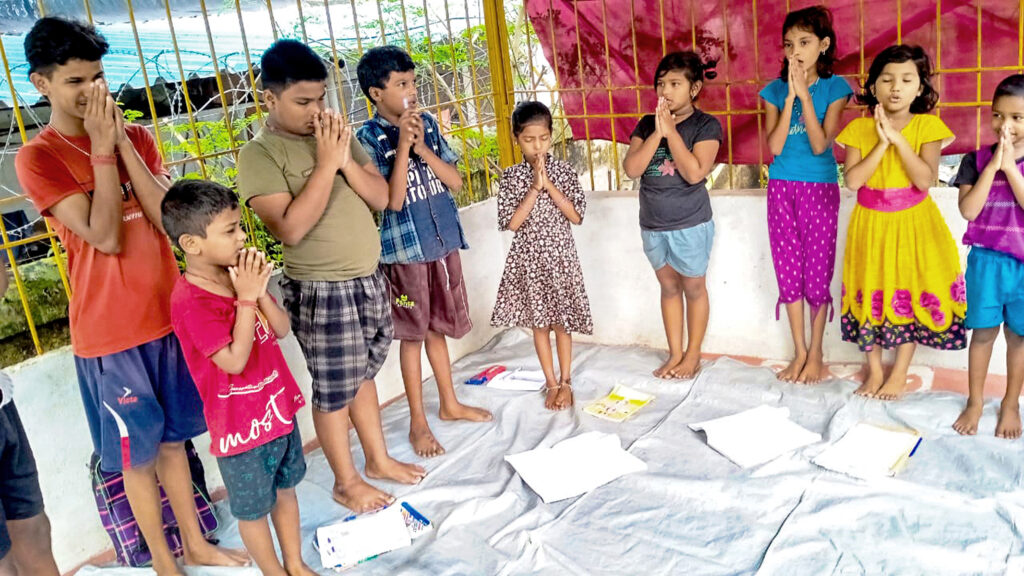
Apart from teaching them numbers and words, he also counsels the children on the advantages of education and motivates them to go to a formal government school, provides first-aid service, if required, and give some food if the children are hungry. Painting and craft work are also encouraged. Songs, games and puppetry are an integral part of each day’s learning session as this attracts the children to the learning points. At the end of the learning work, the teacher gives some homework to keep the kids engaged.
When the teacher finds that some of the children are ready to get into a regular school, arrangements are made put to put them into government schools. The teacher keeps on providing academic support after the school hours for children who get into regular schools.
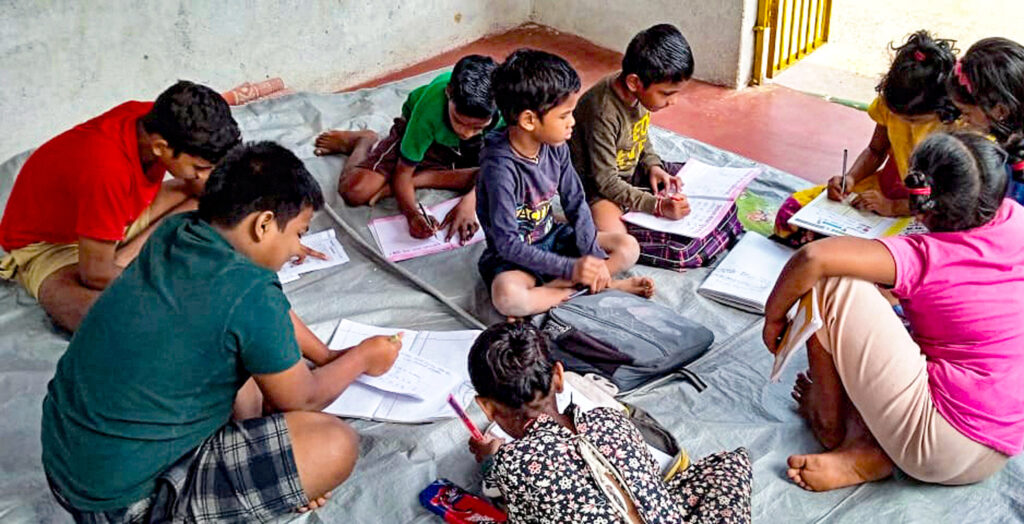
Harichandan confirms that many of the children are at present in government schools, several have even passed their high school exams. But it was not an easy task to get these street children into regular schools. “We had to work with the teachers of neighbourhood government schools and convince them to accept these street children into their schools and give them an opportunity to enjoy the school environment. We also had to take some sessions with the students of these schools to convince them to accept these children as their friends,” he adds.
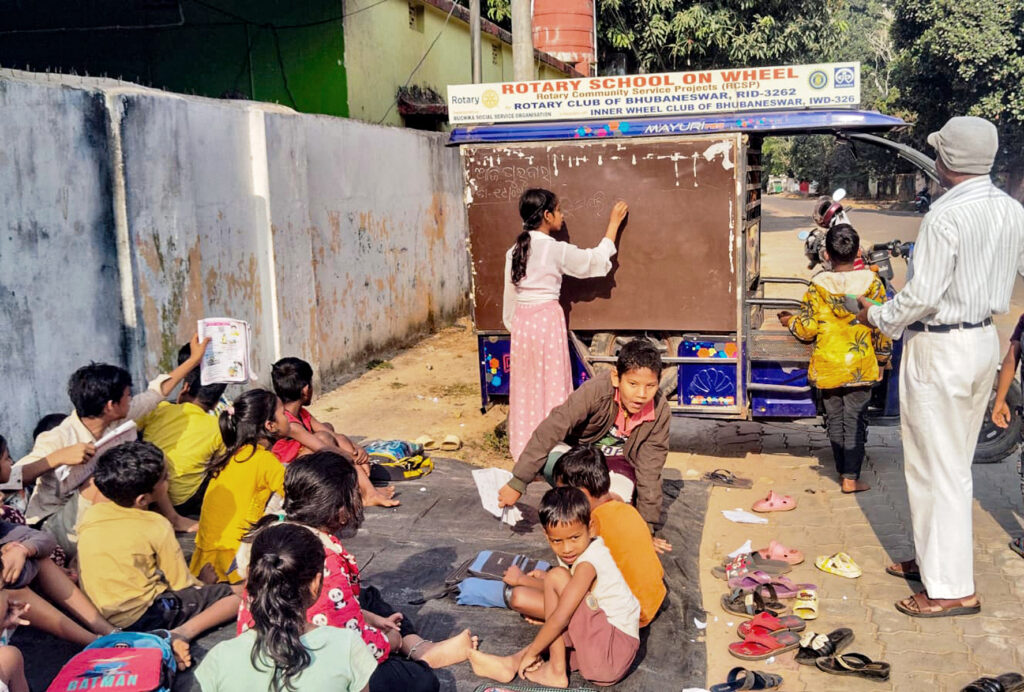
Even at the learning centres, to give the children a feeling of being in a school, the Rotarians have given each child two t-shirts with the Rotary logo, as also shoes, toys, books, medicines etc. With a club member donating some 50 toys for the School on Wheels, a toy bank was started and the children were delighted when given different kinds of toys to play with every day.
Harichandan says that this ‘schooling’ project has had a profound effect on the children that goes beyond learning. “When we took them to the Regional Museum of Natural History, Bhubaneswar, we found them so disciplined and well-behaved that we were pleasantly surprised. During their visit to the museum, they really enjoyed observing the preserved carcasses of extinct animals, birds, big fish and different types of stones collected from different parts of India. The club hopes to organise similar tours in the future too.”
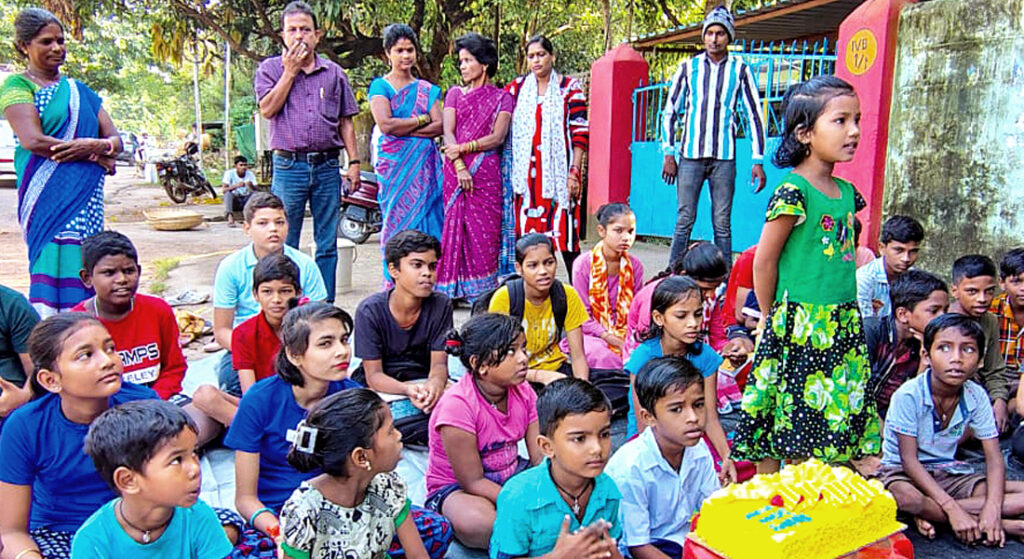
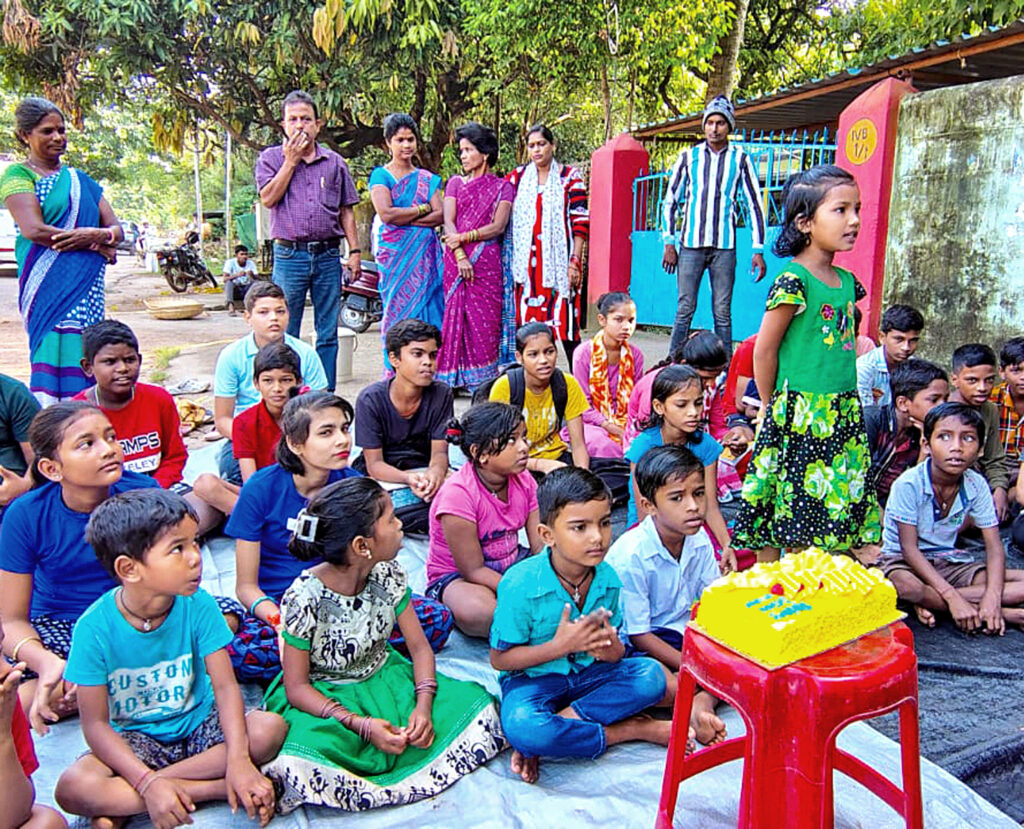
Striking a poignant note, he says that while other children look forward to celebrating their birthdays with doting parents indulging them, “many of the children living in the streets do not even know the date on which they were born. Thanks to PP Jnana Ranjan Rath, a system was started to celebrate the birthdays of all children on the last date of every month by cutting a cake by the youngest one, in order to spread joy and smiles and distribute cake to the children. Later we found on the last day of each month, the children come to centre with clean shirts, hair neatly combed, nails cut and faces washed clean!”
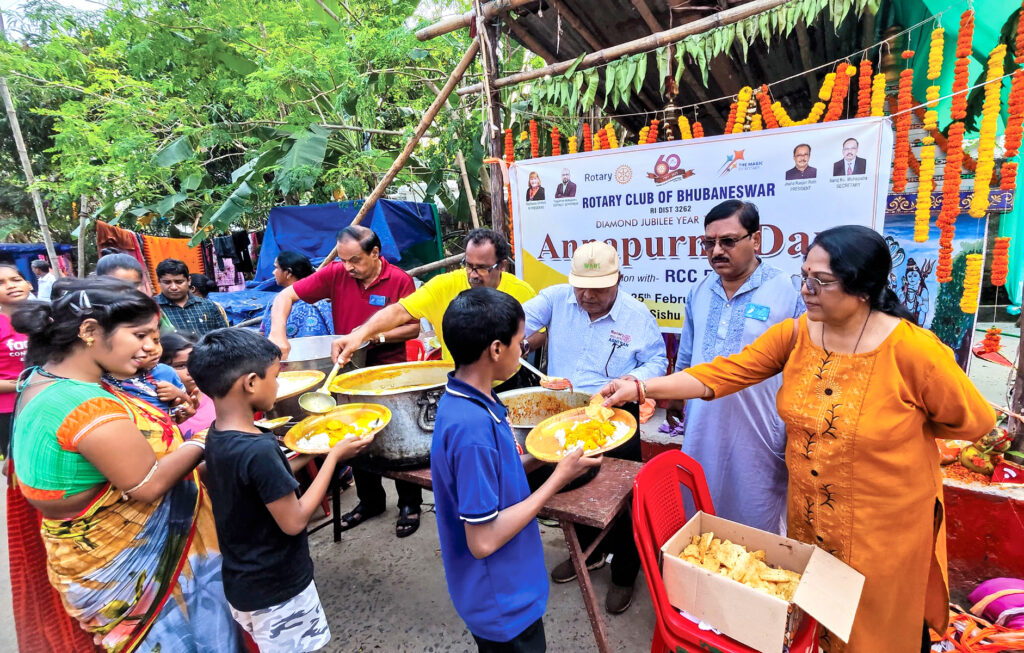
Till today the club religiously celebrates the birthdays of children on the last day of every month, and the youngsters look forward to eating cake that day!
Other welfare measures taken up by the club members for these children’s families include giving blankets to them during winter, and an Annapurna Day, when the children and their families are served cooked food by the Rotarians.
Through this project, at least a few hundred children have benefitted and apart from getting some basic education, they have also enjoyed the benefits of basic healthcare, medication and first-aid services when needed. They have also learnt about good hygiene and sanitation practices to remain healthy and safe, and are educated about their rights and the help they can get from various government organisations when needed. By 2024-end, 132 children had been admitted to government schools and given books and uniforms.
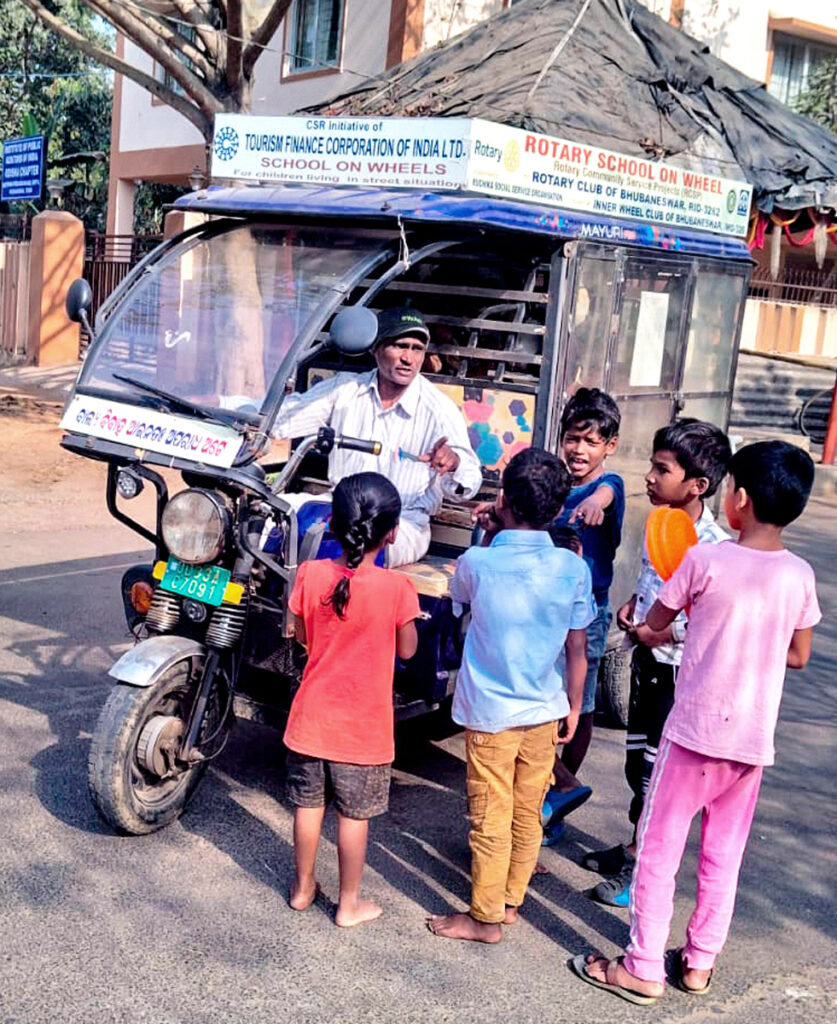
IPDG Yagyansis Mohapatra adds that the club’s “overall objective through this initiative is to reach out to as many children living in street situations as we can with a joyful and creative learning atmosphere that incorporates basic education and life skills, healthcare, hygiene and sanitation knowledge. We also link these vulnerable children to various government services available for protecting children’s rights.”
Past president Srichandan Mishra shares the trickle-down effect of this project, as after their initiative, two more similar Schools on Wheels have been supported by the Azim Premji Foundation and a Belgian organisation. The club has been able to sustain this project with support from several DGs who have visited these centres during their governorship. They include PDGs Santanu Pani, Prabhu Subudhi, Jayashree Mohanty and Yagyansis Mohapatra.