




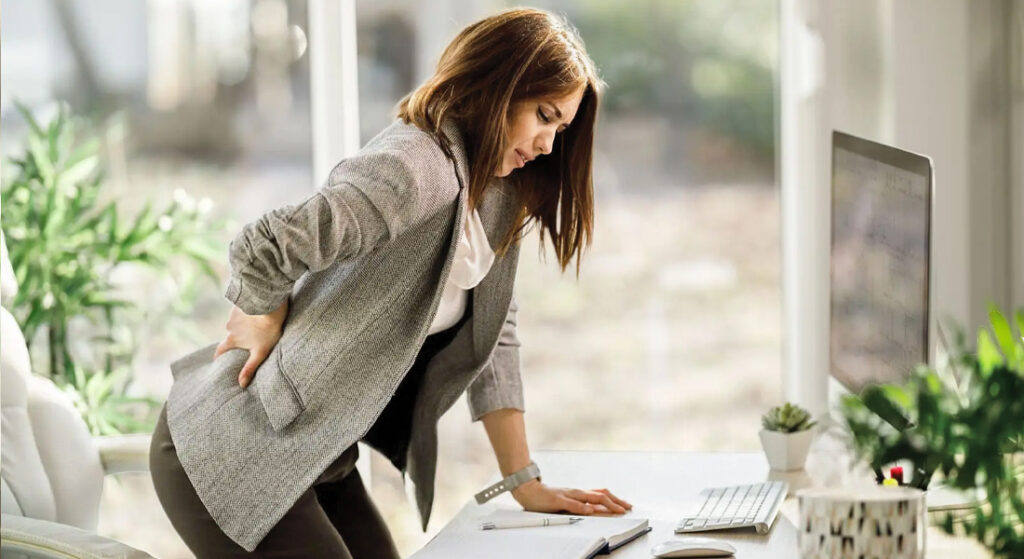
Do you suffer from a backache? Whether it is occasional or chronic, you are not alone.
If you look around, you will see plenty of seniors walking around wearing a supporting lumbar corset. Twelve per cent of the adult population (both men and women) have backaches at any given time.
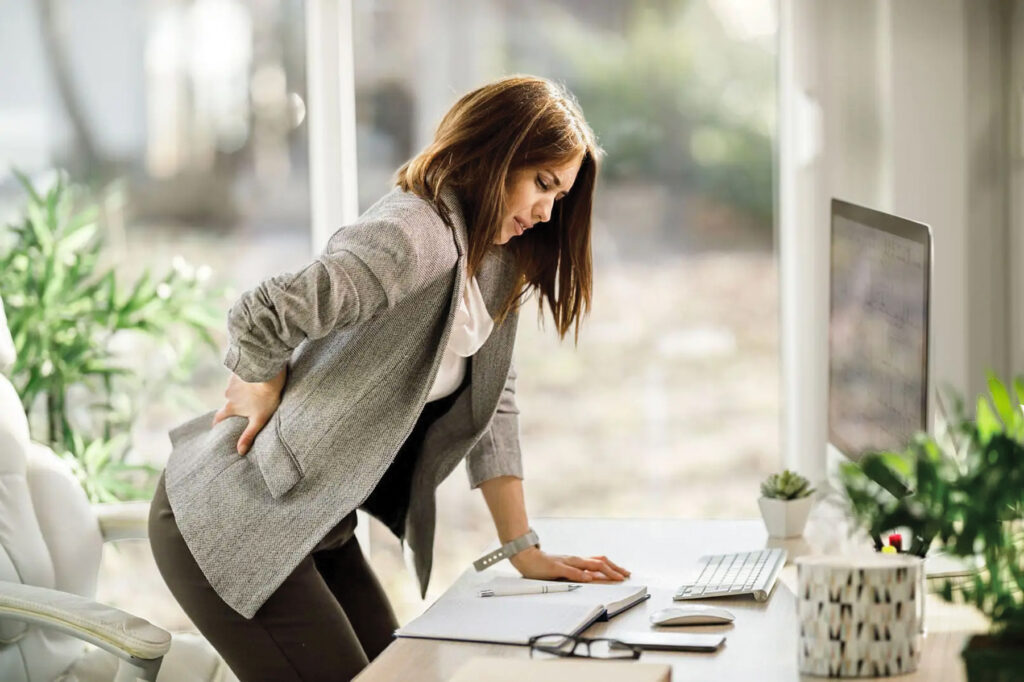
Backache may be an acute discomfort, a sudden incapacitating twinge or a long-standing chronic pain. Both can interfere with daily activities. The extent of the disability this can cause is enormous. The constant irritation interferes with efficiency and functioning. Studies have shown that those in the age group of around 65, who have suffered from chronic, persistent or recurrent backaches are financially worth less than their healthy counterparts. A study in Australia showed that chronic backpain forces individuals to retire early, affecting their long-term financial health.
We humans evolved from quadrupedal animals that walk on all fours. We became bipeds and started to stand upright. This means that the eight-kilo weight of the human head has to be supported by the backbone. This is made up of a series of small vertebrae separated by cartilaginous discs that function as impact-absorbing washers. As age advances, constant weight bearing and overuse while twisting, standing and bending take their toll, and the back starts to hurt.
The pain is typically located between the lower rib margins and the crease of the buttocks. It may have occurred acutely while bending or awkwardly picking up a heavy object. It may appear with no apparent precipitating cause. It may be aggravated by movement or be constant and dull. It can prevent restful sleep. This in turn leads to fatigue, inefficiency and irritability.
Nerves extending to the hip region and feet emerge from between the vertebral bones. A problem in the back (bones or discs) may show up as pain in one buttock or radiate down the back of one or both legs. This symptom is called sciatica. It is not a diagnosis in itself, but just a description of the pain. Sciatica may be accompanied by tingling and loss of sensation in the feet.
If you develop a backache, then try the following home measures for symptomatic relief.
- Apply a capsaicin containing ointment and then an ice pack for two minutes at a time every hour or so.
- Take NSAIDs (Non-Steroidal Anti-Inflammatory drugs) like ibuprofen or naproxen. Paracetamol may also provide relief from pain.
- Rest initially, but not for more than two days consecutively, as it will weaken the paraspinal muscles supporting the spine. This will eventually aggravate the pain.
- Sleep on your side with a pillow between your knees, or on your back with a pillow under your knees.
A physician needs to be consulted immediately if the pain follows trauma, or causes bowel and bladder problems, if there is fever, or if there is weakness or loss of sensation in the legs. Any pain that lasts more than two weeks also needs to be taken seriously and evaluated.
Unfortunately, not all back pain has a single cause. It is not a case of “one size fits all.” It can be due to a plethora of reasons. Even with identical symptoms, two people can have different diagnoses. Persistent pain needs to be investigated and evaluated. Blood tests, X-rays, CT and MRI scans may be required.
The results may show vitamin D deficiency or low calcium levels. The uric acid levels may be elevated. The bones may be weak, with osteopenia, osteoporosis, compression or wedge fractures of the vertebrae, slipped or damaged intervertebral discs, facet joint problems, changes in the disc endplates, lumbar canal stenosis or the ‘cauda equina syndrome.’ The problem may have its origin elsewhere and may be due to inflammatory disorders, cancer metastasis or some infection. Investigations and scans of the abdomen may show a silent aortic aneurysm or other intra-abdominal pathology.
The difficulty in diagnosis and treatment arises because many of the ‘disc changes’ and other radiologic and blood reports can be found also in many normal people who do not have a debilitating backache.
In a lucky few people, a correctable or treatable cause can be identified and specific therapy started. Even when a cause is identified and specific treatment given, relief may be elusive. Quite often, no specific cause can be identified, and the low back pain is then labelled nonspecific.
Treatment may be frustrating for both the patient and the physician. This may lead to doctor shopping, dissatisfaction and misery. Inability to function efficiently because of the pain and slow response to treatment can cause depression, and further aggravate the perception and response to the pain and its treatment.
Physicians may combine analgesics with muscle relaxants and antidepressants in an attempt to provide relief. Physiotherapy with guided exercises and strengthening often helps. Unhappy patients may try alternative medication and acupuncture. The list of treatment for nonspecific back pain is long. A lot of the treatment is anecdotal and unproven.
In severe longstanding cases, the physician may advise corticosteroid or nerve block injections to the spine. Surgery can be done for structural causes like a herniated disc with nerve compression, spinal stenosis, or spine instability.
Some lifestyle modifications do help:
- Attain ideal body weight. Extra weight around the stomach changes the posture and strains the spine. It is like a permanent state of pregnancy.
- Use ergonomically correct furniture for work and study.
- Prolonged sitting weakens the paraspinal muscles. Get up every hour and stretch or walk a few steps.
- Exercise aerobically (walking, jogging, swimming, cycling) for 30-40 minutes a day, at least six days a week. Do yoga or stretching and core strengthening regularly for 20 minutes as well.
- Do not smoke. Nicotine causes imbalances in bone metabolism, with reduced bone density.
- Alcohol consumption can interfere with calcium and vitamin D absorption, weakening bones.
Don’t wait for a backache to develop. Exercise regularly to prevent it. It is always better to lock the house before the thief enters.
The writer is a paediatrician and author of Staying Healthy in Modern India.