
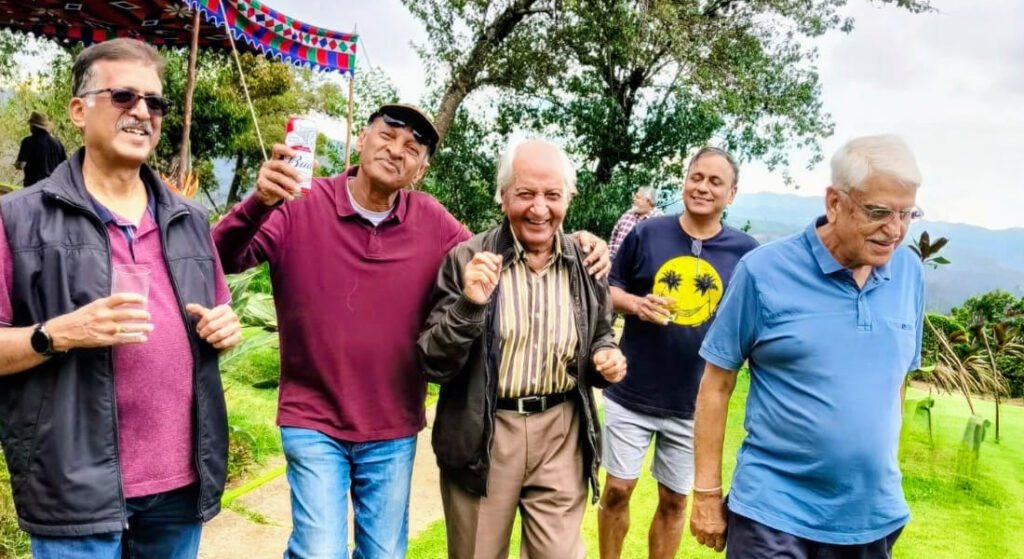
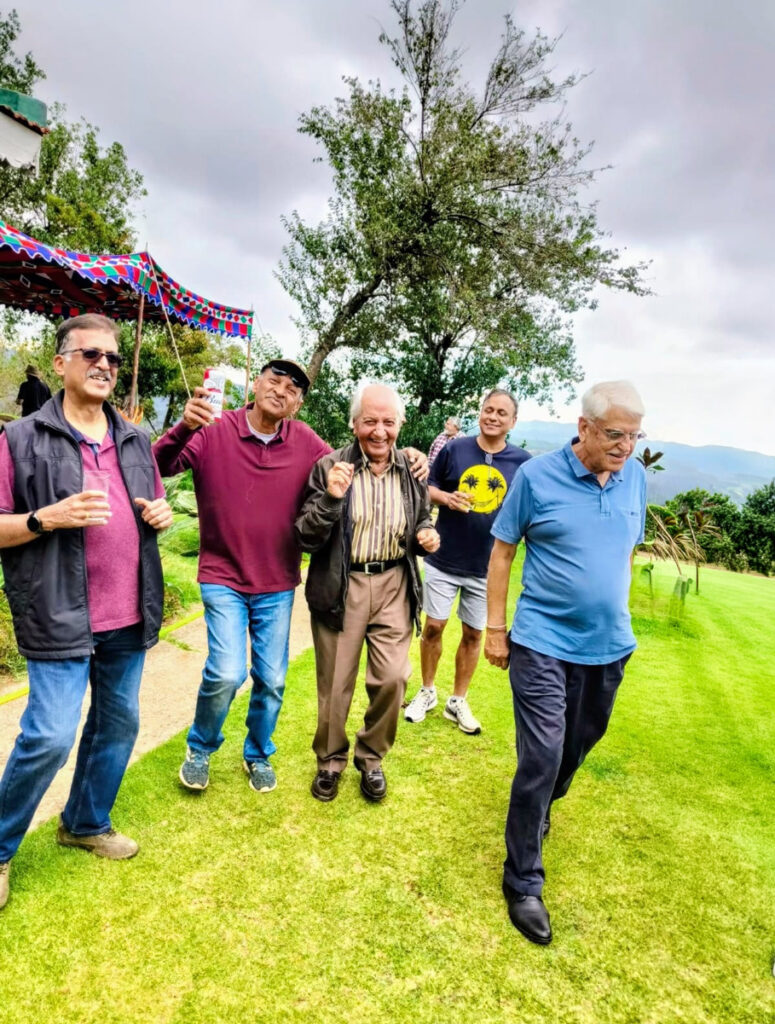
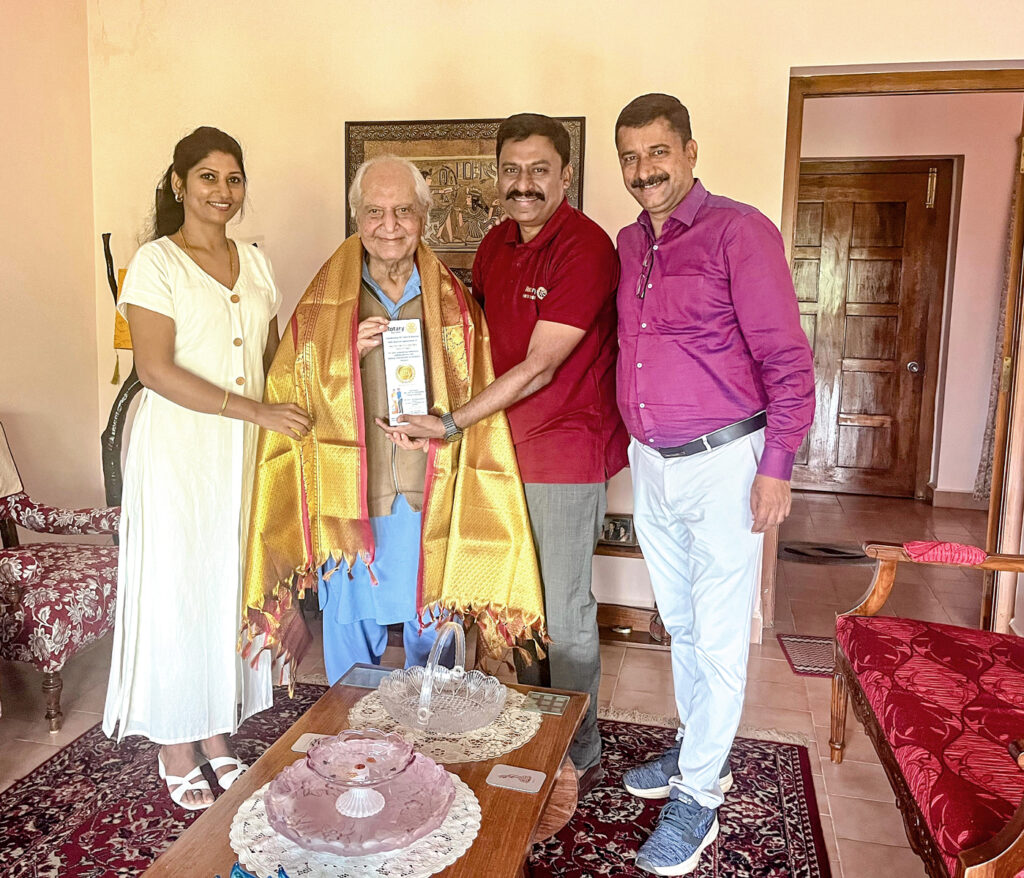
At 99, when most people step away from public life, Dr T S Chhabra still comes to his Rotary meetings in Coonoor, Nilgiris. The veteran dentist, Army officer and Rotarian, represents a generation for whom service was not a slogan, but a way of life. With 57 years in Rotary and nearly a century of lived experience behind him, he is one of the oldest and most respected members of the Rotary Club of Nilgiris, RID 3203.
Born in undivided India, Chhabra’s formative years were shaped by India’s Freedom movement. Between 1944 and 1947, while studying dentistry in Lahore, he was swept up by the patriotic fervour of young Indians demanding independence. “We were fired and inspired,” he recalls. He participated actively in protests and demonstrations against the British rule.
The Partition of 1947 uprooted his family. Like millions of others, they migrated to independent India as refugees. He resumed his education at Bombay’s J J Hospital and completed his dental studies in 1948. A few months later, in January 1949, the Indian Army invited qualified dentists to join as commissioned officers. Chhabra applied immediately. He was one of the first dentists to be commissioned into the Indian Army’s Dental Corps after Independence, a distinction he wears lightly, but proudly.
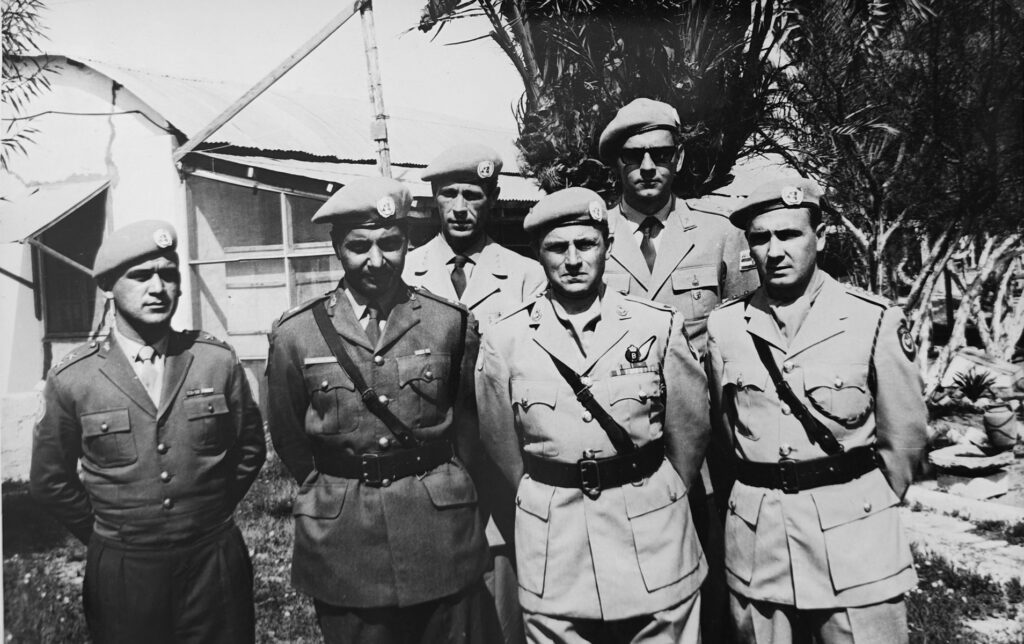
For two decades, he served in uniform, learning lessons that stayed with him long after retirement. His postings included two stints at the Military Hospital in Wellington, Nilgiris, first as a Major and later as a Lieutenant Colonel. In 1966–67, he was deputed to the Gaza Strip on a United Nations assignment during a period of conflict, “an experience that broadened my worldview and deepened my commitment to humanitarian service. The Army taught me discipline, loyalty and camaraderie. We came from all over the country, without divisions of caste or religion. We were one extended family,” he recalls.
After taking premature retirement in 1969, Chhabra chose to settle in Coonoor. Impressed by the fellowship and service ethos of the Rotary Club of Nilgiris, he accepted membership in September 1969. “I found that Rotary rests on two strong pillars — service and fellowship. That is what drew me in,” he recalls. More than five decades later, those pillars continue to support him.
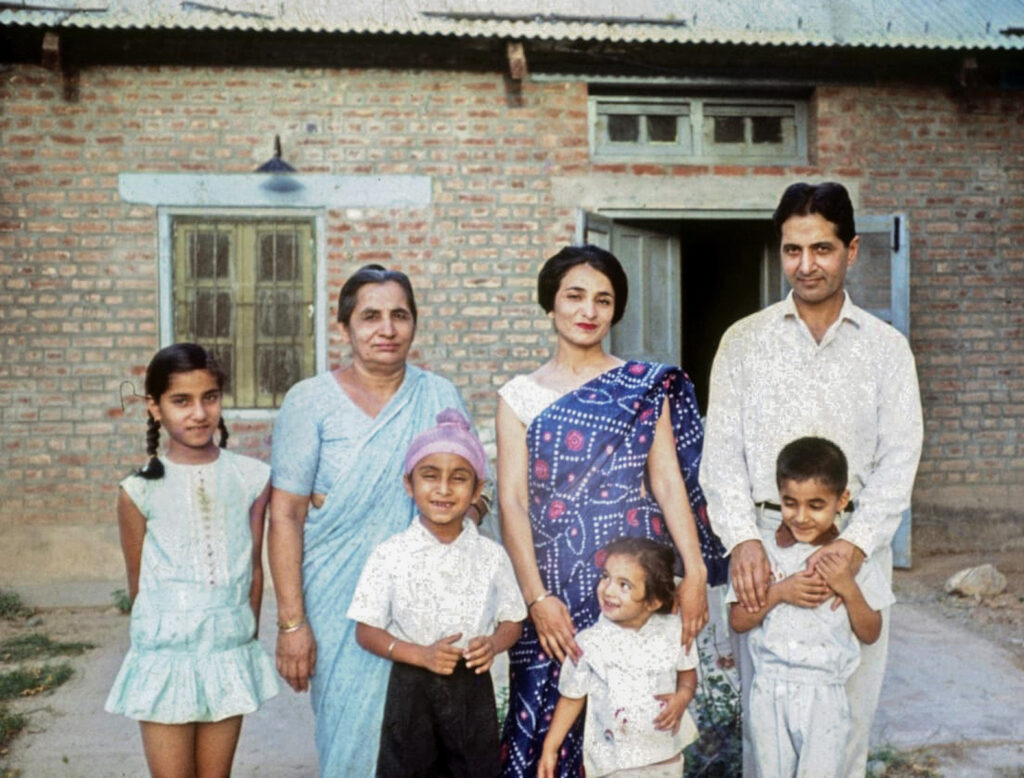
Today, he describes Rotary as his “extended family,” a source of emotional and physical strength, especially in his sunset years. He attends meetings regularly, often accompanied by his daughter Sunaina, who joined Rotary after her mother’s passing. Service, for the Chhabra family, has always been a shared legacy. His wife Aruna was a founder secretary of Inner Wheel in the early 1970s.
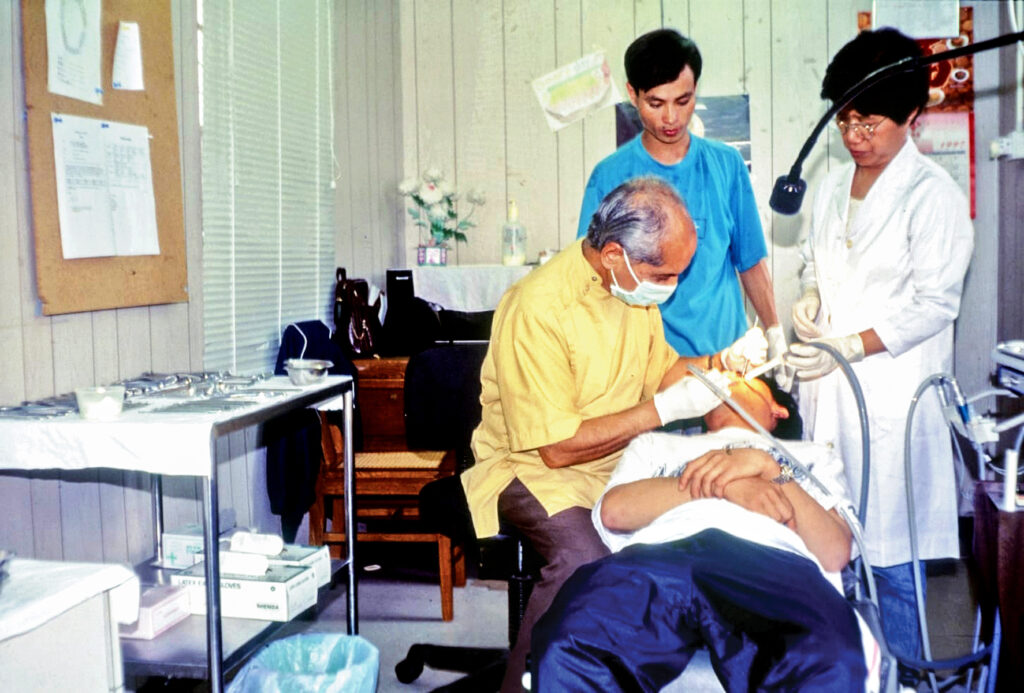
Among his many Rotary initiatives, Chhabra takes special pride in dental and medical camps and his association with free clinics. However, one experience stands out: serving as a Rotary International volunteer dentist. The role took him across countries, enabling him to interact with Rotarians worldwide and reinforcing his belief in Rotary’s global fellowship. “I simply enjoyed these assignments and found Rotary fully satisfying,” he smiles.
He recalls the visit of the then RI President Rajendra Saboo in 1991, when RC Nilgiris celebrated its golden jubilee. There were delegations from Sri Lanka, Bangladesh and Pakistan. “The Rotary delegates from Pakistan were all Punjabis, and they were glad to find me speaking their language. It was of course a nostalgic occasion, and they even invited me to my village in Pakistan,” smiles Chhabra.
Over the decades, he has witnessed Rotary’s evolution — from a male-only organisation to a more inclusive and vibrant movement. While welcoming this progress, he offers a gentle word of caution. “We should be selective in who we induct. Clubs should identify people who have the time and inclination to get involved in Rotary’s ethos. When we join Rotary, we only become members of Rotary. Only when we get involved do we truly become Rotarians,” he says.
Despite personal losses — including the passing of his wife and, more recently, his grandson — Chhabra remains resilient and self-reliant. His days are filled with reading, music, social interaction and a weekly game of bridge at the Coonoor Club to keep his “grey cells ticking”. His son Tarun, a former dentist who is now a full-time environmentalist working to preserve Toda culture, visits him regularly.
Chhabra’s advice to the younger generation: Slow down. We have become slaves to money. God created time, man created hurry. He urges young professionals to balance ambition with empathy. “Make money, but never lose your human touch. Talk to your family. Tell them you care. Do it today. Tomorrow may never come.”
To fellow Rotarians, his message is equally clear: leadership must be collective, service must be humble, and teamwork must be sincere.
His influence is felt deeply within the club. As club member Deepika Unni aptly puts it, “99 years young and over 55 years in Rotary, Chhabra uncle reminds us that service has no retirement age. I love listening to his stories about his overseas service for Rotary and his joy in being a Rotarian.”
Fellow Rotarian Jacob Mathews marvels at his remarkable clarity of mind. “Even today, he recalls events from decades ago with extraordinary detail. His humour is sharp, witty and stories never repeated. His eyesight remains enviably sharp, and he reads without glasses. He even drove till the age of 97.” He adds that Chhabra occupies an almost symbolic seat in the club — the extreme left corner of the first row. “To many of us, he is a father figure, offering guidance through his quiet presence rather than words. In all my years of knowing him, I have never seen him angry. Grace and dignity are simply his way of life.”
Past president Vijayakumar Dar, who has known him for nearly two decades, says, “A man who is an inspiration for both young and old; whose service to Rotary spans half a century; whose memory rivals our Nilgiris elephants; whose sense of humour still has a glint of mischief — a man one meets but once in a lifetime. Knowing the Chhabras is a rare blessing.”