



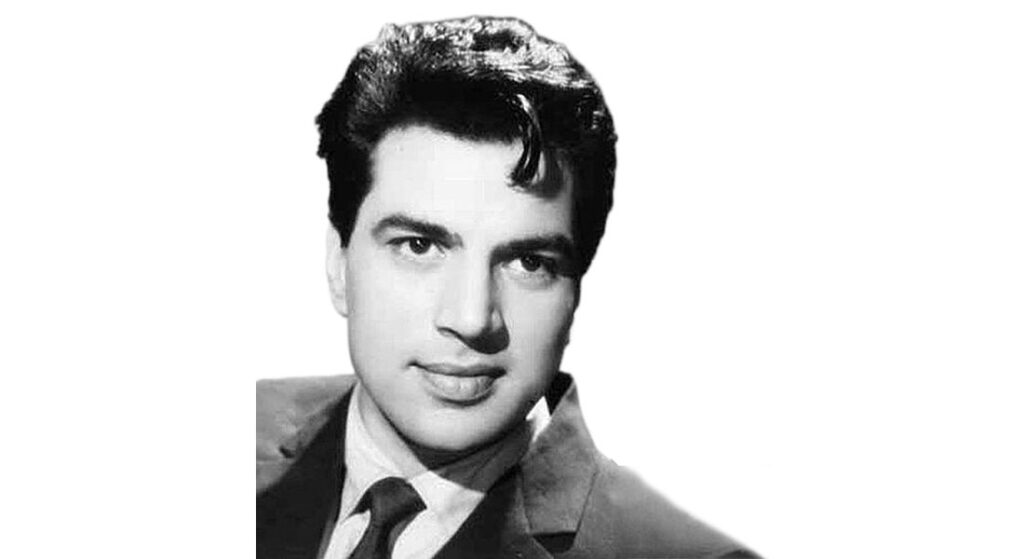
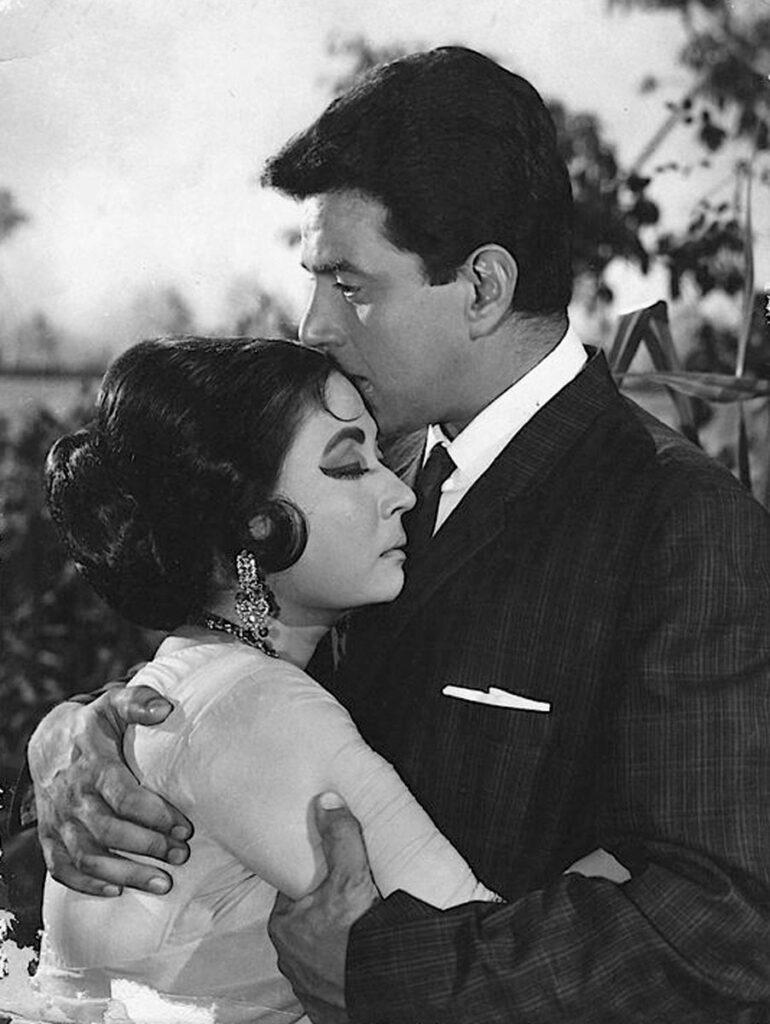
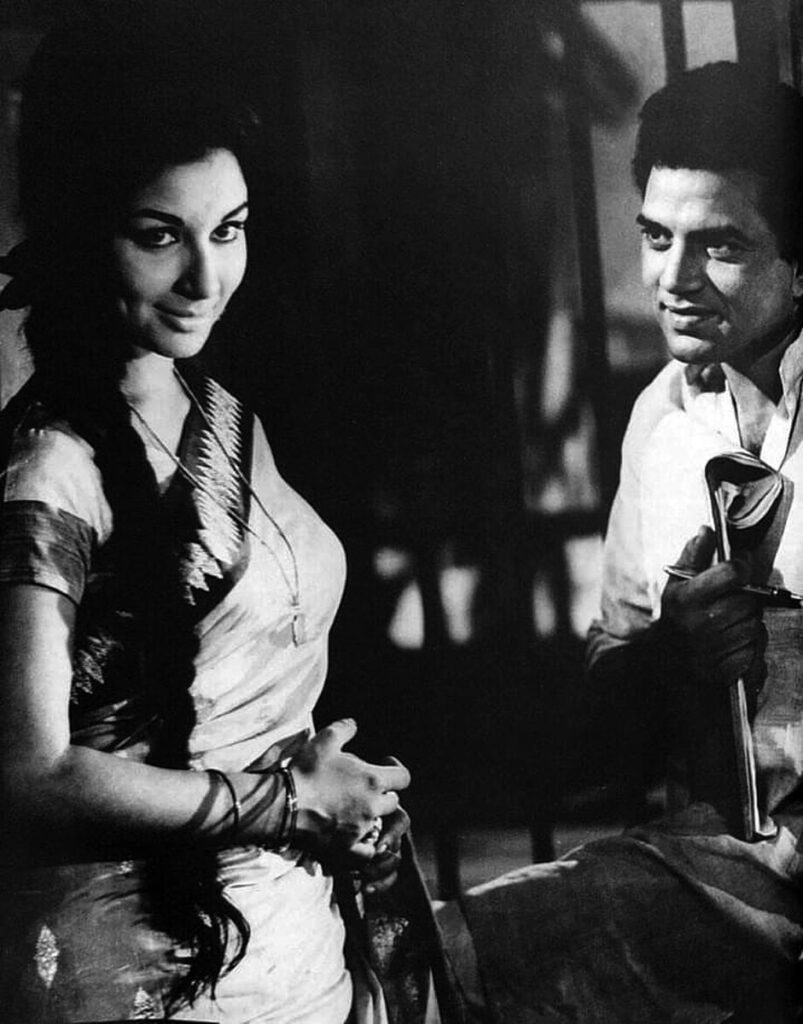
Who can forget a stunningly handsome Dharmendra delivering the soulful melody Ya dil ki suno duniyawalo, ya mujh ko abhi chup rehne do (Hemant Kumar), and gently serenading Sharmila Tagore in one of Hrishikesh Mukherjee’s best films Anupama (1966). Even though this film tells a story primarily of a woman Uma, enacted so beautifully by Sharmila Tagore, who recoils into herself and ceases to speak as she is rejected by her father, who blames her for her mother’s death during childbirth, Dharmendra, who delivered one of his most impressive performances in his early career, quietly stands by her side, caring and loving, but never aggressive or forceful.
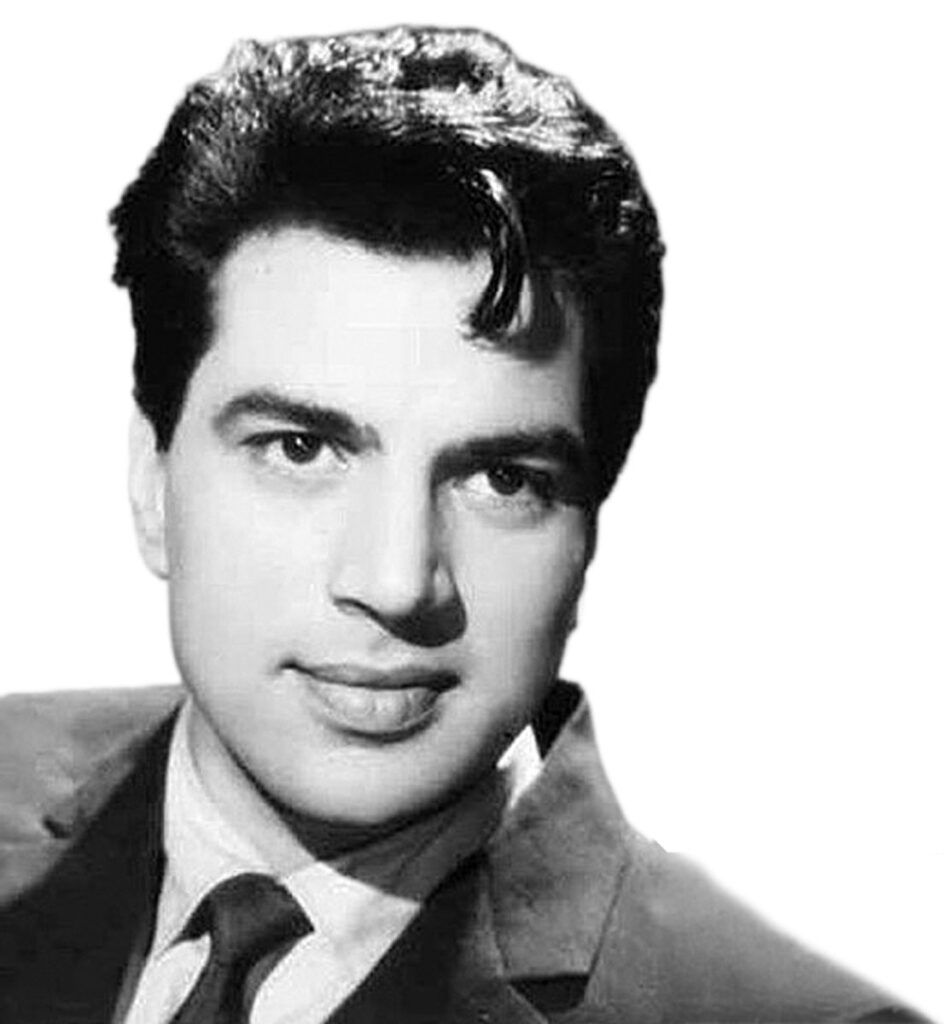
As the veteran actor bid goodbye to his family and fans at 89, the most common recall included his nickname Garam Dharam, his macho image in most of the roles he played, and of course the most iconic film not only of Dharmendra, but all of Bollywood, Ramesh Sippy’s Sholay (1975), where he plays the flamboyant and gregarious Veeru to Amitabh Bachchan’s silent and stoic Jai. The two are ex-convicts, hired by Thakur Baldev Singh (Sanjeev Kumar) to nab Gabbar Singh, a notorious and deadly dacoit, who has spread havoc in the village of Ramgarh.
Salim Khan and Javed Akhtar’s scintillating dialogues, all the three male stars’ acting, not to mention the bubbly and constantly chattering Basanti, played by Hema Malini, and above all Amjad Khan’s impeccable delivery of the character of Gabbar Singh, gave this film the aura and title of being an evergreen classic that continues to resonate with Indian audiences even after 50 years. It was here that Dharmendra firmly established his expertise in the genre of comedy…. Remember the unforgettable mausi and chakki peesing and peesing scene where an inebriated Veeru threatens to commit suicide if Mausi doesn’t give him permission to marry her niece Basanti?
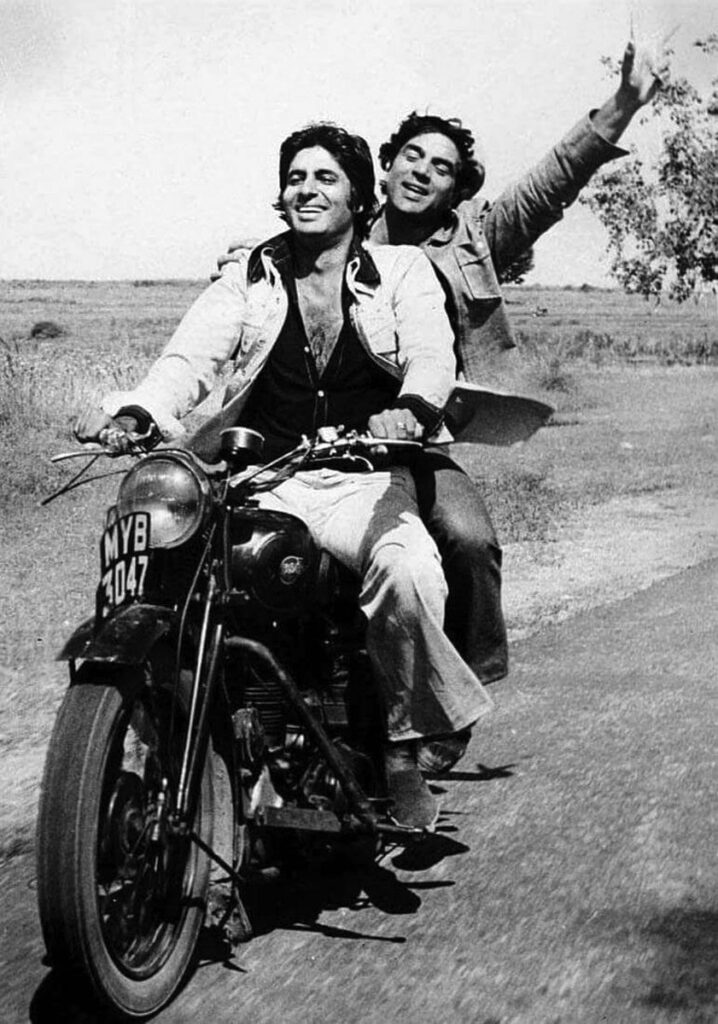
Dharam’s dialogue delivery here and in the temple scene where the actor hides behind a pillar and impersonates Shivji, who urges Basanti to accept his love, left audiences spellbound and in splits. In Hrishida’s Chupke Chupke too, where he masquerades as a driver in order to fool his heroine (Sharmila Tagore’s) guardian Om Prakash and the hilarious conseqences, proved Dharmendra’s capacity to play comedy roles with an ease one hardly expected from a rugged and macho actor.
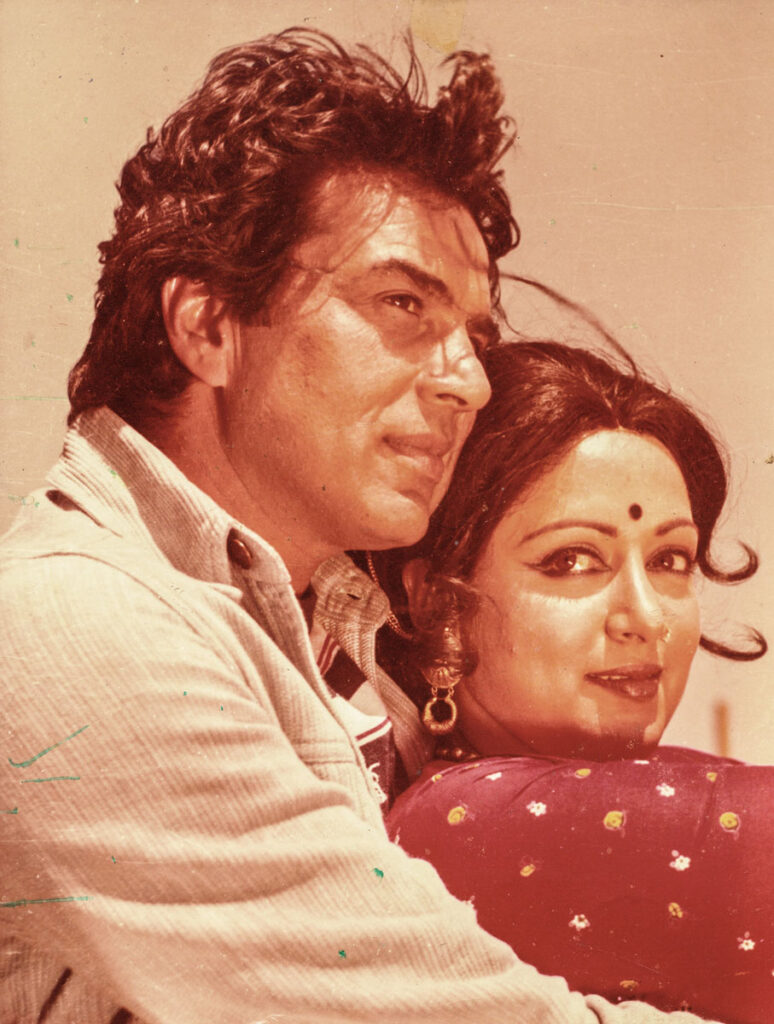
Widely known as the “original he man,” the tall and broad-shouldered actor had a macho persona that came through effortlessly in movies like Phool aur Patthar and other subsequent films. The man, who came from Ludhiana to Bombay with no godfather and made it big in Bollywood through his own merit, once admitted in an interview that in his earlier years when he was a nobody, he would look enviously at Dilip Kumar’s posters splattered all across Bombay, and wonder: ‘Can I ever become or look like him?’ He went on to become a favourite star of women filmgoers. Doesn’t his nickname Garam Dharam, say it all? In a career spanning seven decades, he acted in some 300 films, and in the earlier years, thanks to his Greek god looks, he was featured in mostly romantic roles, aimed at female audiences.
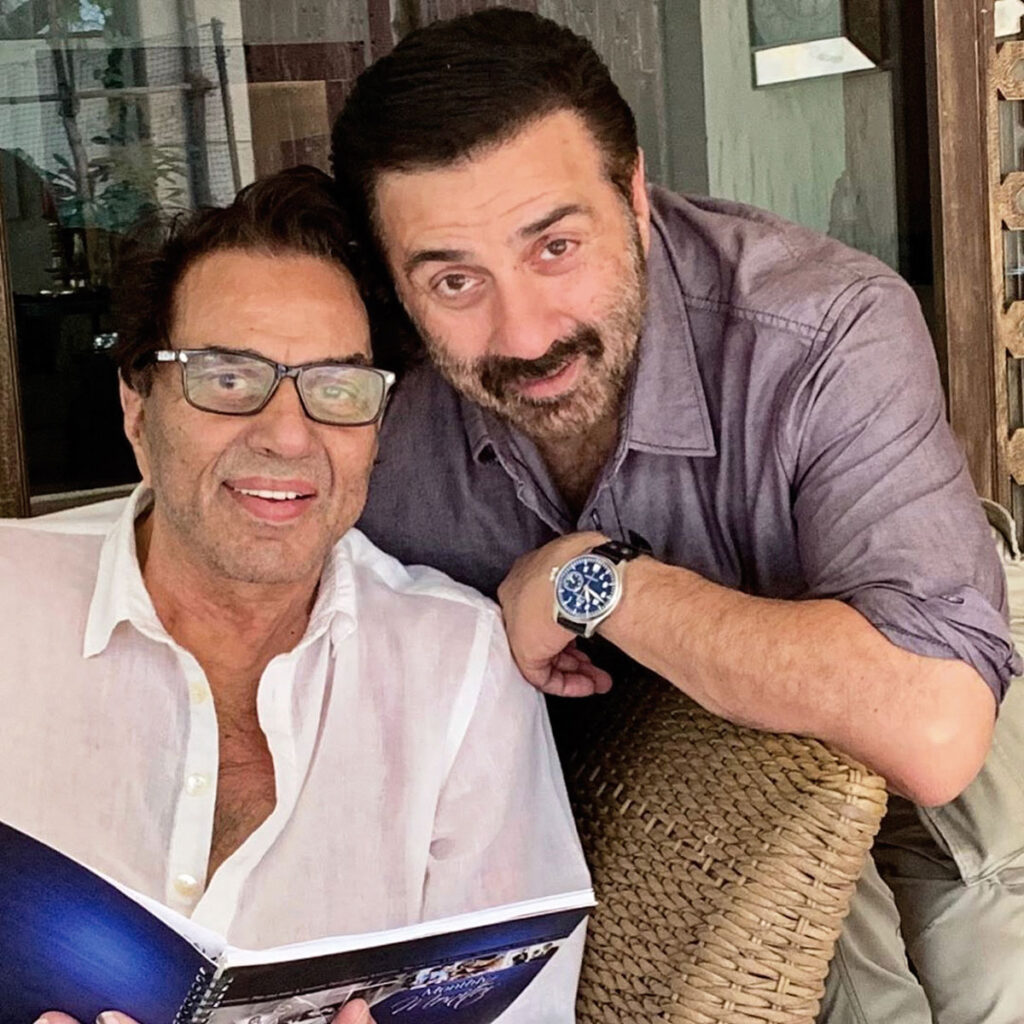
The rugged, machismo hero also had perfectly chiselled facial features and the combination drove female fans crazy. Add to this his enigmatic smile, a gentle persona and an old-school charm and women simply could not resist him. So how could Hema Malini do so despite knowing that he was already married with four children and would never abandon his family? He fell for her after seeing her at a movie premiere and relentlessly pursued her, and she admitted in her biography that after turning him down several times, she gave in. In a baffling arrangement, they became a married couple, and gave birth to two daughters, even as he continued to live with his first family. But as she put it: “He was always there; every time, everywhere.”
Small wonder that many of Bollywood’s actresses were heartbroken at his passing. In her tribute Preity Zinta wrote, “What do you say about a man that was all heart, so loving, so compassionate and one of the biggest superstars and a legend of Indian cinema? When I didn’t know him, I loved him and when I met him, I loved him even more. Words fail me as I feel sadness creep into my heart.” His leading lady in seven films Sharmila described him as “an affectionate, simple and caring person, completely without guile.”
She along with Shabana Azmi and Jaya Bachchan considered him the most handsome hero and once asked by Aamir Khan on a Kaun Banega Crorepati episode, if he ever felt insecure when his wife Jaya was out shooting films with other heroes, Amitabh admitted that she has clearly told him that she was smitten by Dharmendra. Javed Akhtar, the celebrated lyricist, once expressed his admiration for the actor by saying, “I have not seen ‘Greek God’. I do not regret it. Because I have seen Dharmendra. A person who’d see him, would keep looking, and when we saw Dharmendra for the first time, our condition was the same”.
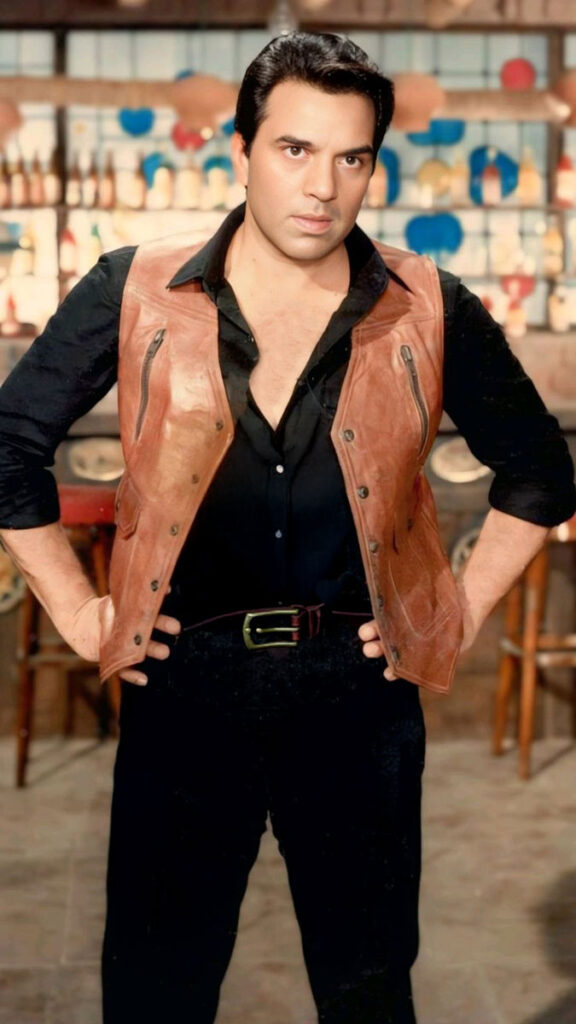
Small wonder that his heroine in Phool aur Patthar, Kaajal, Majhli Didi, etc, the legendary Meena Kumari, fell for him, and fell hard!
Reverting to Dharmendra’s love and reverence for Dilip Kumar, in Dilip’s autobiography The Substance and the Shadow, he recalls how once in 1952, while visiting Bombay as a college student he walked into Dilip’s house unstopped and ended up in his bedroom. Suddenly the veteran actor woke up and seeing a stranger standing there, called for help and the young man bolted. Six years later, he came to Bombay again to participate in a Filmfare talent hunt, and his make-up artist said she was Dilip’s sister and arranged a meeting between the two. Dilip received him, “talked to me like an elder brother, full of love and concern and narrated how he became an actor and how difficult it was for him in the beginning to understand the demands of the profession.”
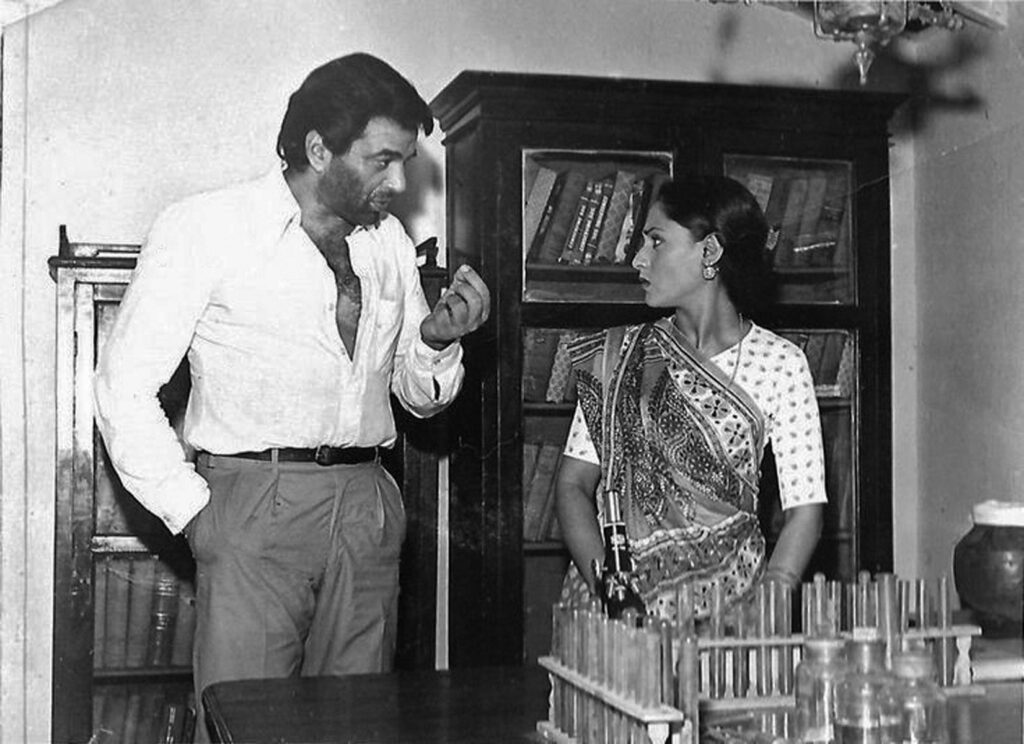
Before he left, Dilip noticed the youngster shivering in his thin shirt. He took Dharmendra upstairs, fetched a warm sweater from his cupboard, hugged him and “saw me off at the gate. I can still feel the warmth of that hug as it was genuine.”
It was the versatility and ease with which Dharmendra handled roles in different genres that set him apart as a great actor. He later got a Padma Bhushan and also became a Lok Sabha MP.
His partnership with Amitabh Bachchan on the screen was magical; whether it was Sholay or Chupke Chupke, Dharmendra’s screen presence, natural charm and charisma were so huge, that only an actor of the calibre of an Amitabh Bachchan could hold his own before him. But I personally believe that in both the movies, perhaps due to the liveliness and verve of the characters he plays, Dharmendra walked away with the honours.
In his tribute on X, Amitabh wrote: “another valiant giant has left us, leaving behind a silence with an unbearable sound.” Describing him as “the epitome of greatness” he praised him for the largeness of his heart and its most endearing simplicity. “He brought with him the earthiness of the village in Punjab he came from, and remained true to its temperament… his smile, his charm and his warmth, extending to all who came in his vicinity, a rarity in the profession… the air about us swings vacant.”
Dharmendra remained active till the end, and as recently as 2023 played a short but memorable role in Rocky aur Rani ki Prem Kahani. The one memorable sequence from this average film is where a wheelchair-bound Dharmedra gets up, starts walking and serenades Shabana Azmi, streaks of grey hair et al, as she is leaving the room, singing that Mohammed Rafi-Asha Bhonsle immortal song: ‘Abhi na jao chhod kar ki dil abhi bhara nahi’. I can watch that clip on Youtube any number of times! Such was the magic of Dharmendra, even at 87.
As the veteran charmer took his last bow on the stage of life, leaving millions of fans shattered, the words resonating were abhi na jao chhod kar ki dil abhi bhara nahi…