

Taking a leaf out of wildlife, RC Shimla, RID 3080, has designed a kangaroo-type baby carry bags allowing career women or those in physically demanding jobs to keep their infants close to them while on duty. In fact, the club has rejigged a hospital-based neonatal care technique into a practical solution for working mothers.
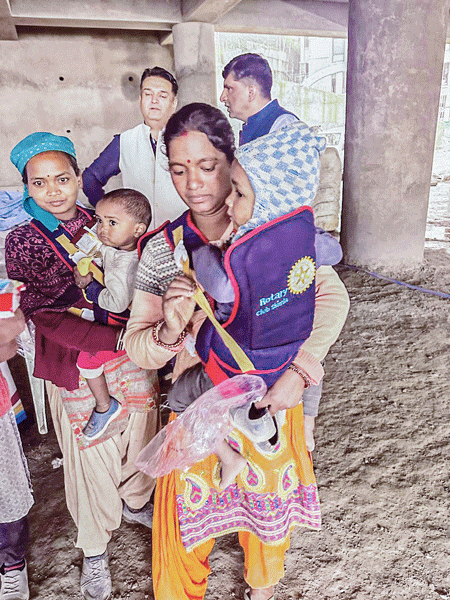
The baby carry bag adopts the principles of kangaroo’s mother care, a WHO recommended care for premature and low birth weight babies that promotes skin-to-skin contact between mother and the newborn. “Many women usually carry babies on their backs or leave them unattended during working hours,” says club president Karan Bamba. The new kangaroo-type bags allow mothers to carry infants securely against their chest while continuing their daily work at construction sites and during other labour-intensive jobs.
DG Ravi Prakash, who inaugurated the project, praised the club’s effort to bring “a globally recognised healthcare norm into community-level practice.” Fifteen bags were distributed at the launch event, and the club plans to deliver 100 such bags by the year-end.
The project highlights concerns around maternal health and “the pressures faced by economically disadvantaged women who return to work shortly after giving birth — often with few options for safe infant care,” adds Bamba.
Hospital gets diagnostic boost
The club upgraded healthcare facilities at the Kamla Nehru Hospital by inaugurating an ultrasound machine worth ₹48 lakh, funded through a CSR grant from the Indian Oil Corporation.
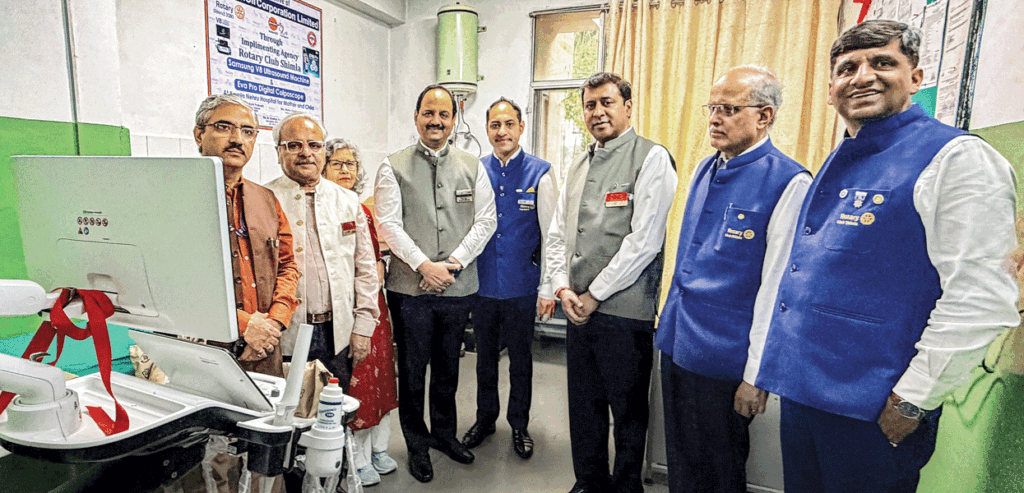
Local MLA Harish Janartha inaugurated the machine and appreciated the club for “providing advanced diagnostic equipment which would improve healthcare access for patients who depend on government facilities.”
The club will be donating a colposcope worth around ₹5 lakh for early detection of cervical cancer, further strengthening preventive screening services at the hospital.