

They’re not comics, they’re a way of life. They show a way of living, according to Japanese and other fans.
What we have found at our monthly book club meets is that the more we like a book, the less we are likely to have to say about it barring platitudes. Give us a book that raises hackles and we spew out a torrential storm of multifaceted comments! That’s how it was with The Daughters of Madurai by Australia-based Rajasree Varriar: while the theme (female foeticide/infanticide), and the intent (laying bare a social evil) were admirable, the execution fell short. The book is based on information garnered from reliable sources, so no quibbles there. However, it stumbles when it comes to character building, understanding of social milieu, logical unfolding of the plot, and even names characters inappropriately. The biggest drawback is the fact that it ignores a fundamental premise directly connected to caste hierarchies and their implications. To top it all… But let’s not get into that. Let’s move on to what Marie Kondo sparked off. Yes, Marie Kondo of the ‘magic of tidying’ fame.
A friend who dropped by also dropped off a gift: Letter from Japan by Marie Kondo (with Marie Iida). It’s a book that explains, in simple terms with plenty of examples, the Japanese way of life, and its philosophies encapsulated in words and phrases. All of us are familiar with the concept of hara-kiri. I recently attended a kintsugi workshop where we deliberately broke a mug and tried to reassemble it in an attempt to understand there’s beauty in imperfection. Everyone knows about cherry blossoms, sakura in Japanese. Did you know that sakura-viewing has been a ‘thing’ for years? The word for it is hanami.

Then again, take oshikatsu. “In 2021,” Marie Kondo writes, “the term was even nominated for Japan’s annual buzzword contest. Oshikatsu is a portmanteau of oshi, meaning someone or something you support, and katsu, meaning ‘activity’. In short, oshikatsu refers to the various activities fans engage in to support their object of passion.” Your oshi can be an actor (Vijay), a work of fiction (Pride and Prejudice), animals (elephant), even food (pizza). Through words loaded with philosophies the book conveys the ‘Japaneseness’ of the Japanese and offers an inviting, even provocative way to understand a people and a culture.
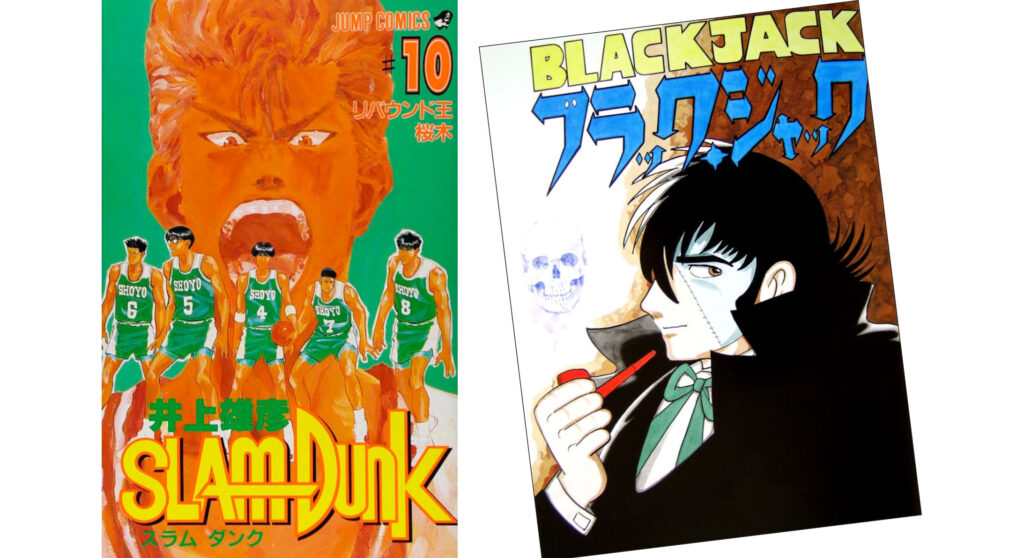
One of the chapters in the book is devoted to manga. Manga refers to illustrated books, comic books in other words, extremely popular in Japan and, indeed, so popular that the word itself has caught on globally. Marie Kondo talks about her husband’s favourite manga, Slam Dunk, by Takehiko Inoue. This 31-volume series features a character called Hanamichi Sakuragi who transforms from a high school rebel into a skilled basketball player. As a schoolgirl, Marie remembers visiting her father’s childhood home and ransacking his storeroom where she stumbled upon his huge collection of manga. “The bookshelf was lined with bestselling manga from the time when my father was young. Spanning genres from sports and slapstick to martial arts, each title offered a surprising insight into my father, whom I had always thought of as a rather reserved and serious person.”
When she asked him to name his favourite manga, he thought for a bit and then pulled out Black Jack by Osamu Tezuka. “Osamu Tezuka,” she writes, “often referred to as the God of Manga, created the foundation of Japan’s postwar manga culture. Black Jack is one of his most well-known masterpieces.” It features a brilliant surgeon and the manga “explores a physician’s dilemmas, questioning whether a doctor’s duty is always to prolong a patient’s life through treatment, and whether such treatment can truly bring happiness to the patient.” For her father, says Marie Kondo, “Black Jack wasn’t just entertainment; it served as a guide to his life of service.” Her father is a physician.
Clearly, manga isn’t just for children, it contains lessons for life and is something the Japanese “refer to all their lives.” Imagine, then, my kawaii (which means something like a feeling of warmth and delight) when I suddenly remembered a set of fat illustrated books nestling in the back of the top shelf of a cupboard that I opened frequently but hardly ever reached up into, certainly not the back row! This set of fat illustrated books is The Buddha by none other than Osamu Tezuka himself, apparently among the last of his epic manga works. As the title suggests, it tells the story of Gautama Buddha — with lightness, detail and a quirky sense of humour.
Thank you, Marie Kondo, for reminding me of them. I had forgotten their presence, although I had read them ages ago on the recommendation of some students in Ahmedabad back in the day when I was in my first job! I recall that the series was considered with the Bhagavad Gita-like reverence by some design and architecture students I was friends with at the time. Many years later, I found the entire series in my son’s home in San Francisco, all purchased from Half-Price Books. While he was in the throes of packing his entire apartment into two suitcases prior to taking a sabbatical in order to travel, I inherited the entire series!
The series numbers 14 in the original, and eight in the English (international) edition. The illustrations are dynamic, dramatic, flagrantly free-flowing, the text is vivid, friendly and extremely contemporary. There are fictional elements that inject action into the narrative but the story of Gautama Buddha has truth and integrity. Indeed, there’s a sense of vulnerability that underlines the telling juxtaposed with unexpected frames of slapstick and unconventional references. For instance, sometimes Tezuka himself pops up all suited-booted with an “Oops! It’s me!’ style entry!
Book 1 Kapilavastu features the birth of the Buddha, but there’s plenty more as well to set the stage for the times, the kingdoms and the people. In Book 2 The Four Encounters we get a glimpse of Siddhartha as an impressionable young boy. Book 3 Devadutta sees Siddhartha encountering the real world riddled with suffering. Book 4 continues where Book 3 leaves off. Open Book 5 The Deer Park randomly to pages 218–219 where Devadutta asks to become Buddha’s disciple. The sequence is both casual and deep: “I’ve ordered a sofa, a bed and carpeting,” he says. “You should have a more dignified room.” “Forget it,” responds Buddha. “You should return to the city and continue your work. No matter what kind of work you do, no matter what your caste may be, you can attain enlightenment. You must consider the following: What have you been doing? Is it important to you? Is it important to someone else? Or is it important to many others? Is it important to your country? Is it important to the world? Is it vital to all living things, all nature? If it isn’t, then you should stop. Because everyone in this world is connected.” Books 6, 7 and 8 take the story forward to nirvana.
For the uninitiated, The Buddha is a wonderful entry-point to manga. So, again, thank you Marie Kondo who, through Letter from Japan, reminds us of the value of words. Ikigai, for instance, which is all the rage now. It translates as “a reason for being”; it could also be “the feeling that your existence matters.” A good word, a great feeling, good reason to read. That’s books for you: writer at one end, you at the other. Connected.
The columnist is a children’s writer and senior journalist