


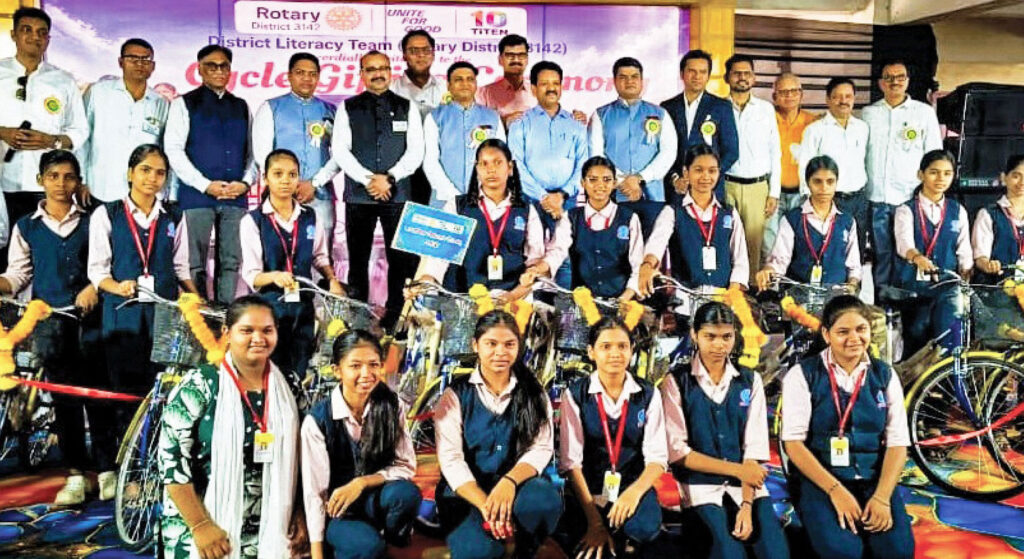
Around 30 clubs of RI District 3142 have raised funds to gift 500 bicycles to Adivasi schoolgirls from underprivileged families in some rural areas of Maharashtra in places such as Kalyan, Bhiwandi, Shahapur and Titwala.
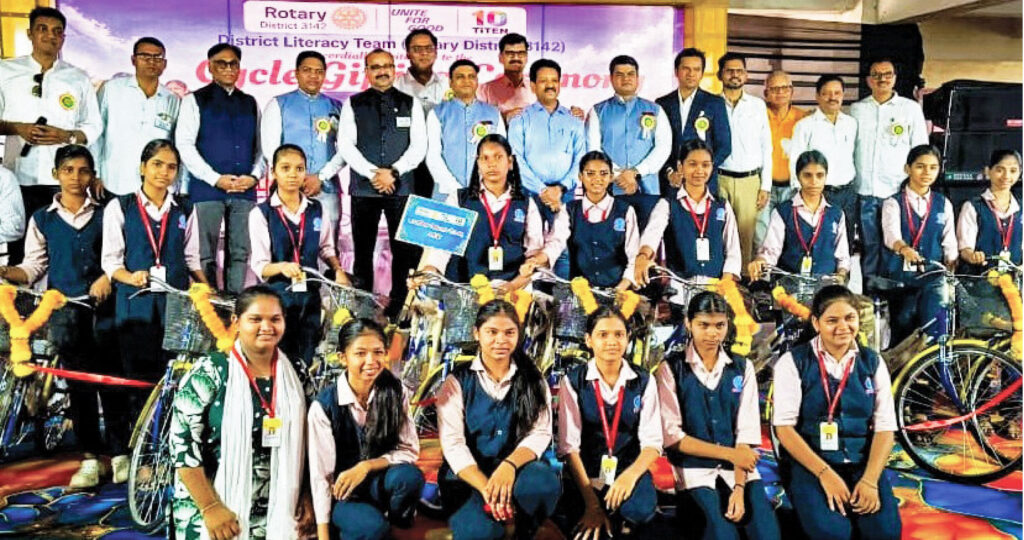
The project which cost over ₹16 lakh was made possible through funding from corporates including Vivo (₹4 lakh), and contributions from various club members. The cycles were recently handed over to the girls at a gifting ceremony organised by RID 3142’s Literacy team at the Pranayu Hospital, owned by two Rotarians, at Bhiwandi.
These cycles will ensure that girls in secondary schools in classes from 7 to 10, who were at the risk of discontinuing their education because of long commute of 3–4km, will now continue their education.
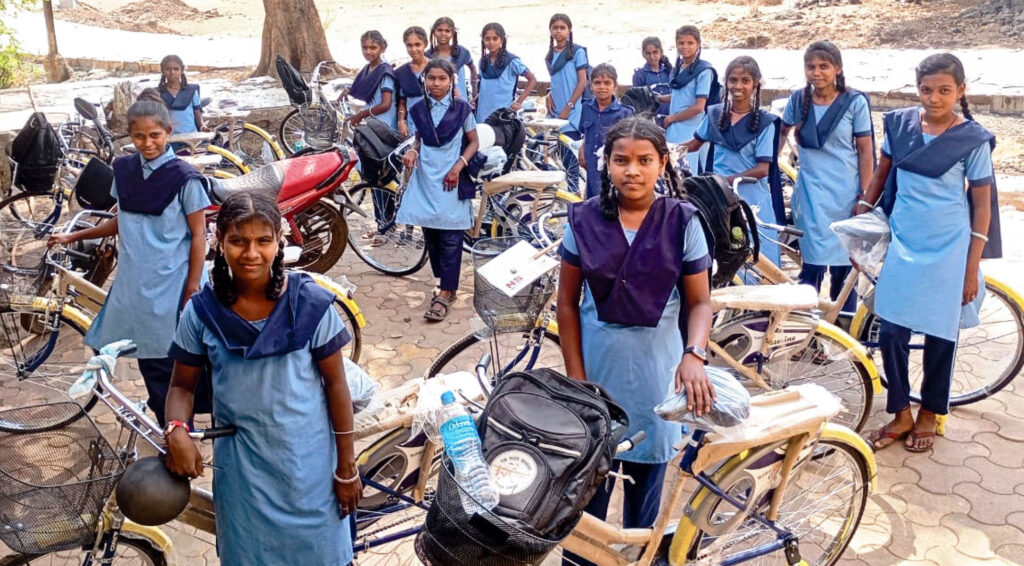
Giving details of how the project, titled Kanya, originated, District Literacy chair Vinaya Hebbar, who is a member of RC Navi Mumbai Link Town Airoli, said, “Our team does many projects on improving the facilities and infrastructure at government schools. For a couple of months, while I was touring government schools in the rural and tribal areas of these places in search of schools to convert them into Happy Schools, talking to the principals and teachers we found that the biggest issue troubling them was that girl students were dropping out in the higher secondary schools because their homes were 3–4km away.”
It is common knowledge that in rural areas parents are wary about sending teenaged girls to schools when walking a long distance is involved to reach the school and get back home. To ensure the girl’s physical safety, they take them out of school, putting a cruel end to their education. “We were told that girls regularly attend classes without any problem in primary schools because these are more in number and closer to their homes. But high schools are often about 3–4km away from their homes and with proper public transport not being available in these villages, many girl students drop out from schools.”
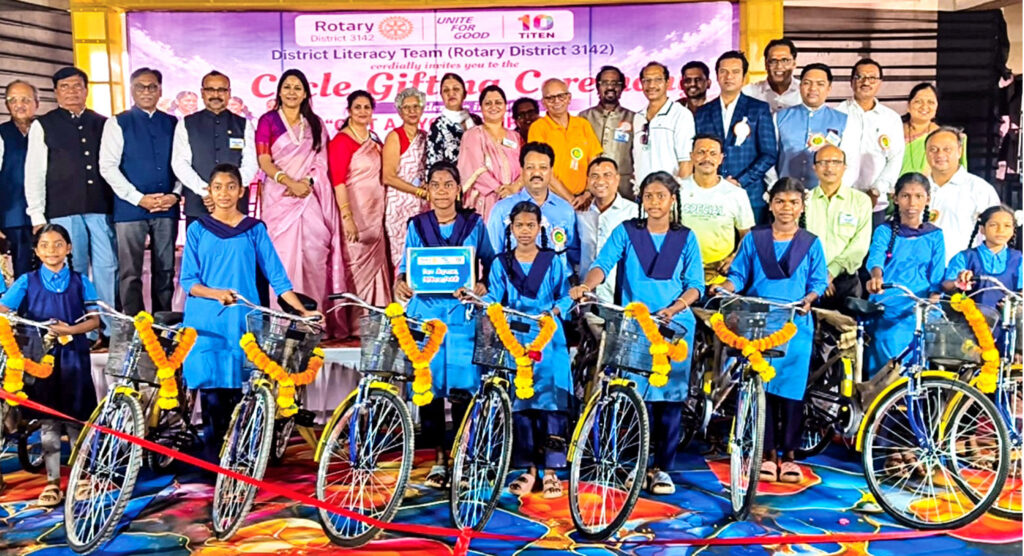
The tragedy was that generally girls are very enthusiastic about continuing their education but have no say when the parents put their physical safety first. The parents of these girls work mostly as farm labourers, in brick kilns or are engaged in other daily wage work. “So we decided to change the project a little and extend help to empower these girls and ensure they remain in schools by giving them bicycles,” says Vinaya.
The result was 500 happy faces and bright futures. The best part of this project is helping not only the 500 girls who received the bicycles. As the demand from the various schools for bicycles was 850, and the project team originally set out to collect funds for about 1,000 cycles, they were not able to raise that kind of money.
Now both the Rotarians and the school authorities are encouraging the girls “to help other fellow girl students by offering them a ride whenever possible, promoting a culture of care and inclusion We are so happy that many of the girls now don’t have to drop out of school after Class 5 and can complete their education with safety, dignity and confidence,” says Vinaya.
She adds that “actually the boys had also requested us to give them cycles; since we couldn’t meet everybody’s wishes, we have decided to continue the project this coming year too. Because at the end of the day, we feel that we should not discriminate between boys and girls.” The beneficiaries were chosen on the basis of the distance between their home and the school, and some of them who have only single parent were also chosen.”
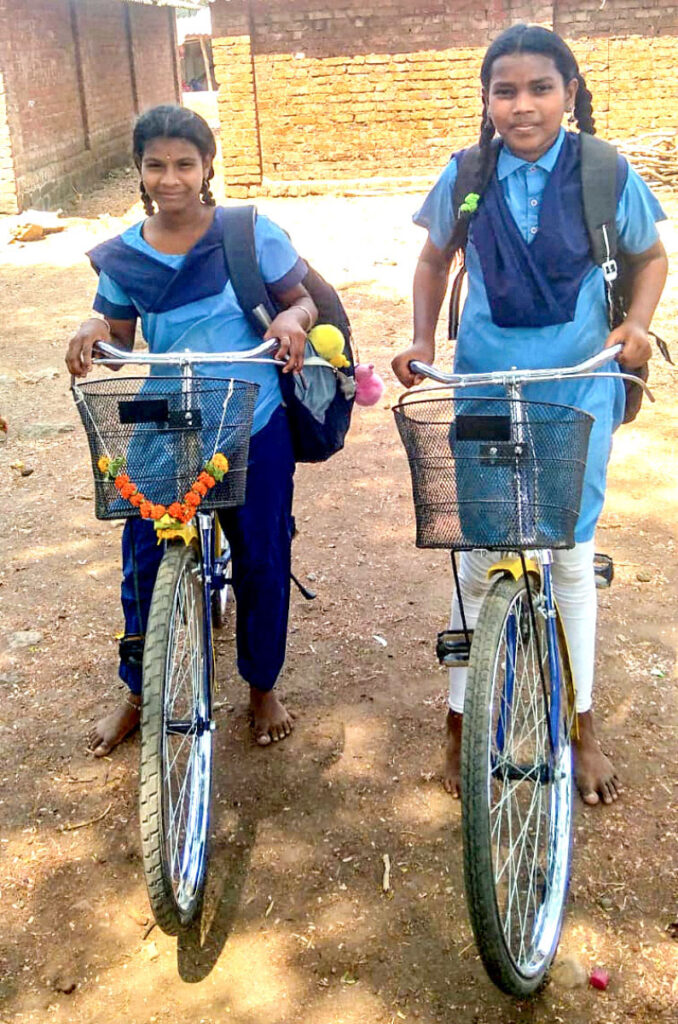
To ensure a higher reach of this project, the Rotarians have asked the principals to ensure that the girls with bicycles, who do not have younger sisters in school, should hand them back to the school once they complete Class 10, so that the cycles can be given to other girls.
The bicycles were handed over at an event attended by DG Harsh Makol, DGE Nilesh Jaywant, project coordinator B V Raviprakash, Vinaya Hebbar, assistant governor Rohidas Bhoir and Pranayu Hospital MD Dr Rajesh Bhoir, a Rotarian, along with representatives of the key sponsor Vivo.
Raviprakash shared details of the project and acknowledged contributions from Vivo, Ventura Securities (₹1.5 lakh) and Cirrus Tours & Travels (₹2 lakh), along with the presidents and donors of the involved clubs, “proving once again the power of collective service.” DG Makol said: “These are not just bicycles — they are pathways to education and stepping stones towards a brighter future for these girls.”
Vinaya added, “The joy, excitement and gratitude on the faces of the girls were truly indescribable. For them, this bicycle is not just transport, but a powerful enabler of education, dignity and independence. DGE Nilesh Jaywant encouraged the students to pursue their education with determination.”
Thalessaemia centre
On the same occasion, a significant healthcare initiative — the inauguration of a Thalassaemia Care Center — was also launched, reinforcing Rotary’s commitment to both education and health.
This bicycle is not just transport, but a powerful enabler of education, dignity and independence.
The centre is located at the Pranayu Hospital owned by the Bhoir brothers, both Rotarians. This hospital is in Bhiwandi and this is the fourth thalassaemia project that the Rotarians of this district have set up.
On how the blood which is given at this centre free of cost to thalassaemia patients is procured, Vinaya says that various Rotary clubs in the district organise regular blood donation camps at engineering and other colleges, gurudwaras, etc, where volunteers donate blood.
Speaking at the event, Dr Rajesh Bhoir gave details of this initiative and emphasised the urgent need for awareness and timely treatment of thalassaemia, a genetic blood disorder that requires regular blood transfusions and lifelong care. “This centre will provide free treatment for thalassaemia patients, offering much-needed relief to families facing financial and medical challenges. This initiative will also focus on early detection, counselling, and spreading awareness to help prevent and manage the condition effectively.”
The event stands as a powerful example of Rotary’s commitment to education, healthcare, and community upliftment — ensuring that young girls can continue their education and that critical health services reach those in need, added Vinaya.