


Akshay’s life began with two limitations he did not choose — no vision and no financial cushion. Born blind, he learned early to stay close to his mother, to let her guidea his steps and to wait for someone to hand him what he needed. By the time he was in his twenties, he hardly left home alone.
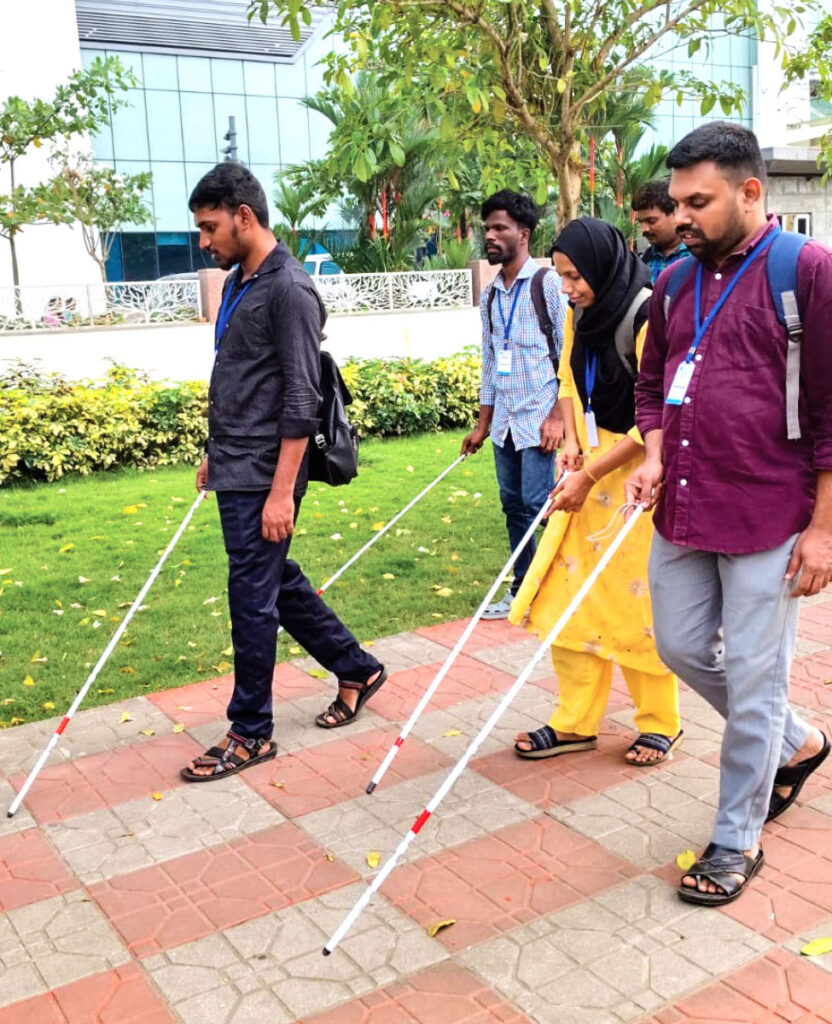
When he was first introduced to Project Surya, an RC Cochin Global (RCCG), RID 3205, initiative to help people with visual disabilities to enter mainstream jobs, he stepped into the training room “slowly, tapping the floor with my cane until I found a chair. A trainer placed my hand on a keyboard. The screen reader spoke to me. I quickly pulled my fingers back. My head was spinning,” he recalls. What was even more embarrassing was when “they asked me to say a line in English. I murmured a few words, then stopped. I dropped my head and held on to my cane tightly. I had not spoken in English ever before.”
But Akshay kept coming back to the training centre. One morning, “I managed three commands on the computer without help. Another day, I walked from the gate to the classroom without holding anyone’s arm.” Small things, but they all added up. Weeks later, he sat through a mock interview, “speaking louder than I ever had in English,” he smiles.
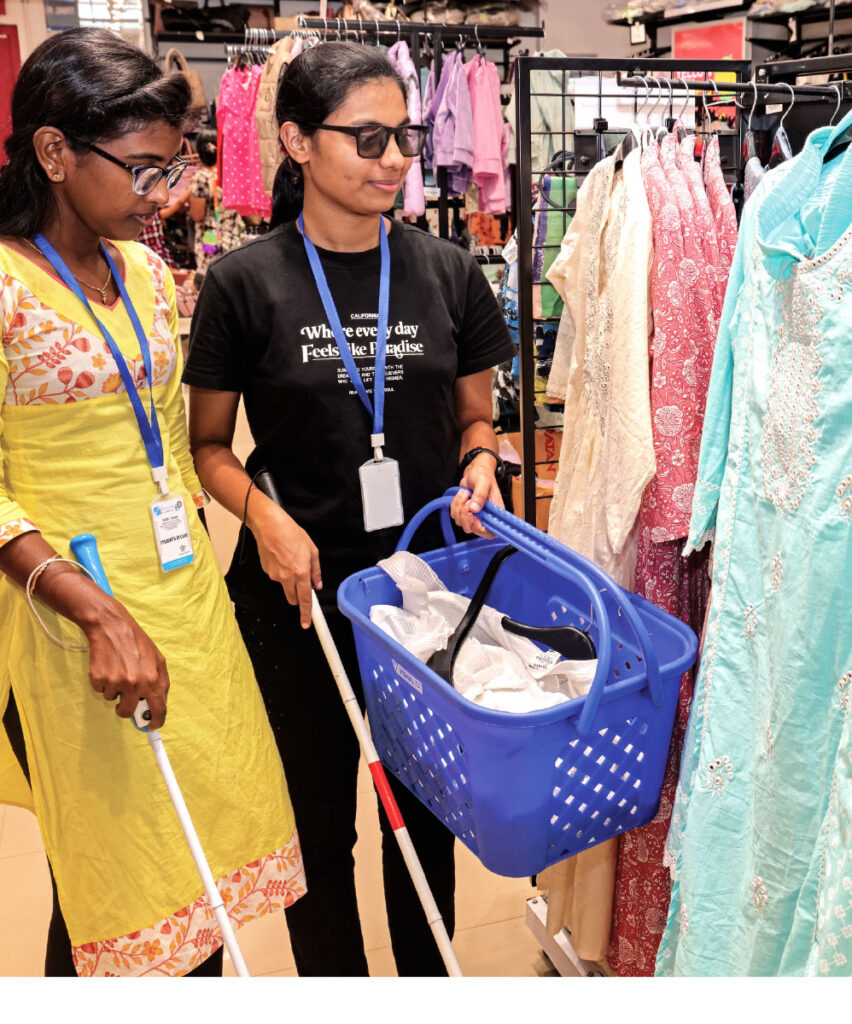
Today, he works as an Accessibility Tester at IBM, earning over ₹1 lakh a month. Soon he built a house for his family, “the first home my parents have ever owned.”
For Akshay, “the journey did not begin with confidence or ambition. It began with a quiet young man sitting in front of a computer, trying to keep up with a voice that felt too fast. Project Surya helped him build a life he had never imagined,” says Joby A Thattil, the project coordinator and member of the club.
Each batch has to complete a community project, contributing something meaningful to the community with at least 100 beneficiaries.
Project Surya is a long-term skilling programme that trains visually- impaired adults in computer literacy, mobility, English communication and workplace readiness. “The approach is simple: teach practical skills, build confidence step-by-step, and prepare trainees for mainstream employment,” says Thattil. Over the years, the programme has become “a bridge between hesitation and independence for hundreds of visually- impaired youngsters.”
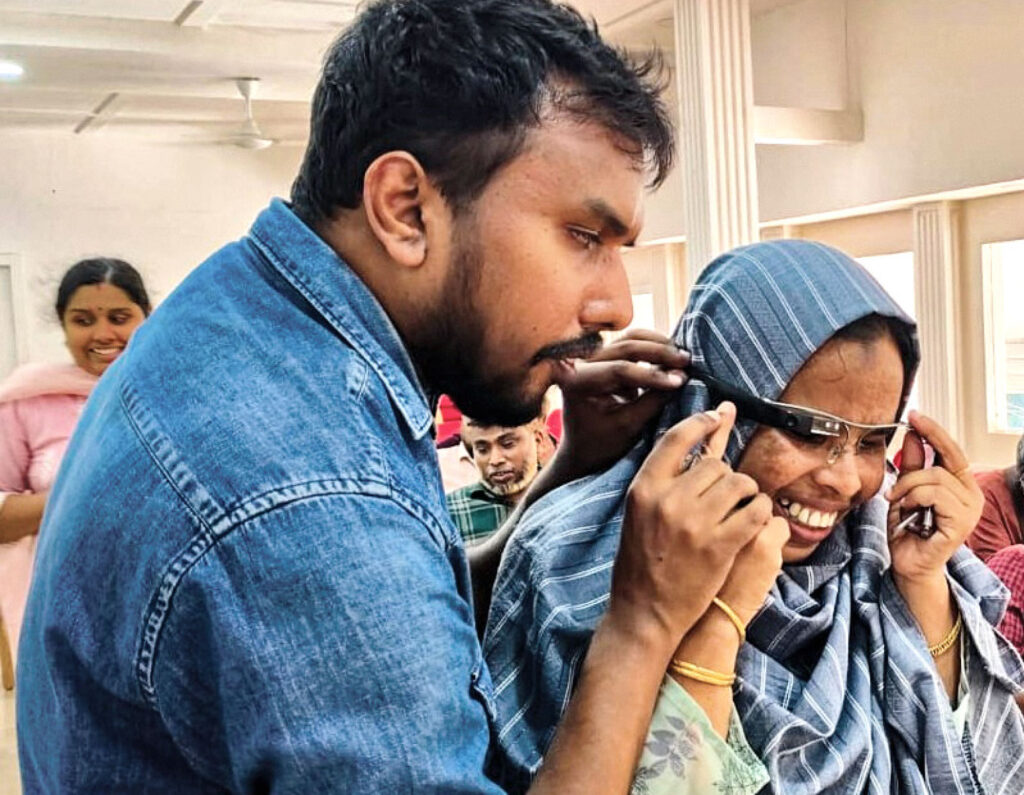
The beginning
The initiative began in 2008, when club member George Mathew researched the number of visually-impaired adults who were finishing school yet entering the job market with almost no formal training. Supported by RCCG and in collaboration with the Society for Rehabilitation of Visually Challenged (SRVC), the first 10-seat computer lab was set up at Infopark Kochi, with the support of the then-CEO of Infopark, Sridhartha Bhattachary.
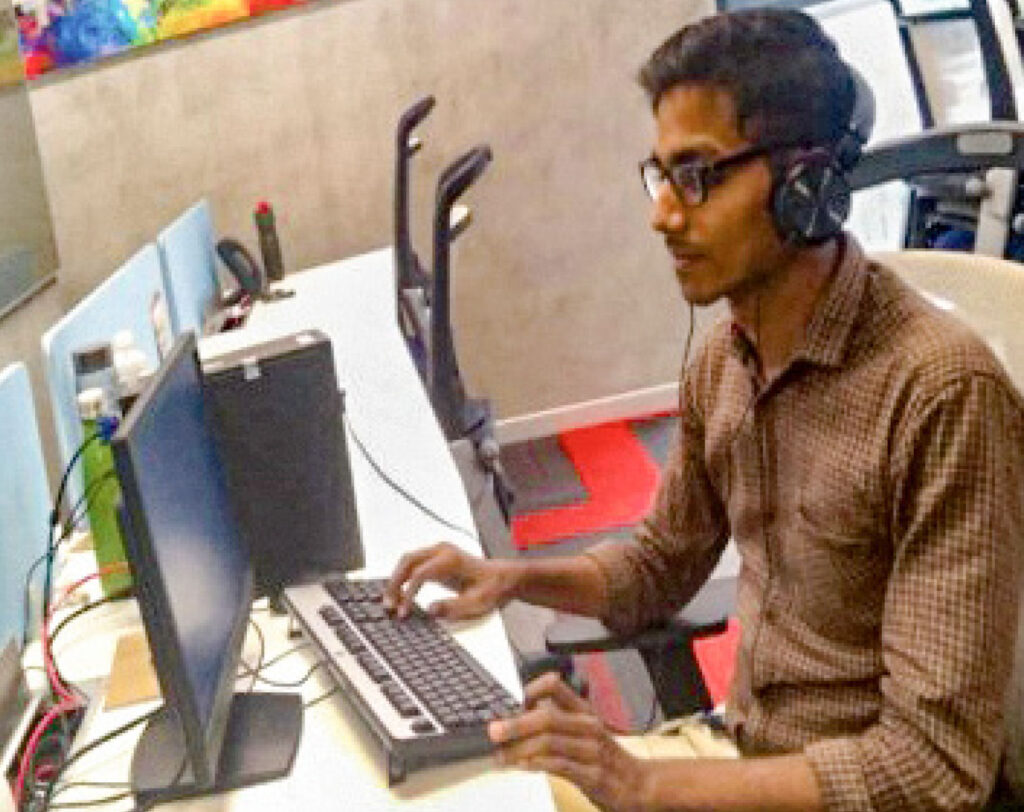
Enable India (a non-profit organisation in Bengaluru, empowering people with disabilities) provided the curriculum and methodology. The first batch for a six-month course enrolled seven students. When SRVC branched off in 2015, the Rotary club rebuilt the collaboration with Enable India and formalised the initiative as Project Surya, guided by its long-time mentor Mareena George. It expanded training capacity to 15 students per batch in 2017 and strengthening support systems, including boarding and travel for deserving students. The centre provided computers, mobility, communicative English, personality development, soft skills and assistive technology training.
During the pandemic, the centre moved entirely online for nearly four years. Training returned to Infopark in 2023 in a hybrid format under centre director and club member Kala Ravishankar. More modules were added in communication and workplace readiness, standardising assessments, and strengthening the training structure. “The hybrid model allowed students from across Kerala and neighbouring states to join the programme. Many of them had previously been unable to attend in person,” says Thattil.
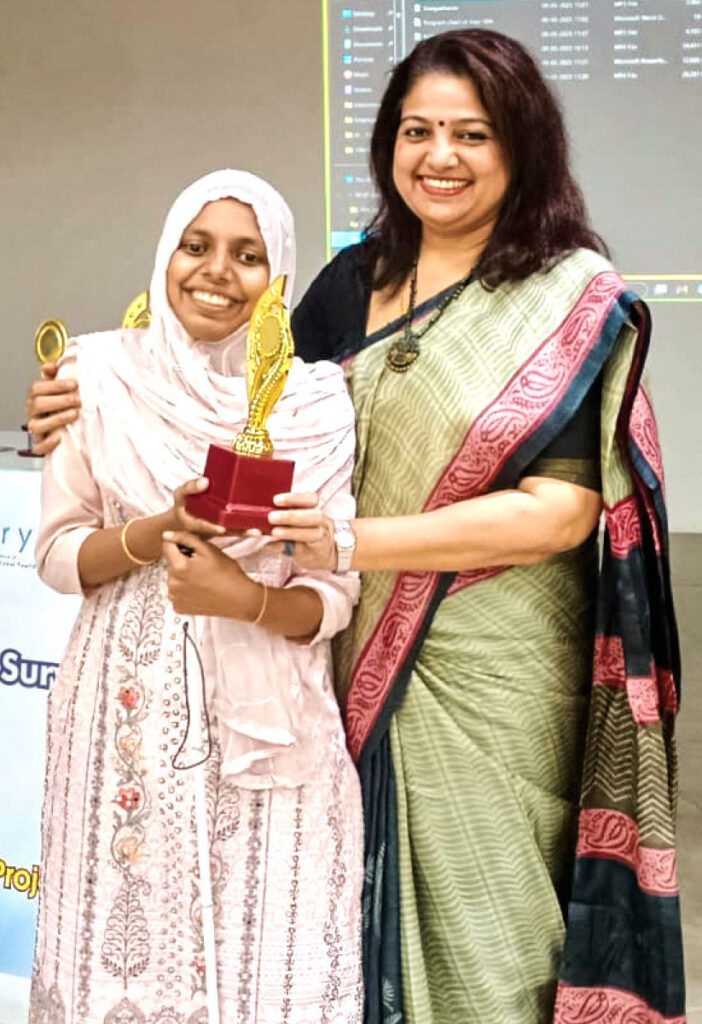
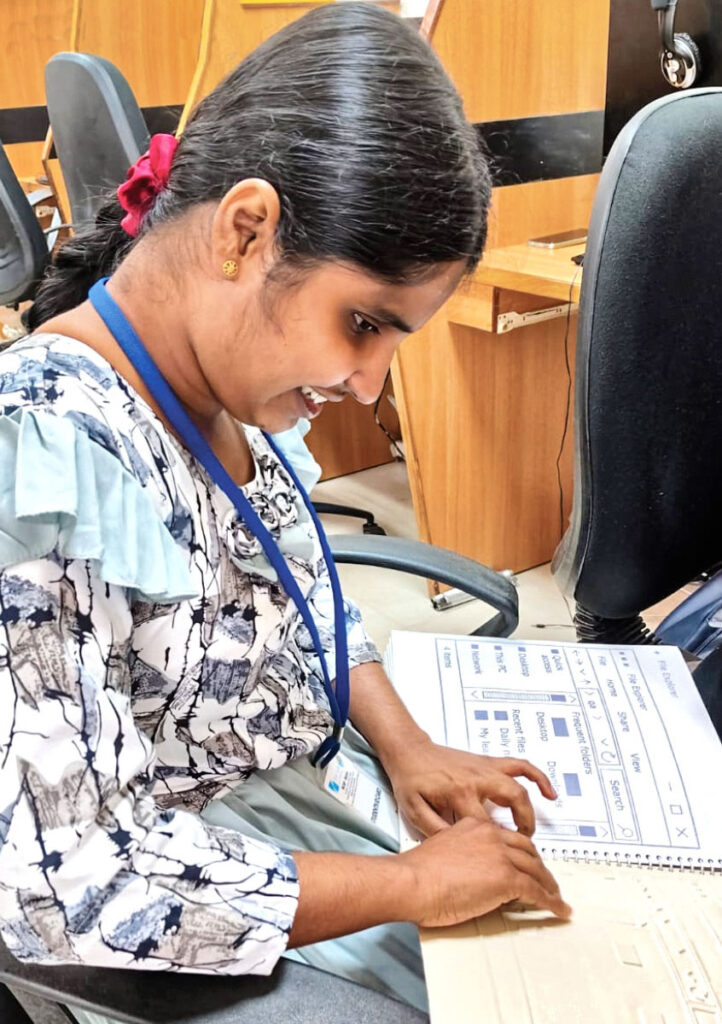
Today, the project operates as a fully equipped Computer and Life Skills Training Centre at Infopark, offering free, structured programmes for visually-impaired adults. It provides training in assistive technology and life skills, conducts corporate sensitisation sessions, and runs awareness and community outreach programmes for individuals and families. Fully supported by the endowment of RCCG, “the programme is designed for long-term sustainability rather than short-term intervention,” he says.
Since its inception, the project has completed 20 foundation-course batches, training over 300 visually-impaired candidates through intensive in-person programmes, and more than 45 online batches. Over 900 individuals have participated in awareness workshops focused on mobility, assistive devices and employment pathways. Thattil is proud that “today, approximately 85 per cent of Project Surya’s alumni are in employment.”
Akshay now works as an Accessibility Tester at IBM, earning over ₹1 lakh a month. He has built a house for his family, “the first my parents ever owned.”
Explaining the recruitment procedure, Thattil said, “We reach out to companies directly to explore suitable opportunities for our visually-challenged candidates. When we learn of a vacancy, we share the CVs of eligible candidates and follow up with the company on the interview process. We also maintain strong connections through our alumni network and we contact companies based on referrals from our alumni who are already working there.” Company visits are organised so that candidates can better understand the organisation and its work culture, and “we also use these visits to enquire about potential vacancies.”.
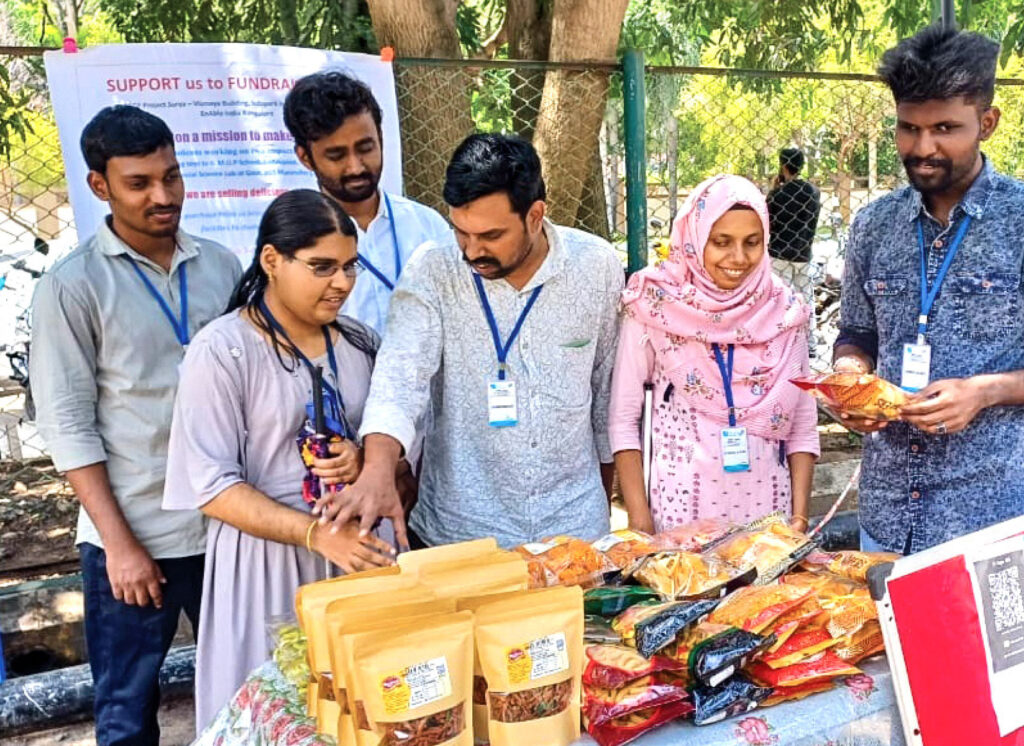
One of the highlights of this project is that each batch is required to complete a community project — contributing something meaningful to the community with at least 100 beneficiaries. One of the batches donated educational toys such as chess boards, carrom boards, building blocks etc worth Rs 20,000 to GM L P School in Malappuram. To raise funds for the project, the candidates organised a sales stall at Infopark.
Successful placements
Poornima V M grew up in a single-parent household and has completed her master’s degree in engineering. She was employed in a private company where her work involved long hours on the computer, often during night shifts. Over time, she suffered from functional low vision.She joined Project Surya, where she learned new ways to study and work using assistive technology. She prepared for the competitive exam for the Indian Space Research Organisation (ISRO) and cleared both the written exam and the interview.
“Being selected for an apprenticeship at ISRO was a major achievement for me. It proved that losing vision did not reduce my intelligence, skills or determination to succeed,” says Poornima.
When Gokul M joined the training centre in 2019, he had never used a computer before. He has low vision and did not know how to use screen-reading software, which reads out what is on the screen for visually- impaired people. Even simple tools like a magnifier were new to him.
“In the beginning, Gokul was very quiet. He did not talk much in class and avoided taking responsibility in group activities. Learning to use new tools — like listening to a computer voice reading text, using enlarged screens and memorising keyboard shortcuts — was frustrating for him at first,” recalls Thattil.
But over six months, he became more comfortable using computers, he also became more confident. When it was time for the group’s community project, Gokul stepped forward to lead. His team organised a toy collection and fundraising drive for an upper primary school. He worked hard, making calls, collecting donations, and coordinating everything.
Being selected as an apprentice at ISRO was a major achievement for me. It proved that losing vision did not reduce my intelligence.
– Poornima
Before finishing the course, he secured a government job as a Gramin Dak Sevak (rural postal employee), where he uses the same computer skills which he once felt unsure about.
In 2018, Sandeep G (30) was working as a nurse. He had more than 10 years of experience, working in hospitals in India and abroad.
Then his life changed. A leg injury slowly made him completely blind because of optic nerve damage. Sandeep, who lives in Karunagappally in Kerala, had to rethink both his career and his life. He used his talent in mimicry, singing, filmmaking and acting to earn some income through stage shows, but the work was not regular.
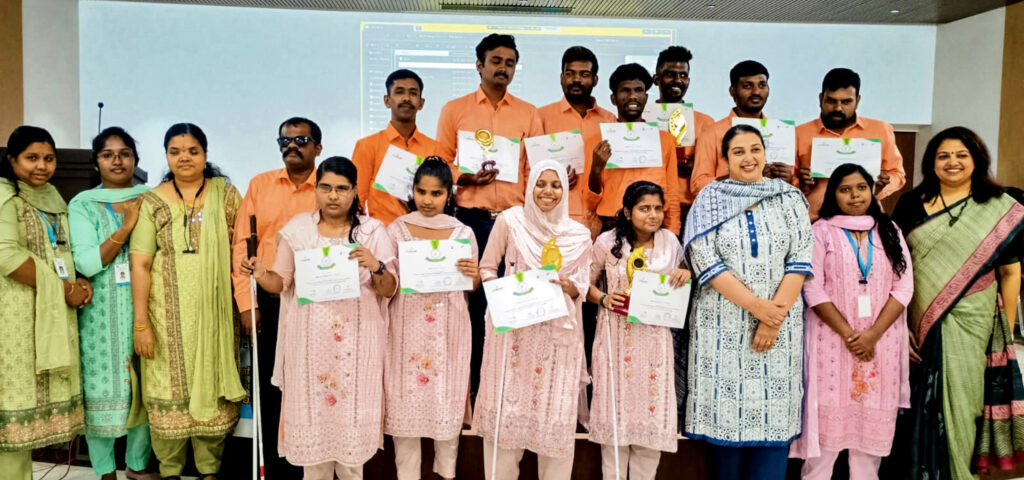
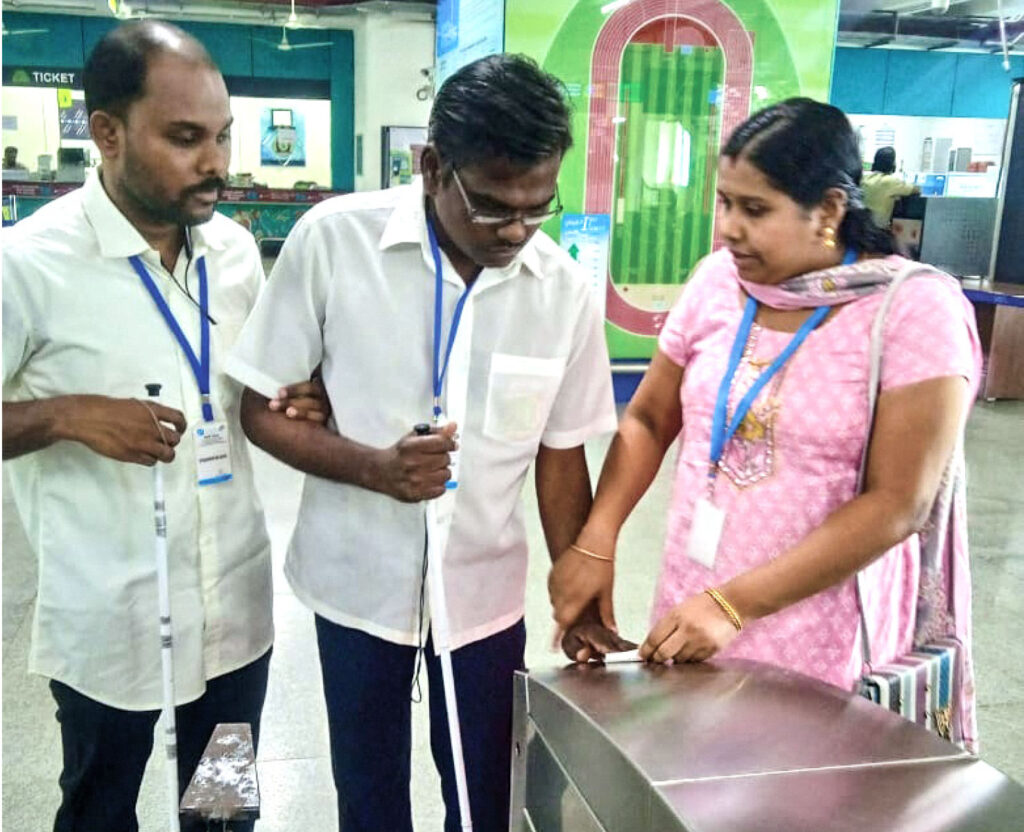
In 2024, he joined a six-month course at Project Surya. The first few days were hard because he missed home, but slowly he adjusted and found direction again. “It was during this time that I began using a white cane and learned to travel on my own between Ernakulam and Kollam.” He learned to use computers with screen-reading software like NVDA, and trained in Word, Excel and email, using audio instead of sight.
Today, Sandeep works as an assistant trainer at the Kerala Blind School Society. “Losing my vision changed my life, but it did not end it. Instead, I built a new path, not based on sight, but on learning, adjustment and determination,” he says.
Blind Walk
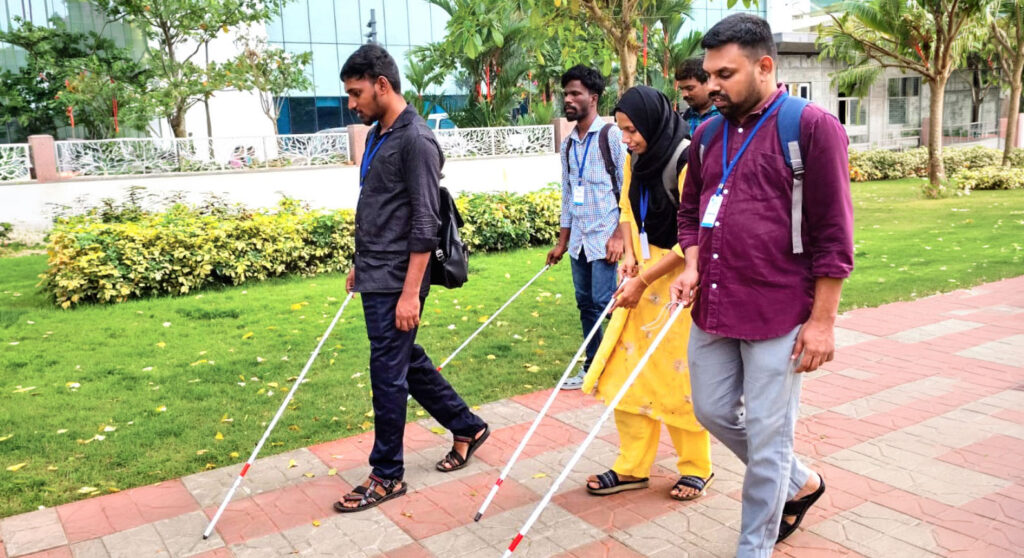
The club observed White Cane Day (Oct 15) at Infopark with participants in a blindfolded white-cane walk to raise awareness on the challenges faced by visually-impaired individuals. Students of Project Surya participated in the event.