



My addiction to India’s favourite sport began as a six-year-old kid playing cricket with tennis balls in a neighbourhood maidan in Bangalore. My talent was zero — I scored few runs and took fewer wickets — but I commanded attention with a fund of cricket anecdotes and statistics, thanks to books like Jack Fingleton’s Brightly Fades the Don. My uncle, a cricket aficionado, was in charge of his office library. He ordered every book on cricket which I promptly borrowed and returned after making copious notes. I was fond of quoting legendary cricket writer Neville Cardus, particularly his most famous sentence “The batsman dismissed the ball from his presence,” which commentators from Mumbai to Melbourne parrot even today.
I adored BBC commentator John Arlott, who was also a poet and a wine connoisseur and spoke with wit and panache. When South African spinner Tufty Mann tormented English batsman George Mann with his offspin, Arlott remarked “This is a clear case of Mann’s inhumanity to Mann.”
When I grew up, my cricket mania only got sharper. Like all kindred souls, I hid my transistor in the office desk drawer for clandestine cricket commentary. When India won the World Cup in 1983, I celebrated by buying my wife Nirmala a gold necklace. Her relatives ribbed her, asking what she had done for the victory.
But Nirmala disliked cricket, complaining about the time I wasted on it. During a London vacation, she was upset when I was totally absorbed in an England vs India Test match on TV. Tendulkar was in sublime form, and there was no way I could move away. She had an outing on her own, joining a guided tour of the Buckingham palace.
However, Nirmala once performed a noble service for the Indian cricket team — something I wasn’t capable of doing. It happened in October 1992 in Harare, Zimbabwe, where I was working in a UN project for four years. The Indian community was thrilled when our cricket team arrived in Zimbabwe en route to South Africa where they were to play three Test matches. In Harare, it was a single Test match and a single one-day match. Azharuddin was the skipper, star players included Kapil Dev, Tendulkar, Manoj Prabhakar and Javagal Srinath.
In October 1992 when the Indian team visited Zimbabwe to play a series of matches, the players were deliberately being served bad food so that they would play badly.
The Indian government deputed an official in Zimbabwe, Arun Kajla, to liaise with the national cricket team and provide any services the team required. He gave us some disquieting information: the cricket team was starving because the food at their hotel was atrocious. He remarked that the team was deliberately being served bad food so that they would play badly. I laughed, thinking this was a joke, but Kajla looked grave and said “This is not a joke, this is true.”
The Indian ladies in Harare were outraged when they heard about the plight of our cricketers. “We’ll look after them,” they exclaimed.
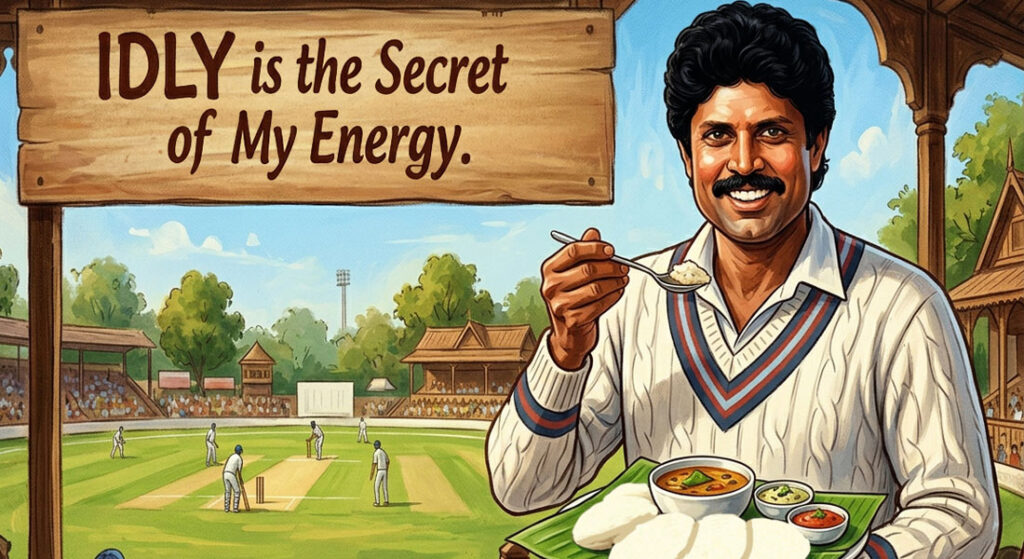
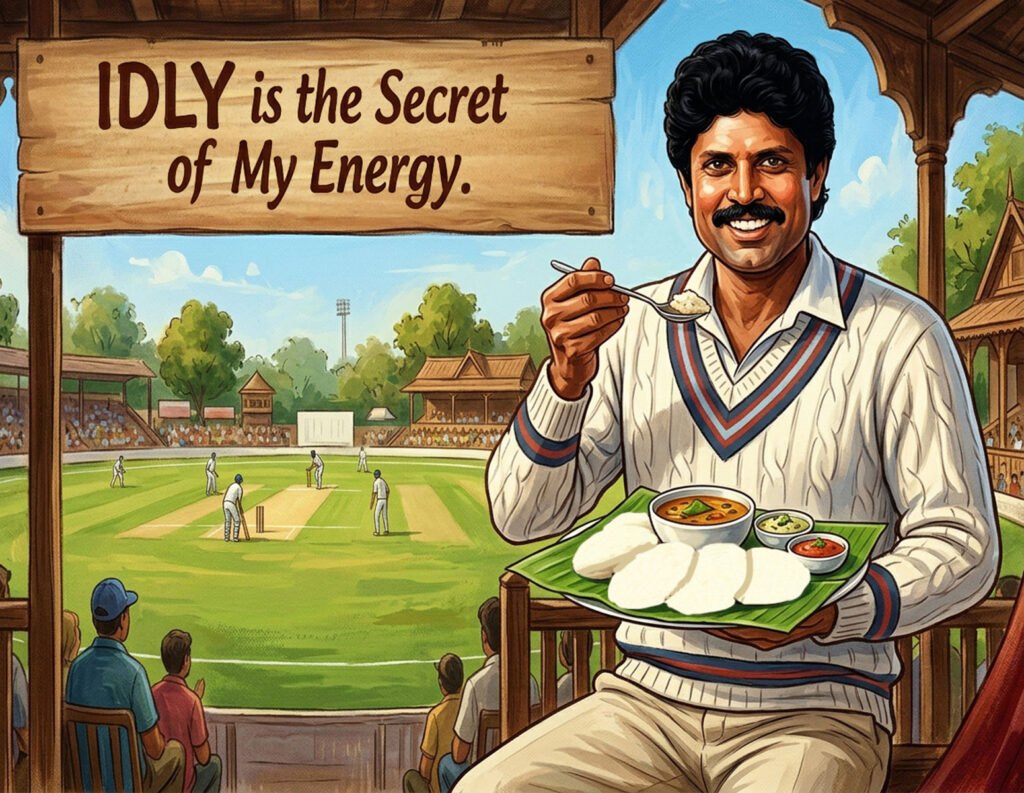
Nirmala joined the rescue army of female chefs. She had brought a special idli-making machine from Chennai to Harare. She got up at 4am the next day, and packed some 100 idlis, fluffy, flower-soft and irresistible, along with spicy, delectable sambar. Kajla arranged to collect the precious parcel.
Half of the idlis came back uneaten. Kajla apologised, saying, “The team loved your idlis, Nirmala. But how much can they eat? They had loads of Punjabi, Gujarati, Bengali, South Indian food… The Gujarati ladies in particular sent huge quantities of delicious stuff. Yesterday it was famine, today it was a feast, thanks to you lovely ladies.”
But he promised her that on “Saturday, I’ll take nothing from the other ladies. You make masala dosas which you do so well.” Nirmala was dismayed. Making masala dosas for some 25 hungry sportsmen was no joke, when she had no assistance and the right ingredients wouldn’t be available in Harare. She said, “No, let the Gujarati ladies have the pleasure.”
The food problem got sorted out, thanks to the energetic Indian ladies and the resourceful Kajla. And the hotel food got better too, after protests from India.
Coming to cricket, the India- Zimbabwe Test match was historic as it was the latter’s first-ever Test match! They acquitted themselves creditably, India did not. The Indian team was unused to playing at Harare’s altitude, and the bowlers in particular found it tough. The match was drawn, mainly because the Zimbabweans batted very slowly. Not even three of the four innings were completed.
The one-day match was held on Diwali, a Sunday. Nirmala ruefully recalled the Diwali family get-togethers back home. But I was too excited to be nostalgic. What better way to celebrate Diwali than watch a one-day match, I exclaimed. The entire Indian community turned up. Again, India didn’t exactly sparkle but managed to win. They scored some 205 runs in their 50 overs, Zimbabwe fell short by 16 runs. I was relieved, I couldn’t have accepted an Indian defeat — nor could the other vociferous Indian spectators!
We were guests at two pleasant dinners in honour of the cricketers held by the Indian High Commission and Air India. Wives were present in strength. At the High Commission dinner, male and female guests sat in separate groups. Someone remarked: “The ladies have come to see the cricketers, and they are all with the men.” Kapil Dev gallantly picked up his plate and sat with the ladies. He asked them about their Indian origins, about how they liked their life in Zimbabwe, thanked them for feeding the team on their first few days in Harare. “We really hogged, the food was so good,” he remarked.
At the Air India dinner, we found Sanjay Manjrekar waiting for the hotel elevator. I promptly struck up a conversation with him. When I got off, I was elated to meet the entire Indian team, who thought I was a friend of Manjrekar. I shook hands with them, even chatted with my idols Tendulkar and Kapil Dev. Some of the cricketers chatted up with Nirmala, complimenting her on her Conjeevaram saree, much to her delight.
“Cricket is a boring game,” pronounced Nirmala, “but our players are a nice sort.”
The writer is a member of Rotary Club of Madras South