


It is time to reflect and take Rotary to the next level, “so that we impart the ideals of love in this disruptive and conflict-ridden world, and spread the message of togetherness,” said Irfan Razack, an AKS member and CMD of Prestige Estates, Bengaluru. He is the first million-dollar donor (₹9 crore) from RID 3191. “There are many avenues to spend money, but Rotarians are the privileged few with their yeoman service to those in need, contributing their might towards education, health, sanitation and water,” he said.
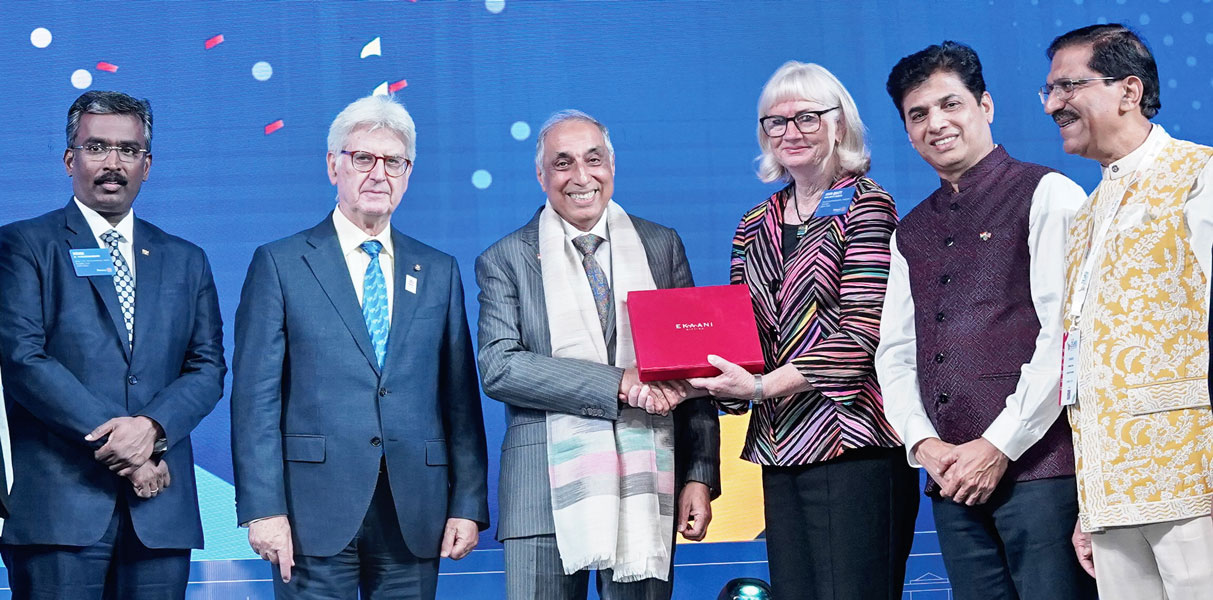
Addressing a session titled ‘Power of giving,’ at the Tejas institute, he said in a way god has been kind to Rotarians as “they get an opportunity to serve, apart from having their interactions and fellowship. With a huge legacy of TRF, around half a million Rotary clubs in the world spend $400 million a year on deserving causes.” While Rotary is not a social club, for members take part in every activity “with involvement and dedication, its ethos also includes social mingling and sharing of ideas for service.”
Over the decades, Rotary has changed tremendously with clubs not insisting on compulsory attendance at its weekly meetings, and “even the classification norms being diluted with preference given to quantity over quality. Of course, the biggest achievement of Rotary is polio eradication, which is now limited to just two countries, and it will be totally gone soon.” The pleasure of giving is “something different as the more we give, you keep getting it back. And it is common to see more number of 100 per cent PHF clubs which take pride in having AKS and Major Donor members… When you do good to society, it will return to you from someone else.”
Giving a parable involving the Dead Sea and the Sea of Galilee, a freshwater lake, Razack said the former has stagnant water as there is no flow outlet, “the water is dead with no marine life and vegetation. Whereas the Galilee is vibrant with the best of marine life and free-flowing water (emptying into Dead Sea)… both the water bodies get water from the Jordan River.” Hence, there is life only in giving as exemplified by Rotary.
To illustrate the power of love, he said while taking a walk on a hot day, a young couple saw three young strangers, named Success, Wealth and Love, distraught and in a huddle. Taking pity, the wife approached them to know if they wanted help, for which they chorused, ‘you have a choice of selecting one of us only.’ As the couple were deliberating on which one to opt for, either ‘success or wealth,’ their girl child wanted to pick up love. When they chose Love, “the rest two – Success and Wealth – accompanied them to their house.” Only love can overcome the forces of disruption and negativity in the world, said Razack, and called upon Rotary to instil this humane quality among people for a united, compassionate world.
Sahil Barua, founder-CEO, Delhivery, a startup enterprise in the logistics and supply chain domain, spoke on ‘Change through innovation with purpose.’ If India has to fast track its economic growth for a giant leap, it needs to get some basic fundamentals right, he said. “First, we must have good access to financial services, along with a modern logistics sector, then an educated workforce, and healthy people who are bold enough to dream together.”
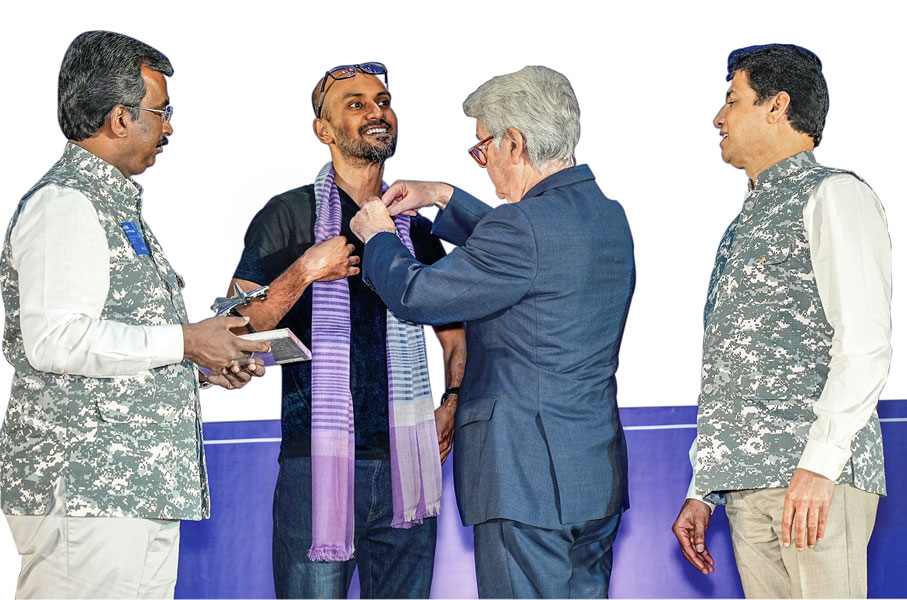
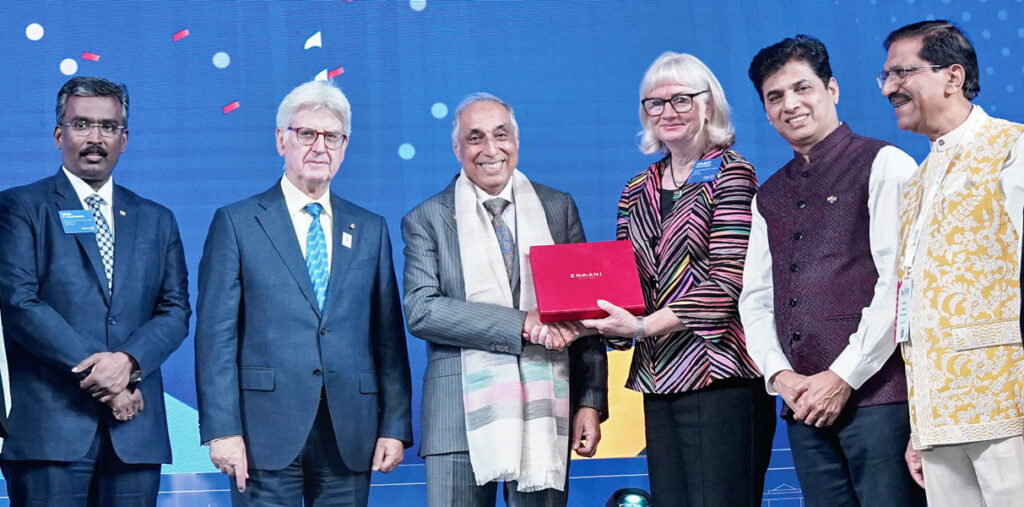
RI President Arezzo as RIDs Muruganandam and Nagesh look on.
He recalled his first brush with the Indian bureaucracy during peak Covid after he got an e-mail from a Rotarian from RC Hyderabad. “The club urgently needed oxygen concentrators, and the civil aviation ministry cleared our request to fly a planeload of these cylinders from China… In three months, we flew in 85,000 concentrators through 46 planes for treating patients.” He learnt the ‘delivery dynamics’ 15 years ago when he founded the company along with his four partners. “Most of the godowns were on the city outskirts, difficult to access, dimly lit, and lacking efficiency and professional conduct. Our logistic infrastructure including trucks moving freight and goods, and warehouses had a dismal look, unlike the ones owned by Fedex, UPS or DHL in the US and European markets.”
MNCs did not want to set up shop in India as they found many constraints — buying land is a tedious process, construction takes time, labour woes, and above all, there were 30 different languages making it difficult to communicate, even as the education level of workers was very low. Barua had to build the supply-chain network and warehouses from scratch. “We hired 1,000 engineers, signed a deal with Volvo, Sweden, for a new design of our cargo trucks, and built warehouses across the country.” The bigger challenge is to teach the workforce ‘dignity of labour’ to inculcate a sense of pride in what truck drivers and other staff do for their living, he smiled.
On average, their Delhivery Academy trains one lakh personnel each year, and coordinates with 50,000 partners across verticals for a hassle-free running of their cargo transportation services.