





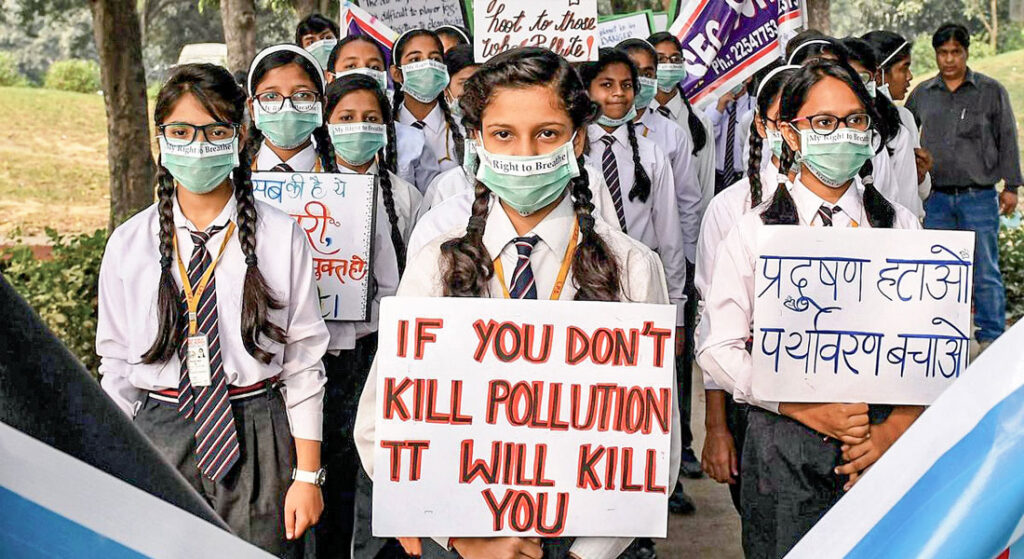
Only if citizens play their part can we ensure healthier AQI levels.
Diwali is over months ago and, yet several cities in the country are suffering from acute air pollution. What does that mean? That air pollution is not a passing festival phenomenon as people used to think and dismiss it as. Neither can it be blamed solely on farmers burning the stubble of freshly harvested crops. In fact, Delhi as well as large swathes of North India saw the worst phase of elevated air pollution levels in December last when farmers were clearly not the ones who were guilty.
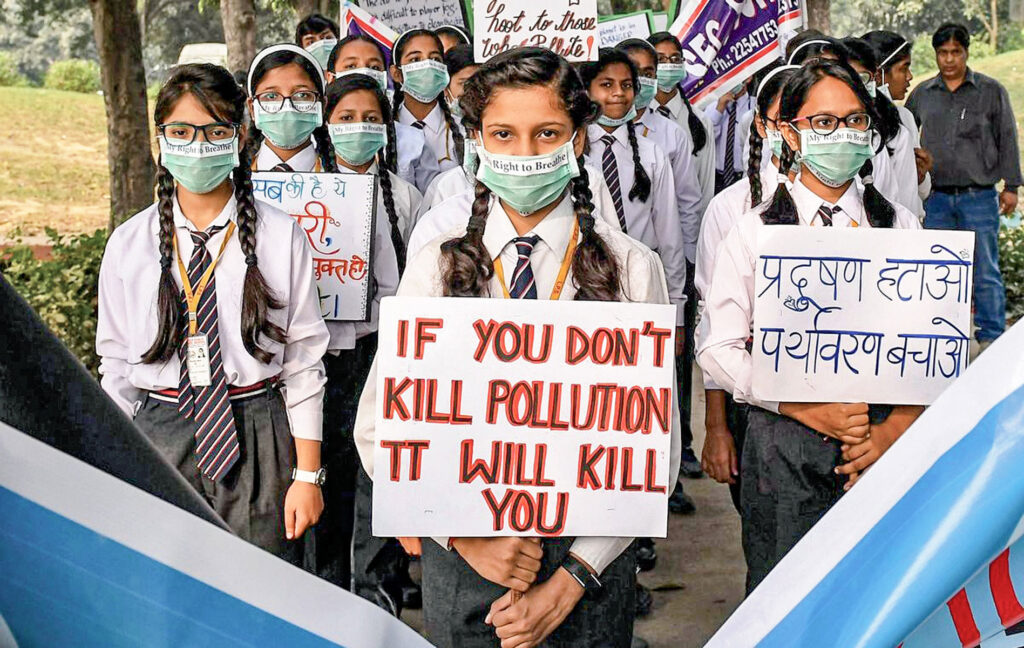
It did not take long for ordinary citizens in the national capital to realise that air pollution is a hydra-headed phenomenon with several causative factors contributing to hazardous air quality. These include vehicular pollution, construction activity, industrial emissions, waste burning and geographical/meteorological factors. Crop stubble burning and Diwali crackers do add to bad air quality, but they cannot be held responsible in isolation.
One thing is becoming increasingly clear. The Air Quality Index (AQI) is a matter of concern not only in cities like Delhi but also across the subcontinent. Last year saw smog envelope Mumbai forcing citizens to keep a watch on the AQI in their city. In Chennai, it rose to unhealthy levels in December-January although the city is blessed by relatively clean air when compared to Lucknow or Kanpur.
So, what exactly is AQI and how does it impact us? Simply put, it is a figure used by health and pollution monitoring agencies, to indicate how polluted the air is in a particular region or part of a city. The higher the figure, the more toxic the air, carrying with it greater health risks. The figure released at different times of the day is colour-coded to indicate the extent and severity of atmospheric pollution.
Thus AQI level from 0-50 is coded green indicating that the air quality is good; 51 to 100 is marked yellow and stands for moderate air; 101 to 150 is in orange and the air is unhealthy for sensitive groups; 151 to 200 is unhealthy and flagged red; 201 to 300 is marked very unhealthy and colour-coded purple and, anything over 300 is hazardous and marked in maroon.
While calculating the AQI the following parameters are considered: particulate matter (PM 2.5:fine inhalable particles, 2.5 micrometers or less, and PM 10, 10 micrometers or less) , nitrogen dioxide (NO2), sulphur dioxide (SO2), carbon monoxide (CO), ozone (O3), ammonia (NH3), and lead (Pb).
The readings from across the country last year gave a grim prognosis that if corrective steps are not taken, our children, our elderly, and ailing citizens will be put to much distress. Even the health of those who consider themselves healthy will be at risk. Respiratory illnesses will only increase if the air that we breathe is of an unhealthy quality.
We know air quality is a matter of concern, and that it directly contributes to global warming. What can we as individuals do to improve air quality in our home, town, city and by extension in our country?
First and foremost, advocate for better air quality by persuading the authorities to take measures such as reducing vehicular traffic and increasing public transport for citizens. The maximum air pollution is created by vehicular traffic. Public transport should be made so attractive an alternative, and so convenient with adequate incentives that people naturally take to it. Encouraging cycling and building good cycle lanes that are obstacle free would be great. Amsterdam in Europe is one such city and universally appreciated for its stringent rules relating to vehicular traffic.
Unfortunately, there are not enough incentives in India for people who use public transport or cycles. Think about it. If we had to pay six times as much for parking and five times as much for fuel when using private vehicles, we would naturally take the bus or the metro to work. And if the buses were well maintained, clean and efficient, kept to strict schedules and were frequent enough to carry the whole population, why would people need to use expensive private transport? Hence, amplifying the demand for excellent public transport is an important role all of us can play in the long run.
However, in the short term when peak air pollution is right at your doorstep there are some tips that will help. Shut all doors and windows to prevent outdoor air from drifting in. Today, several people are investing in air purifiers to maintain better air quality. But these too need regular maintenance, with filters requiring regular change.
You could monitor indoor air quality regularly to check the level of particulate matter, humidity and volatile organic compounds. This would be advisable if you have infants, children or senior citizens at home. Monitoring helps you to decide how to cope with the situation, when to use the air purifier and when to ventilate the room. Ventilating when air pollution is at its lowest is also important.
It would be wise to invest in a vacuum cleaner and use it frequently as it picks up fine dust particles. Curtains, towels, bedsheets, and cushions also need to be washed often so that allergens of all kinds are reduced.
Of course, you must know that it is best never to smoke indoors if you are in the habit. Lighting up in the house only increases the pollution and health risk for family members. The use of exhaust fans in the kitchen also helps in clearing out pollutants, especially if elaborate meals that generate smoke are being cooked.
They say that wisely chosen indoor plants can reduce indoor pollution as they absorb volatile organic compounds such as formaldehyde and benzene. But for that to be effective you need large number of plants, which may not be a practical solution.
All said and done, there is one truth: that no one is immune to air pollution. It adversely impacts each of us and you cannot “get used to it” as I heard someone say the other day. I was aghast when an acquaintance remarked that people in Delhi are used to living in a polluted atmosphere. In fact, that was the trigger for writing this column.
We could borrow a leaf from China on how it managed to clear the air in Beijing, once known as the smog capital of the world. The strongest role was played by curbing industrial emissions and reshaping the city’s transport landscape. The latter was done through increased public transport, emphasis on cycling, and larger fleets of e-vehicles. We know that air pollution is preventable, but only if there is a will.
The writer is a senior journalist who writes on environmental issues