





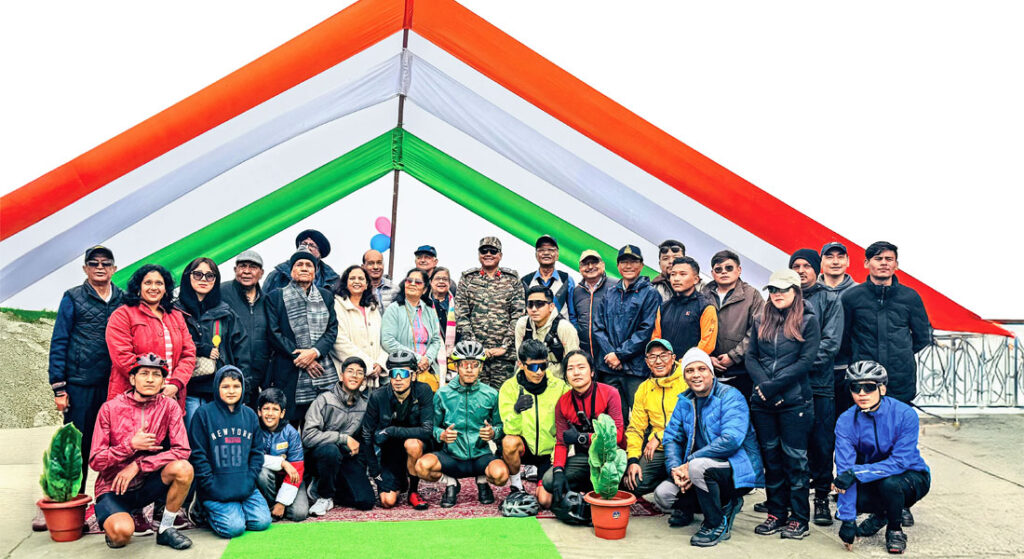
Members of the Rotary Club of Gangtok, RID 3240, have pulled off an environment- friendly coup in establishing a bio- toilet block at probably the highest altitude in the world. After a lot of planning and challenges in execution that dragged on over two years, a glistening new bio-toilet facility, with separate washrooms for men and women, has come up at Kupup town in East Sikkim, which is located about 65km from Gangtok. The altitude — a formidable 13,000ft!
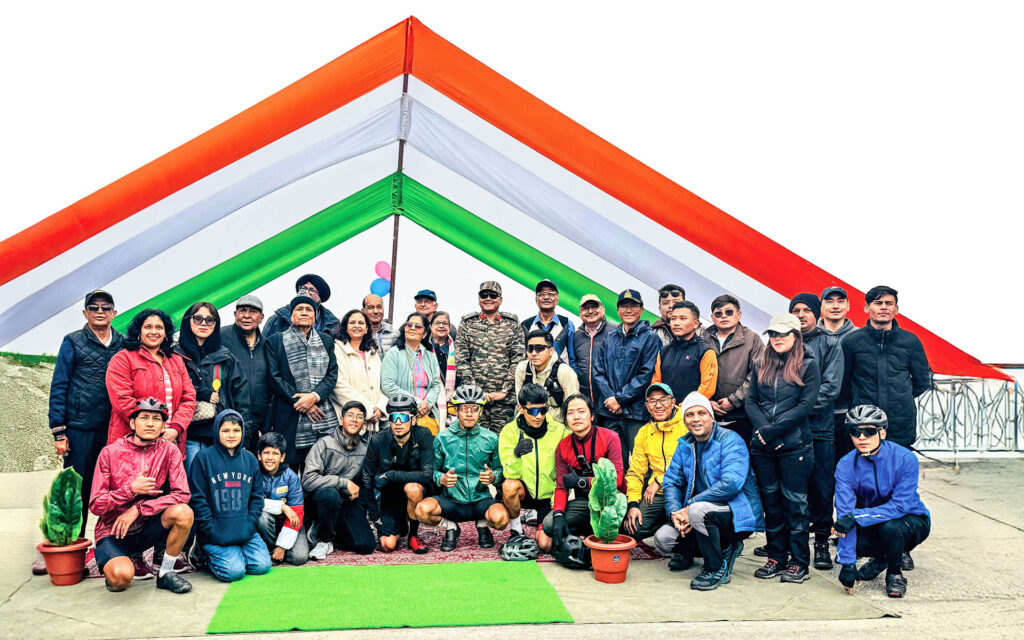
In September, in this beautiful and scenic town, one of the highest in the region and which boasts of breathtaking vistas of the renowned Elephant Lake, named for its elephant-like shape, Brigadier Jha from the Indian Army inaugurated the bio-toilet. Kupup, a difficult hilly terrain which has substantial army presence, also holds historical significance as a prominent trade point along the ancient Silk Route between India and Tibet. It is also home to the Baba Harbhajan Singh Shrine, where both soldiers and locals offer prayers.
Explaining the genesis of this project, PDG Dr Yogesh Verma, a member of this club, said that this is a very fragile region environmentally and it is very difficult to have sanitary pipelines and other facilities required for conventional toilets. With its natural beauty and the shimmering waters of the Elephant Lake, it gets a large influx of tourists and “the Indian Army personnel we consulted while doing community assessment made a strong case for putting up a bio-toilet there.” The land for the toilet was provided by the Army, and the work was also done with support from the Army.
The plumbers found it difficult to work in the challenging weather conditions and punishing temperatures of minus 5–10 degree Celsius.
The existing toilet was in a pathetic condition, had only two urinals and was being maintained very poorly. The new bio-toilet provided by the Rotarians at a cost of ₹20 lakh has two sides, segregated for men and women and each side has three commodes, with urinals also provided in the men’s toilet.
But planning and executing a bio-toilet project for a hilly and difficult terrain in a fragile ecosystem in a state like Sikkim and town like Kupup came with its own set of unique challenges. The project was the culmination of years of planning, coordination and dedication. “Members of RC Gangtok worked tirelessly to overcome logistical challenges, including transporting material and adapting the design to withstand extreme temperatures, and liaising with the Indian Army and local administration for smooth execution.” The toilet essentials were pre-fabricated in Lucknow, but the difficulty came in transporting these and other required material to the tricky spot. It was here that the Indian Army extended its support in transporting the material and coordinating the whole thing.
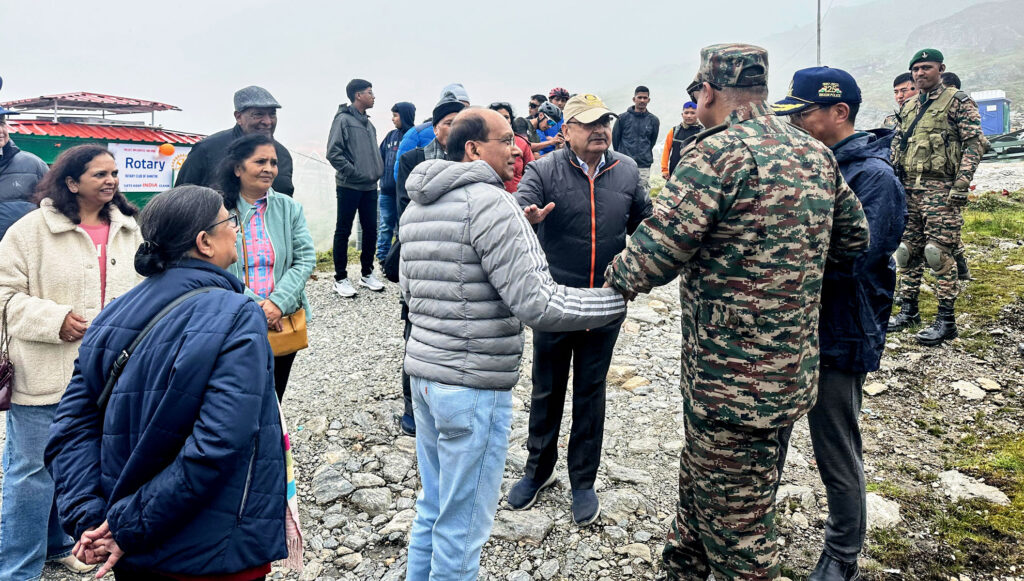
“Believe it or not, our main challenge was to get the plumbers to put the toilet together,” chuckles Verma. “First of all, it is a restricted area and permits are required to visit this spot; normally only one day permits are given but the plumbers needed to be there for 15 days. Again, the Army helped.”
Then came the challenging weather conditions and punishing temperatures of minus 5–10 degree Celsius! “Add to this the wind factor; the plumbers were from the plains and found it very difficult to survive and work in that kind of cold weather. Once again, the Army helped with the shelter and the stay but despite all that, we had to pay the plumbers much higher wages to keep them at the site to finish the job.”
At the end of the day all of us are very happy because we know this project will benefit thousands of soldiers, pilgrims and tourists.
PR director of the club Prakash Mundra adds that the bio-toilet was such a crying need and such a big boon to the local community that the inaugural ceremony was attended by not only Brigadier Jha, who is the core commander of the Indian Army there, but also Tashi Wangyal, IGP, Law and Order, Sikkim Police. Club president Naresh Agarwal, joined the brigadier to inaugurate the toilet and hand it over for public use.
Stressing on the significance of the project, PDG Verma said: “This bio-toilet stands as a testament to Rotary’s commitment towards sustainable development, public health and environmental conservation. To achieve this at such a high altitude, in such a difficult terrain and challenging climatic conditions, reflects the dedication and perseverance of our team.”
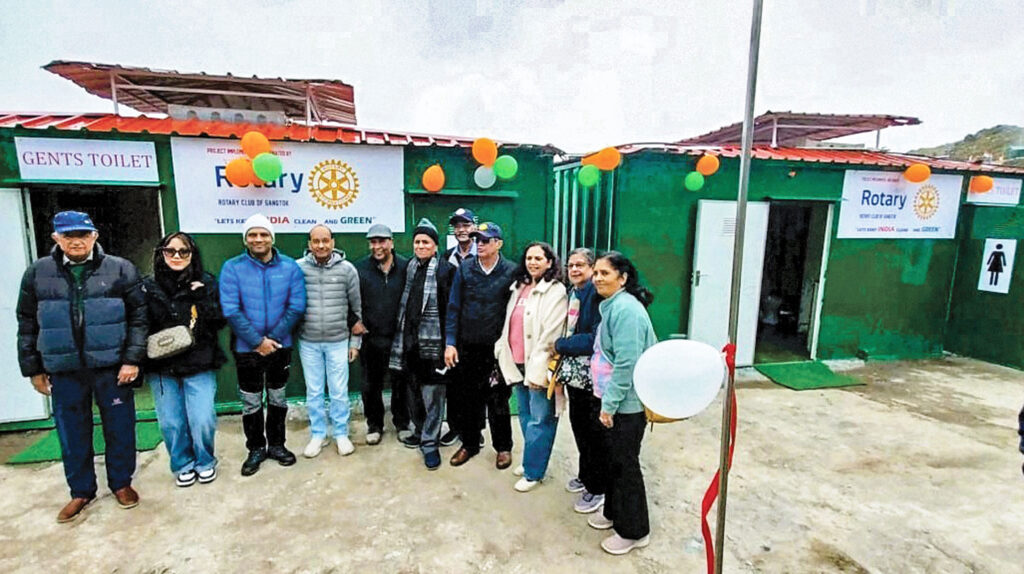
He specially thanks two club members — Aswin Oberoi and Gurpreet Dhunna — for ploughing on when quite a few members complained during the most trying times about the need to take on such a difficult project and said: Yeh kaha funs gaye (Why did we get caught in this). But at the end of the day all of us are very happy because we know this project will benefit thousands of soldiers, pilgrims and tourists who visit this revered site (shrine) and tourist spot every year.”
This pioneering initiative is not only a matter of pride for Rotary in India but also a global benchmark in sustainable sanitation and environmental stewardship. It symbolised “Rotary’s ability to break new frontiers in service, while protecting the environment. Unlike conventional toilets, the bio-toilet system ensures waste decomposition through bacterial processes, preventing water contamination and preserving the fragile Himalayan ecosystem. By addressing sanitation concerns at a popular tourist destination, this project will enhance visitor experience while safeguarding public health,” added Verma, who also acknowledged the contribution of Rtn Arijit Banerjee (Ramaesis Realty, Kolkata) whose relentless efforts made the project a reality.
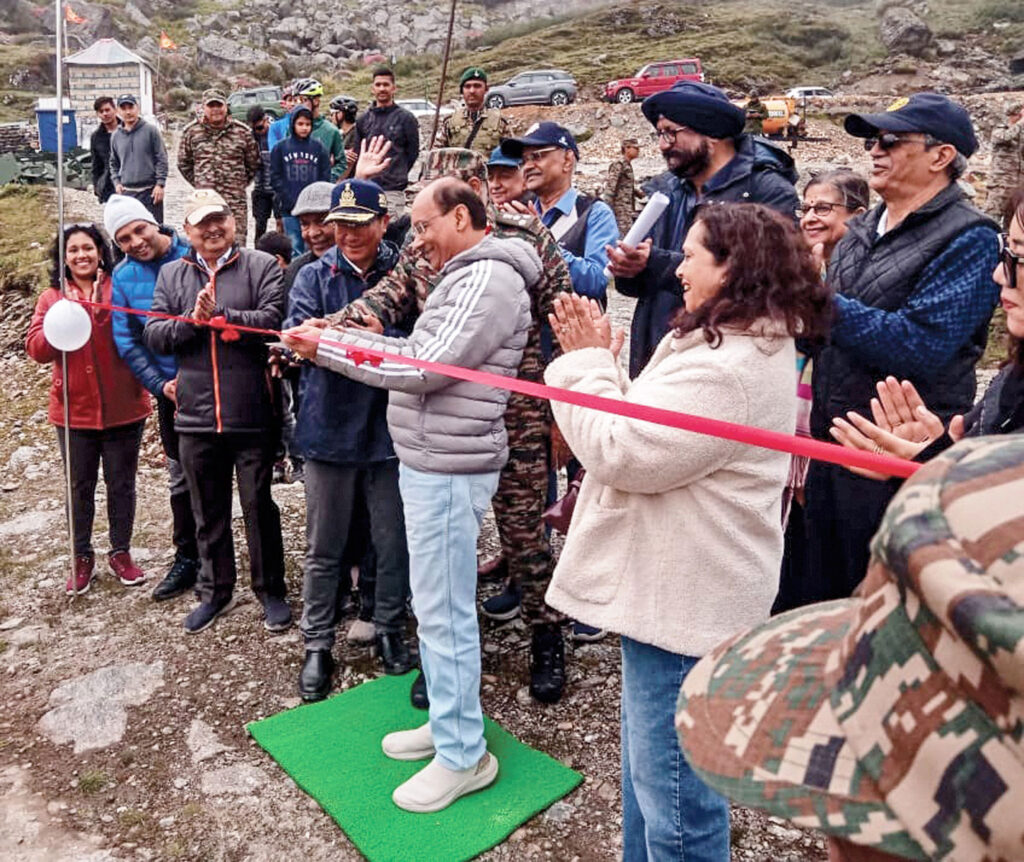
The club, with 36 members, now wants to explore putting up similar eco-friendly sanitation facilities at other high-altitude locations to promote hygiene and responsible tourism in the Himalayan region.
Verma, who has retired as a medical professor and was running two hospitals in Sikkim, recalls with pride the VTT programme he had conducted in 2014 to improve maternal and child health in the region, and reduce maternal mortality. “In 2012, I was the head of the government hospital here and we used to have in Sikkim 26 maternal deaths a year… a big number in such a small state! Women would die during childbirth because there was delay in reaching them expert medical care.”
The team of gynaecologists from UK, organised by PDG Himanshu Bashu from that country, comprising five experts, first trained 13 doctors and paramedics in Sikkim, on how to conduct training to reduce maternal mortality. “I was DG then and all the teaching and training material was brought from UK and in the one-week workshop we trained 13 gynaecologists, nurses and 30 other doctors on how to handle emergencies at delivery points.”
The VTT was repeated for two more years, with the result that in “two years the maternal mortality went down to 9 from 26 and then 6. The impact of that programme was so great that till date we have maternal mortality only in single digit,”’ beams the PDG, adding, “our club is very proud of that project.”