



As I zip through some iconic projects done by the Rotary Club of Bhavnagar, RI District 3060, such as their Ray of Hope project where children who have never seen the inside of a school are huddled over books in different groups in a spacious hall at the Rotary Centre built by the club, or 25-odd terminally ill senior citizens getting dignified and compassionate care at the Rotary Karunalaya, the words uttered by past RI President Kalyan Banerjee, in a casual conversation, come to mind.
“In so many different ways, Rotary in Gujarat, I tell you, is very special… unknown, unheralded, but always vibrant and on the job when it comes to community service projects, and RC Bhavnagar is no exception. You should visit the place someday.”
Well, it took me a couple of years… no less, but driving back from Bhavnagar to the Ahmedabad airport on the slick new and smooth Expressway, I console myself… der aaye, durust aaye (better late than never)!
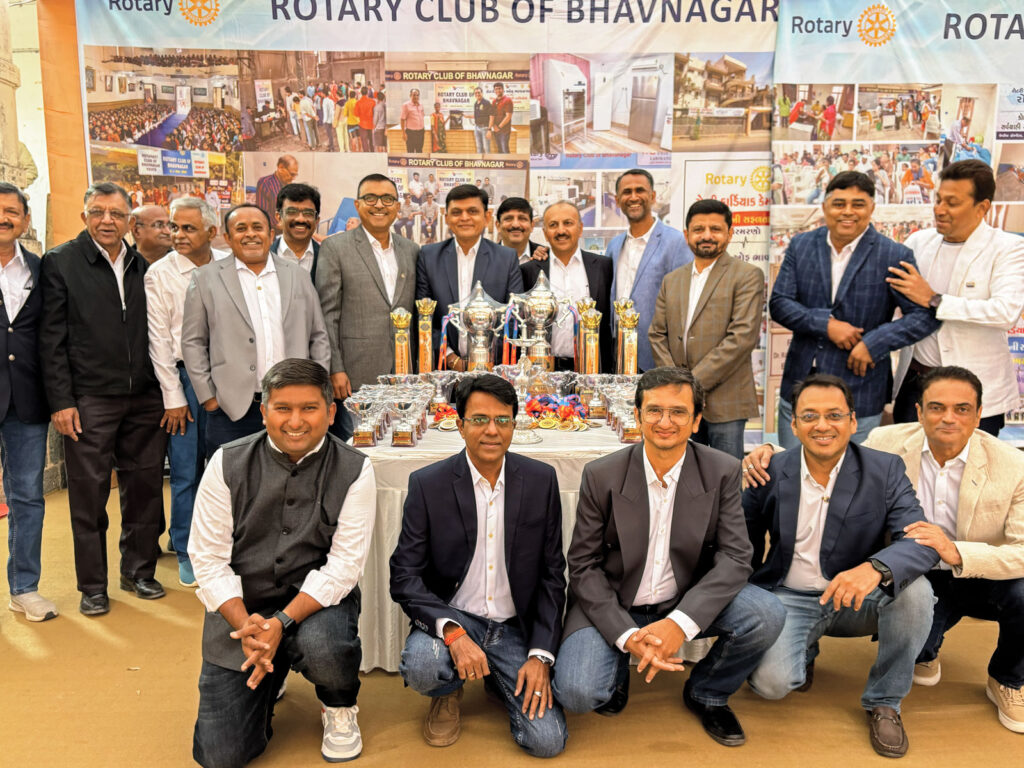
The bunch of Rotarians led by club president Kaushal Sheth, including PDG Pradeep Gohil, take me around the projects the club, one of the largest in RID 3060 with 150 members and started 81 years ago, is running.
Rotary E Library
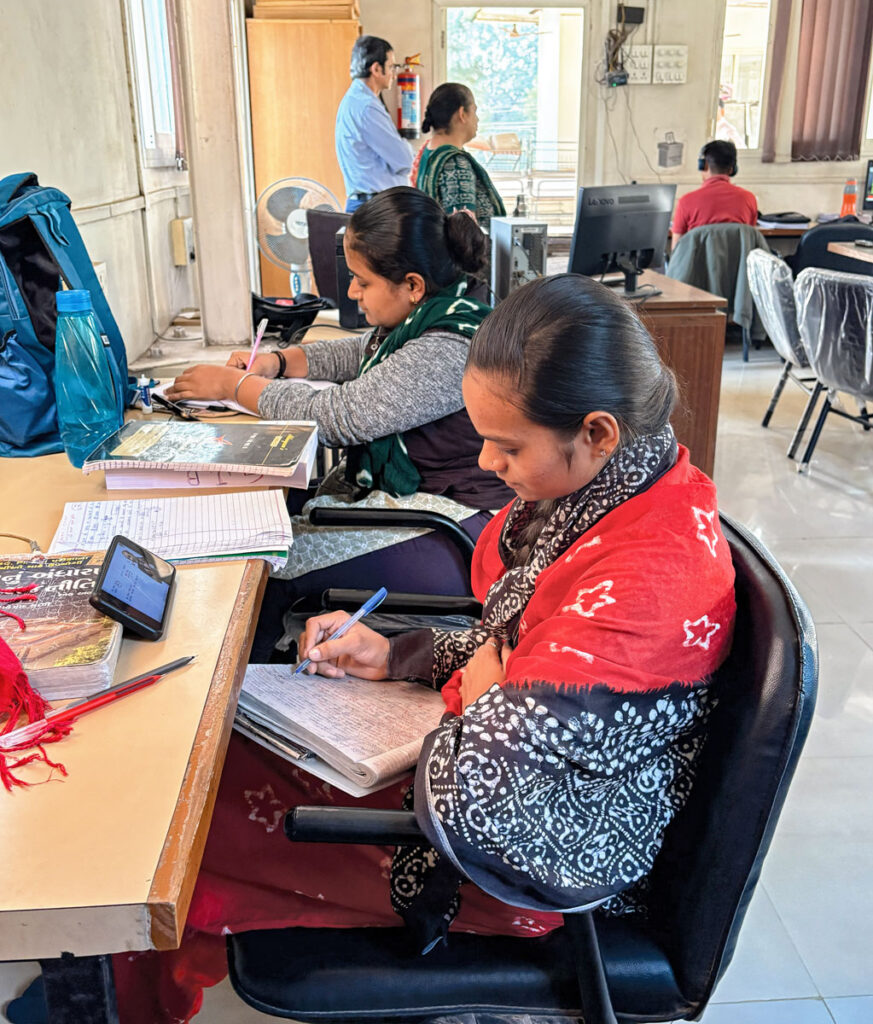
The first stop is at the Rotary E Library, where a group of youngsters are glued on to either their mobile phones, computers or textbooks. No, they are not playing games or chatting on their phones. They are downloading or browsing study material in preparation for their entrance exams. At this brightly lit and spacious library, started in 2015 at a cost of ₹15 lakh (substantially big money 10 years ago), which included a donation of ₹3 lakh given by Dr Ramniklal Mehta, aspirants for as many as 75 different vocations can access study material to prepare for entrance exams for banking and insurance services, IAS/IPS and other police posts, engineering jobs in the government sector…. “You name the competitive exam and our library can give you access to either text/reference books or online material which can be downloaded,” says Umang Desai, past president of the club.
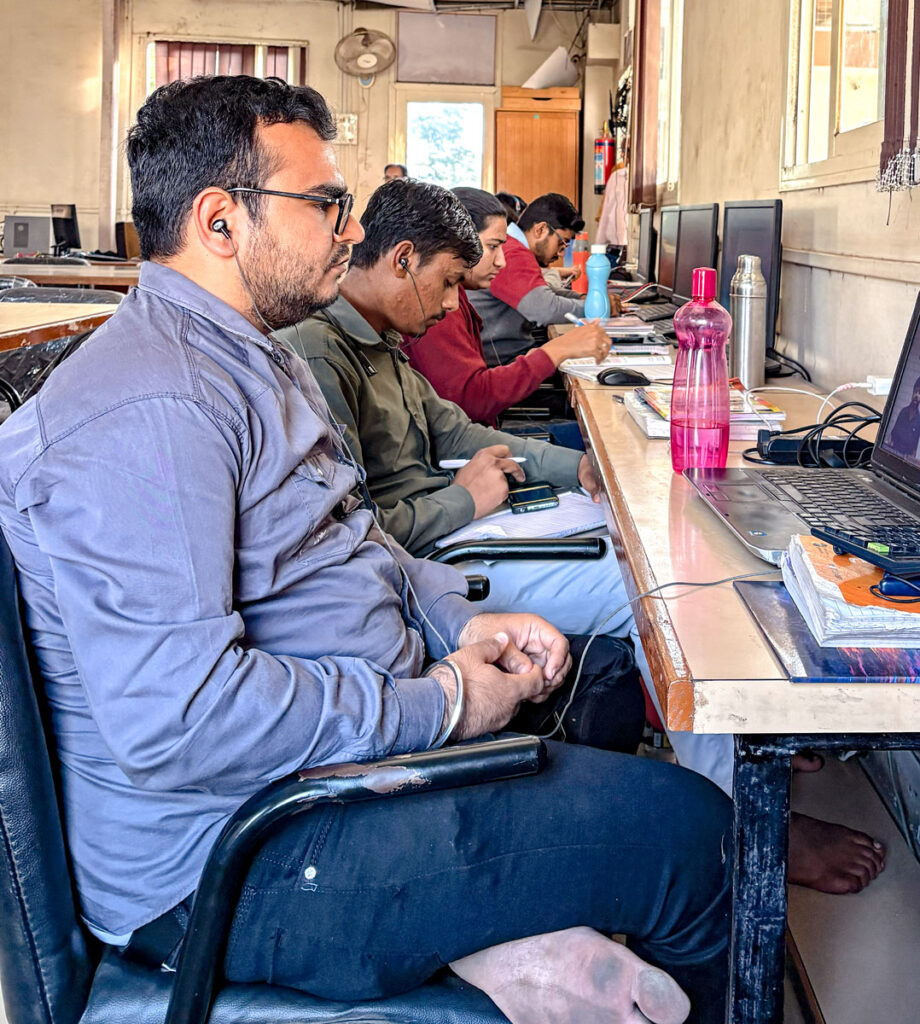
Initially the library service, which is virtually free, charging a paltry annual membership fee of ₹500, began with books and printed material. “Over the years we got a few computers where students can access online study material — there is unlimited wi-fi service available here — but we now find that even the use of computers is decreasing as those coming here can download everything on their mobile phones. So many exams are being offered online now.”
PDG Gohil adds that periodically mock exams are conducted at the centre. Over 10 years, about 1,500 students have benefitted from this library, and of the ₹15 lakh spent, half has been given by corporates and the other half has been raised through donations.
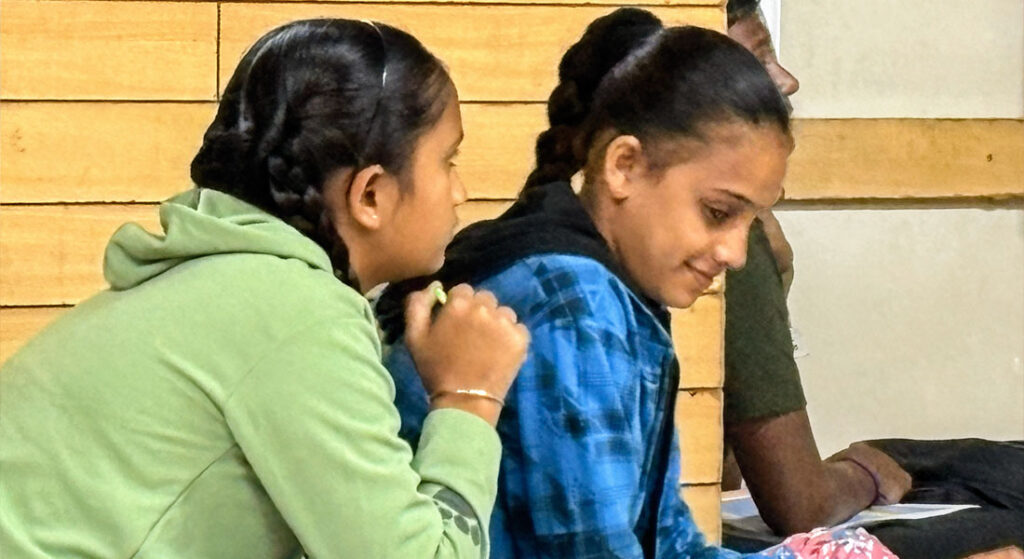
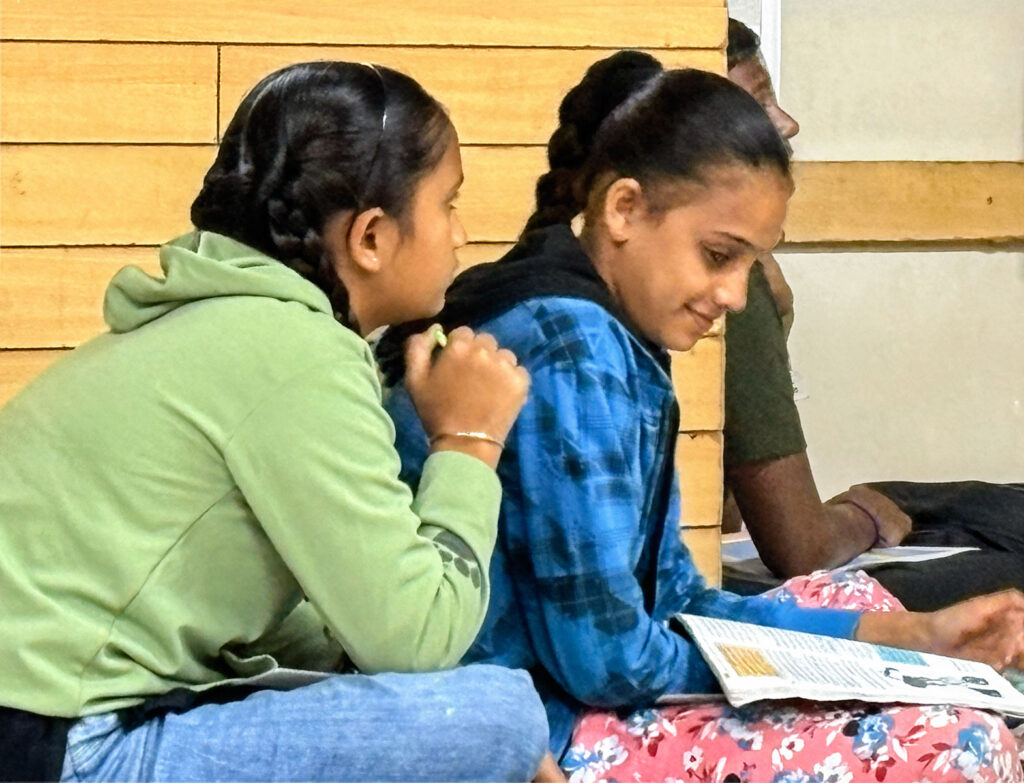
Kinjal, who is seated here, wants to become a PSI; to my puzzled look she says “Police sub-inspector!” Why, I ask and she says simply: “Because I have always dreamt of wearing the police uniform.” She has been coming to this library to prepare for her entrance exam for one year, and admits “that I simply love coming here, because it gives me a chance to study without any disturbance.”
Kaushal Joshi is preparing for his CA Foundation exam; “I can get my hands on a lot of material, which I can access both online, and study through books available here. … it is actually a six-month course, but I couldn’t clear it in my first attempt, so am repeating. But I am confident that I will get through this time,” he smiles.
Both the youngsters were here, along with the others, when the library opened at 8.30am, and Gohil says that they will probably remain here till it closes at 7.30pm. Adds Desai, “You must have seen a bunch of tiffin boxes on the ground floor. There is a beautiful garden close by; they all come in the morning, bringing their lunch boxes from home, and in the afternoon, they will take their lunch break in the garden.”
I ask who are these youngsters, where do they come from, and realise on hearing the answer what a prized sanctuary this must be for the job aspirants. “Many of them come from far-flung villages; they all belong to lower middle and middle classes. Most of them live in one-room homes and do not have at home the privacy or conducive atmosphere required for a concentrated study in order to prepare for their entrance exams.”
In so many different ways, Rotary in Gujarat is very special… unknown, unheralded, but always vibrant and on the job when it comes to community service projects, and RC Bhavnagar is no exception.
— Kalyan Banerjee, Past RI President
Adds Desai, “With the help of this library so many have passed their exams and have become police sub- inspectors and got jobs in so many different vocations. Many times parents used to come and thank us profusely for providing this place for their children to study. The two children of our Rotary Centre caretaker you wrote about (Rotary News, June 2025), both used to come and study here.” (While one sibling has become an IT engineer, his sister has got a job with the Gujarat Electricity Board).
One crucial requirement for all these young job seekers is some level of proficiency in English grammar and taking care of this aspect is past president Purnima Mehta, a retired English professor, who comes here and helps the youngsters with the language. Periodically, the Rotarians also groom them in communication skills; how to manage interviews, how to present themselves and conduct mock exams.
Miyawaki forest
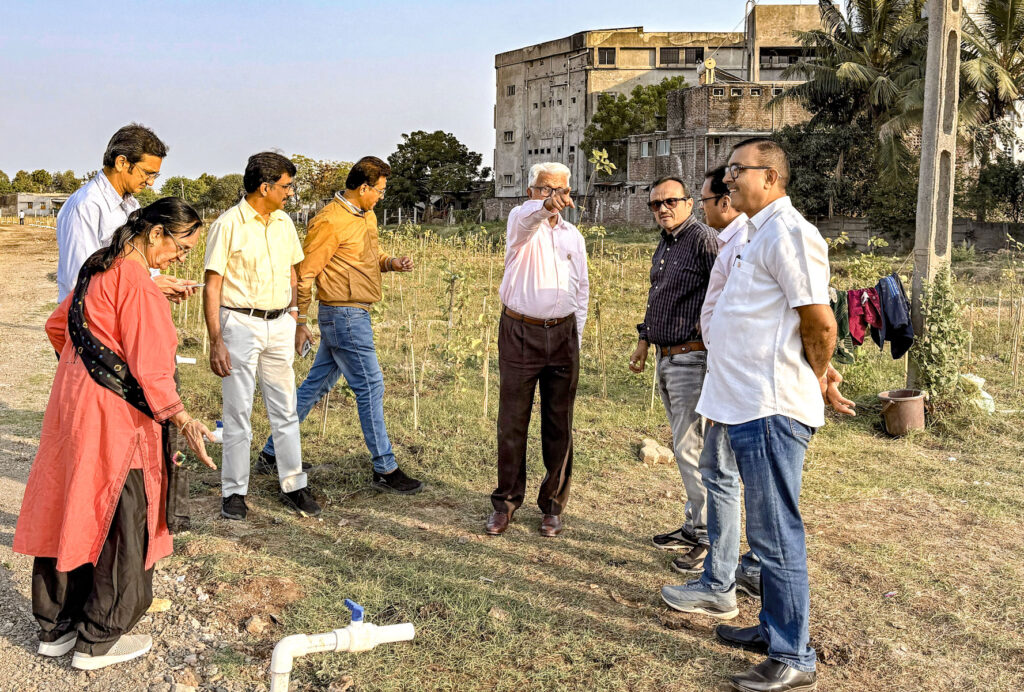
A current project which is getting all the energy and enthusiasm of the core team of the club is the development of a Miyawaki forest bang in the heart of the city, on a 10,000 sq metre plot given to them by the Bhavnagar Corporation. Club president Kaushal Sheth explains that the Rotarians have already planted about 25,000 trees in the form of canopies and local, fast-growing varieties have been chosen. “Three years ago, we had tried to do a similar project on Railway land, but the project could not materialise for various reasons. This time we got the necessary permissions, corporate funding and started the work before the monsoon.”
The project will cost around ₹25 lakh, and a major chunk of the funds — around ₹18 lakh have been committed by one of their CSR partners — Tamboli Casting — which has given around ₹20 lakh, and the rest has been collected by the club through donations. He explains that the corporate partner has been roped into this project, thanks to the Rotary Sports League, an annual sports tournament the club organises exclusively for corporates, to give their employees an opportunity to play and compete in one of the four games — cricket, table tennis, badminton and volleyball. “You will see tomorrow, at the inauguration of this year’s tournament how by conducting it for the last 20 years, our club has got sustained corporate funding for our service projects,” he beams. The CSR sum raised is an impressive ₹4 crore!
Giving details of the kind of trees being planted, past president and project director Tejas Thakkar says that three different kinds of canopies with local, fast growing tree varieties have been planned, and these will be at different heights — 22 to 25 metres, medium variety of around 15 to 20 metres, and smaller trees that are less than 15 metres in height.
“According to our research and what we saw in some Miyawaki forests we visited over two years, we can get up to 15ft growth in a year. The project will be completed in a month and we have signed a three-year MoU with the Bhavnagar Corporation under which we will maintain this place.”
Desai adds that the Gujarat government is building oxygen parks across the state, and “in our discussions, the corporation authorities specified this should be developed as an oxygen park. Well, some call it that, others urban or Miyawaki forest, but the idea is to green the places we live in. The basic concept is that you plant native trees very close to each other so that they compete with each other, both for food and sunlight, and in the process, grow much faster!” There is a lake adjoining this park, and the Rotarians are allowed to use that water for the trees.
The transformation is visible; from a dirty, unkempt piece of land where the overflowing lake water was stagnating, the Rotarians have created a green lung for the city, with proper walking path, a fence to keep out stray animals and even planned for parking space for a few vehicles. Lighting has been avoided to encourage birds to come in; later butterflies also will be introduced. Some mulberry trees have already started yielding fruit, and are attracting birds already.
A Ray of Hope
We next visit the Rotary Karunalaya which is a hospice and rehabilitation centre for terminally ill patients who will no longer benefit from further medical care. (Await a detailed report in a subsequent issue of Rotary News).
But the project that really touches the heart and reinforces the difference Rotarians are making in the lives of Bhavnagar’s less fortunate citizens is the one titled Ray of Hope — Child Educare Centre, through which children of the poorer classes who either have no means for or see no merit in education, get a shot at learning… and thus a future.
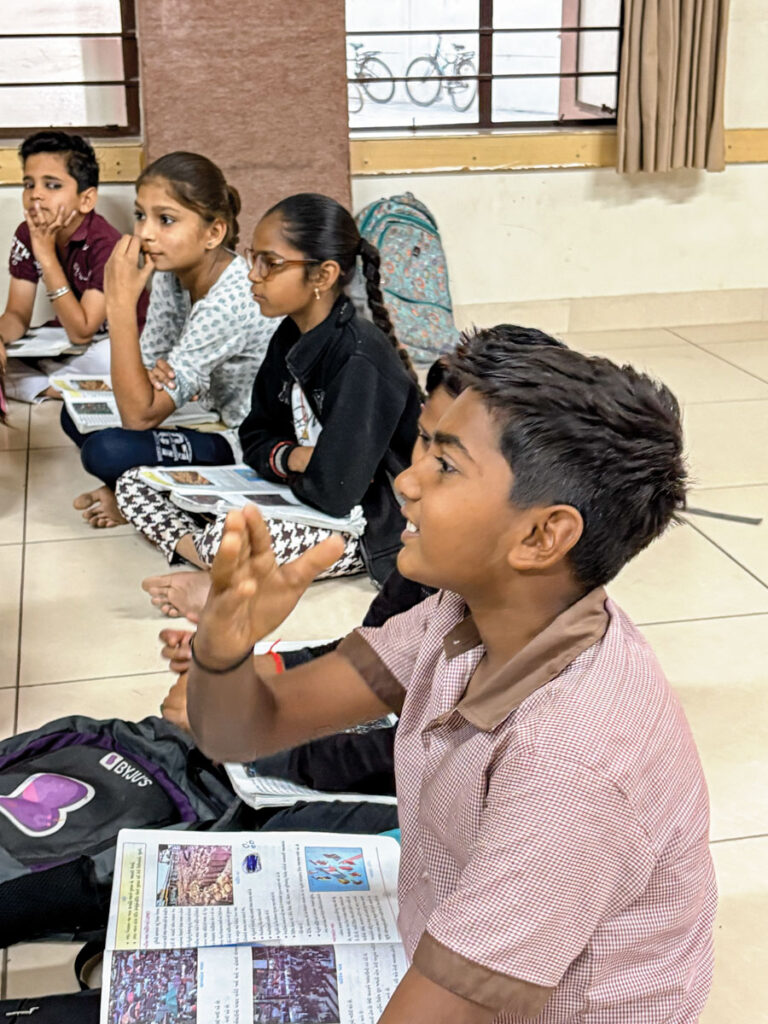
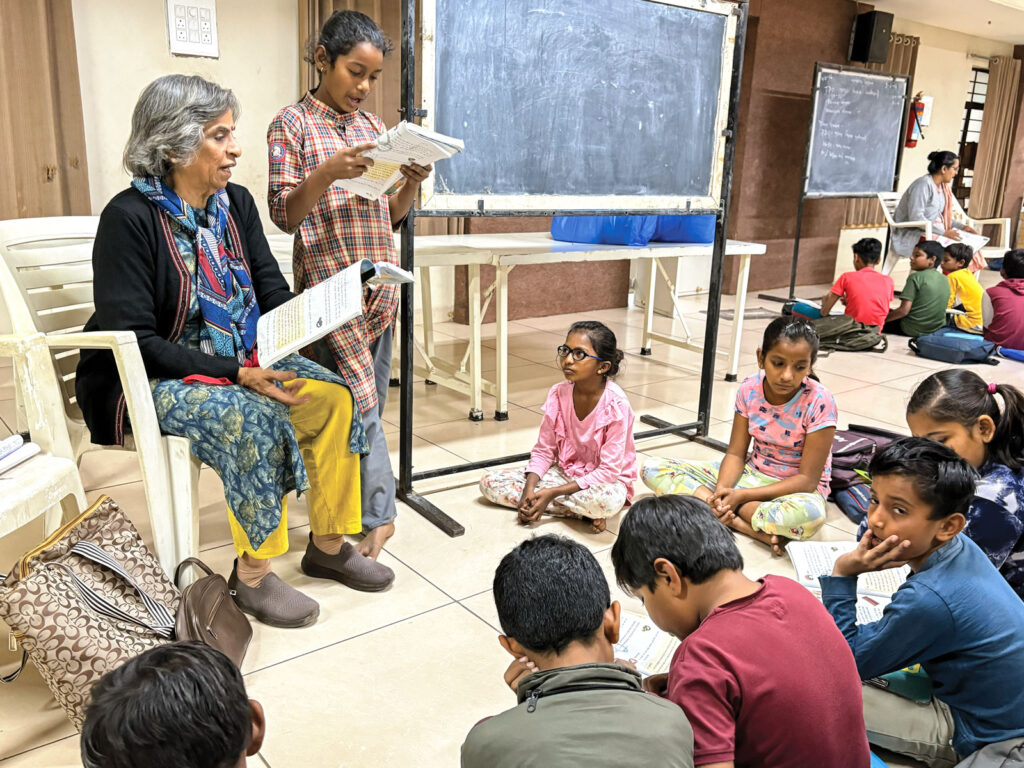
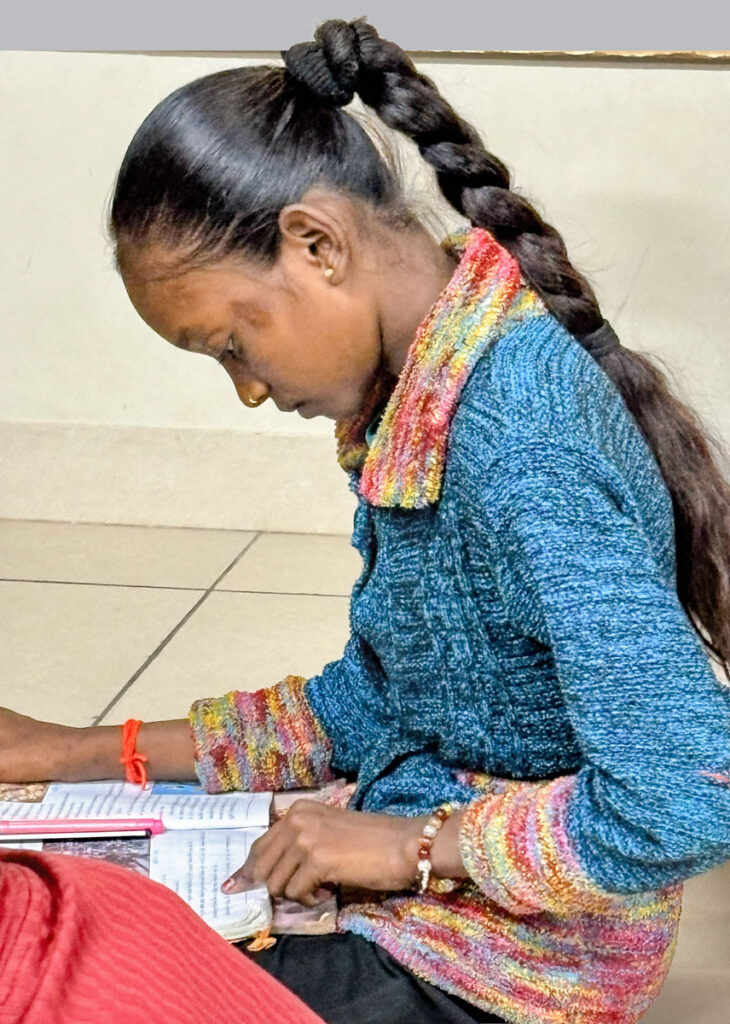
At the glittering, spanking clean and spacious hall at the Rotary Centre, I find several children pouring over textbooks, engaging in a dialogue with their teachers, or taking notes. There is a vibrant buzz in the air, chatter, and the kind of cheer and positive energy that a group of children can spontaneously inject into any setting or gathering.
One of RC Bhavnagar’s longest projects which was started in 1988 when Manish Kothari was club president, its objective was to provide educational opportunities to poor and underprivileged children, particularly those living in slum areas or in tents put up at construction and other sites where daily wagers bring their children. Earlier, Kothari had told me in an interview (Rotary News, June, 2025) that in the initial years, “when the poor did not give much importance to education, we had to literally lure the children to the Educare centre by offering them snacks, new clothes, toys, and retain them by telling them interesting stories and offering fun activities.” His sister-in-law Parulben Kothari was a regular teacher and was recently given an award for meritorious service by RI.
As the centre started getting more children, other Rotary Anns started volunteering, teaching the children alphabets, numbers first and then reading, writing and various subjects. “Even today, the food we give them, as well as uniforms and other clothes, is a big draw and brings the children here. They are from absolutely poor families, and as they are not in school, they loiter on the streets, and start stealing and indulging in all kinds of nefarious activities,” says PDG Gohil.
As the children got hooked and started learning quickly, the Rotarians first got them admission into government schools, later sending the brighter ones to private schools. Many of these children have graduated and have become engineers, accountants, nurses, pharmacists and got government jobs too. “So many of them, now successful and working in Bhavnagar, come back regularly here to teach our students. And that is very touching for us to see,” says club president Sheth.
Teaching one group of eager young students is Jyoti Manish Vakil, who tells me she comes on all five days of the week, to teach the children. “No, no, I have no experience as a teacher, but I have been coming here regularly for the last 27 years,” she beams.
Jyoti is a member of Rotary Club of Bhavnagar Vibrant, an all-women’s club. She teaches the children social science, Gujarati language, English and Hindi. She “simply loves coming here daily; it gives me such a huge sense of fulfilment,” she smiles.
Taru Thakkar is the mother of past president Tejas Thakkar and has been coming here for over two decades. She just loves to teach the children how to read properly. “They can read Gujarati, but they have very little confidence. So I teach them how to read with confidence… communication skills are so important.” She teaches them to read Gujarati, English and Hindi. The first one in Bhavnagar to start a beauty parlour in 1977, she has now handed over that business to her two daughters-in-law and gives all her energy to what she loves best — teaching these children.
Elsewhere, in another cluster, a group of children are debating enthusiastically all about buying and selling of vegetables… the distribution, the market chain, and so on.
Past president Purnima, who also teaches English here, says so many of the children coming here get into regular schools — either municipal or private — and those who show interest and talent are helped to get into colleges. “We have given the children around 75 cycles, which help them commute from their homes and back. Many of the Anns bring with them home-made snacks which the children enjoy and also it gives them adequate nutrition. We also give them school bags, sweaters and raincoats.”
Rotary Sports League
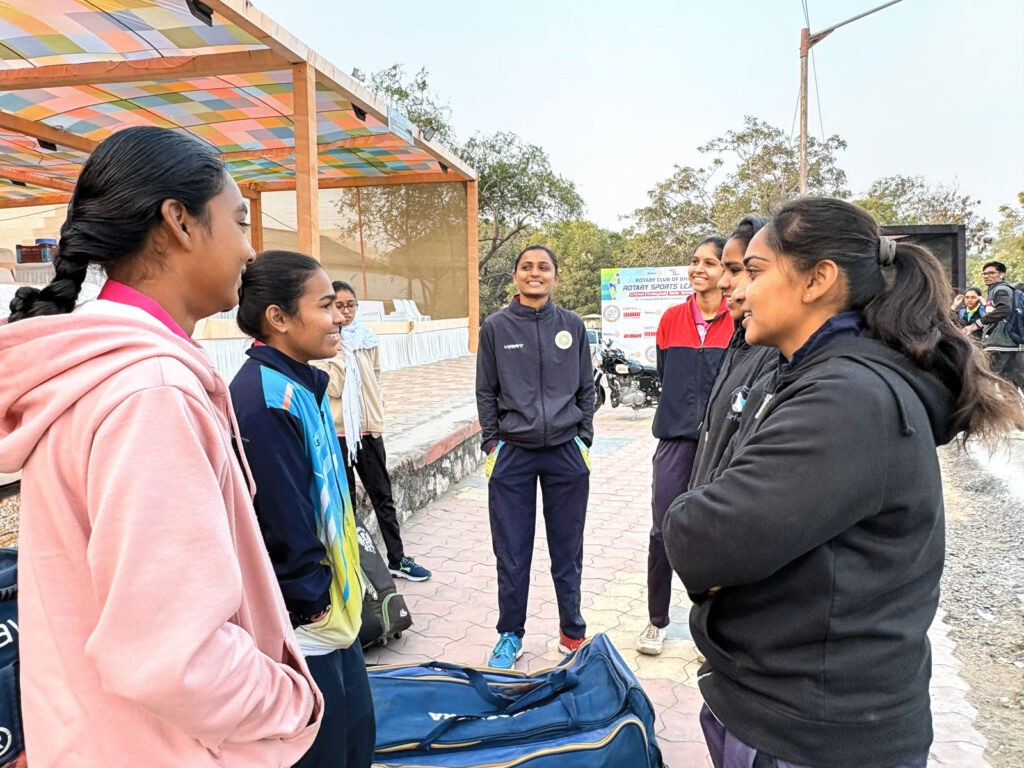
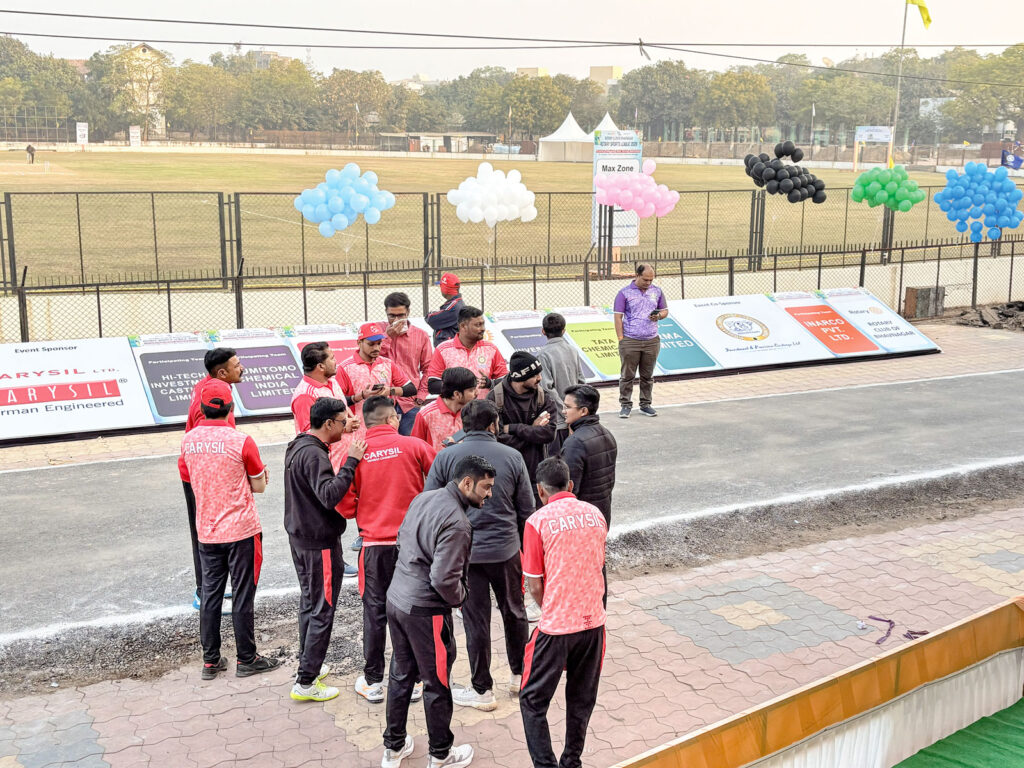
I wind up my short visit to Bhavnagar the next day by going on a nippy morning to the vast, sprawling grounds of the Bhavnagar University where the two-day sports tournament being conducted by RC Bhavnagar exclusively for corporates is being held. This is the 20th year of RSL; the air is festive, there is music and colourful balloons ready to be released for the inauguration and this year, teams from nine different corporates will compete in the four games of cricket, volleyball, table tennis and badminton.
Giving details of this tournament, past president and tournament committee chair Chetan Kamdar says the basic idea in starting this tournament for corporates 20 years ago was to connect corporates with Rotary. “The idea of CSR came later. We had thought that if corporates join Rotary in any way, or partner with us, then it will be easy for us to get funds for our service projects.”
With a chuckle, he recalls how “tough it was 20 years ago to organise such a tournament… because the corporates looked at all the minute details, and even worked out that if my person plays one ball, it will cost me around ₹750!”
But as the club connected with more corporates, first in and around Bhavnagar, and later entire Gujarat, things improved. At the venue each year, a prominent banner is put up detailing the service projects done by the clubs in the city. Thanks to this relationship with corporates, carved out two decades ago, the club has managed to raise nearly ₹4 crore of CSR funding for its service projects. This is apart from the sponsorship for the tournament.
The tournament raises each year around ₹15–20 lakh depending on the number of teams participating; this year there are nine, and sometimes the number goes up to 16. “More than that we cannot manage.” CEO of Carysil Ltd Chirag Parekh is present at the venue; Carysil is one of their main sponsors and gives each year ₹4 lakh; co-sponsors give ₹2.5 lakh each. And each participating corporate has to pay a fee of ₹75,000 for the organisation, venue rent, food etc. After all expenses, a surplus of ₹8–10 lakh or so is generated, which is used for the club’s projects.
This year, for the first time, and following Indian women’s team winning the World Cup in cricket, each team was asked to compulsorily send one woman player. “Yesterday, in your talk you stressed the importance of gender justice; this is our way of ensuring gender justice. Yes, it is only one player in 10, but still, it is a beginning. (In this tournament the cricket team has 10 and not 11 players).”
The corporate partners at the tournament include Investment and Precision Castings, Nirma, Tata Chemical, Steelcast, Inarco, Agrocell, Renaissance Jewellery etc.
On their part, the players enjoy this tournament so much, that “they wait all year for it to happen,” says past president of the club Jiten Shah. “And if some prospective candidate looking for a job in one of the competing corporates is good in one of the four games, he is more likely to get the job.”
So what next for the club, I ask the Rotarians. Desai says the club has applied for a global grant of around $65,000 with a partner club in the US. “The money will be raised from some local doctors and a relative of mine from the US is donating $15,000.” When the funds come through, the club wants to provide smartboards to some 50 schools.
Pictures by Rasheeda Bhagat