


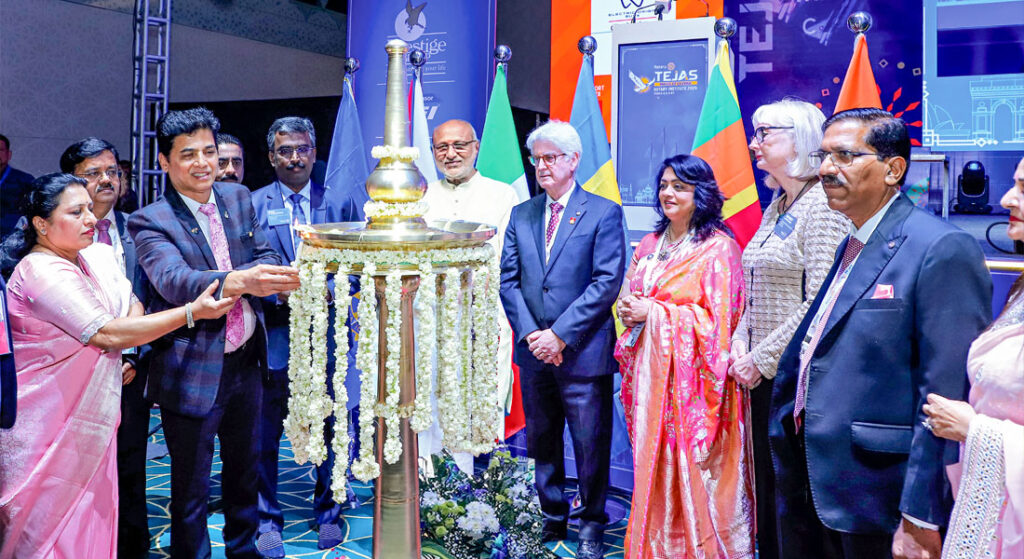
As social catalyst and torchbearers of progress, Rotary is the beacon of light with a spirit of service and endeavours for nation-building, said India’s Vice President C P Radhakrishnan while inaugurating the Rotary zone institute, Tejas — Wings of change, in Delhi. His disclosure about being a former Rotaractor was greeted with a huge applause.
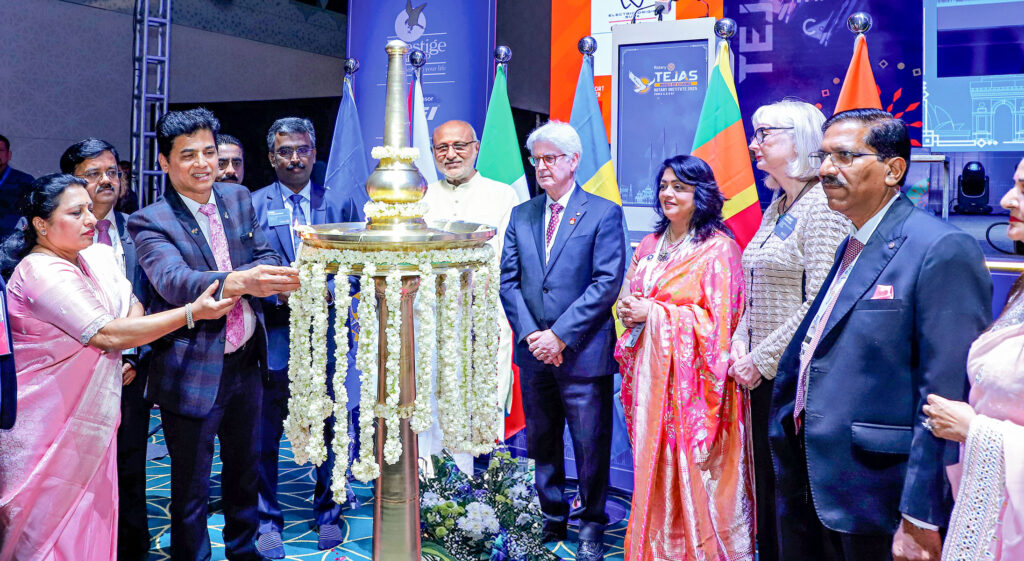
In his address to nearly 1,500 delegates from Zones 4,5,6 and 7 including Rotary leaders from India, Nepal and Sri Lanka, RI President Francesco Arezzo, vice-president Alain Van de Poel and others from Sweden, Belgium and Malta, he urged the Rotary family to continue “with their tireless efforts and unwavering dedication that strengthen the social fabric of the nation and humanity as a whole.” Recalling his talk with President Arezzo, he said India is not only the fastest growing economy, “but also its Rotary family is the fastest growing in the world.” After the US, India has taken up large-scale Rotary projects, and “your work in health, education, environmental protection and community development have beautifully complemented our national priority.”
Rotary’s work in health, education, environmental protection and community development have beautifully complimented our national priority.
— C P Radhakrishnan, Vice President of India
Complimenting Indian Rotarians for doing such immense service to society, the vice-president said, “whether it is Swachh Bharat, Beti Bachao-Beti Padhao, or Har Ghar Jal, every GoI mission gains strength from the grassroots participation and involvement of Rotary. This partnership and other similar initiatives reflect the power of collaboration between government, Rotary and community leaders… which reminds us that even small acts of service can create waves of transformation.”
On the crucial role played by Rotary through its partnerships with governments and citizen-led initiatives, Radhakrishnan noted that these activities drive social transformation. “President Arezzo informed me that over the years, Rotary clubs have done impactful global projects in polio eradication, its flagship project, health, literacy, water and sanitation, all worth over $350 million.” Recalling his participation in a district conference as a Rotaractor, he said, “at that time I spoke about how Rotary is always there, right from birth to death. From polio drops to newborns, building and running schools, ambulances and crematoriums, Rotary is always with us.”
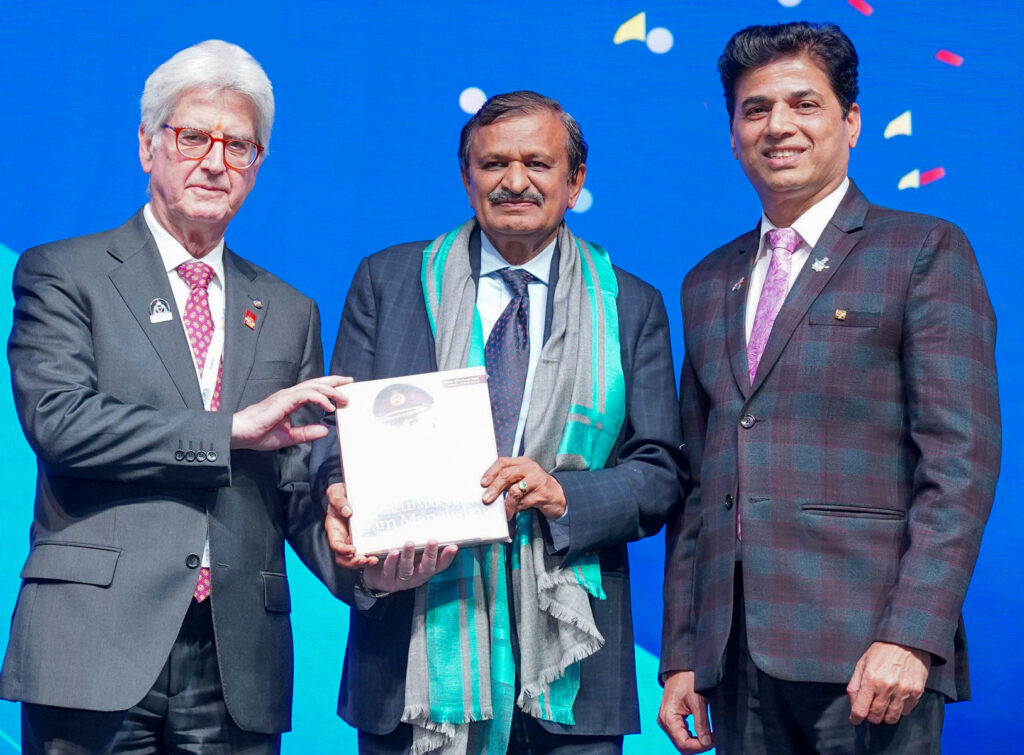
Through its flagship Global Polio Eradication Initiative (GPEI), Rotary has invested around $2 billion, thus proving its commitment to create a healthier society. “Gone are the days when a child lost her leg before she could be taken to a doctor, which is the greatest achievement of Rotary.” Let this Tejas event be a launch pad of new ideas in skills development, environmental protection, digital literacy and healthcare. The government will be behind Rotary in all its endeavours.”
During his opening address to the delegates, institute chairman PDG Sharat Jain said, “Tejas means radiance, which will come alive in this institute with brilliance, energy and the spirit of selfless service as embodied by Rotarians. This institute is not just a Rotary meeting, but a celebration of who we are, a reaffirmation of our shared purpose, compassion, and our enduring friendship across borders.” He added that what we do for our ourselves dies with us, “but what we do for others remains immortal as Rotary is a force that illuminates communities, uplifts life and inspires hope.”
Rotarians have big heart
God sends some people designated as goodwill ambassadors, also known as Rotarians, to earth to serve communities, wipe out tears of suffering people, and “their large philanthropic hearts make a difference in the world,” said Dr C N Manjunath, director, Sri Jayadeva Institute of Cardiovascular Sciences and Research, Bengaluru, and a Rajya Sabha MP.
Speaking at one of the sessions, he said he was associated with Rotary for the last 15 years, and in this period, his Jayadeva Hospital has done over 10,000 heart surgeries for children. “Over the last 18 years, the hospital has treated 75 lakh OPD patients and performed eight lakh surgeries. We have a credo: Treatment first, payment later, and no patient is turned out for want of money,” said Manjunath.
Tejas means radiance, which will come alive in this institute with brilliance, energy and the spirit of selfless service.
— PDG Sharat Jain, chairman, Tejas Institute
Painting a gloomy picture, he said 60 per cent of deaths in India occurred due to NCDs like heart attack, stroke, kidney ailments, BP, diabetes, cancer, and “the latest addition to this list – screen addiction and loneliness.” Around 30 lakh people die due to heart attack and brain stroke in India each year, and the number of victims below 34 years is rising steadily, he noted. “There is no happiness in medicine, but there is medicine in happiness,” said Manjunath, and added that there are dozens of simple, daily habits that can keep us disease-free — good sunlight, diet, exercise, smile, fasting, good sleep, attitude of gratitude, talking to each other, intake of fruits and vegetables, family bonding, yoga and meditation, and “being in Rotary.”
His parliamentary committee has recommended to GoI to include HPV vaccination against cervical cancer in the National Immunisation Programme. “Rotary clubs are doing a great job in vaccinating girls aged 12–15 for cervical cancer, through which 90 per cent of lives can be protected.”
Rotary is synonymous with friendship, and “your signature today is an autograph tomorrow. Live long, live young,” he added.
On the cusp of new era
Following its age-old development model dictated by its cultural ethos, India is on the cusp of a new era, said Rajya Sabha MP Sudhanshu Trivedi.
He quoted IMF chief Kristalina Georgieva who recently said that India is going to produce 15 per cent of global wealth in the coming years, thus becoming the growth engine of the world. Rating agency Moody’s has forecast the country’s GDP growth at 7 per cent in fiscal 2027, and “we are the no 1 in digital transactions, accounting for 48 per cent of the global volume, more than the US and China put together,” he said
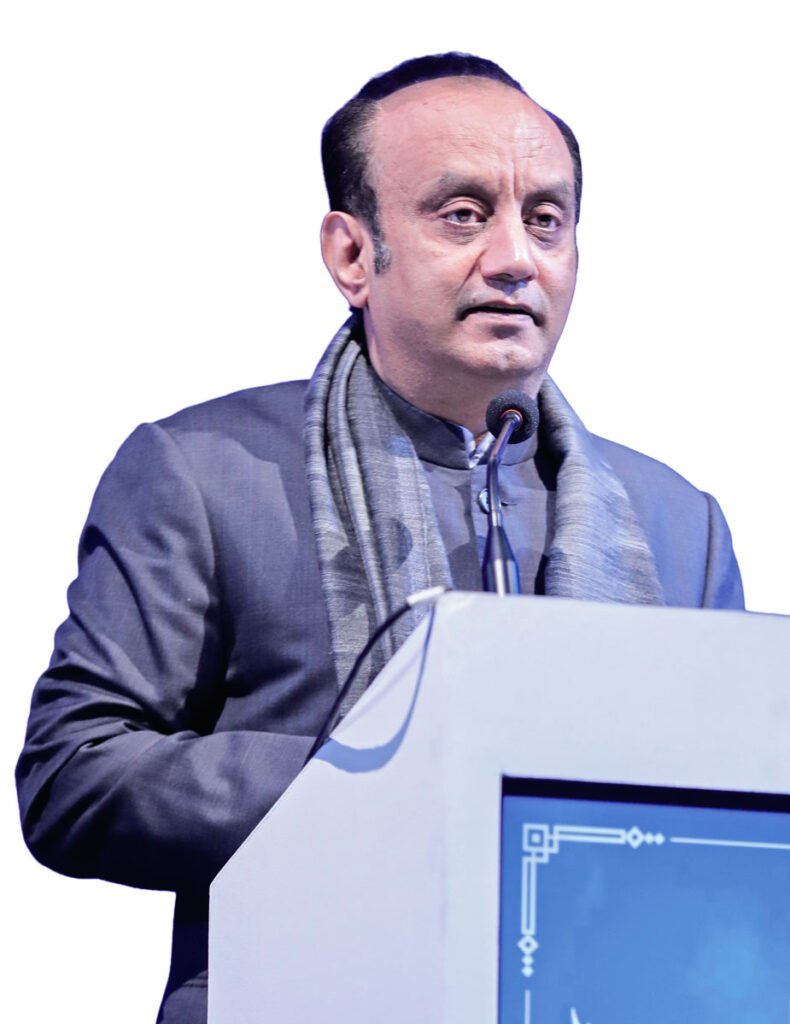
India is the fourth biggest economy, has the fourth largest stock exchange, ranks third in automobile manufacturing, third in aviation industry and second largest maker of mobile phones. In October 2025, UPI, the country’s largest digital interface provider, overtook Visa to become the world’s single largest digital gateway, he said. Our Moon Mission was the first to land on its South Pole, he added.
India has made a fine geostrategic balance between two warring blocs in the world — “we are founding members of both Quad and BRICS. And we collaborate with Russia to produce Brahmos missile, while US also delivers predator drones to us. India has started attracting global manufacturers including Dassault from France, Foxconn from Taiwan and iPhone from the US.” India’s rise as a global leader is concomitant with its growing leadership in new-age technology like AI and quantum computing, said Trivedi.
In a conflict-ridden world, “India has a significate role to play as the fastest growing economy with the youngest population and is one of the oldest civilisations,” he added.