



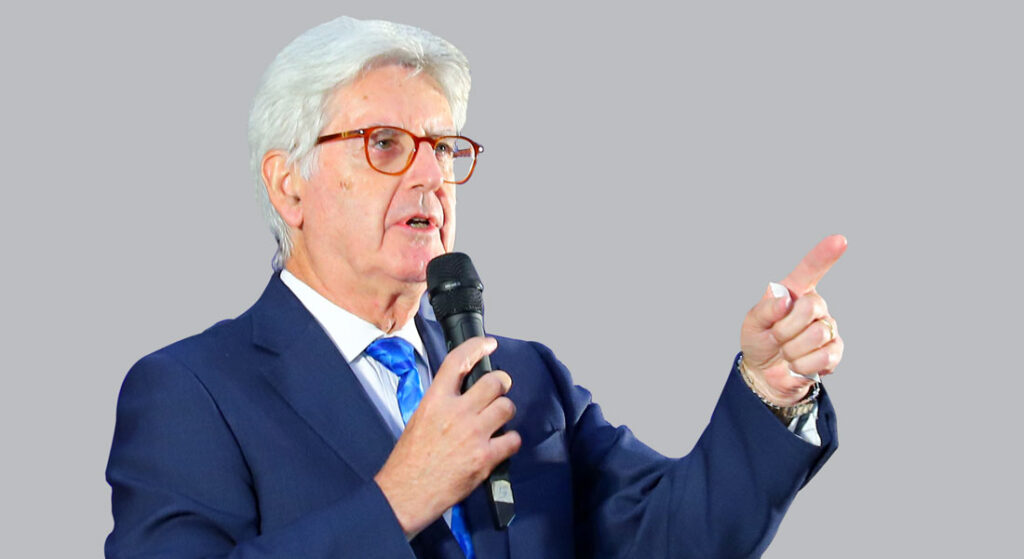
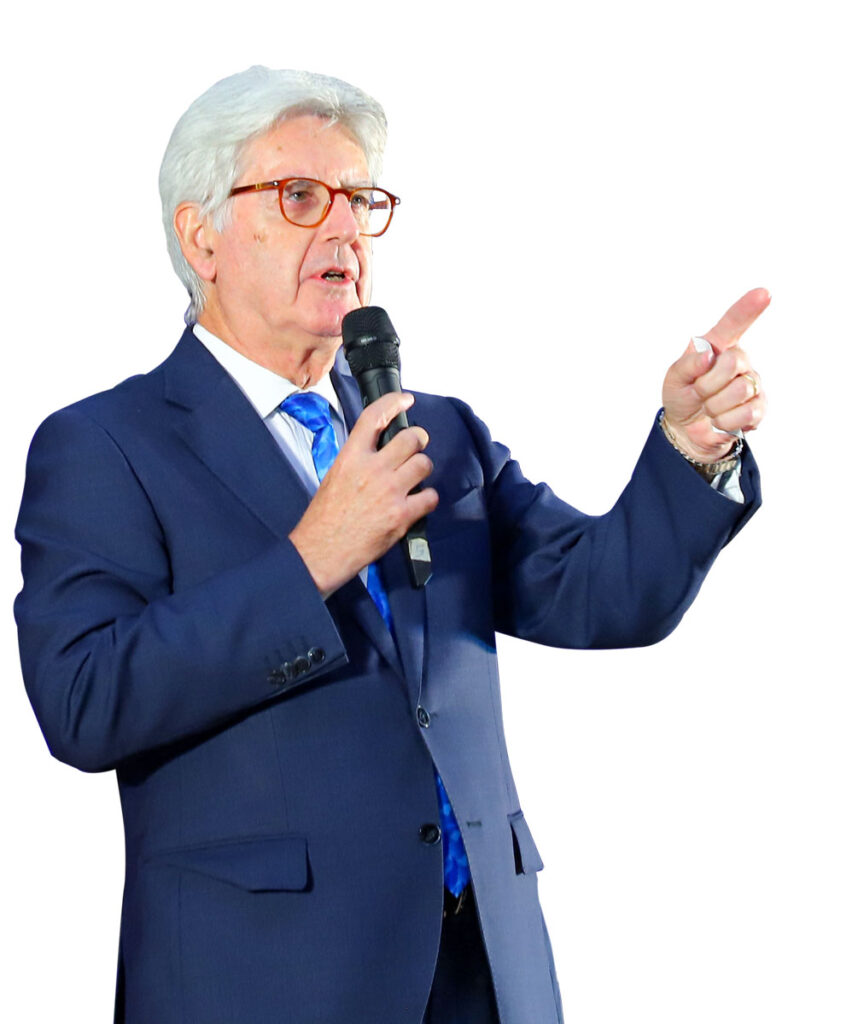
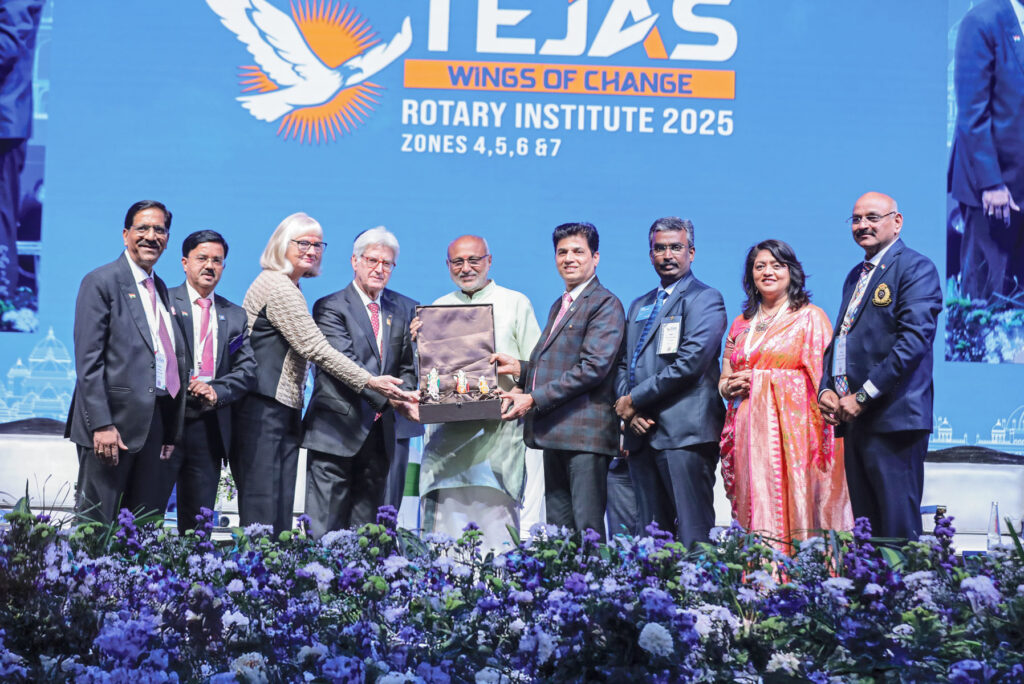
Considering the state of the world in which we live today, Rotarians need to come together and “use Rotary as an instrument for peace… reaching out across divides and forming connections with people you might otherwise never meet. Let’s strive, through the service we give, to make our communities more cohesive, healthy and peaceful. Peace is of special importance today as peace is all about making people free from poverty, harm, disease, environmental pollution, unclean water and poor sanitation,” said RI President Francesco Arezzo at the inaugural session of the Zones 4,5,6 and 7 Institute titled Tejas Wings of Change held in Delhi.
Peace also comes when you provide educational opportunities, access to medical care and freedom from poverty, he said. Elaborating on the presidential message for this year — Unite for Good — he said this was much more than a slogan. Over the last decade “we have welcomed tens of thousands of new members around the world each year, but nearly the same number departs, year after year. This dynamic between growth and departure is not a Rotary problem… it’s a mirror of the world itself. People are longing for meaning but they don’t always find it.”
Arezzo said people join Rotary because they admire what Rotary stands for but they leave when Rotary becomes “only a structure or just a way to spend time, rather than meeting their expectations, hopes or desires. If we unite for good to give every member a sense of belonging, to make them feel an essential part of our organisation, and ensure that clubs are committed to giving members the best of experiences as people of action and changemakers, perhaps they won’t leave Rotary.”
From anna daan or giving food to those in need to the great community kitchens of the gurudwaras, to everyday kindnesses that stitch neighbourhoods together, giving is woven into the daily Indian experience.
Rotarians can unite for good by being contributors to the communities they live in, learning from each other how to create lasting change and by demonstrating how to build a foundation for peace by earning trust… helping to meet essential human needs, reaching across divides and forming friendships despite differences.
The RI President urged Rotary leaders to check with their members what they expect from their membership. “Have open discussions about what they hope to gain from Rotary and connect personally as best as you can to improve your members’ experiences. Reach out to people in your communities to see what your club can do to make a positive change. In many cases, that will mean new opportunities for service projects. Having meaningful dialogues can be just as important.”
Reiterating the core ethos of Rotary to make the world a better place for all, Arezzo said, “Sending a young person as a peace scholar or another young person to another country for a youth exchange programme is working for peace. Preventing and curing disease, providing clean drinking water and sanitation where there is none, is working for peace.” Ensuring that women can give birth safely, improving the environment, supporting girls’ education and sustaining families’ livelihoods, would also enhance peace.
“Rotary service makes the world a little more free everyday, and in doing so we create conditions for peace. Gandhi once said non-violence is the weapon of the strong. That is why we unite for good, for a world built on compassion, love and not greed.”
We win only as a team, never alone or as individuals. So we must do more than move quickly, we must move gracefully and mindfully and prepare to help the next leader succeed.
The RI President then turned upon all the positives that Indian traditions, history and scriptures offer. “Here in India generosity is not an event, it’s a way of life; from the concept of anna daan or giving food to anyone in need to the great community kitchens of the gurudwaras, to everyday kindnesses that stitch neighbourhoods together, giving is woven into your daily experience.”
Whether it was Krishna talking in the Bhagwad Gita about daan, the act of giving, becoming sacred when it was done without expectation of returns, or the Chaitanya Upanishad advising people to give with humility, joy and not measure the size of the giving but the openness of the heart, all of them found a connection with Rotary’s ideals. “Rotary’s 4-Way Test finds resonance in India with the spirit of dharma and seva… above all it reflects Vasudeva Kutambakkam, the world being one family.”
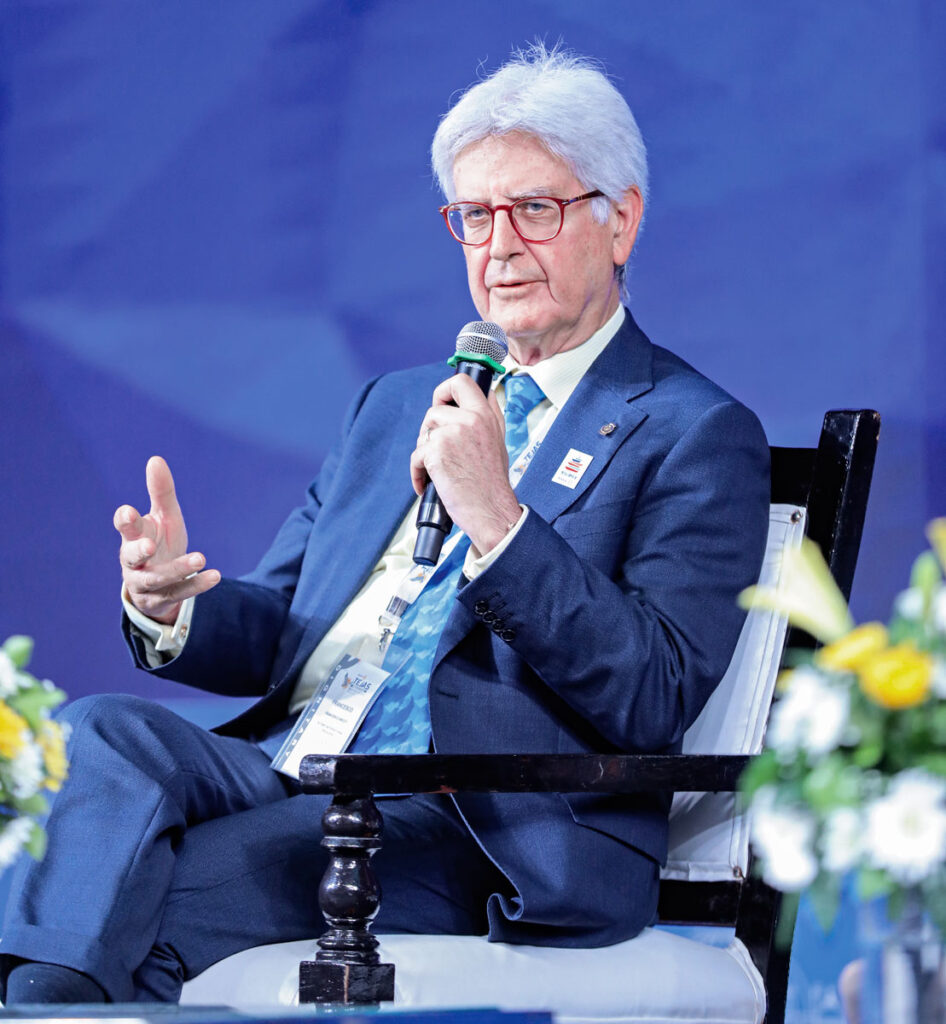
But a big challenge comes from modernity… “whether in Rome or Milan or Delhi we feel the same wave; digitalisation, acceleration and disconnection. The world spins faster… it’s a time when values dissolve before they can take shape, institutions feel lifeless, choices multiply yet matter less, power outpaces responsibility.” In such a world, Rotary could be a place where people were not measured by achievements but welcomed into a dialogue, not manipulated, not entertained but entrusted. “But to do this we must reflect on the work we do and the schedules we follow. Too often projects end with the term of the governor or the club president. But the work that truly matters, such as education and peace, requires time and continuity. I like to think of Rotary as a great relay race. We have many batons, club presidents, district governor, the RI president; we each take our laps, do our best, achieve all we can and then pass the baton. But if we miss the handoff or make the next runner trip, it doesn’t matter how fast we go. We win only as a team, never alone or as individuals. So we must do more than move quickly, we must move gracefully and mindfully and prepare to help the next leader succeed. We must also know which way to run.”
Here Arezzo quoted from Alice in Wonderland; when Alice seeks directions from the Cheshire cat, she is asked where she wants to go. ‘I don’t much care where’, says Alice, and the cat replies: ‘Then it doesn’t matter which way you go!’
“This is a warning, if we don’t know where we want to go, not just this year, but beyond, then any direction will do and no direction will matter. Strategic thinking helps us prepare the ground for those who come after us. Let us commit to projects that go across leaders and egos, let us build for the long run and not short applause,” said Arezzo.
And India was showing the Rotary world what this looked like in practice. Consider the Rotary Program of Scale Partners for Water Access and Better Harvests in India. This five- year initiative led by Indian Rotarians “is transforming rural life, building check dams, ponds, teaching sustainable farming and restoring aquifers. The numbers are really impressive: ground water levels rising 10 to 50 per cent each year, but beyond numbers lies something really remarkable. A mother no longer walks long distances to fetch water, a farmer who does two harvests a year, a child who now goes to school instead of fetching water. This is generosity; the same that comes from the Indian tradition of daan, the same spirit that fuelled Gandhi’s mantra of non-violence and the one that works in the gurudwara kitchens, and moves Rotary’s service.”
Just as Prophet Baruch, riding in exile in a time of despair and darkness, had given the call ‘look to the east’ today Rotary too has two reasons to look east, not only in a metaphorical but real sense. The east, particularly India, is seeing “the most strong and vibrant growth in membership. And in India we are witnessing something extraordinary; not just an increase in membership but also in meaning and clarity. Rotary is made of not just clubs or projects but of people and “people stay when they feel something deeper than obligation. They stay when they feel connected not just to a cause but to one another.”
He was happy to see that “here Rotary is rising not only symbolically but concretely, joyfully, spiritually. If we can transfer our clubs not just in size but also spirit, if we can practise the 4-Way test, not just as a recitation but a resolution, if we can invite others into Rotary not only to serve but to belong, then we will not only retain members, we will become a beacon, a gathering place not of slogans but meaning, not of charity but shared transformation. And by doing so we can change the world,” said Arezzo.
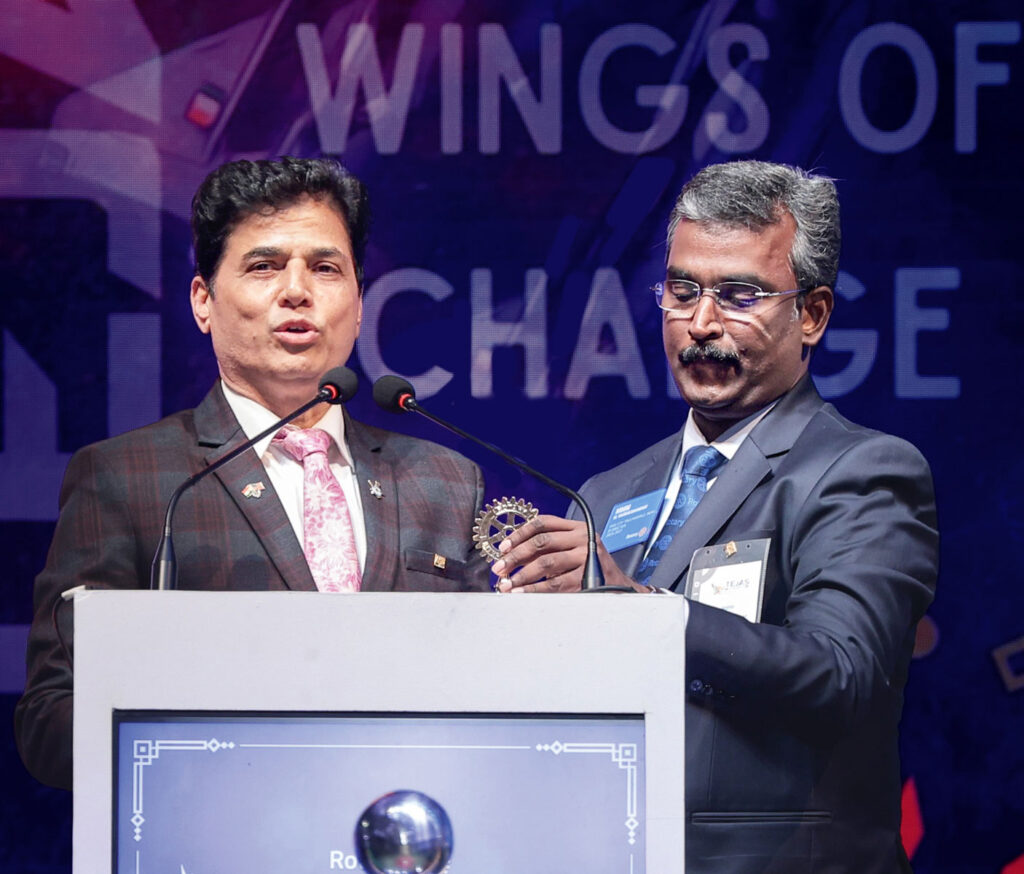
Addressing the inaugural session, convenor and RI director K P Nagesh said after a lot of questions and deliberations, Delhi had been chosen as the conference venue. The region had two very dynamic governors Ravinder Gugnani (RID 3011) and Amita Mohindru (RID 3012) “who took ownership and delivered, and “a very disciplined and determined PDG Sharat Jain, who did elaborate planning and put everything together. The result was that we saw a record number of 1,456 registrations.”
Apart from giving a car to everyone for the three days of the institute, it was decided to launch many new schemes such as the lifetime achievement awards to those who had put in mega efforts to eliminate polio from India. “We thought we can’t wait for polio to be totally eliminated before recognising these people, so we decided to reward those who had really worked hard for this cause with lifetime achievement awards.”
The other new idea introduced was creating the million-dollar club among the Arch Klumph ranks. While the US already had over 700 AKS members, India had reached 258, and “we want to make this number 500 as soon as possible. We found that many AKS members reach the Levels 1 and 2 and there ends the story. So we decided to launch the million-dollar club, and there are already 7 in that club with pledges of $1million. Of course Rajashree Birla and DGE Ravishankar Dakoju have already given several million dollars to TRF.”
Nagesh added that when several AKS members were approached, even more came forward to join the $1 million club, taking the total number to 14. Many other initiatives would unfold during the institute through which Rotary would extend a larger helping hand to local communities, particularly the children of defence personnel, he added.
Institute chair Sharat Jain assured the delegates that even though this was a serious training programme, care had been taken to “blend learning and leadership skills with fun and laughter. We have put together for you a programme that will remind you why Rotary fellowship is unique.”