



School students in Akola, a town of five lakh people, 250km from Nagpur, always look forward to participate in the three-day RYLAs conducted in the Melghat forest area by RC Akola, RID 3030. Now into its 80th year of service, the club has “taught time management, punctuality and leadership qualities to over 1,500 students through big residential RYLAs in forest camps and small, half-day RYLAs at the schools,” says club president Naryosang Taraporevala.
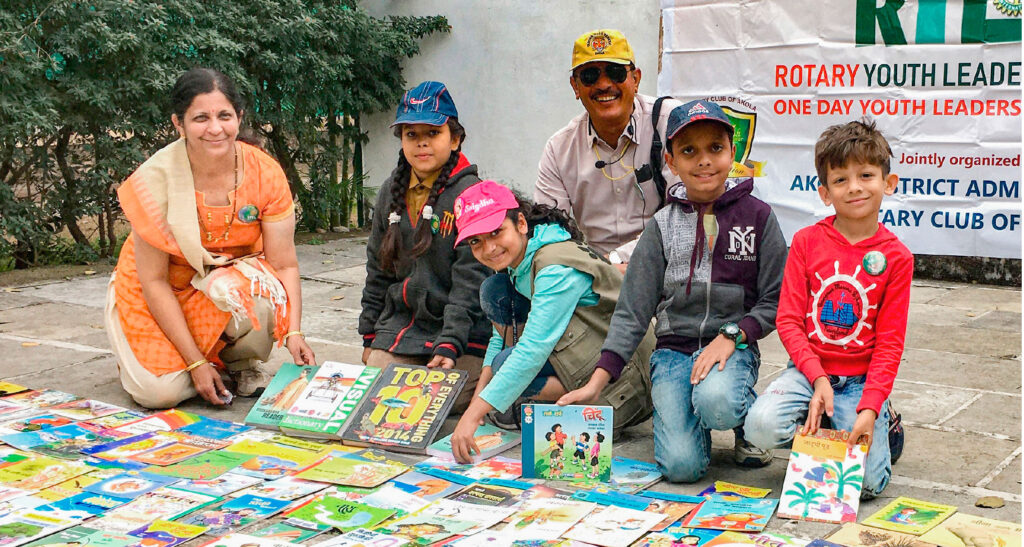
He has plans to hold two mega RYLAs in Oct-Nov at the Melghat forest “where we will erect numerous tents, hold camp fire, play games and hold interactive sessions. As it will be held in winter, the scenic hills, a part of Satpura mountain range, will give the students a pleasant backdrop to enjoy their brief stay there,” he explains. The club will host 10–12 half-day RYLAs at schools this year. So far the club has conducted around 120 such leadership sessions since its inception. For tribal and rural students, free educational RYLAs are held, “while for residential camps, we levy a nominal fee as we have to take care of food, accommodation and logistics.”
Tribal welfare
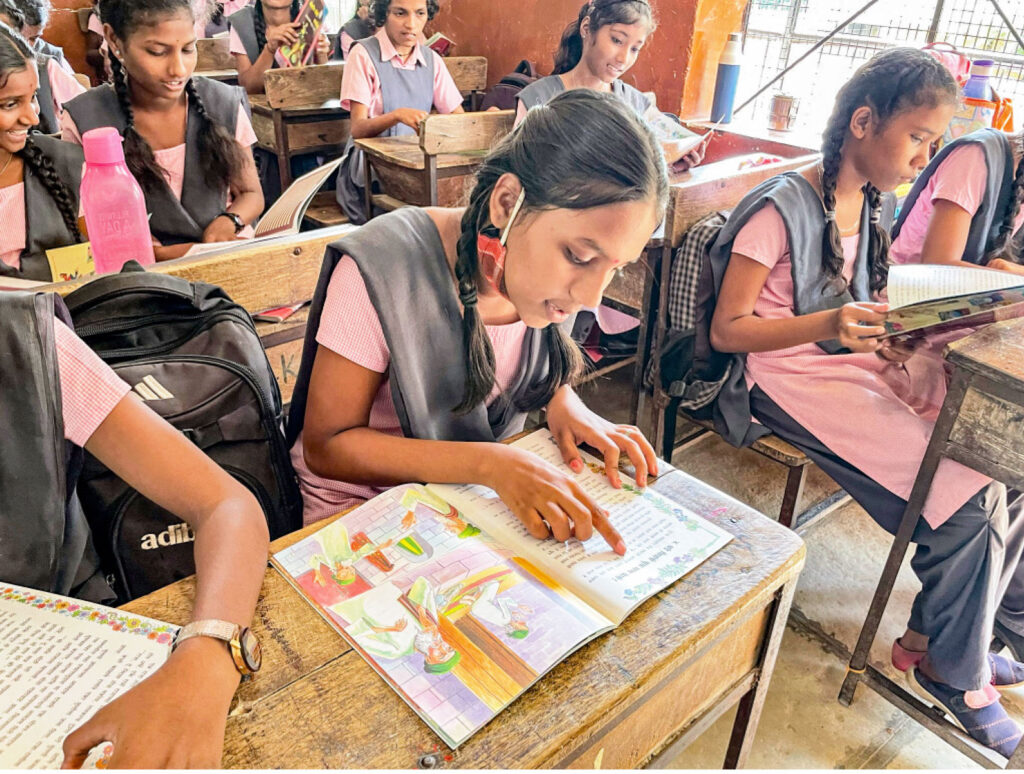
Skilling tribal women and children has been the top priority of the club for the last five years. Rotarians visit government-run Ashram Shalas (tribal schools) in Gullarghat, Dharghad and other remote villages in and around Akola on a regular basis and engage children under Project Read with Me. “We have reached out to around 30 private and government-aided schools, and donated thousands of books across genres including academic books, notebooks, stationery and other school essentials,” says Radheshyam Modi, a senior Rotarian and former district chairman of Rotary Youth Exchange. More than 1,500 students would have benefitted under this literacy school project.
The idea behind the project is to “hook children to the reading habit and enable them to write legibly with clarity of thought. We provide wall paperboards to schools for students to display their articles and sketches for others to see and appreciate,” he explains. Under the third component of Read with Me, a group of 20 Rotarians hold communication sessions for students from low-income and disadvantaged families.
Recalling his club’s intensive work in the Melghat tribal areas, Modi says, “around 600 Adivasis including women, children and youth have benefitted from Rotary’s outreach consisting of training programmes. While women were trained in tailoring and post-natal care of newborns, youngsters learnt driving so that they can earn a decent income.”
During his visit to the Moharidevi Khandelwal Kanya Vidyalaya, a girls’ school in Akola, decades ago, after the event got over, Modi invited a young girl to give a vote of thanks. “But instead of addressing the gathering, she started to cry. I talked to her and helped her deliver a small speech which she did well. Years passed; suddenly, one fine morning as I was standing near a swimming pool at dawn, I saw a college girl running towards me to say ‘Thank you’. She said: ‘Now I am leading my college hockey team, which would not have happened if you had not encouraged me to speak on that day in my school.’ I couldn’t control my tears then,” smiles Modi.
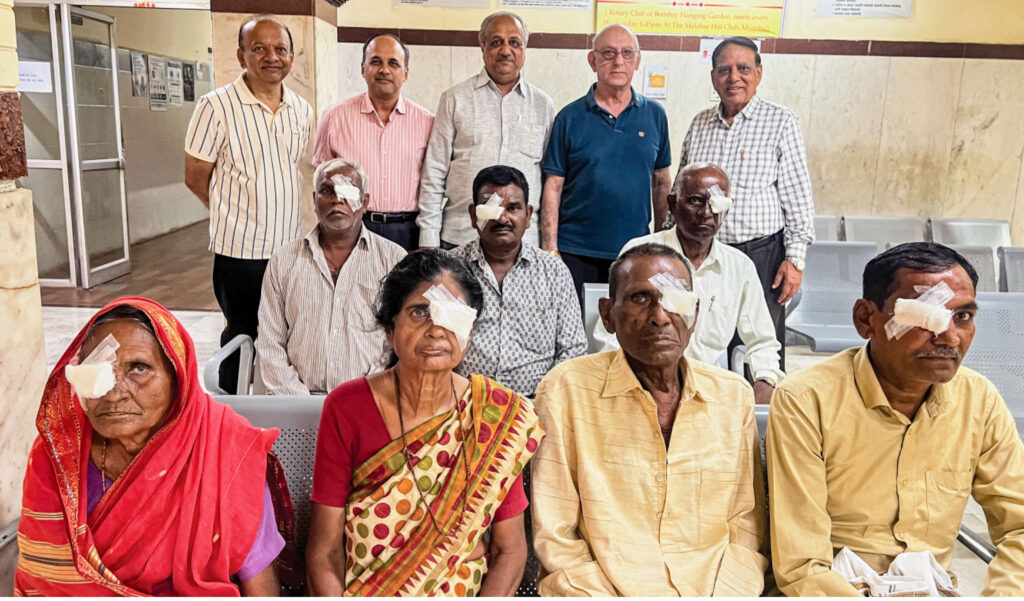
Another iconic project of the club is its 50-year-old cataract screening camp, through which 100–120 surgeries are done each year. “We have done cataract surgery on more than 1,000 patients in these years. To mark the 80th year, we want to reach out to 1,000 people this year alone,” says Taraporevala.
Before India became polio-free in 2014, “our PolioPlus teams used to move around the slums and underserved areas (jhuggi jhopdis) across Akola, braving the insanitary conditions of these settlements. Our groundwork earned us goodwill among the communities, and mothers readily took their newborns to the nearest PHCs or clinics to get them oral polio drops,” recalls Modi with pride. “We were accompanied by medical volunteers who gave polio drops at the doorsteps in the vulnerable areas of Akola.” The club president intervenes to add that they organised two skating rallies, as a fundraiser, at that time — Nashik to Amravati, and Jalgaon to Nagpur — each having 15 skaters. “All the rallyists enjoyed the hospitality of the Rotary clubs on the route who offered them accommodation and food. We raised ₹2 lakh from the rallies for our PolioPlus drive.”
Rotarians visit tribal schools in the Melghat forest area and engage children under Project Read with Me. Tribal women are also being skilled.
Some of their regular projects include blood donation camps, tree planting drives, and health awareness sessions for schoolgirls from low-income families. “Each year, we hold at least 50 healthcare sessions for schoolgirls in which they are taught menstrual hygiene and other good sanitation practices.”
Attracting Gen Z
When he joined Rotary in 1967–68, Modi (84), a tax consultant, recalls that it took him “two years to understand what the Rotary movement is all about, what it stands for, and how I can contribute as a Rotarian.” Now after more than five decades, “I breathe Rotary; it runs in my veins… Rotary helps me to lead a happy and contented life.”
But he warns that today, “new members join and leave after 12 months. They think Rotary is a social club, which it is not. It is a service club. We have to attract Gen Z groups as they are sharp, witty and come well-prepared. RC Akola is making efforts to draw more young professionals into its fold by making our club attractive to them.”
Chartered in September, 1945, the club has 30 members consisting of entrepreneurs, traders, academicians and businessmen.