
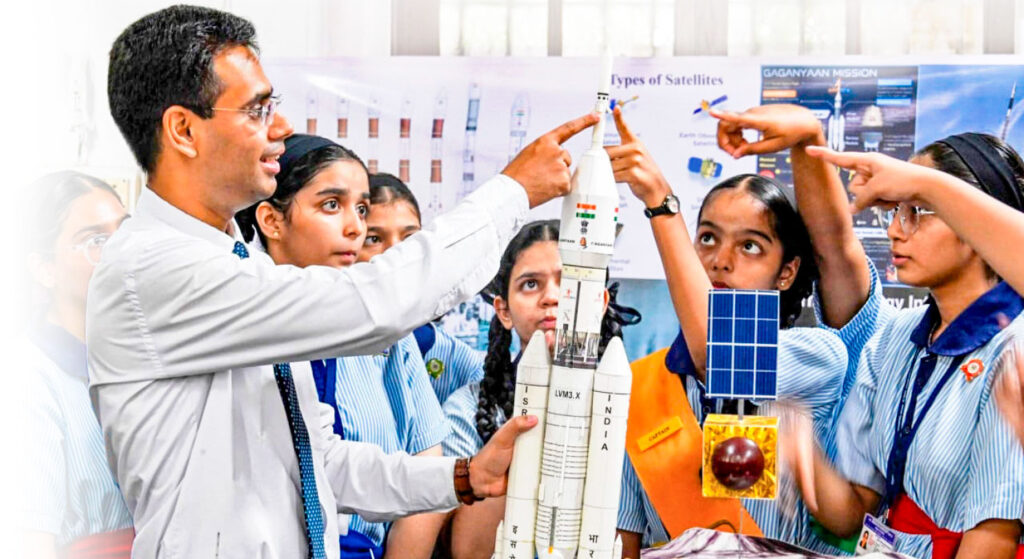
The century-old Institute of Science, Fort, came alive in August with over 1,500 school and college students from across Mumbai gathering to celebrate the National Space Day 2025. The event, organised by RC Mumbai Sion, RID 3141, in collaboration with Dr Homi Bhabha State University, offered students an opportunity to explore India’s achievements in space research and innovation, particularly the success of Chandrayaan-3.
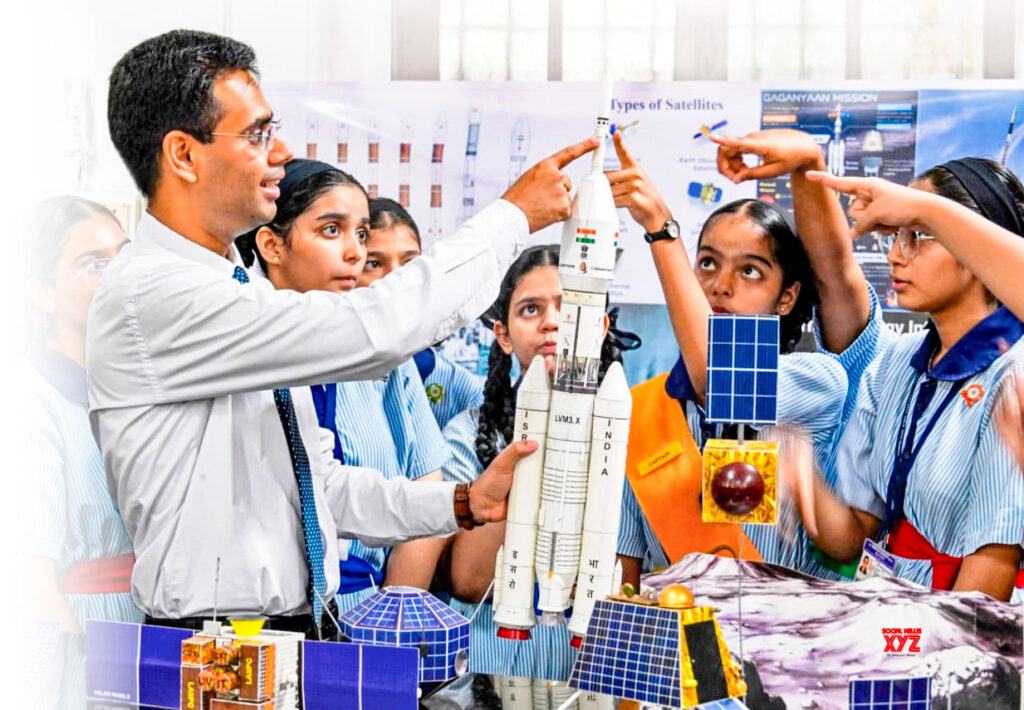
What set this initiative apart was its youth-led organising team, said club president Kiran Shetye. “Our young club members, professors Anish Gawande (Department of Zoology, Elphistone College, Mumbai) and Neha Nakashe (hospital administrator and healthcare management expert at Gleneagles Hospitals, India), designed an interactive, hands-on learning experience that encouraged students to go beyond observing and build, explore, and satisfy their own curiosity about the universe.” The duo also coordinated the creation of handmade and 3D-printed rocket and satellite models, made in partnership with ISRO, adding a funtional dimension to the exhibition.
Shetye and Dr Rajanish Kamat, the vice-chancellor of Dr Homi Bhabha State University, inaugurated the event. The two-day exhibition “reflected our club’s commitment to advancing scientific literacy and empowering youth through experiential learning,” says Shetye.
At the heart of the event was Anish Gawande, a multilingual science communicator and researcher with over a decade of experience in science popularisation. As president of Teenovation, an NGO affiliated with Vigyan Prasar (Department of Science and Technology, Government of India), and an officially registered space tutor of ISRO, Gawande has dedicated his career to making science accessible and engaging to young learners. Through this partnership, Teenovation disseminates knowledge about space science and technology in line with ISRO’s outreach initiatives. His miniature rocket replicas have even earned a place in the India Book of Records.
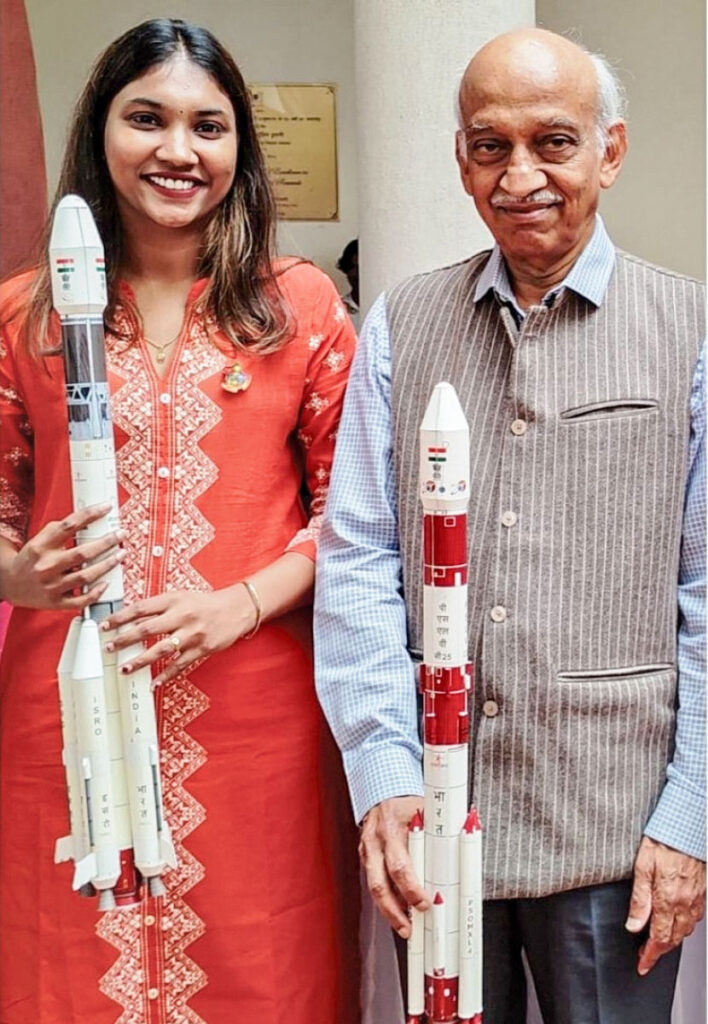
For Neha Nakashe, this project was “more than just an educational initiative. My journey as a science communicator began with a spark of curiosity and a paintbrush,” she says. In 2019, as a student at M D College, Mumbai, “I volunteered at Teenovation’s science fest, painting intricate rocket models. I never imagined my fascination with space would take flight in such meaningful ways. Years later, when I met former ISRO chairman Dr A S Kiran Kumar, holding an ISRO rocket model beside him felt like my childhood dream had come full circle.”
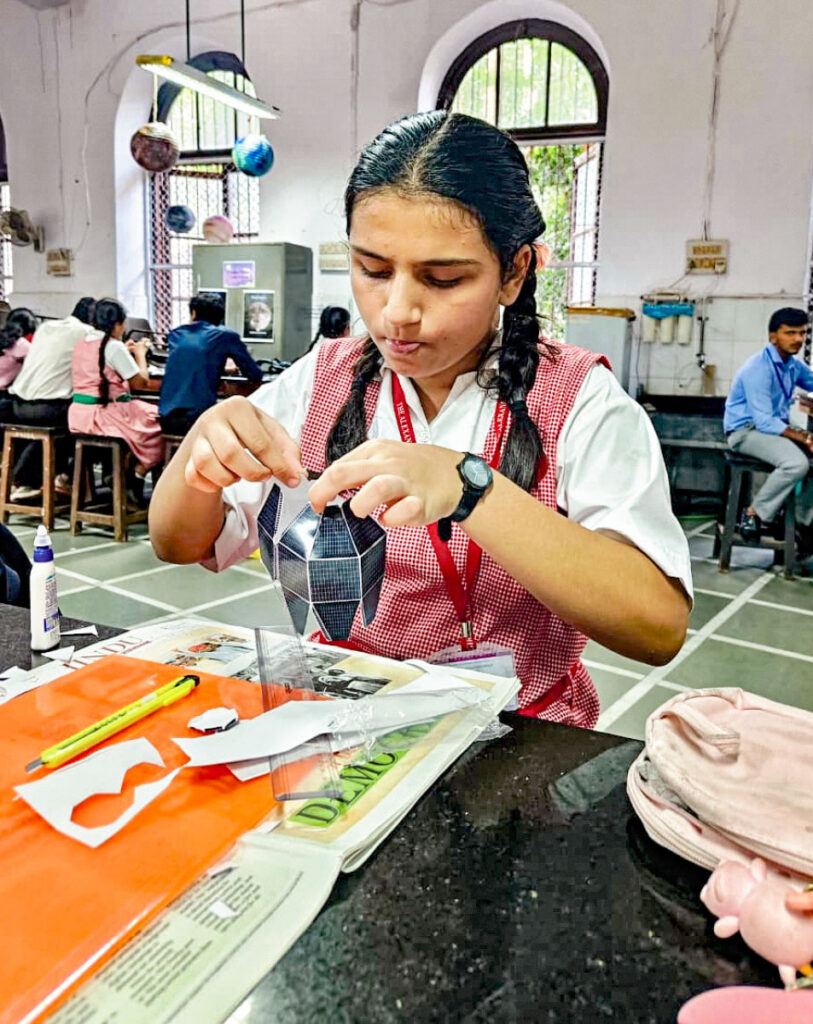
Visitors were treated to a wide range of exhibits and experiences. A scaled ISRO exhibition showcased India’s space milestones, while a 7D moon-landing simulation offered a thrilling glimpse of Chandrayaan-3’s journey. A mobile planetarium and creative workshops, such as astro-art and satellite model-making, helped participants grasp complex concepts through play and imagination.
To ensure inclusivity, all shows were conducted in English, Hindi and Marathi, allowing students from diverse educational backgrounds to engage fully. “Science shouldn’t be limited by language,” says Gawande. “Our goal was to make space exploration accessible and exciting for every child.”
The exhibition also paid tribute to ISRO’s evolution. “Founded in 1969 under the visionary guidance of Dr Vikram Sarabhai, India’s space programme began in a small fishing village near Thumba, Kerala. In those early years, rocket parts were carried on bicycles and bullock carts to the launch site because there were no vehicles or roads equipped for the task. Despite limited resources, Indian scientists persisted with ingenuity and determination,” he says, brimming with pride.
“The Aryabhata satellite, launched in 1975, marked India’s first step into space. The SLV-3 project in the 1980s established India as a nation capable of developing its own launch vehicles. Over the years, ISRO’s advancements from PSLV and GSLV rockets to landmark missions like Chandrayaan-1 and Mangalyaan reflected the power of home-grown innovation,” says Neha. At the exhibition, as students moved through detailed 3D-printed models from Aryabhata to Chandrayaan-3, “they could literally trace India’s journey from bullock carts to the moon. Seeing these models together really showed how far India has come,” she smiles.
Teachers who accompanied the students left with the feedback about the programme sparking curiosity and confidence among the young learners. “Many of these students have never been to a science exhibition before and the hands-on experiences and visuals gave them a new perspective on what’s possible when curiosity meets creativity,” adds Neha.
“Rotary’s role is to create opportunities that nurture innovation and curiosity, and if even a few students here are inspired to pursue science, we’ve achieved our purpose,” says Shetye.
Neha adds, “As the event concluded, students left with star charts, models, and a renewed sense of possibility. Beyond celebrating ISRO’s success, the event showed students that science, when shared with excitement and purpose, can help them dream bigger.”