
The Rotary Club of Hyderabad East, RID 3150, in partnership with the State Bank of India and the Unipads Foundation, has launched Project Shakti aimed at promoting menstrual hygiene and supporting the education of girl students across Telangana.
The project, with an outlay of ₹2.5 crore, distributed reusable sanitary napkin kits to around 60,000 girls in 2,000 schools and colleges across the state. The first phase of the project was inaugurated at Veeranari Chakali Ilamma Women’s University, where 7,000 students received the sanitary pad kits. Hyderabad district collector Hari Chandana Dasari, DG Raam Prasad and University vice-chancellor Surya Dhanunjay were present at the distribution event.
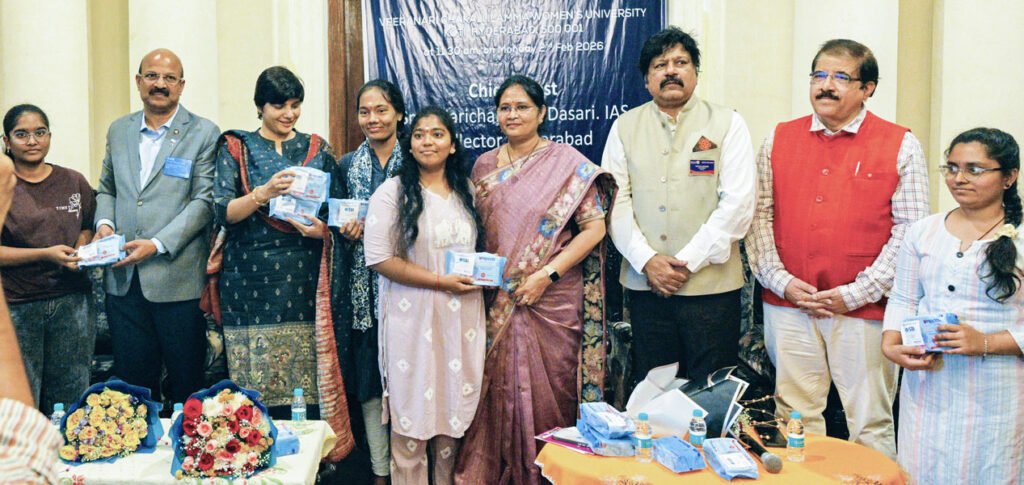
Speaking at the event, club president Govind Putta said the MHM initiative went beyond distribution and focused on long-term impact. “Project Shakti is about dignity, education and sustainability. By providing reusable sanitary pads, along with proper training, we are ensuring that young girls do not miss school due to lack of access to menstrual hygiene products. This is a step forward in ensuring that they continue their education with confidence,” he said.
Each kit is designed to last 12–16 months with proper care, offering a cost-effective and environment-friendly alternative to disposable sanitary products. Along with distribution, the programme includes awareness sessions and practical training on usage, washing, drying and storage of the pads.
The club is coordinating with government bodies, schools and local NGOs for implementation, while SBI is supporting the initiative through its CSR programme. The Unipads Foundation is providing the products and training material.
Rekha, a Class 9 student and beneficiary of Project Shakti, from a government school, who received the kit during the launch, said, “Sometimes we miss school during our periods because we don’t have proper facilities or products. The reusable pads will really help us, and the training showed us how to use them safely. I feel more confident now.”
The project also aims to reduce menstrual-related absenteeism and reduce disposable sanitary waste. Progress will be monitored through distribution data, user feedback, and periodic surveys to assess its impact on students’ attendance and well-being.