


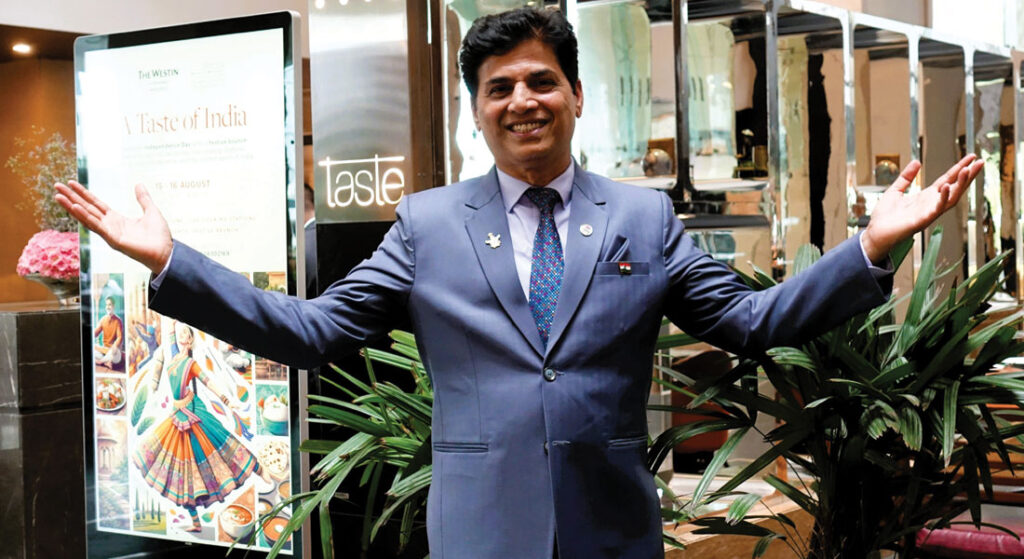
Born in an agricultural family RI Director K P Nagesh grew up in a village in Kanakapura taluk, Karnataka. Till high school he studied in Kannada medium, with English and Hindi as subjects. “I had to walk around 8km to reach my high school, and then another 8km back… every day.” For his PUC, the family shifted to Kanakapura, “only because that involved a 23km-walk from my village which was impossible.”
Next came a mechanical engineering degree, followed by the challenge to find a job, which was hard to get.
The Indian Air Force came into his life almost by accident. “A batchmate saw an advertisement asking for young engineers to join the Indian Armed Forces. We thought even though we won’t get selected, let’s go; it’ll be a good outing. Everything was free… travel, accommodation, food.”
The Indian Air Force taught me leadership, the ability to talk confidently and without fear, discipline of course, time management and dress code.
To his great surprise, he made it, clearing one round after another, joined as a pilot officer, went on to become a flight lieutenant, and spent six years in the Air Force.
The Air Force years
So why did he leave? It was the early ’90s, many young Indian engineers were heading to the US, and most of his engineering classmates had decided to go there. “My wife Uma is a computer engineer, and I a mechanical engineer, so we thought we would go to the US.” But fate had other plans for him; another ad and his life took a new turn.
This time, the ad sought young defence officers for a security company. “Since I wanted to go to the US, I didn’t give it much attention, but Uma applied for me, saying: ‘Let’s see what happens!’ ” On the third day he was called for an interview, was selected and stayed there for two years. But the Air Force had already made a deep impact on him.
Asked what the Air Force taught him, particularly about leadership, Nagesh says, “the selection itself was rather tricky and challenging, and went on for almost five days… involving written tests, professional knowledge, group activities, discussions, physical fitness… running, rope climbing, jumping, etc! I came first in running.”
Rotary is an unmatchable, non-comparable organisation, with everything for everybody; it’s a single window solution for anything.
All the walking during school days must have helped, I comment and he laughs. “Oh yes, thanks to all that walking, my physical fitness was great!”
But there was one area where he struggled — the group discussions. There were youngsters from IITs and other prestigious colleges. Nagesh had studied in Kannada medium and found it difficult to get into the conversation. “Everybody was talking and I could hardly get a word in.”
That was when he remembered what he calls the “Kamal Haasan trick” from a film he had seen. In the film, the actor is travelling in a bus, and can’t get the driver to stop because of a language problem. After trying everything, he finally shouts loudly. The driver applies the brakes, and the passenger gets down and says ‘Thank you’.
Nagesh decided to try something similar and suddenly shouted: Friends. Everyone stopped talking. He had their attention. “I said we are discussing everything that is happening outside India. Let’s please come back to India”. He saw the selection panel members make some notes and knew he had scored a positive point.
Women are in the forefront in all organisations, then why aren’t we encouraging women to be at the frontline in Rotary? The gap exists in leadership positions.
Looking back, he says the Air Force was the turning point in his life. “It taught me leadership, the ability to talk confidently and without fear, discipline of course, time management, dress code… so many plus points have come from the Air Force.”
Enter Rotary
And then came Rotary!
He joined Rotary after one of his Air Force friends G C Jayaprakash suggested that he should join a Rotary club. “I didn’t know anything about a Rotary club and said I am already a member of this club and that club. And he said, ‘No, no, this is totally different. It’s about networking, service, leadership, and a lot of fun, where families meet at events, go for picnics, etc.’”
In 1995 he joined Rotary Bangalore High Grounds as a charter member. He was immediately made the treasurer. “They said you come from a disciplined, defence background.” A couple of years later when they asked him to be president, he refused as in 1998 he was busy setting up his security services company. But the members didn’t give him a choice. After one meeting, a senior Rotarian — Ramesh Joshi — followed him to his car in pouring rain. “I was sitting inside and he was standing outside getting drenched asking me to accept the club’s presidency.” He finally gave in. “I was hesitating because my principle is if I take up something, I want to do the best. Otherwise, I will not take it.” That principle has stayed with him, he says.
A high-achieving DG
In 2015–16 Nagesh became governor of RID 3190, and achieved the distinction of making his district the world’s topmost in TRF-giving. With huge satisfaction he recalls that he set out with the goal to make it the best in India, but ended up with the world No 1 position not only in TRF-giving, but also membership, Rotaract, Interact, and women members.
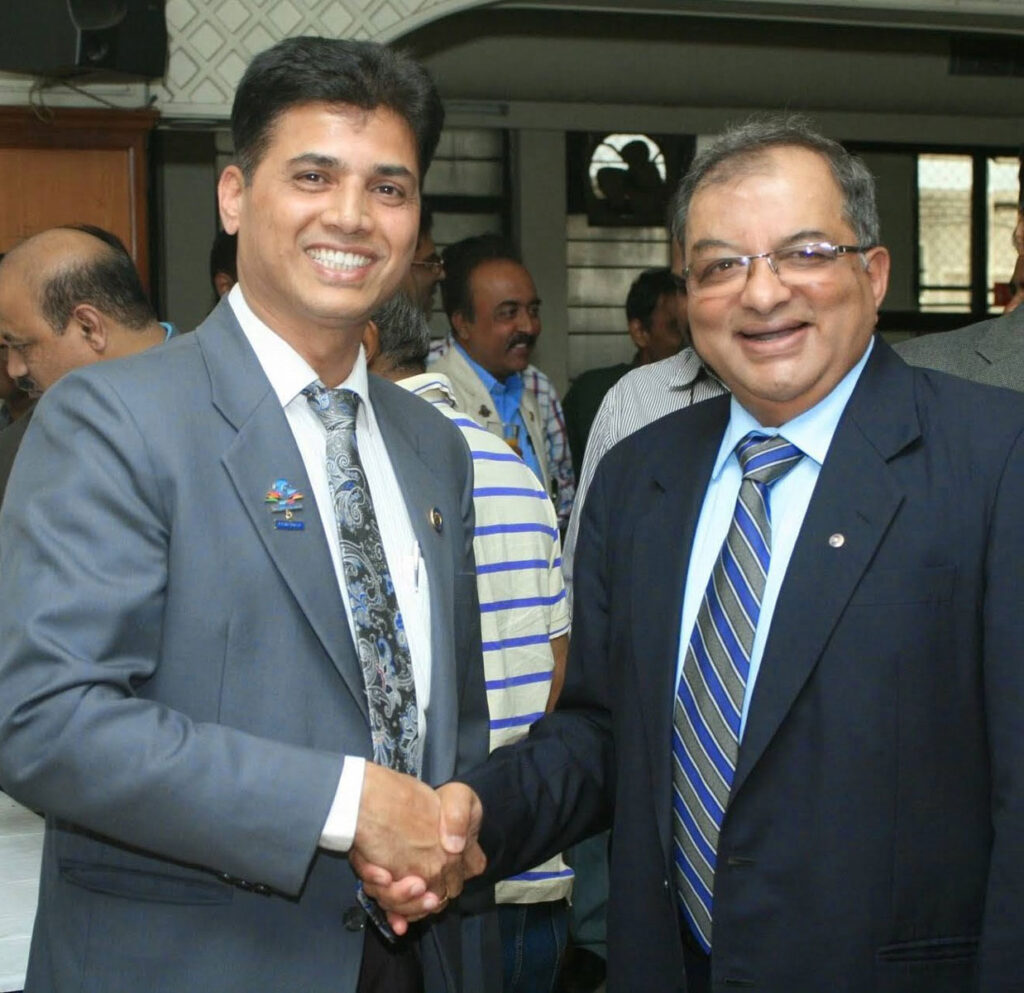
I remind him of our coverage in Rotary News about the then RID 3190 DG walking away with all the awards at the Dubai Institute and the headline I had given: Then there was Nagesh. He smiles and gives much of the credit to his team, but also to something he had learnt much earlier. “I applied whatever I had learnt in the Air Force.”
I told my batchmates… I’ve decided to be world number one; catch me if you can! And they gave me this title.
Coming to what Rotary had given and taught him, he says, “Rotary is a good friends network with very qualified and mature leaders with great leadership qualities. What we can learn in Rotary is not available anywhere else. You can look at the qualities very successful Rotarians have and adopt them. Rotary polishes you, and teaches you how to present yourself.”
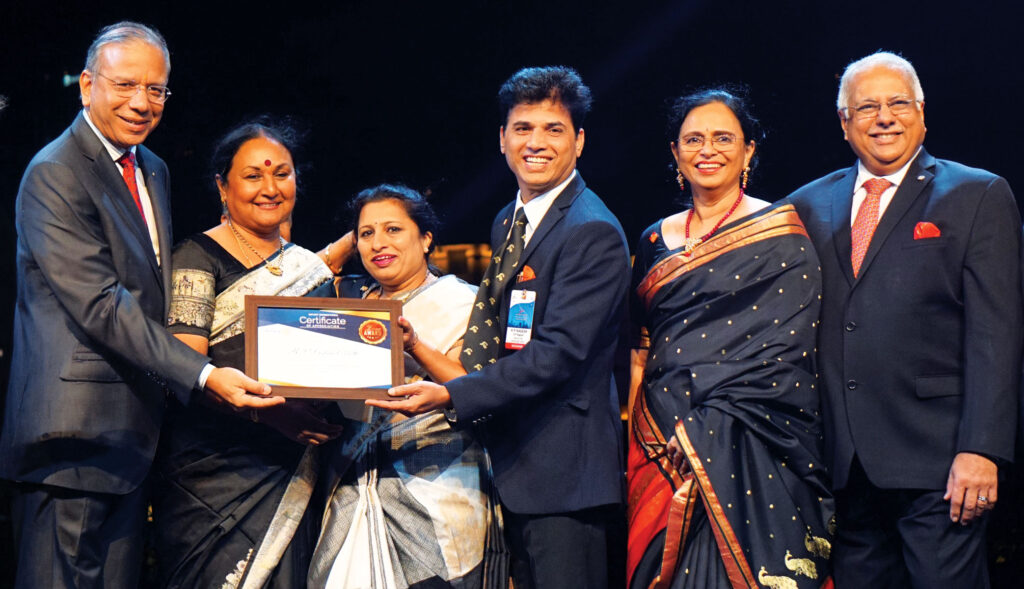
Rotary also gave him the opportunity to see the world, do service. Within a year of joining, he became the polio committee chairman of his club; “that was actually the turning point and I decided to continue in Rotary.”
He admits that during his governorship his business did suffer, but he was completely involved in Rotary. “I told my batchmates… I’ve decided to be world number one; catch me if you can!” The title stayed.
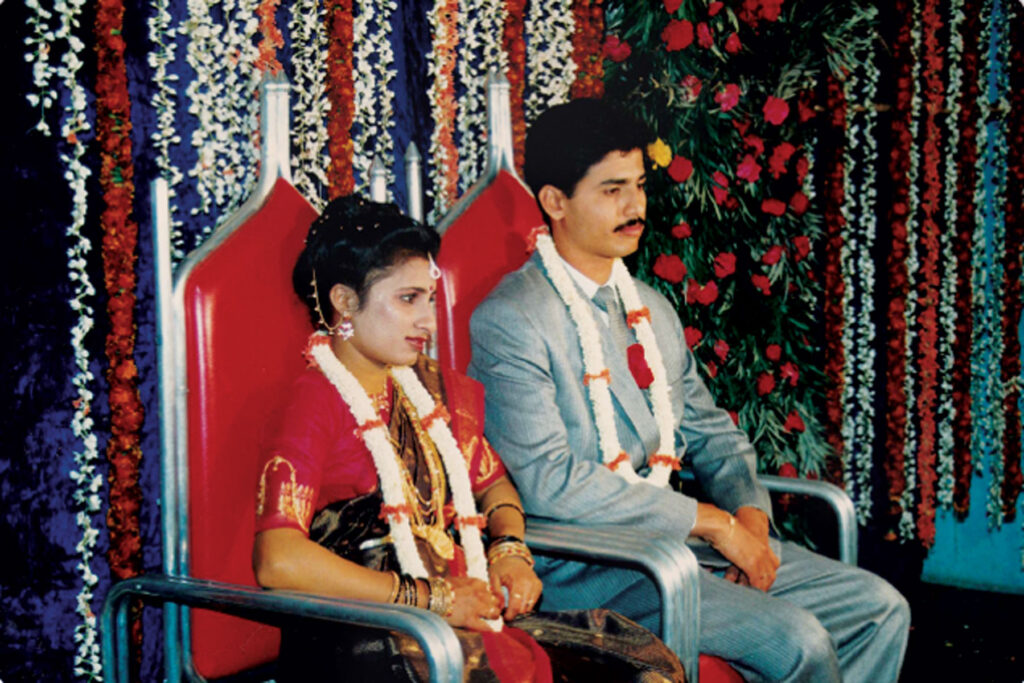
He also set himself the challenge of starting 52 new clubs in 52 weeks — something he says was achieved for the first time in RI.
Bigger is not always bad!
On the debate about membership quality versus quantity, Nagesh takes a different view. “When you get somebody into Rotary, where is it written that this person has quality? Here I differ from others… first, get people into Rotary, explain Rotary to them, understand them, and shape those new members. Whoever loves Rotary, will continue; one who doesn’t, for whatever reason, let him leave.”
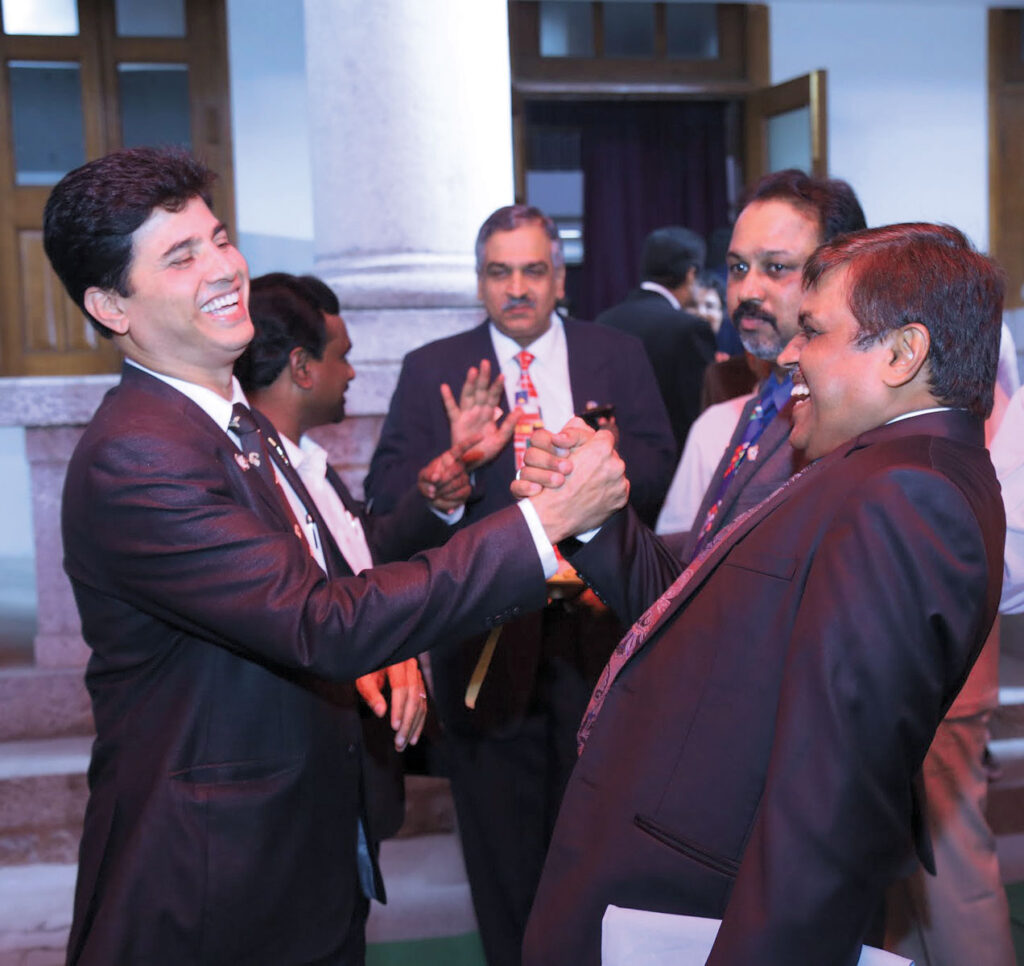
He is equally ambitious about Rotaract. With 65 per cent of India’s population below 35, he believes India has an opportunity that may never come again. “At the RI Board when they put the target of Rotaractors at 1.25 lakh by 2030, I said India alone will achieve this target.”
Rotaractors in India have doubled from 24,000 last year to around 50,000 this year. “Now we want to double that to 1 lakh and make it 1.25 lakh before Muruganandam and I step down as directors. So India alone will achieve the world target of 2030 in 2027.”
President Yinka, he adds, has also made a commitment saying that “the moment you reach the 100,000-mark for Rotaractors, I will, wherever I am in the world, fly down within 48 hours to India to celebrate that moment. This is his commitment.”
Profile of RI VP M Muruganandam in October’26 issue.
At a glance
Religion: I respect my religion and all religions. But pooja and other rituals are being taken care of by Uma… she is compensating for me, and I am grateful to her.
Favourite food: Our South Indian food, there is nothing like it. My favourite is dosa… of all varieties. And of course, biryani!
Cooking: I want to, I have some inclination for cooking for sure, but Uma is not allowing me inside the kitchen!
Fitness: I am fit, thanks to the Indian Air Force where we were out from 4 to 7am… three non-stop hours of running, games and other physical activity. Even today, fitness remains part of my routine. I play shuttle badminton from 6am for an hour and then spend another hour in the gym. My daughter Nidhi forces me to go to the gym!
Relaxation: Somebody told me just relax a little; you are running around too much. I said the moment I lie down, I will get tension! Talking to people and keeping busy is relaxation for me.
Music: I love music. It relaxes me. I love Hindi, Kannada songs…. any kind of Indian music.
Movies, favourite actors: Indian movies… Rajkumar in the earlier days, then Rajinikanth and Kamal Haasan. Now I also like Hindi movies, but old ones, not the latest ones.
A people’s person: I like doing things parallelly. I work almost 18 hours a day; there are some 20 people… who have become family over the years. We meet once a month for a movie, picnic, an early morning walk in Lalbagh or Cubbon Park, or simply to eat somewhere. I just love being with people. Staying alone, I get tension and become restless.
Favourite holiday destination: I love places where there is a lot of nature and natural beauty. New Zealand is the ultimate in natural beauty, as also some European countries which are so beautiful. Recently we visited eight African countries and really enjoyed them.
Rotary in short: It is an unmatchable, non-comparable organisation, which has got everything for everybody. I love it because it is a single window solution for anything… that’s Rotary.
Good leader: A good leader should always lead by example, because Rotary is a leader’s organisation. If you lead by example, people will follow and respect you. I learned a lot from the late PDG Yogananda from Bengaluru… he is my Rotary guru.
Dream for Rotary: I am not satisfied with where the organisation is today. Rotary is now doing good. But I want to see a Rotary that is great and at the top among NGOs. It has all the qualities and potential to be there. The problem is in the concept of leadership… not the leaders. We have great leaders.
TRF-giving: We might be No 2 in the world but even then, I am not happy. The potential is there to multiply it tenfold. At my acceptance speech in Bengaluru, I set another target — to get by 2030, 100 Rotary districts in India and take TRF giving to $100 million.
Rotary in India
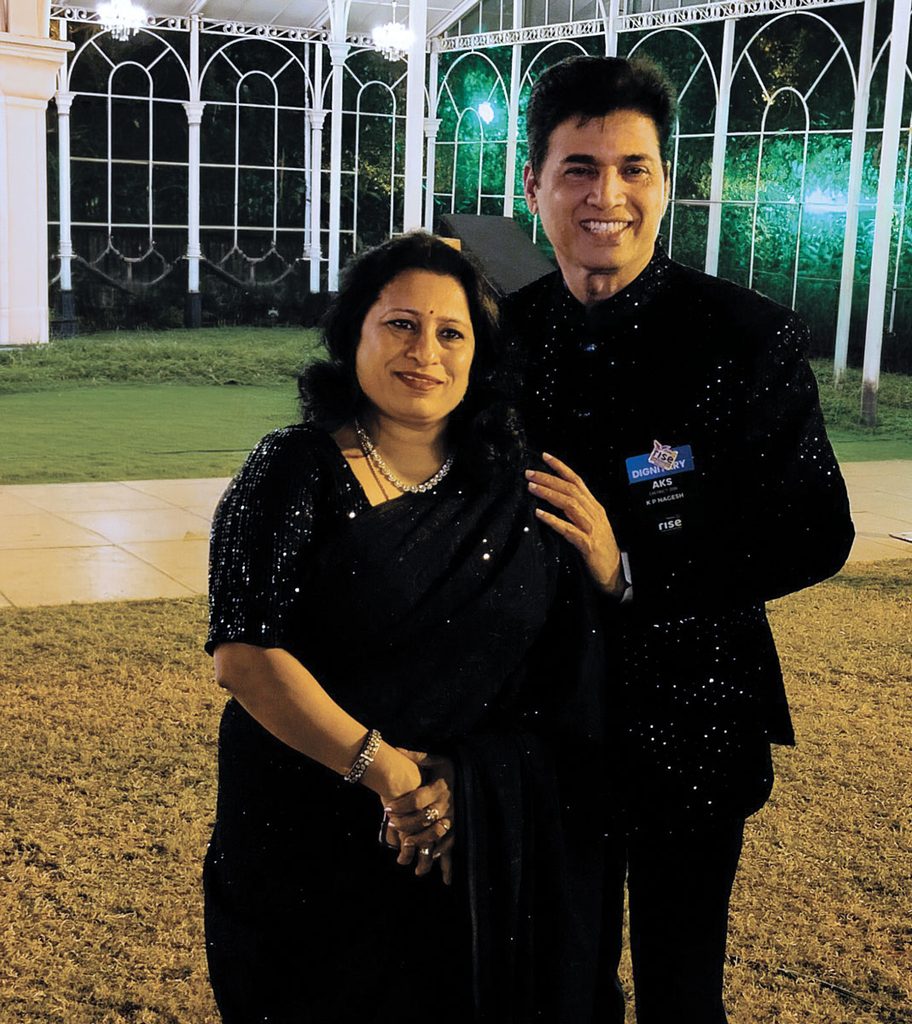
On the strength of Rotary in India, growth in membership, TRF giving and service projects, RI Director Nagesh says confidently “I don’t think anybody can beat us. India is producing Rotary leaders for the world. I’d even say Rotary is a manufacturing factory… a leadership manufacturing factory.”
He marvels at the manner in which Rotary changes people; “it transforms people; so many women have told me: ‘Thank you for making my husband president. Now he is a totally changed person.’ ”
Nagesh is not overly worried about politics within Rotary in India. “Some cases, maybe 5–10 per cent, go beyond the limit. But both Vice President M Muruganandam and I are handling them.”
I hesitated to become club president so soon because my principle is if I take up something, I want to do the best. Otherwise, I will not take it.
The answer lies in leadership by example. He says complaints from India are reducing and he believes that creating more districts and therefore more leadership opportunities can also help. “That will reduce the fighting and the complaints.”
Support from family
Nagesh’s Rotary journey was possible because of his family’s support. He and Uma initially enjoyed Rotary together — family outings, meetings and other events. Uma herself has been a Rotarian for 25 years. But over the years, Nagesh’s involvement grew. “Earlier I would spend 20 per cent of my time on Rotary. Now it is almost 80 per cent.”
He admits that his family and friends, who now get much less of his time, are supportive.
“But they are also counting the days. They say, ‘After this, please don’t do anything and spend some time with us!’”
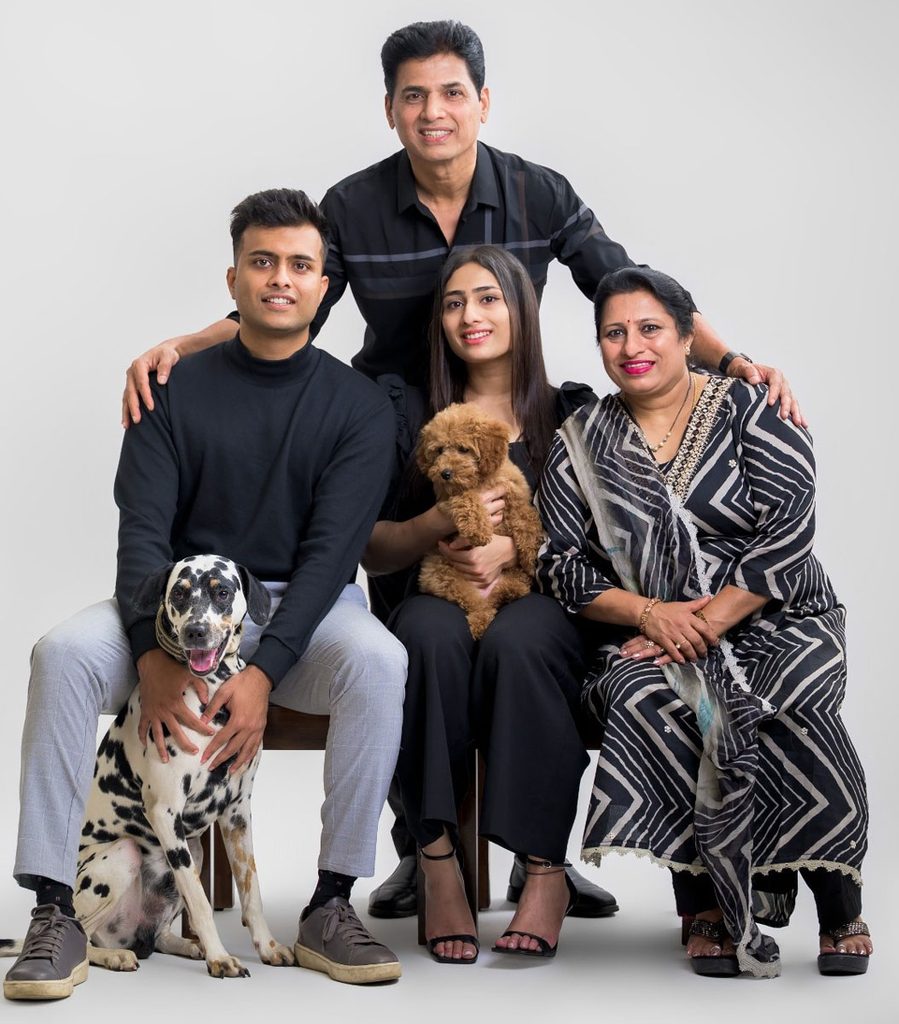
Their daughter Nidhi is a chartered accountant and a fitness enthusiast. Their son Tejas is a mechanical engineer and runs his own start-up company.
Increasing women members
Nagesh is clear that Rotary needs many more women. “I am not at all happy with the current situation of women’s membership in Rotary in India. Look at the larger picture; whatever field you take, women are in the forefront. Then why are we not inviting or encouraging women to be at the frontline in our organisation? That gap is still there in leadership positions.”
But things are slowly changing, and “we are beginning to see more women club presidents and governors too. But we need to take our female membership from the present 18 per cent to at least 33 per cent.”
He supports the idea of using Inner Wheel to bring more women into the Rotary family.
“It is cheaper, easier and not too demanding. Let more women first join Inner Wheel and later 10–20 per cent can come from there to Rotary.” He points to Brazil as an example and says we should apply it too because it is successful there.
In his experience, Nagesh adds, “women bring several strengths to Rotary. They are more focused, productive, effective, sincere, disciplined and committed. Clubs with more women members are flourishing and growing faster.”
There is already a drive to identify clubs without women members and encourage them to bring in at least 10 per cent women members. Another possibility, he says, is to bring spouses and female relatives into Inner Wheel and eventually offer dual membership in Inner Wheel and Rotary. The message is simple: “Rotary cannot afford to leave half the population on the sidelines.”