


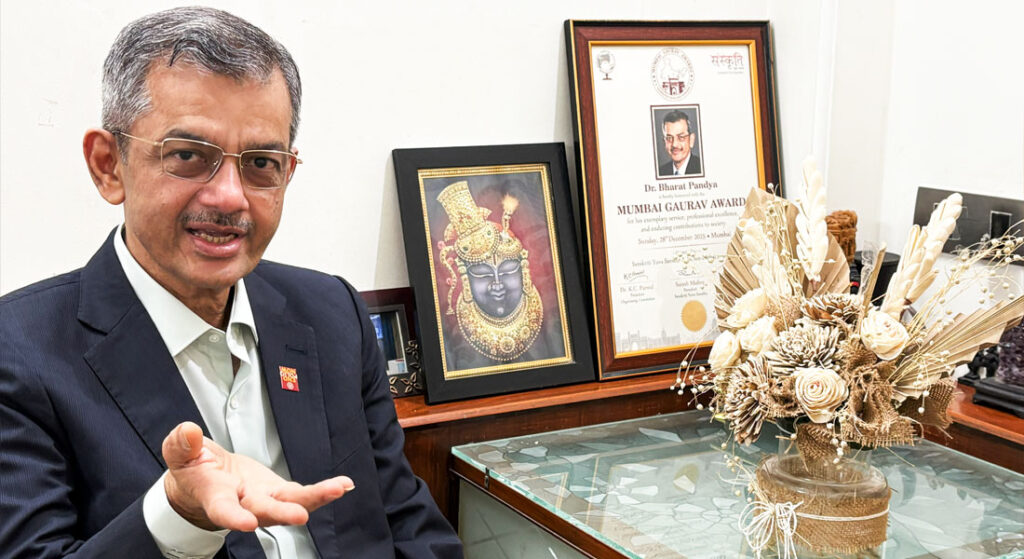
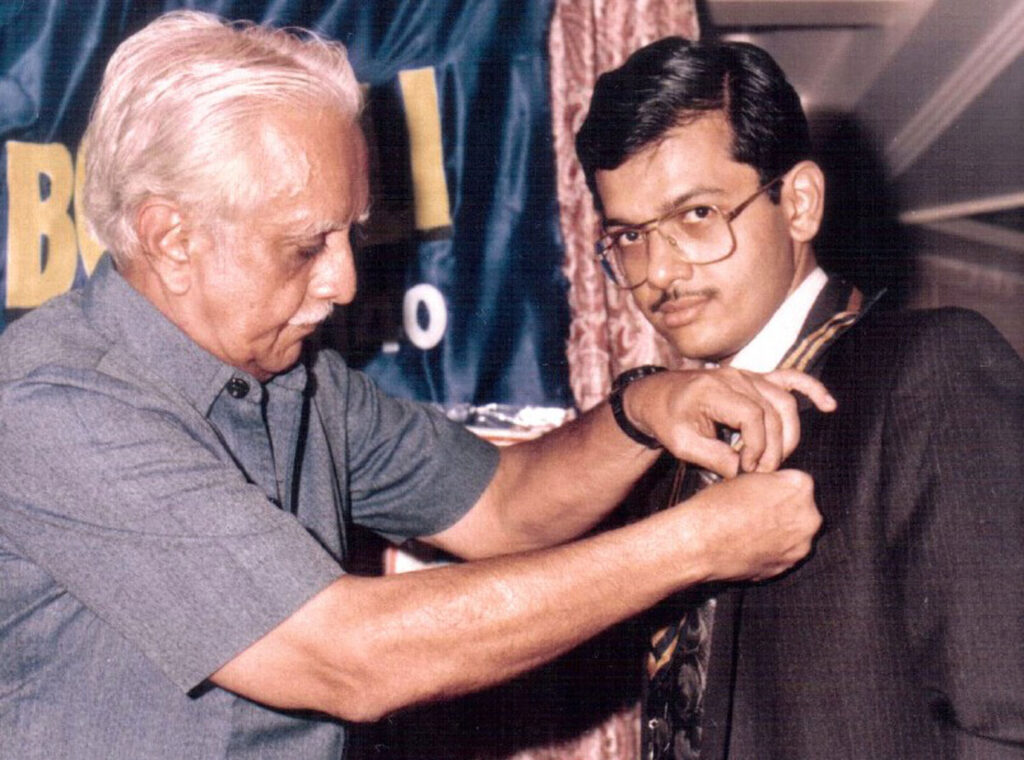
He became a Rotarian in 1989 as a young surgeon at 30, “by accident,” when his father’s patient J P Saxena, who was starting a new Rotary club in Borivali invited him. He was reluctant, as he had just started his surgical practice, but Saxena convinced him. Thus RI President Nominee Bharat Pandya became a charter member of RC Borivli, and was soon pushed to become club president. Having accepted the responsibility, he gave his best… doing many outstanding projects, adding 19 new members and 12 Paul Harris Fellows, “a big thing in those days.”
After his year as president, Pandya “realised that Rotary is really helping me to expand my horizons beyond my immediate circle.”
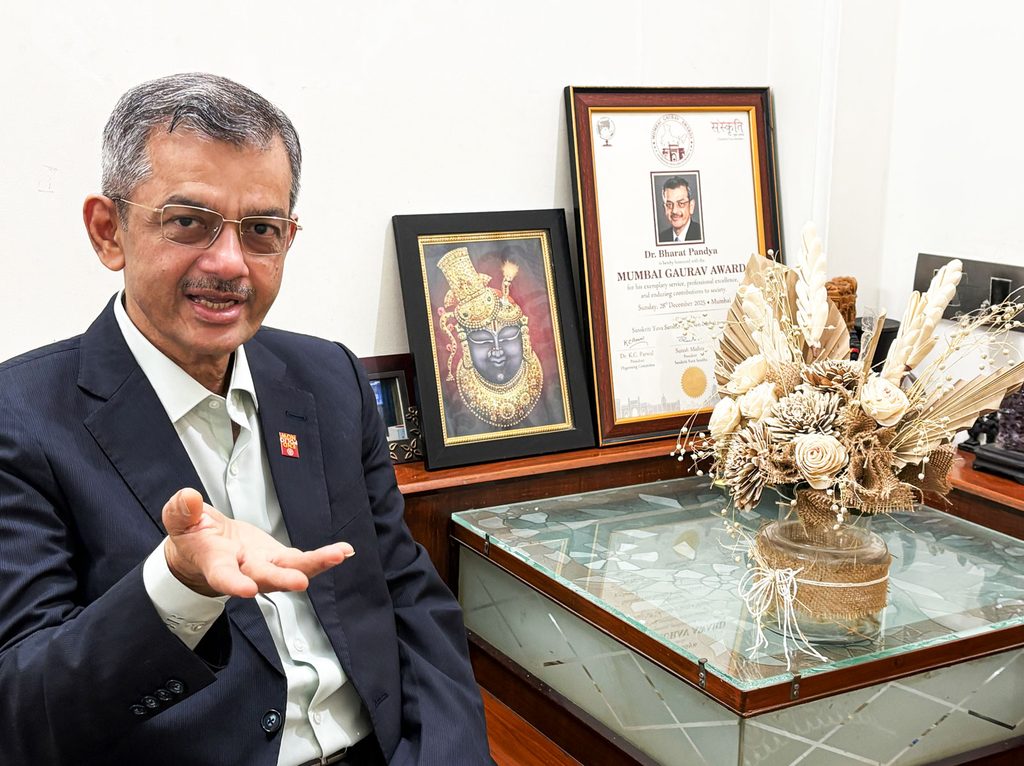
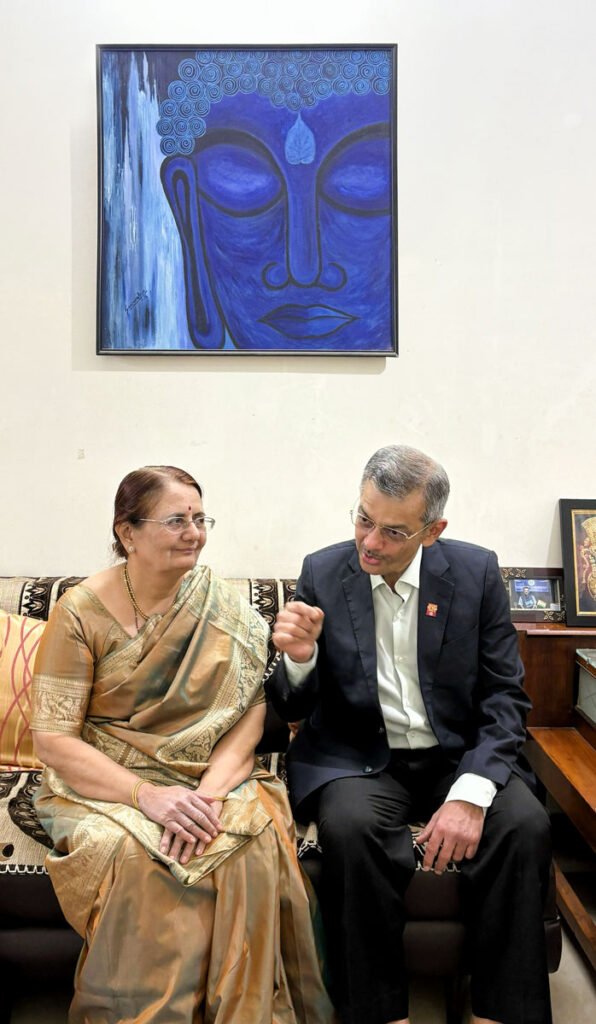
Those horizons will cover the whole world come 2028 when he assumes the role of RI President, I quip. We are having this conversation in his apartment in Mumbai, in the same building that houses the Pandya Surgical and Maternity Hospital where his wife Madhavi is the gynaecologist. The gentle, mild- mannered Rotarian smiles; “when I joined Rotary 37 years back, I never realised I would ever get the opportunity to make the whole world my horizon.”
If we want to keep Rotary alive, relevant, vibrant, effective for the next 30–50 years, we have to get younger people. Today, the young are looking for purpose and a cause.
So does he consider this an opportunity or a challenge… perhaps a daunting one? “I consider it an exciting opportunity. Looking at the scale, reach and presence of Rotary in more countries than represented in the United Nations, the responsibility begins to weigh on the shoulders. But I wouldn’t call it daunting; I’d use the word exciting.”
He is excited to take on this responsibility which will “allow me to meet and interact with more Rotarians at the grassroots levels and understand how Rotary works in different parts of the world. I am excited about the people I’m going to meet, the different perspectives I’m going to hear, and what we can accomplish together. And I think my role is not to have all the answers. My role is to listen, learn, bring people together and give Rotary a clear sense of direction. Hopefully we can together move the needle a little bit forward for Rotary.”
Asked what was more important in Rotary — membership, projects or something else, he says: “At the centre of everything is membership. If we have the members, everything is possible. If we don’t have the members, things are difficult. I would like to focus on two things — make Rotary more member-centric, more accessible, relevant, engaging, and very important, more enjoyable for members. If we take good care of our members, give them a good club experience and meaningful work, then members will take care of Rotary’s growth.
The maximum attrition happens in the first three years; the first three months are important because first impressions are sometimes the last impressions.”
Pandya suggests clubs should organise quality induction of a new member, give him a meaningful role in the club in the first three months, depending on his/her interest; provide adequate Rotary education and create a sense of belonging in the member. “Many times we induct new members and leave them on their own. We have to work on them… nurture new members.”
He gives the analogy of a new bride, who needs to be given special attention and made to feel welcome. “In the first 1,000 days a member should get continued Rotary learning, a leadership opportunity and a voice in the club’s decision-making to make him more engaged, involved and valued. He will then feel his voice matters and get a sense of belonging. Next, expose the member to a really impactful service project.” The following year that member should be made to mentor another new member, “because the best form of learning is teaching others.”
Also, adds Pandya, the Rotary experience should be personalised for different members “because everybody doesn’t have the same requirement from Rotary. To me, fellowship may be important, to you, it may be service, to a third person, the prestige of Rotary and wearing the Rotary pin, or the internationality of Rotary, where you can find open doors in new countries. These are not even new concepts, just packing of different things.”
The impact of the work Rotarians do on the communities… not the money spent but the transformation of communities, and the behavioural change this is bringing, also need focus. “Our leadership positions will end in a year, but the impact of the work we do should last for years and decades. So I am going to focus on membership and the impact of our work.”
I will focus on making Rotary more member-centric, more accessible, relevant, engaging, and very important, more enjoyable for members.
Rotary has scope to grow, apart from India, in Africa for the next 5–7 years at least. “President Yinka is already doing it, and President-elect Larry will continue I’m sure, and so will I. There are now about 50,000 members in Africa, and in the next five years, with proper focus, Rotary membership in Africa, an entire continent, can go up to 150,000.”
Pandya is happy that Rotary is also growing slowly, but steadily, in Germany, Italy and Scandinavia. However, some parts of the Rotary world are not growing and if Rotary has to grow, “we have to stop the leak and reverse the trend in those areas and encourage clubs which resist change to be more flexible and innovative.”
Membership focus includes getting more women and younger members, he says. “If we want to keep Rotary alive, relevant, vibrant, effective for the next 30-50 years, we have to get younger people.”
Today, the young are looking for a cause, as was seen in India recently with Generation Z. “They want a cause and a purpose to work on… they want to connect more and use more technology. But they are also interested in developing their own leadership skills.” If Rotary can offer these, it is well placed to attract younger members.
As for women members, if 50 per cent of our society comprises women, then they need equal representation in Rotary. Even though women members are increasing, the RIPN feels Rotary needs more women in leadership positions at all levels. It’s not possible for women to become RI Presidents or RI Directors or even DGs directly, but they have to be “encouraged to get leadership at the club, district, zone and then RI levels.”
This is happening but not fast enough thanks to the “aspiration for positions, which men, who have entered Rotary much earlier, tend to monopolise.” He clarifies that more leadership positions are needed in Rotary for women, not because they are women, but because they are capable, competent and talented. “I hope 10 years on, we’ll stop talking about women’s leadership. It will be just leadership!”
Leadership is not about standing in front of people and leading them… but standing with the people. A good leader is not somebody who builds more followers, but more leaders.
But meanwhile, to encourage more women leaders, pathways will have to be given to them… “not to be partial to them, but more welcoming and encouraging.”
I next ask Pandya on higher expectation from him as RI President as he is widely seen as an erudite, thoughtful and caring leader. What new ideas of change can he bring on the table? “I wouldn’t call myself erudite, but thoughtful and caring, yes, and I think those are two important attributes of a good leader. I agree expectations from me will be higher because of the way I’ve grown in Rotary. But my Rotary experience is going to help meet those expectations,” he says.
He recalls that as an RI Director he had focussed on health; now he wants to expand that focus to healthy communities. And this is “not just about health, but access to healthcare, preventing diseases, maternal and child health, sanitation and clean water and environment. Because you can’t have healthy communities without clean water, proper sanitation or environment.”
While Rotary should push the concept of healthy communities, with different clubs working on focus areas of their choice, such as water and sanitation, maternal and child health, environment, because all these promote health communities, “eradicating polio remains our number one priority.”
On what Rotary can do for young India, Pandya says it is already doing a lot; education affects young people the most, and “we are doing a lot in education and should step up our efforts.” Health awareness is another area of concern as 20 per cent of our population under 15 is obese, and when they turn 35–45, they’ll face problems. RYLAs are providing professional skill development opportunities. These should be expanded, along with mentoring of the young generation.
On how his hospital and surgical practice will be managed during the long time he needs to spend in Evanston for his presidential year and earlier, Pandya says he has a transition plan. “Of course, I am going to miss my operation theatre, and my operation theatre is going to miss me.”
There will be differences and disagreements. But we can resolve them without becoming disagreeable.
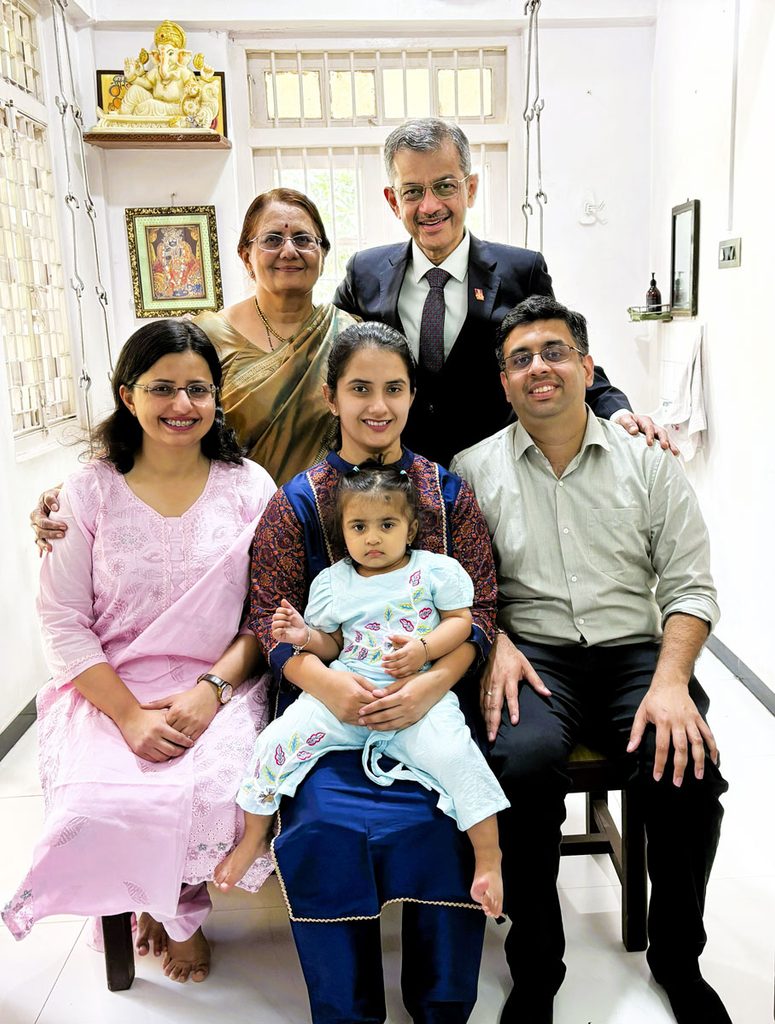
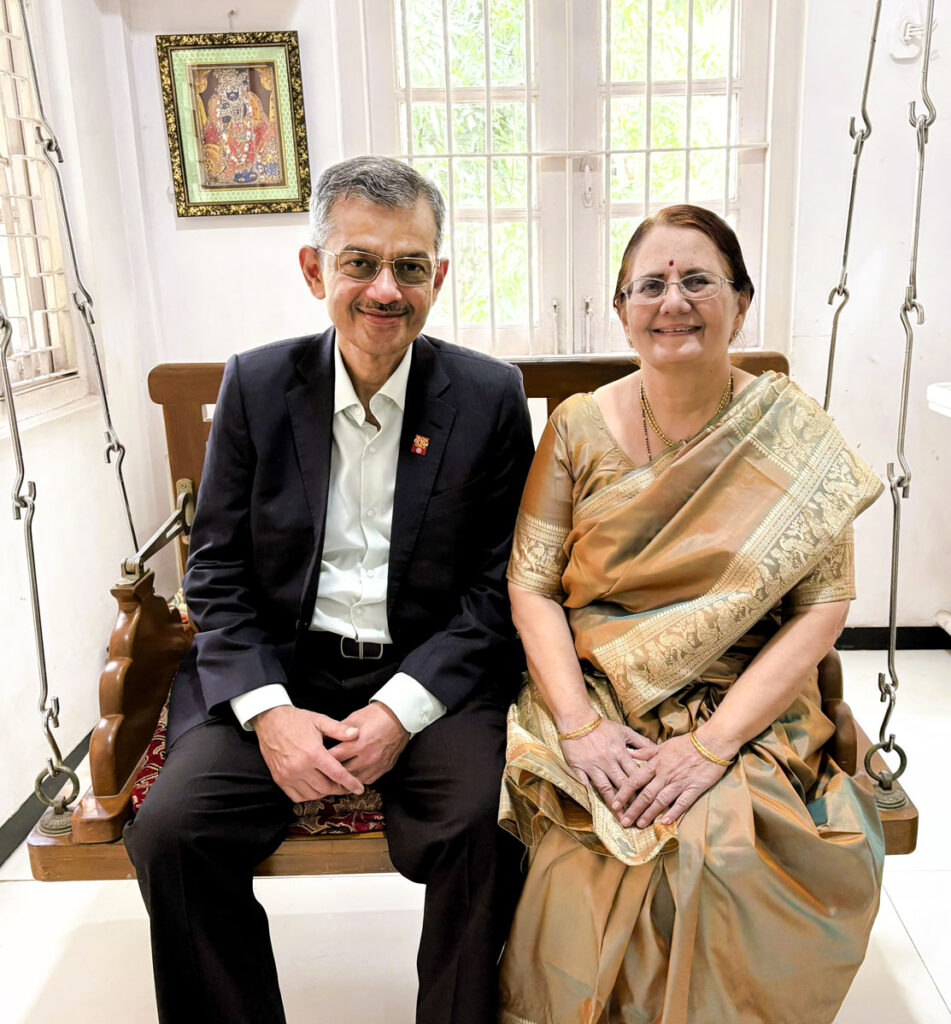
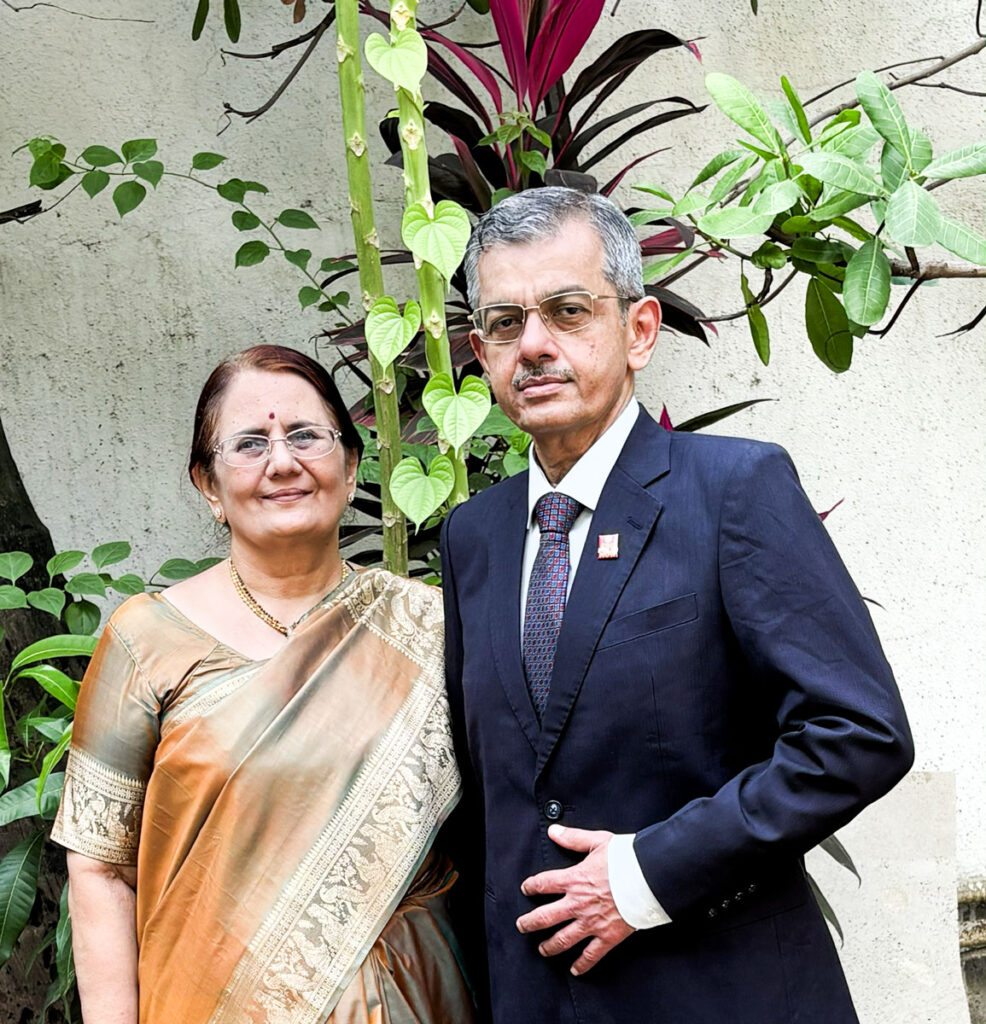
So how difficult was the decision to put in his nomination knowing all this? “It wasn’t a difficult decision, but it required a lot of careful thought, on the part of my family too.” But once his wife Madhavi came on board, it happened. Their daughter Sashmi is a gynaecologist and will fill in when Madhavi is away with him.
Asked how Rotary has transformed him, Pandya attributes a lion’s share in his leadership skills to Rotary. “It exposed me to a wide variety and range of people in different professions, and allowed me to really mature and develop as a leader, sharpened my public speaking skills. Earlier, in front of 10 people, I could barely speak 4–5 sentences.”
But now he is known for his meaningful speeches; do they need preparation? “For important meetings, they do; and I write down at least some points. Unless you’re a Winston Churchill, you have to do some preparation, or else your speech will be a disaster!”
So what part of heading Rotary excites him the most? “Meeting people from different cultures, countries, languages and backgrounds, looking at the work they do. We think in India we do a lot of work and we do a lot of work. But I saw in Philippines, Taiwan, Brazil, Nepal, Australia and other regions Rotarians are doing tremendous work too. I look forward to the opportunity to see Rotarians’ work all over the world and the innovations they bring to service projects to meet the needs of their communities.”
We must remember that our positions are temporary but the impact we can create can last for generations.
Also important is the work Rotary does for peace, and under the Programs of Scale, including in India (PWABHI — Partners for Water Access and Better Harvests in India), where the Rotarians are working with Mayank Gandhi and the Global Vikas Trust in some of the most backward regions of Marathwada. Remarkably, some of those farmers’ annual incomes have jumped 5, 7 to even 10 times — up from ₹40,000– ₹50,000 per acre to ₹3–₹5 lakh.
“Through our own Rotary Peace Center at Symbiosis and other Rotary Peace Centres, Rotary can definitely make a difference by creating a peace mindset in people, and focus on how to avoid conflict by bringing people together in harmony and peace.”
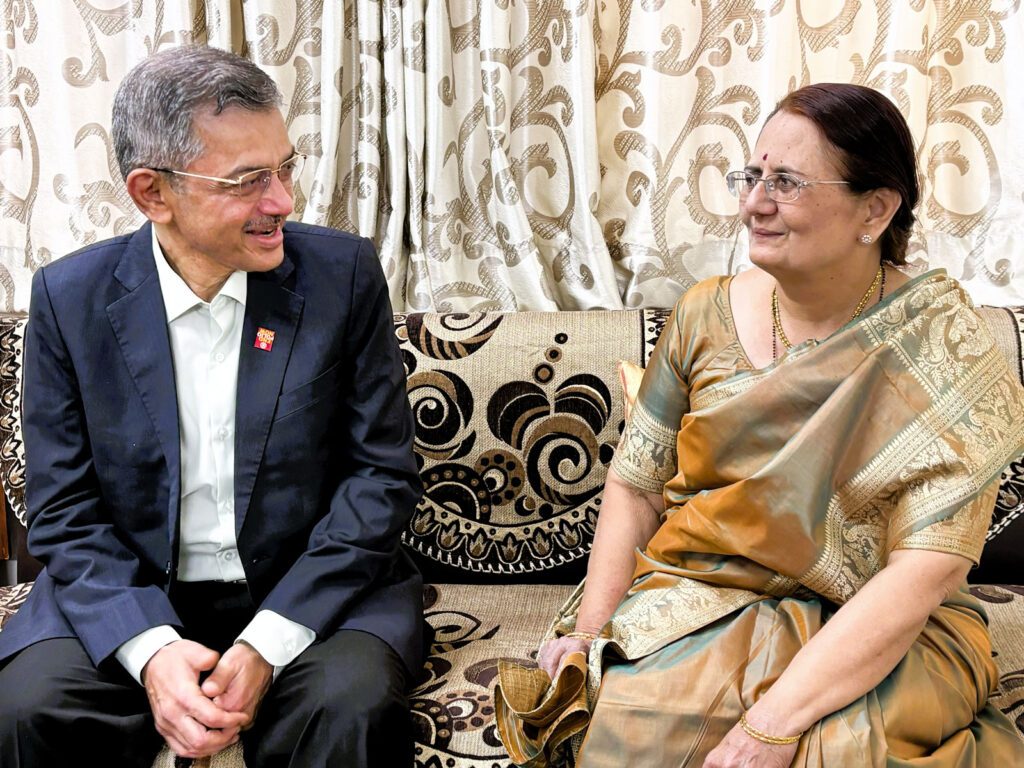
On the price his family has had to pay for the substantial time he has given to Rotary, Pandya agrees there has been some sacrifice on all sides when it comes to family time. “But I have tried my best to balance things; whenever I go for a Rotary engagement, my time is given only to that engagement. There is nothing which diverts or distracts me. I finish that engagement and I am back home… for my family and my profession.”
He adds, “Yes, Madhavi does get upset sometimes, but she, and my two daughters, have always been supportive. But in the last couple of years with my daughters studying out of Mumbai, with my increasing Rotary engagements, getting some family time together has been extremely challenging.
As a surgeon I have spent much of my life working to heal people, and many years working to serve communities through Rotary. Both have made me realise that you may not be able to change the whole world, but you can change someone’s world. If we can help every Rotarian do that a little more often, Rotary will have a better, bolder and more meaningful future. That is Service Above Self.”
Pictures by Rasheeda Bhagat
At a glance
Music: I like old… not very old but contemporary and a little before that, Hindi songs. Also, Western music; ABBA continues to be my favourite!
Reading: I used to do a lot of reading and still do some reading, but not as much as I would like to! Hopefully, once I am finished with the presidency, then I’ll have more time to read. My favourite writers are P G Wodehouse, I’ve read the novels of Jeffrey Archer for entertainment. My recent read is From Ideas to Impact by Michael Sheldrick
Social media: I am on WhatsApp and LinkedIn but I need to engage more with social media.
Food: I am not much of a foodie but I like Indian vegetarian food, as also Italian and Chinese food.
Cooking: My cooking skills are limited to making sandwiches, tea and coffee. But for Evanston and when Madhavi is not around, she will teach me some cooking!
Favourite holiday destination: New Zealand, for its natural beauty and clean air. You can almost taste the air there… clean and crisp.
Fitness: I used to do a lot of treadmill walking but post-Covid, I do a lot of walking… at least 12,000 steps a day.
Relaxation: My relaxation is listening to music, occasionally reading. I like to revisit old books.
Religion: I believe in God, but I am not ritualistic. Madhavi takes care of the puja and everything else.
His dreams….
I first want to see Polio totally eliminated. Once that happens, there is a possibility Rotary can get the Nobel Peace Prize; that will be a big moment for us. A long-term dream is that Rotary should become a first-choice partner for the people whenever there is need in the community, at least for our areas of focus. The same for other organisations who seek a partner. Also, I am passionate about TRF, which I believe is a very good Foundation.
But leveraging the work we do through our Foundation, we should be able to attract much more non- Rotarians’ money to TRF. The way AI companies are growing… they are already valued in billions of dollars. I’m sure that 2, 5 or 10 years later, many of their founders will become philanthropists like Bill Gates. When that happens, Rotary should be able to get that money, because it can do so much more work with more funds. But of course, we will have to tailor our projects and activities to meet their needs, which would probably be different from Bill Gates’ priorities. The one who gives the money decides what work needs to be done.
(For himself) My short-term dream is to do my best in this new responsibility coming my way. Once this is done, I need to come back, relax with my family, and give them, and also my club members, some time.
Attributes of a good leader
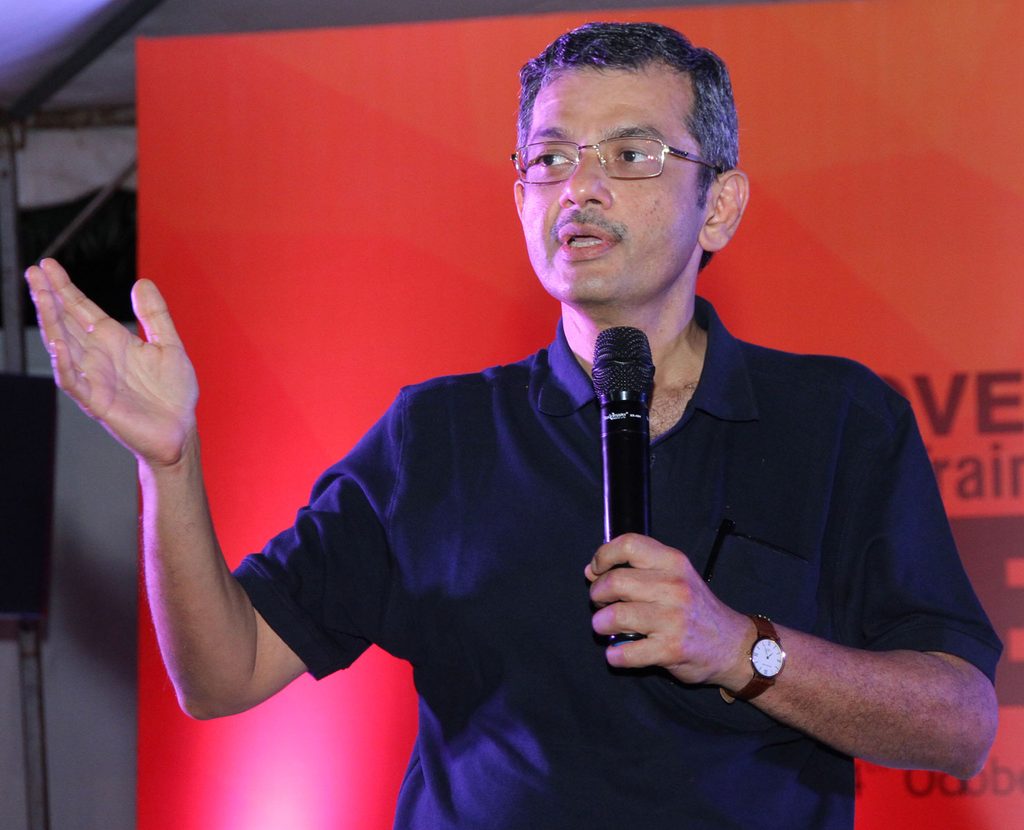
On the attributes of a good leader RIPN Bharat Pandya says, “As I said it is going to be an exciting time and a great opportunity for me. I believe leadership is not about standing in front of people and leading them… but standing with the people, bringing everybody together. I will try to do that. Also, a good leader is not somebody who builds more followers, but more leaders. If I build only followers, when my leadership responsibility is over, who is going to fill that gap?”
A good leader needs to have a vision, the ability to visualise things and a collaborative approach which makes teamwork possible. “Because you can’t do everything alone. You also need self-assurance and confidence in yourself so that you can empower others. If I am not confident about myself, how will I empower others.”
Also, a leader has to have the ability to act; just having a vision, empowering others, doesn’t work. Execution is important. I always say well done is always better than well said. “At the heart of everything is integrity.”
He goes on to give the analogy of a surgeon and how being one has “profoundly influenced the way I live. In surgery every decision is important and those are based on knowledge, your skill, judgement, evidence and teamwork. This intervention is proven to be successful so that is why you do follow it. Then there is teamwork. I can’t do surgery alone… without the anaesthetist, my theatre nurse and even the sweeper. Because an unclean floor will cause infection.”
Then there is compassion. “In surgery, the important principle is to treat the patient, not the disease. You need compassion to treat the patient. Applying this compassion to Rotary’s work, before doing a project you have to look at the needs of the community, and do what you are doing with compassion; help those who need our help without making them feel obliged to us for helping them, and remember we are fortunate to be in a position to help. That is compassion.”
At the same time, don’t do anything totally free; ensure there is some involvement of the community in terms of their skills, labour. “As a doctor I know anything given completely free has less value. Local people have wisdom and know best what is required.”
He sums up his leadership style as ABC plus I. “Analyse the situation, be bold in your decision, stay calm and cool under pressure and adopt a collaborative approach. Across this entire spectrum apply ‘I’ for integrity.”
Those who know him well, admire his integrity above all. Says former RI Director Raju Subramanian, “Some lead from the front, others inspire by the integrity of their leadership. Bharat Pandya represents both. Quiet in manner, profound in thought, he represents the best in Rotary leadership.”
Past RI President K R Ravindran has this to say of our future RI Prez: “I have watched Bharat Pandya at close quarters for 15 years, and in some difficult rooms. He is slight in stature and tall in significance, gentle in manner and immovable in principle, and he has never once confused holding office with doing the work. Rotary has chosen well.”
Rotary in India has many strengths
Rotary in India has many strengths says Bharat Pandya. “Our members are our strength, and so is our generosity.”
Consider what India gives to TRF. “When I took over as Trustee in 2022, our TRF contribution was $26 million; when I finished my term in June 2026, it had gone up to $45.3 million. That’s a 74 per cent increase, which is significant. The quantum of work we do in India is tremendous. I think the maximum number of global grants are happening here. The way we’re able to leverage CSR grants is exemplary, and those CSR grants are really helping the community in so many ways.”
Does he have the CSR numbers, I ask. Of course he does; at the top of this head! “CSR started in 2021–22, and in that year the figure was $2.8 million; it went up to $6.7 million next year; then to $8.2 million, $11million, ending at $15 million last Rotary year.”
There’s scope for much more “it’s huge…. it’s an ocean,” he says.
For one, the companies trust Rotarians; also, at present, 65 per cent of the grants come from corporates owned or run by Rotarians, and there are repeat grants from both Rotary and non- Rotary corporates, which means Rotarians have the trust of the corporates.
The other strength of Rotary in India is “our strong connect with our partners… the governments, various other NGOs and semi- governmental organisations and local municipal corporations. And our well-spread presence across India.”
On what can be improved in India, Pandya says Rotary in India is younger compared to the rest of the world and is growing, with more people seeking leadership positions. “Ambition is not a bad thing. But the way we handle it is important. We have to channellise it properly, and realise that there will be differences and disagreements. But we can resolve them without becoming disagreeable. At times, people should be willing to let go and move forward. There will always be another time. That is something we can improve in India,” he adds.