





This is the story of innocence fatally lured by and enmeshed in an intricate web of duplicity spawned by overweening ambition and false gods.

London Falling. I saw this recommendation in the entertainment section on a British Airways’ flight recently. The name of the author, Patrick Radden Keefe, sounded sort-of familiar. What aroused curiosity, though, was the descriptive blurb. When I finally got to a bookshop — Topping and Company Booksellers in Bath, as mentioned in last month’s column — the book was sold out. In fact, Keefe had had an event at the store. It was only much later, upon returning to Chennai, that the penny dropped: Keefe had won the Baillie Gifford prize for nonfiction back in 2021 for a book on the Sackler dynasty called Empire of Pain (which finds mention in Wordsworld of February 2022 in connection with another Baillie Gifford winner, 2016, This is London by Ben Judah). Anyway, I finally managed to get hold of the book at Heathrow.
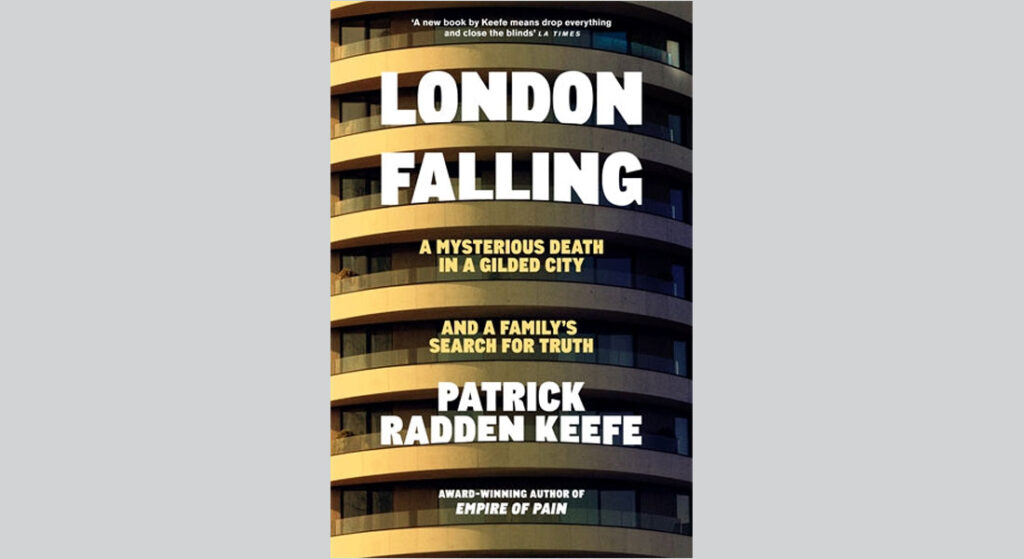
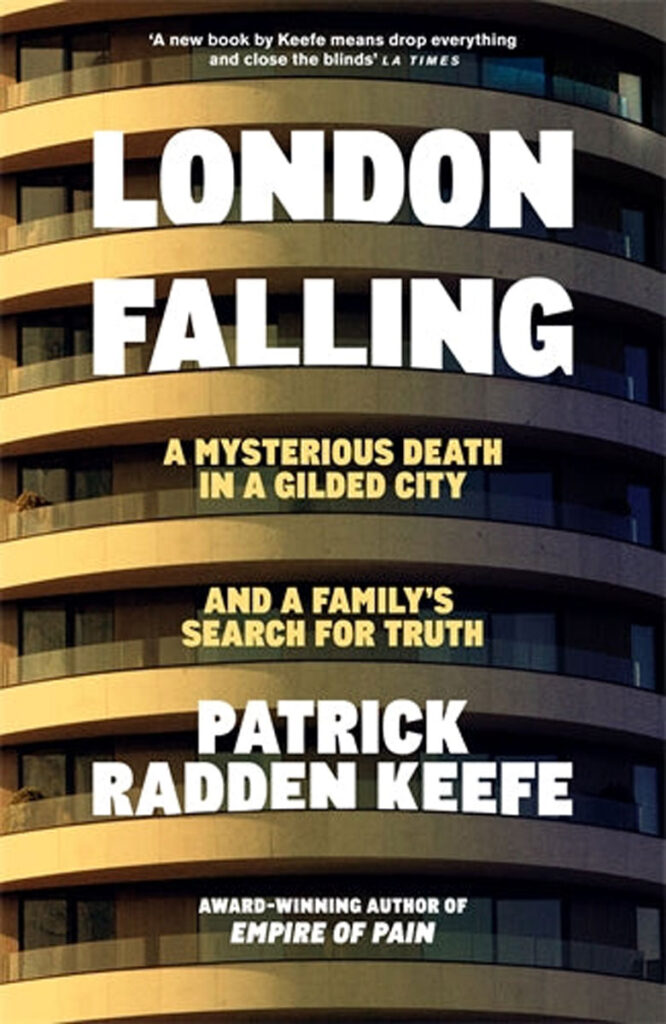
The front (and back) cover of this edition — another edition features the Thames — has an especially dull look with something like black and yellowy stripes running horizontally across. You look closer and you see, emerging from the dull background, the words: A mysterious death in a gilded city…and a family’s search for truth. Immediately, a chill runs up the spine.
In November 2019, the 19-year-old son of Rachelle and Matthew Brettler goes missing. Zac is the younger of their two boys, a bright, ‘jokey’ sort of fellow in his younger days especially, and endowed with a great memory. Fun-loving, athletic and smart, like most other children. The Brettlers are a loving family, the parents are encouraging of their boys, and they live a fairly good life in a decent part of London. But somewhere along the way, when Zac is about 16 or 17, things begin to change because he begins to change. The parents, his older brother Joe and friends don’t notice right away, but when they finally do, they discover that he has become an extremely aspirational young man, craving a far better life, the rich life. The parents are troubled by this, but rationalise it as being normal, given his teenage, and in many ways, it is.
Gradually, though, they see that their son seems to have acquired strange friends, many much older than himself. He also gives the impression that he’s coming into large sums of money and is living the high life. That’s when they begin to worry. For instance, he tells them that he stays for long periods of time in a high-end apartment called Riverwalk overlooking the Thames River, and they wonder how it’s possible for a teenager to get access to such an upmarket address. In fact, the final paragraph of the book provides a telling image related to this fact.
London Falling makes you think of the millions of young people who make their way to big cities with hope in their hearts and dreams in their eyes. It is easy to be led astray, and be exploited.
In the summer of 2019, after the whole family has attended a birthday party and where Zac seemed to be his old, younger self, he leaves “the party early to return to Riverwalk, where he was staying that summer. But he knew that when his parents drove home to Maida Vale, they would head north across the river, and he told them to call him when they were approaching Vauxhall Bridge. When the party was over, Rachelle, Matthew and Joe piled into the family car. As they drove past the MI6 building and onto the bridge, Rachelle telephoned Zac, as instructed, and then they all looked up and saw him there in the distance on the fifth-floor balcony, a tiny figure, waving.”
Note the location of Riverwalk: on the Thames, across from the MI6 headquarters, adjacent to Vauxhall bridge. Clearly, an address not exactly accessible to a normal, middle-class student. Yet, that’s where Zac was standing, waving: on the balcony of apartment 504 from where Zac jumped or fell, fatally, into the river before the year was out. On the way, his hip hit the embankment. He was found by a young man called Baxter Willis who happened to be passing by. Curiously, Willis himself had been questioned some years ago in connection with the death of a teenager whose body was later found floating in the Thames. After endless harassment, Willis’s name had been cleared. The body he found now was shirtless, wearing sweatpants, and one side of his face had taken a severe blow, like that from a boxer. When the police and investigators arrived, they assumed the body had been carried to the spot by the river; they never once considered looking up at Riverwalk, at the possibility of a fall. It took them a few days to finally go into the building to make inquiries. Did Zac fall? Was he pushed? Or did he leap out towards the river in order to escape?
London Falling explores all these and more possibilities by making a thorough and detailed investigation into the time, the circumstances, the personal histories of those involved, and joining the dots in a complex web of ordinary as well as influential people. The author follows the connections assiduously, recording statements, recollections, facts and opinions, taking note of conjectures and deductions, as well as evidence, and listening intently to what the distraught parents have to say.
Keefe came upon the story by chance, through a friend who was a rabbi and who had, coincidentally, conducted the bar mitzvah of Zac. She told him about how the parents were desperately seeking answers. As Keefe began to dig into the story, he discovered a growing cast of dramatis personae representing various sections of the deep, dark underbelly of London. They included drug lords, murderers, football club owners, businessmen and women, men about town and many others. Above all of them hung the presence and influence of Russian oligarchs, newly rich and minting. And overhanging all of this was the metropolitan police that often seemed to have behaved in a distinctly non-proactive manner. What was most shocking to the Brettlers was the discovery that their son had been posing as a wealthy investor, Zac Ismailov, the orphaned son of a Russian oligarch. They did not have an inkling of this.
Curioser still, to me as a reader, was the close involvement of two people of Indian origin who seemed to have either taken an interest in Zac or were interested in what he was touting as his wealth: Akbar Shamji, the son of a Ugandan Indian who had made a dubiously successful life in London, and Verinder Sharma aka Indian Dave, supposedly a rubber baron who was likely a drug lord who had never served time himself although he was linked to rings of unsavoury characters, and whom the Brettlers suspected of being a police informant. How did Zac get close to them? How did Zac convince them that he was a Russian heir? The case was wrapped up as suicide; the Brettlers were/are convinced it was murder.
London Falling is convincing, gripping and unsettling. It makes you think of the millions of young people who make their way to big cities with hope in their hearts and dreams in their eyes. It is easy to be led astray. It is easy to be exploited. It is easy to disappear. Incidentally, the image on the cover is of Riverwalk, the apartment, situated exactly opposite the MI6 headquarters whose camera caught the image of a figure falling into the Thames from the balcony of flat number 504.
The columnist is a children’s writer and senior journalist