





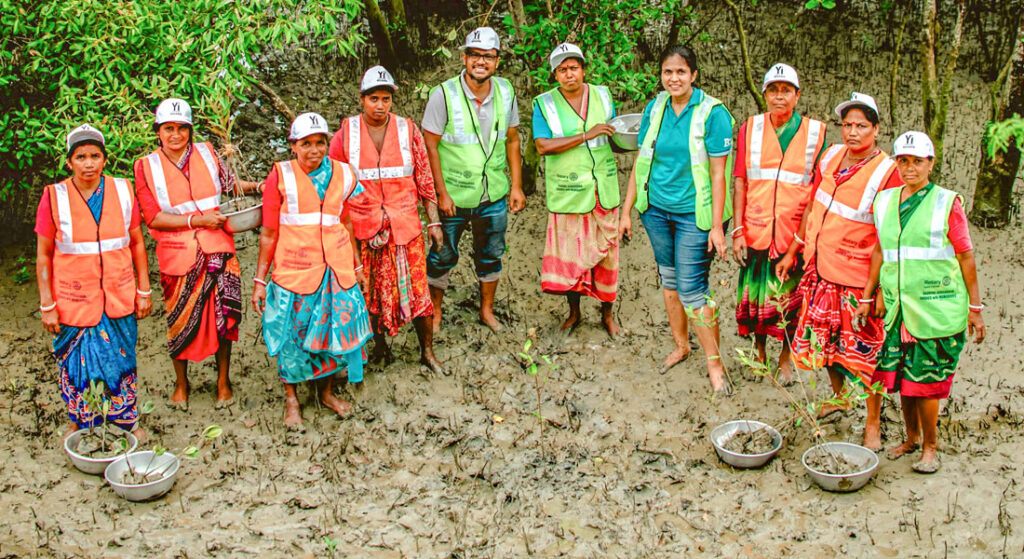
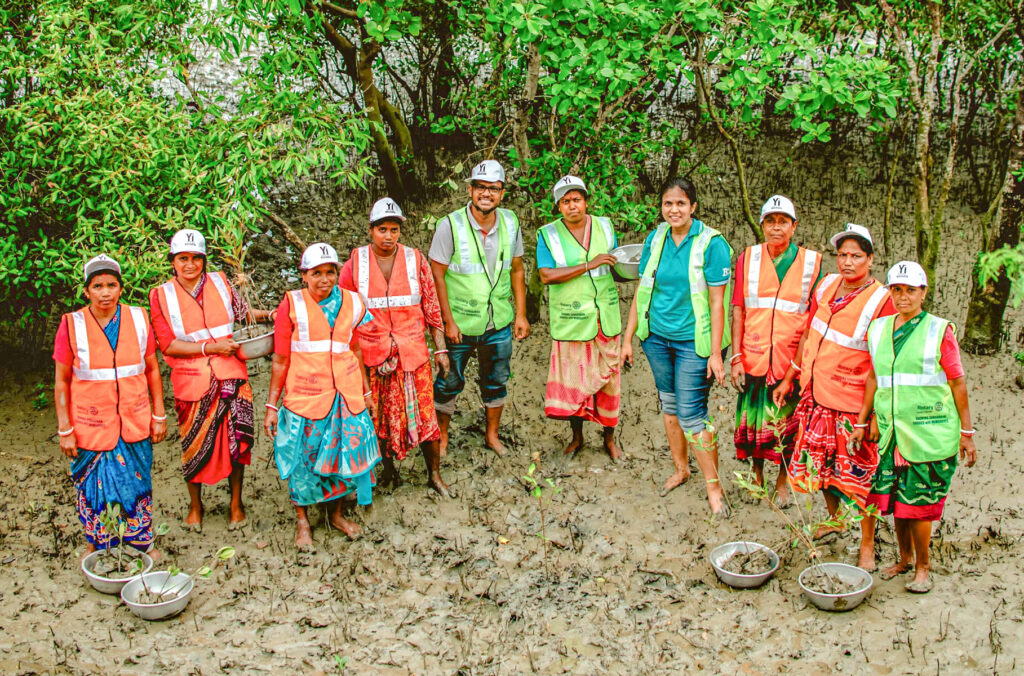
Marking the World Environment Day on June 5, the Rotary Club of Salt Lake Metropolitan Kolkata, RID 3291, launched an ambitious mangrove restoration project at Mokamberia village in the Basanti Islands of the Sundarbans. The initiative aims to plant one lakh multi-species, saline water-resilient mangrove saplings along a 10,000-hectare shoreline covering the villages of Mokamberia and Gadkhali.
The project is being implemented through a global grant in partnership with Rotary clubs from around the world. International partners include RC Washington DC, RC Aarau (Switzerland), Stavanger International Rotary Club (Norway), and Rotary E-Club (RID 7210), while RC Central Calcutta and RC Hooghly are local partners. NGOs Young India and Kishlay Foundation are also supporting the initiative.
“We launched the project symbolically on World Environment Day, although September, with the onset of the monsoon, is the ideal time for plantation,” said Dr Aruna Tantia, project lead and past president of the club.
To mark the launch, 10 Rotarians, volunteers from Young India, and members of local self-help groups travelled to the village and planted 60 saplings along a barren riverbank in Mokamberia.
Home to nearly 5 million, the Sundarbans is an archipelago of 104 islands in the Bay of Bengal. But in recent times this unique ecosystem is under immense pressure.
Home to nearly five million people, the Sundarbans is an archipelago of 104 islands in the Bay of Bengal, of which 52 are inhabited and 52 remain forested. Spread across more than 10,000 sq km, it is recognised as the world’s largest mangrove forest.
However, this unique ecosystem has come under severe pressure in recent decades. “Over 110sqkm of mangroves have been lost in the last two decades due to recurring cyclones, accelerating erosion and saline intrusion,” said Aruna, citing an Economic Times report.
Climate change has intensified tidal surges and cyclones, leading to frequent flooding, destruction of property and intrusion of saline water into agricultural lands. Nearly 90 per cent of local households depend on farming, but increasing soil salinity and flooding have made agriculture increasingly unviable.
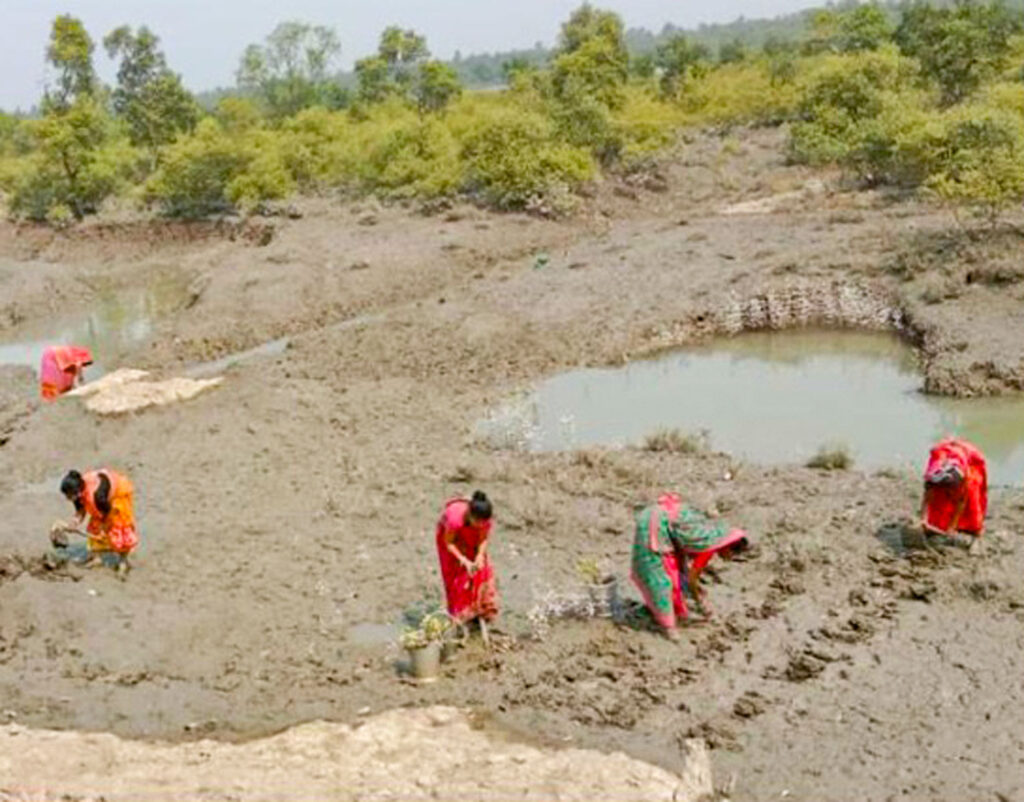
As livelihoods shrink, many residents are forced to venture deep into the forests to catch crabs and fish or collect honey, often risking fatal encounters with tigers. The deaths leave behind the “tiger widows” and other family members who are compelled to seek work elsewhere. The lack of sustainable livelihood opportunities has trapped many communities in a cycle of poverty and hardship, she explains.
A community assessment conducted by the club two years ago revealed that residents wanted stronger natural barriers against erosion and flooding, along with alternative livelihood opportunities. Responding to these needs, the club has designed a project that seeks to reduce climate risks, restore ecosystems and improve the lives of more than 10,000 people.
The club is seeking CSR support to establish a telemedicine centre at its health clinic, to connect rural patients with urban specialists.
The groundwork began in 2023 when Neera Sen Sarkar, associate professor and consultant botanist at the University of Kalyani, conducted a detailed study of the area’s topography, water flow, salinity levels and tidal currents. Based on her findings, a pilot project was launched in 2024 at Ramakrishnapur village, where one lakh mangrove propagules were planted along the riverbank. “The pilot recorded an encouraging survival rate of nearly 70 per cent, providing the confidence needed to scale up the initiative,” said Aruna.
She explained that the new plantation will use sandbanks reinforced with bio-geotextiles. Wooden pegs will be installed along the fortified shoreline, and saplings will be embedded within them to prevent them from being washed away by strong tides.
“This reinforcement will strengthen the banks through natural fencing and help break tidal waves, reducing frequent flooding. It will also improve aquatic biodiversity by creating habitats around the mangrove root systems,” she said. The total project outlay is $57,650.
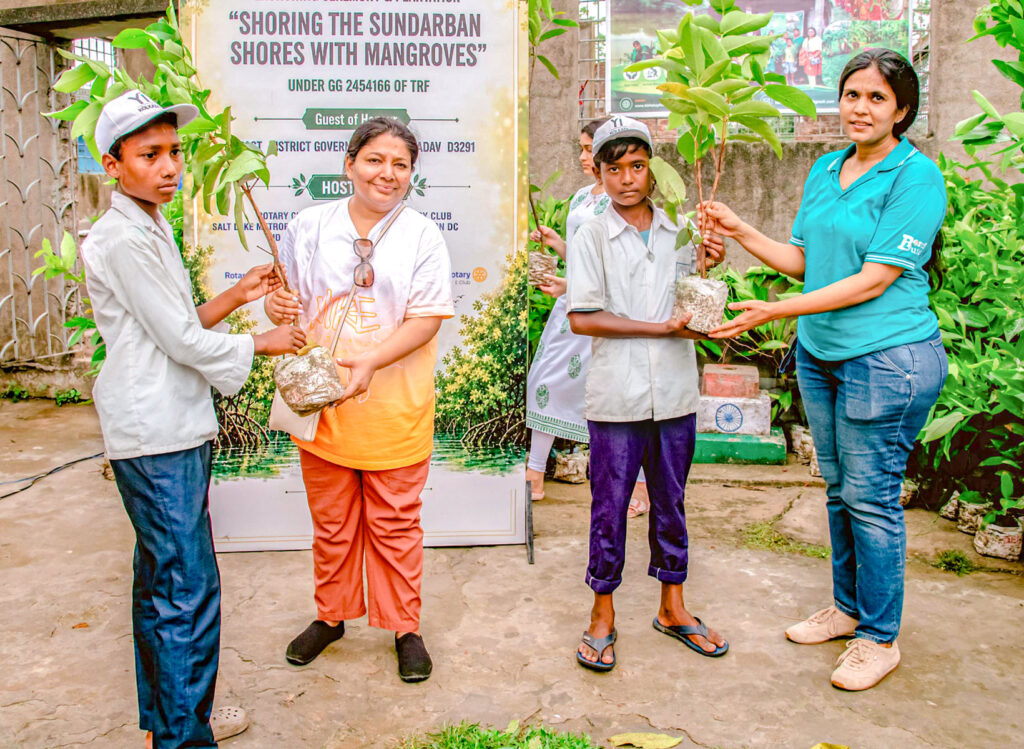
The project is designed not only to protect the environment but also to generate livelihoods. Before plantation begins in September, local self-help groups will be trained to raise mangrove saplings in nurseries and weave bio-geotextile netting. Men from the villages will receive training in soil work and shoreline fencing. Basket weaving from dried leaves of mangrove plants and organic rice cultivation will also be taught to the villagers.
The skills developed through the programme will create income opportunities and enable the community to continue supplying saplings and bio-geotextile materials for future expansion into neighbouring villages.
“Our long-term plan is to replicate this model in at least three more villages in the next phase,” said Aruna.
The club members are conducting awareness programmes for schoolchildren and adults on climate change, environmental conservation and the importance of preserving mangroves as natural coastal shields.
The next step is to introduce rainwater harvesting systems through another global grant. The aim is to provide freshwater for both cultivation and household use.
“The soil here is naturally fertile, but salinity has robbed it of its productivity,” said Aruna. The need became apparent during the club’s regular health camps in the villages. “We found many women suffering from anaemia and suggested that they grow green leafy vegetables in their backyards. They told us that plants simply would not grow there. That prompted us to study the larger environmental challenges affecting the region,” she added.
The club is also seeking CSR support to establish a telemedicine centre at the health clinic it has already set up in Ramakrishnapur village. The facility will connect rural patients with urban specialists, ensuring access to consultation, treatment and follow-up care.
RC Salt Lake Metropolitan Kolkata has been a dependable partner for the island communities, and has played a key role in disaster relief during the devastating cyclones Amphaan and Yaas.