

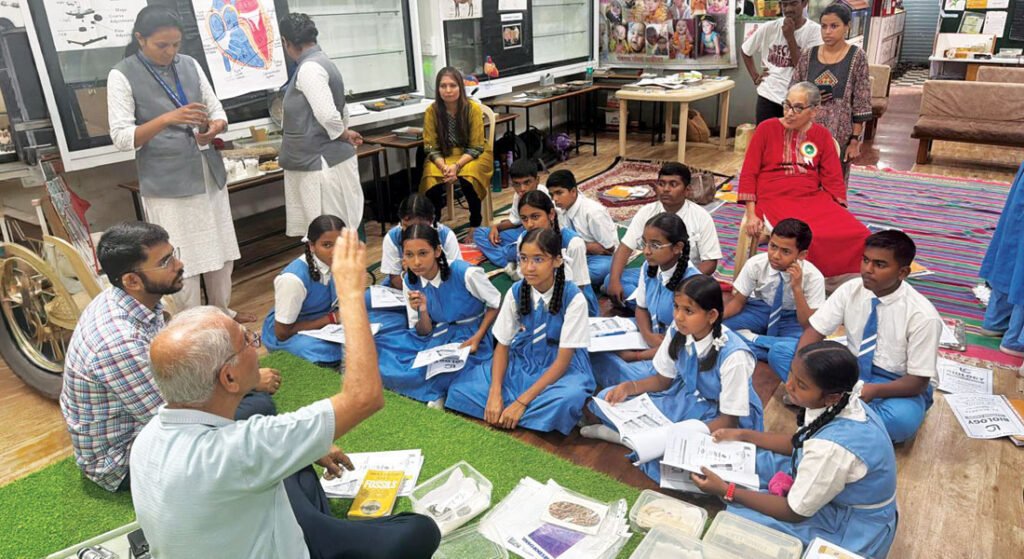
For 25 Class 9 students of Adarsh Vidya Mandir School, Nashik, Biology became more than a subject in a textbook at the Bio Discover Camp. They examined seeds and embryos, observed microorganisms under a microscope, handled fossils dating back millions of years and explored specimens of human anatomy in a series of hands-on sessions organised by the Rotary Club of Nasik West, RID 3030, in association with Acharya Classes.
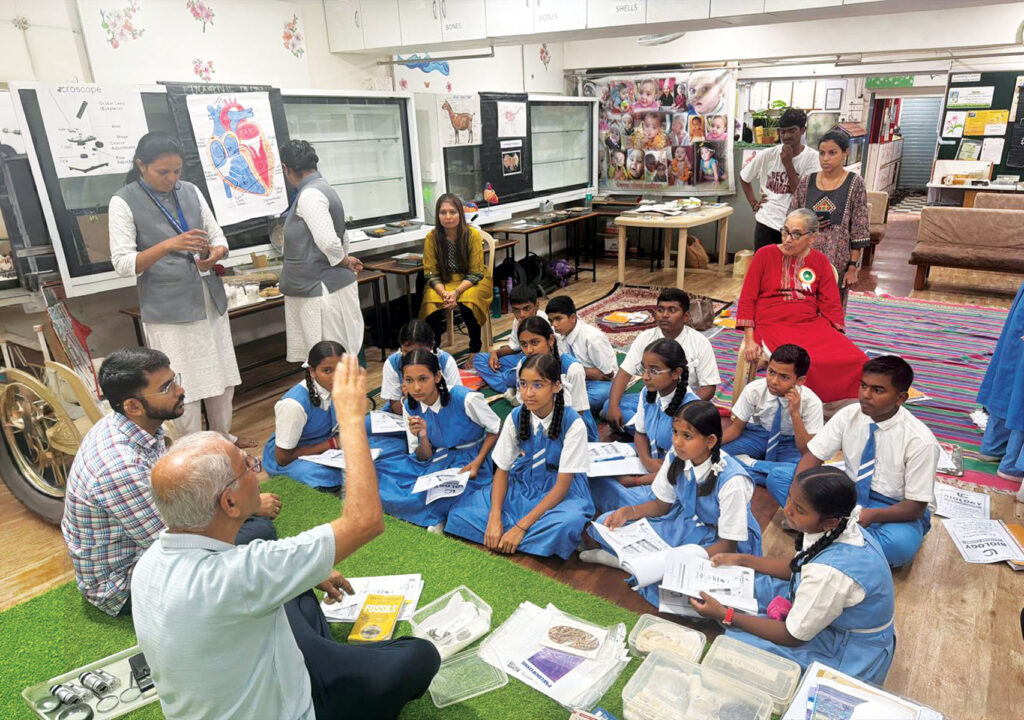
The camp was designed to help students understand life sciences through observation and practical demonstrations. It was conducted under the guidance of Prof S L Acharya, a Biology educator with five decades of teaching experience.
One of the highlights was a session on seeds and germination. Students examined the parts of a seed and its embryo, and learnt to distinguish between monocot and dicot seeds. “It was fascinating for the students to see a Jamun sapling which is a polyembryonic (a phenomenon in which more than one embryo develops within a seed) plant. It was an entirely new discovery for them,” says project chairman Uday Khedkar.
Students observed specimens of fungi, bacteria, yeast and paramecia, and learnt how to use a microscope. They were introduced to different culture media and bacterial colonies, and learnt about the spread of waterborne diseases and the use of test kits to identify possible contamination in water samples.
The students were able to touch and examine fossils from different parts of the world, some believed to be around 300 million years old. Practical demonstrations using bones and skeletons helped them understand human anatomy. Specimens of goat organs, including the eyes, heart, brain and kidneys, along with gallstones, air bladders, a non-malignant tumour, and human reproductive organs, offered a closer look at biological structures.
The camp also included sessions on balanced diets and the harmful effects of excessive junk food consumption.
Smita Khedkar, a retired professor of microbiology, and Kaustubh Sunil Hiray, co-founder of Insight Science Center, a science education institute in Nashik, served as additional resource persons.
“In schools, microscopes and other equipment may be limited, so not every child gets an opportunity to use them. Often, the teacher conducts the demonstration while students watch. The touch-and-feel experience is missing, and that is what helps children understand the subject better and develop an interest in it,” says Uday Khedkar.
The school principal has requested a similar programme for Class 10 students, and the team is preparing to conduct it in the school’s biology laboratory, which can accommodate its larger batch of around 100 students. The organisers plan to bring microscopes, fossils and bone sets to the school to ensure that the students can participate in the practical sessions. They are also planning a workshop for teachers.