

These are easy reads that take you on insightful paths through the ways of the world.
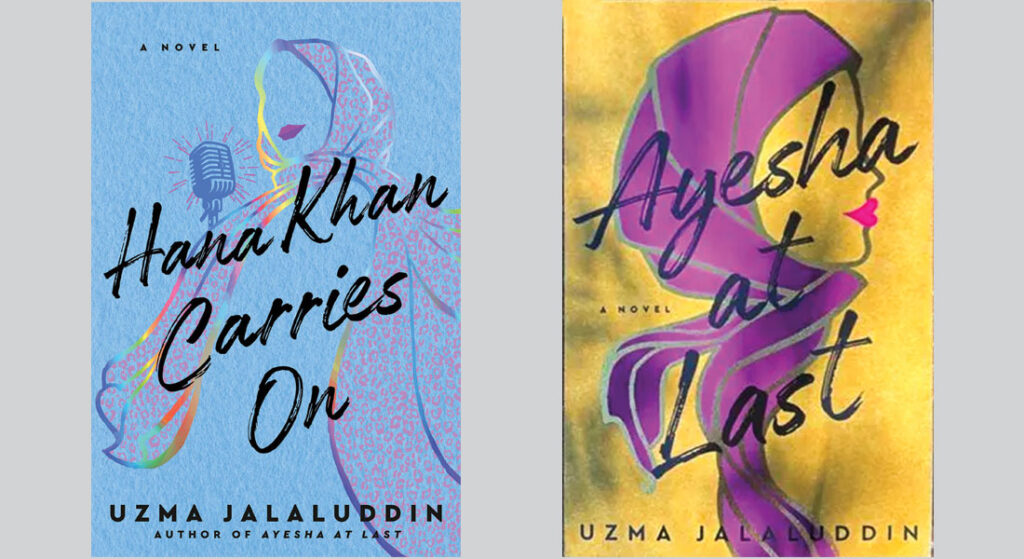
Jane Austen is hugely popular around the world. In an article published in The Common Reader in December 2025 (‘Why we love Jane Austen more than ever after 250 years’), Henry Oliver writes that this is because she “invented the modern novel in order to answer fundamental questions about how to be good, happy, and flourishing in a commercial society. Her novels are about questions that are still central to our lives”. Do read this article if possible. However, this column is not about Jane Austen, it is about Uzma Jalaluddin and her writing. And yes, she is a huge Jane Austen fan. In fact, you could say that her books are a tribute to Austen. At least the two that I read recently: Ayesha at Last and Hana Khan Carries On. This Canadian author writes about what it is like to live in today’s complex culture of constant civilisational clashes, or so it would seem in practically all corners of the world. Certainly, in multicultural, multilingual, multiethnic, multifaith Canada which, over the years, has become a refuge of sorts for many. Uzma Jalaluddin writes about what she knows and experiences.
Ayesha is a woman in her late twenties, clearly well past the accepted marriageable age, a poet working as a school teacher. She belongs to a loving family that includes grandparents, a single mother, and a brother. But there’s nothing ‘settled’ about her; she is still finding her place in the world, both personal as well as professional. It doesn’t help that her cousin Hafsa is the perfect example of how a girl ‘should’ be: young, beautiful, ready and ripe for marriage. Matters are further complicated when Ayesha has to step in for Hafsa as Hafsa-not-Ayesha with regards to an event being organised by their local mosque, resulting in all kinds of confusing outcomes.
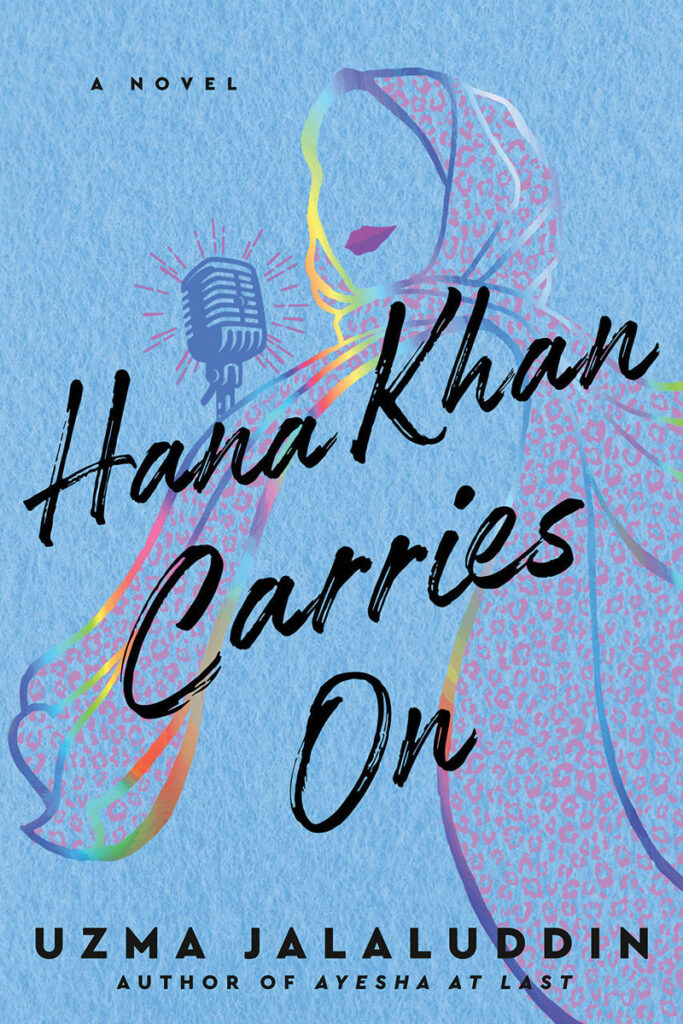
Meanwhile, Ayesha meets Khalid, a quiet, conservative individual, who is accidentally engaged to be married to someone else — no spoilers here. She is put off by how he presents while he is irresistibly drawn to her. How Uzma resolves these various oddities makes for an engrossing, quick, insightful read. In an article posted by Ryan B Patrick back in 2018, Uzma reveals how the plot of Ayesha at Last came to her: “I had this funny image of this man who is an observant and conservative man in a big beard and wearing religious clothing with a skullcap. He just looks like the stereotypical ‘scary person’ and yet, he is a total romantic who has fallen completely in love with this girl. … From that character, the rest of the book sort of emerged very slowly, very painfully.” Often described as a ‘Muslim version of Pride and Prejudice,’ this book took many years to write given the compulsions of running a home, working a profession (Uzma is a high school teacher as well as newspaper columnist) and bringing up small children, but when it was published it instantly garnered success.
What makes both Ayesha and Hana attractive are the details worked into the storytelling, details that the reader can relate to, especially if your history has a colonial colour. Ayesha’s grandfather, Nana in other words, is shown to have been a professor of literature in Hyderabad, India, before the family moved to Canada. When Ayesha ponders aloud over her mother’s attitude regarding her (Ayesha’s) father’s demise, she says to Nana, “It’s like she hates him. She doesn’t have any pictures of him, and she never talks about Dad. I lost something too when he died.” Nana responds by quoting Ophelia from Hamlet: “We know what we are, but know not what we may be.” Ayesha too knows what she is but is yet to discover who she can be.
Both books end dramatically as romcoms generally end, but getting there is all twisty and turny filled with flesh-and-blood people and real-life situations.
Uzma’s storytelling voice rings true. That’s why, through all the contradictions and conflagrations that pepper the narrative in both novels, what shines through is the sense that despite everything and in spite of efforts to disjoint matters, this is ‘home’ for all those who feature in the stories. In the same Patrick post, Uzma says that “growing up as a child there weren’t a lot of books by diverse writers of colour. I always found books that actually spoke about the immigrant experience and people of colour were filtered through a condescending, sometimes erroneous lens.”
There’s where the triumph of Ayesha and Hana lie: what you get is what it is. In a 2018 CBC Radio post Uzma explained that she “wanted to write a story that isn’t the sad immigrant story, which so often takes over the narrative about marginalised communities. I wanted to explore the happy parts. My book has a lot of drama — it does have a lot of serious issues of identity — but it also focuses on love.”
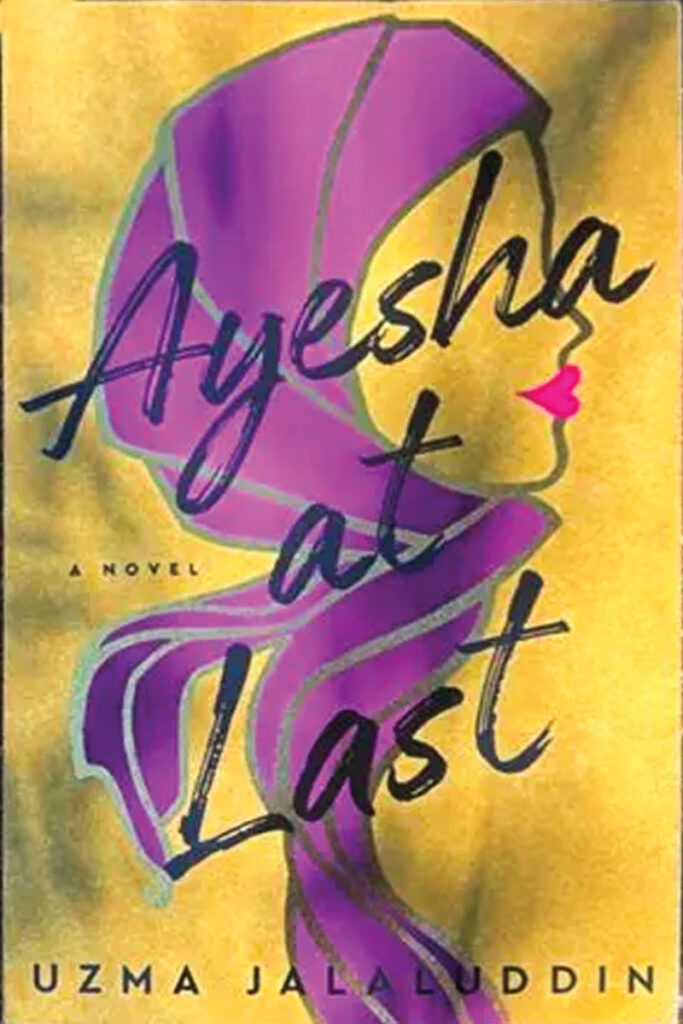
As in Hana Khan Carries On. Hana, short for Hanaan, is into radio. While she helps her mother run the family’s restaurant business — Three Sisters Biryani Poutine — she is also an intern at Radio Toronto, a local indie radio station. There she works alongside another intern of South Asian descent, Thomas Mathews; they are ‘bossed’ by Marisa Lake who, Hana suspects, has a saviour complex. Marisa’s bosses put pressure on her to produce engaging material, she diverts the pressure on to Hana and Thomas — but of course, each one’s notion of ‘engaging’ is poles apart. Three Sisters meanwhile faces stiff competition from a spanking new upscale halal restaurant across the street run by a rough-tough and his market-savvy son Aydin. While Hana vents her frustrations through her podcast, Ana’s Brown Girl Rambles, they manifest as virtual fisticuffs in real life, leading to much tension and heartache. The only redeeming feature is a sympathetic fan of her podcast, Stanley P. Hana’s aunt, Kawkab Khala, visiting from India, is a kind of catalyst who motivates Hana to become who she aspires to be.
Both books end rather dramatically in the way romcoms generally tend to end, but getting there is all twisty and turny filled with flesh-and-blood people and real-life situations. That’s what is so refreshing. It’s not a whitewashed version of multiculturalism. Uzma’s novels are populated by people with all their warts, halos, giggles and ghosting, inhabiting truly diverse neighbourhoods that nurture friendships as well as gossip. They pray, they work, they deal with office politics, racism and discrimination, but they also bask in the security of true relationships and routine… The title of Uzma’s column for the Toronto Star, ‘Samosas and Maple Syrup,’ clearly indicates her world view and the world her characters reside in.
Finally, a word about Fractured Communities. This book, which developed from a PhD thesis on the Adivasis of Singbhum district in Jharkhand, and their history under British rule, was written as the author-cum-student Umar Khalid was serving, and continues to serve, time in jail without bail for the last six years on highly debatable charges. In fact, he had not completed writing his thesis when he was incarcerated and had to appeal to the court in order to submit it to the university. Hailed as a remarkable piece of analytical, historical writing by scholars, the book examines the colonial policy of working the ruptures within Adivasi societies to subjugate them. Serious and scholarly, this book is like a song of resistance, reminding us to pay attention to what the young are now saying.
The columnist is a children’s writer and senior journalist